
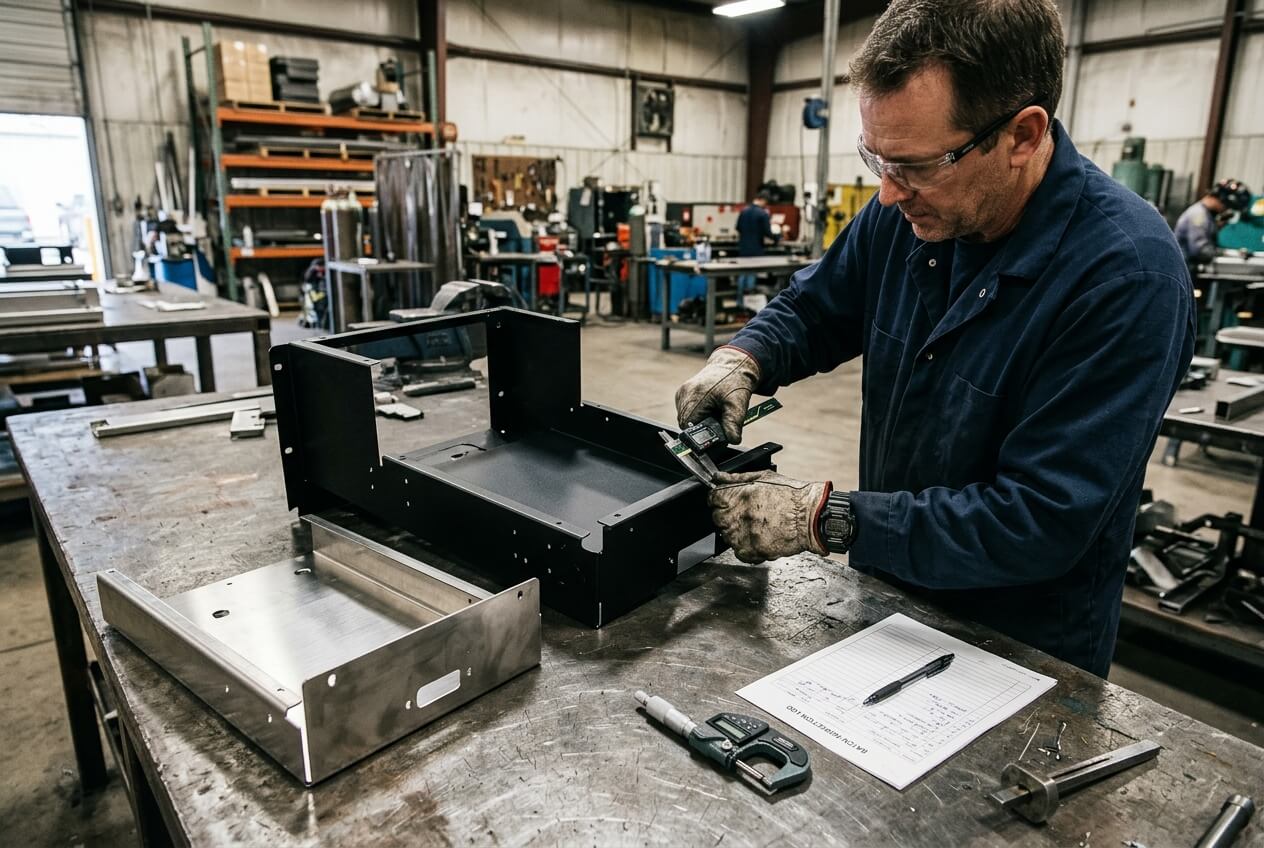
A buyer can source ferrous materials for a powder-coated enclosure, bracket set, frame, or welded assembly and still lose the project at batch inspection. The sample looks clean. The quote looks competitive. The first production lot arrives with weld print-through, chipped edges, coated threads, and rub marks from packing. The problem is rarely the coating line alone. It usually starts with an RFQ that leaves finish scope open.
That is why finish risk matters so much in sheet metal fabrication. One supplier may price light cleaning and standard coating. Another may include weld grinding, masking, extra inspection, and protective packing. Both quotes can look reasonable, but they do not cover the same work. For buyers, that gap creates rework, schedule slip, and order disputes after the PO is already released.
This article focuses on one dominant buyer risk: ambiguous finish expectations on ferrous materials that turn a good-looking sample into a failed batch. If you control that risk early, you also control quote accuracy, assembly fit, and production consistency.
When the RFQ leaves finish scope open, quote comparisons stop being real
Many RFQs use a short note such as ‘black powder coat’ or ‘smooth finish.’ That may work for hidden brackets. It fails on customer-facing enclosures, cabinet doors, display frames, and exposed welded assemblies. In those parts, the buyer is not buying color alone. The buyer is buying a visible standard that affects grinding time, masking labor, coating thickness, inspection time, and packing method.
Ferrous materials make that risk harder to spot because the base fabrication can hide or reveal defects in different ways. Cold-rolled steel may show less texture than heavier structural steel, but weld marks, heat tint, and edge burrs can still telegraph through the finish. If the RFQ does not identify cosmetic faces, hidden faces, and acceptable weld visibility, the supplier must guess. That guess shapes the quote and the batch outcome.
Why ‘black powder coat’ is not enough
Two buyers can write the same finish note and expect very different results. One wants a coated inner bracket with no visible appearance requirement. The other wants a front panel on a control enclosure that must look consistent under showroom lighting. The supplier cannot price those projects the same way. The second job may require more surface prep, tighter handling, and stricter inspection.
That difference also affects lead time. Extra grinding, masking, and touch-up work adds labor and often creates a second review loop before coating. If the buyer discovers the gap after the first sample, the quote has already lost its value as a comparison tool.
How quote assumptions diverge
A supplier may assume that visible weld seams are acceptable as long as they are structurally sound. Another may include blending and sanding on every exposed seam. A third may quote the coating only and leave packing at a basic level. All three can be technically correct, but only one may match the buyer’s expectation. The RFQ must define which surfaces matter most and what level of cosmetic correction is allowed.
For finish-sensitive ferrous materials, the quote should also identify coating system, gloss, texture, color, coating thickness range, and any parts that must remain free of coating. When those details stay vague, the buyer often receives a lower price on paper and a higher cost in changes, rework, or rejected batch units later.
Weld profile and edge prep decide whether coating hides or exposes the part
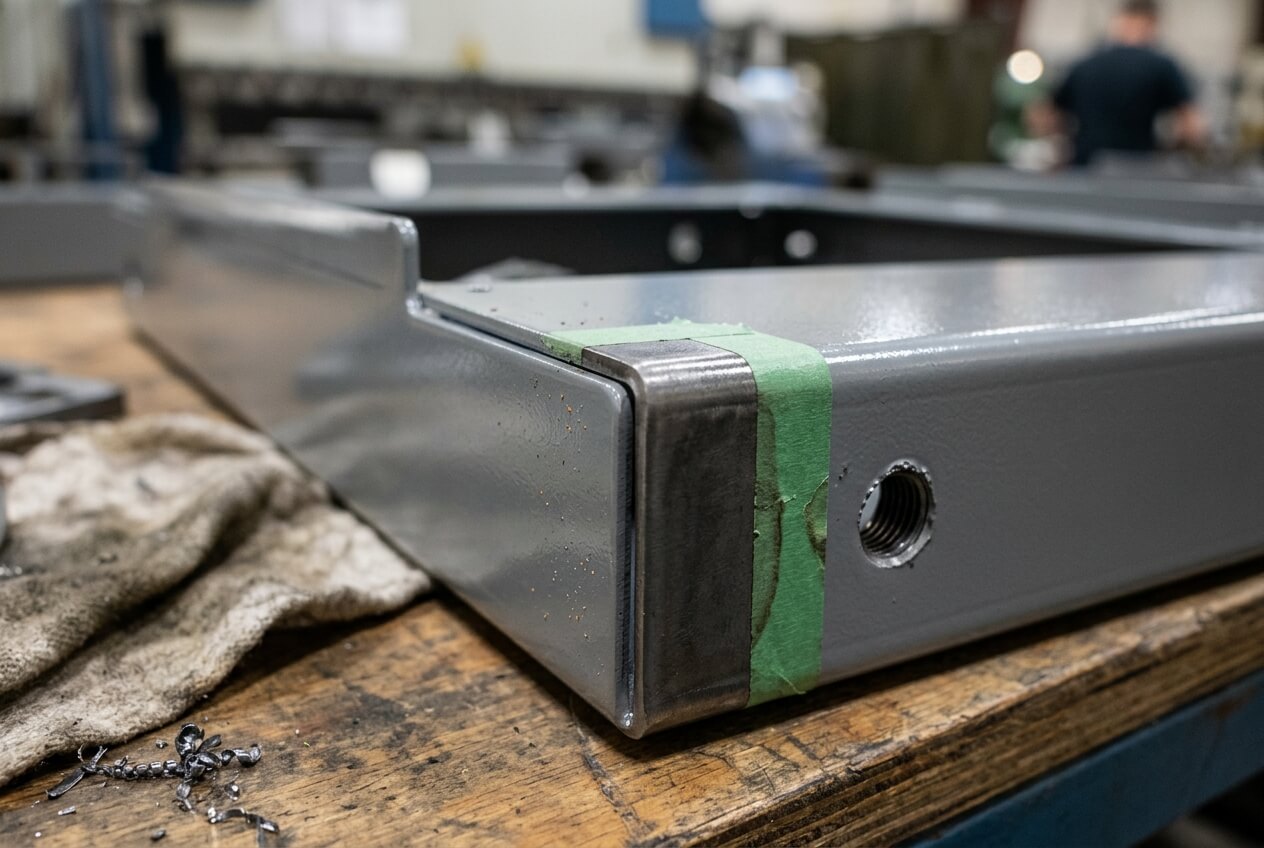
Many finish failures begin before the part enters the powder booth. Weld profile, cut quality, bend condition, and edge prep already shape the final appearance. A weld can meet strength requirements and still print through the coating. A laser-cut edge can look clean in raw steel and still chip after coating if the edge stays sharp. A bent panel can stay within dimensional tolerance and still look uneven once the color highlights the line.
That is why buyers should not treat finish as a final-step issue. On ferrous materials, fabrication and finishing are linked. If the drawing does not state which welds remain visible, where grinding is required, and which edges need deburring or radius control, the supplier will make its own judgment. That judgment can be perfectly reasonable and still fail the buyer’s acceptance standard.
Where visible defects actually originate
Heat from welding changes the surface. Spatter, scale, and oxidation can leave a texture that coating does not fully hide. Bend lines can create stress marks that show more clearly after finish. Handling marks from stacking or clamping can also survive into the final surface if the shop moves parts too early. None of these issues are mysterious. They simply become expensive when the RFQ does not say how much appearance control the buyer expects.
Yishang can review drawings and finish photos before production to flag these risks. A manufacturability check can show that a weld should move to a hidden face, that a bend line needs a different orientation, or that a sharp edge needs a prep note. That review is much cheaper than reworking a batch after coating.
Project example: a control enclosure that looked fine as a sample
A buyer once approved a sample for a powder-coated steel control enclosure. The flat panel looked clean, so the team released the order. In batch production, the assembled door showed weld print-through around the hinge side and small chips on the outer corners. The sample had received extra hand sanding and separate packing. The batch did not. The quote had not included the same cosmetic work, so the buyer paid later in rework and schedule delay.
That kind of gap is common in custom sheet metal fabrication. The sample proves one route, not every route. If the approved part came from a special process, the buyer needs to document it before production starts.
Masking and coating build can break assembly fit after the part leaves the booth
Finish disputes do not stop at appearance. Coating can also affect fit-up, especially on brackets, frames, mounting tabs, threaded holes, grounding points, and mating faces. Powder adds material. That buildup can change clearances, stiffen inserts, or interfere with assembly. If the buyer releases ferrous materials without defining which surfaces must stay clean, the result can be a part that looks acceptable but fails during assembly.
This risk often appears in enclosures and welded assemblies. The buyer expects the door to close smoothly, the bracket to seat on the chassis, or the frame to accept fasteners without force. The supplier may coat all exposed surfaces because the RFQ never marked masking points. The part then needs drilling, scraping, or rework on site. In some cases, the buyer rejects the lot because the coating already damaged the fit-critical interface.
Example: brackets that fit in prototype, then bind in batch
A procurement team approved a prototype set of steel brackets for a machine frame. The sample assembled cleanly. During batch production, the coating line used a slightly thicker film and the rack position changed how powder settled on the contact faces. The brackets still met the drawing dimensions before coating, but the coated parts bound during assembly. The fix required extra masking and a narrower coating range, which increased cost and extended lead time.
This type of problem is easy to miss because the failure appears after finishing, not during fabrication. Buyers should therefore mark threaded holes, grounding points, sliding faces, and sealed interfaces directly on the drawing. If a surface must stay bare, the supplier needs that instruction before coating starts, not after inspection fails.
What to state when fit-up matters
For assembly-critical ferrous materials, the RFQ should identify the coating system, thickness range, masking locations, and any holes or faces that must remain free of finish. It should also state whether small touch-up is allowed and whether coated surfaces can touch each other during packing. These details help the supplier price masking labor and protect fit-critical areas from avoidable rework.
Without that clarity, the buyer may compare quotes that hide very different assumptions. One price may include basic powder coat only. Another may include selective masking, fit checks, and more careful packing. The lower quote may look attractive until the first assembly test.
Prototype approval only matters if the batch repeats the same prep and packing
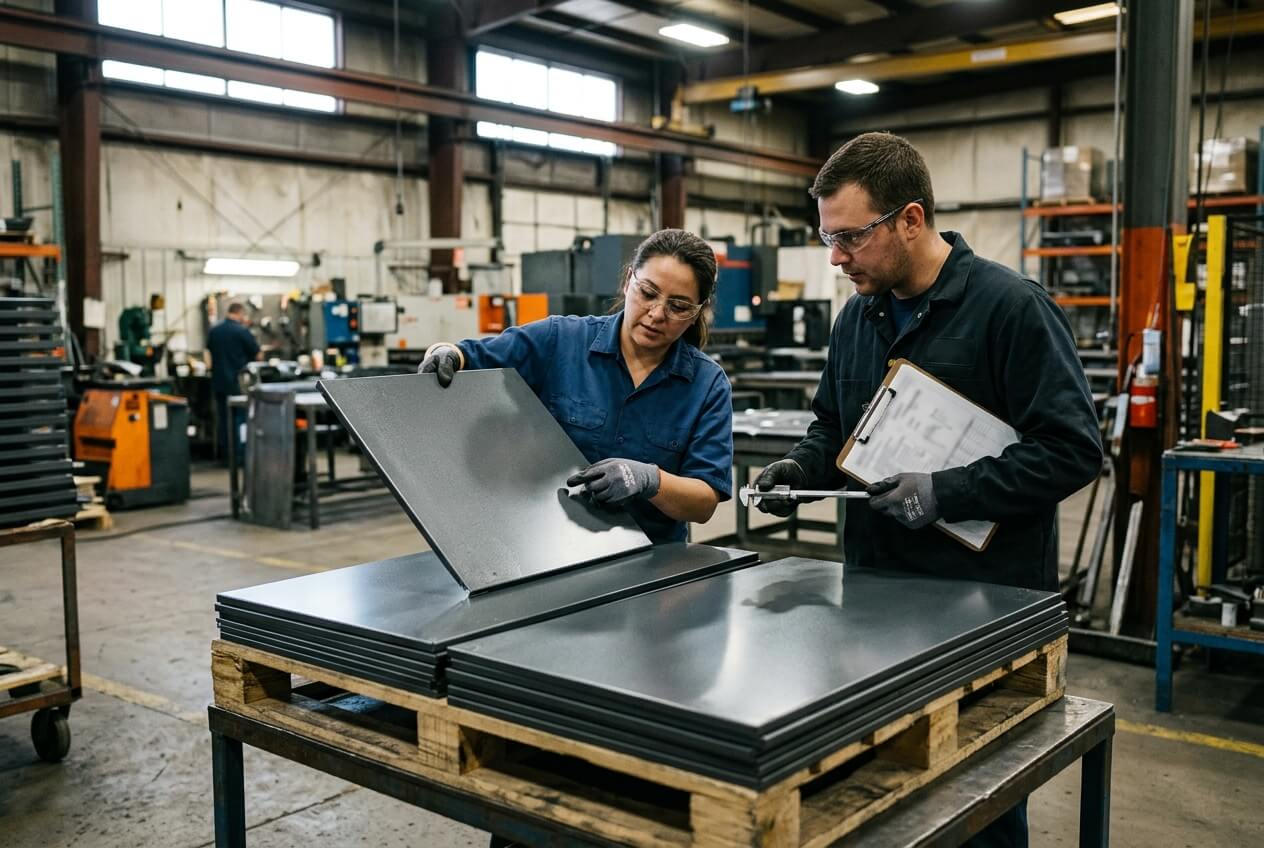
A clean prototype can create false confidence. The sample may receive slower hand sanding, tighter masking, special inspection lighting, and separate packing. The batch may run faster, with different operators, different rack loading, and more handling. If the buyer does not lock those process details, the batch can look different even when the drawing never changed.
That is why prototype approval should do more than confirm shape and size. It should confirm the finish route. Buyers should ask what process created the sample, which welds were ground, which faces were cleaned by hand, which holes were masked, and how the part was packed. If the sample used special treatment, the approved route must be written into the production plan.
Why batch consistency fails after a good sample
Batch work introduces variation. Parts hang differently on racks. Operators handle them faster. Coating thickness shifts across lots. Packaging changes contact points and can create rub marks on corners or flanges. Even when the fabrication stays consistent, the finished appearance can drift. On ferrous materials, that drift often becomes visible at edges, seams, and corners before it shows anywhere else.
For that reason, buyers should not release a PO on sample appearance alone. They should also confirm the approved process sequence. If the sample got more prep than the batch, the buyer must either pay for the same prep in production or revise the acceptance standard to match the real route.
Yishang can support that handoff by checking prototype notes against the planned batch process for sheet metal parts, metal enclosures, frames, and welded assemblies. That helps keep the sample from becoming an unrealistic benchmark.
What to lock before release so ferrous materials do not fail on arrival
The safest procurement move is to treat finish scope as part of the product definition, not as a later discussion. Buyers get better quotes and fewer disputes when they send one complete package and ask every supplier to price the same scope. That package should include drawings, material requirements, quantities, tolerances, finish expectations, inspection points, and packing rules.
For finish-sensitive ferrous materials, the most useful RFQ language is specific. Mark cosmetic faces. Identify hidden faces. Call out visible welds. Note any grind or blend requirement. State coating color, gloss, texture, and thickness range if fit matters. Add masking points for threads, studs, grounding areas, and mating faces. If the part ships fully assembled, explain how the finish must survive transport and unpacking.
That level of clarity reduces false comparisons. It also protects the schedule. When the supplier knows the real cosmetic standard early, it can price labor accurately, plan inspection, and avoid midstream changes that delay coating or packing.
What a strong buyer package should include
- Drawings with cosmetic faces, hidden faces, and assembly-critical surfaces clearly marked.
- Material grade, thickness, quantity, and any special surface condition before coating.
- Tolerances that affect fit-up after powder coating or finishing.
- Finish photos, approved sample notes, and any rejection examples.
- Packing rules for corners, edges, stacked parts, and contact-sensitive surfaces.
- One clear contact path for questions so the supplier can confirm assumptions before production.
If your project involves cosmetic enclosures, brackets, frames, or welded assemblies made from ferrous materials, send Yishang your drawings, material requirements, quantities, tolerances, and finish expectations for review. Start the conversation at zsyishang.com so the RFQ matches the real fabrication and finishing scope before you compare quotes or release the batch.
Frequently Asked Questions
Why can ferrous materials pass sample approval and still fail batch inspection?
The sample may receive extra sanding, manual masking, slower inspection, and separate packing. Batch production usually runs faster and with more handling. If the approved sample does not reflect the batch process, the finished appearance can change even when the drawing stays the same.
What finish details should buyers add to an RFQ for powder-coated sheet metal parts?
Buyers should mark cosmetic faces, hidden faces, visible welds, masking points, coating color, gloss, texture, coating thickness range, and packing rules. They should also note any assembly-critical surfaces that must stay free of coating.
How do welds affect the final appearance of ferrous sheet metal fabrication?
Welds can leave profile changes, heat tint, spatter, or scale that show through the finish. A weld may be structurally sound and still fail a cosmetic standard. Buyers should say which seams remain visible and whether grinding or blending is required.
Why does coating thickness matter on enclosures and welded assemblies?
Coating adds material to edges, holes, tabs, and mating faces. That buildup can affect clearances, fastener fit, and moving parts. If fit matters, the RFQ should state the coating range and identify the surfaces that need masking.
What should a prototype approval record include for finish-sensitive projects?
It should record the actual process used on the sample, including weld cleanup, masking locations, coating type, coating thickness, inspection lighting, and packing method. That record helps the batch team repeat the approved route instead of guessing what made the sample acceptable.