
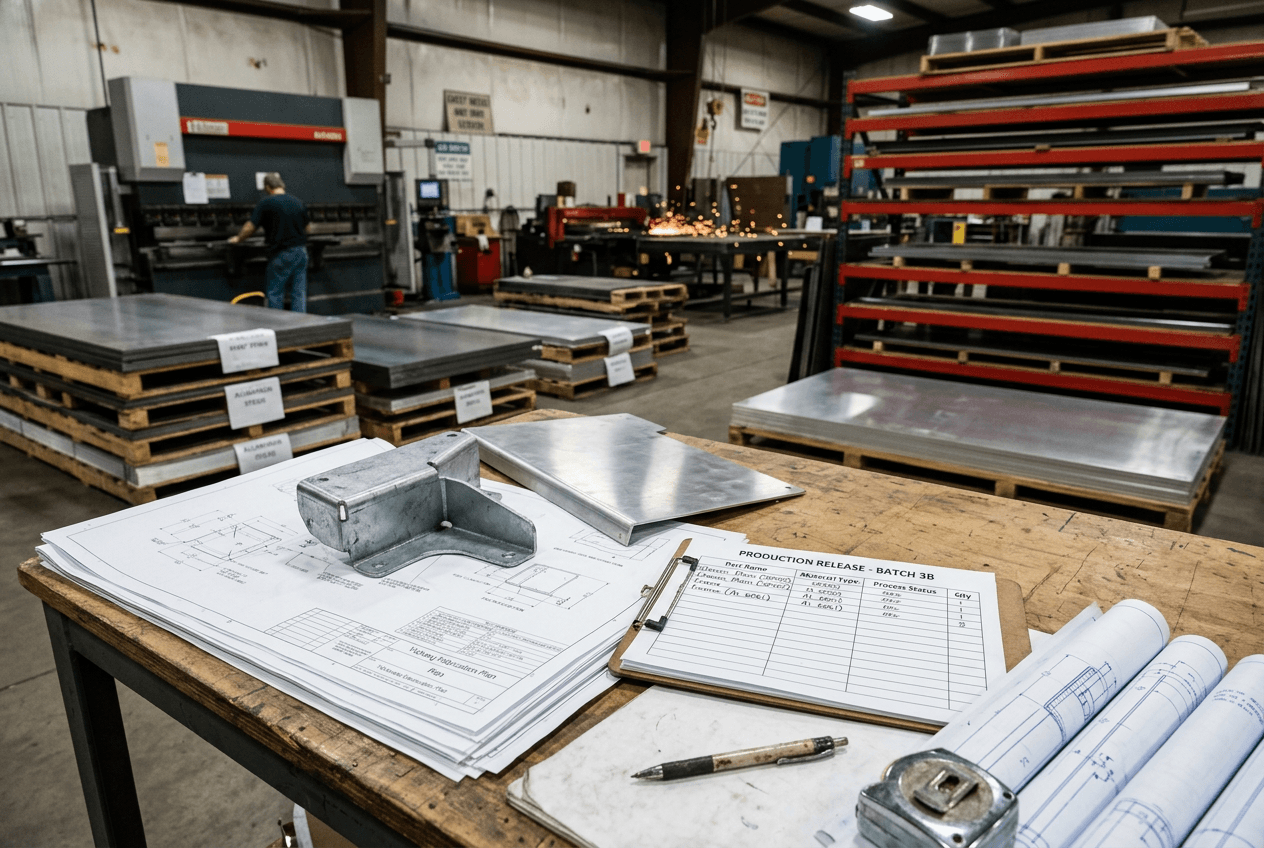
The definition of ferrous and nonferrous matters most when a sheet metal RFQ is still ambiguous. A buyer may think the material choice is obvious, but a supplier may see several possible routes. One quote may assume mild steel. Another may price stainless steel. A third may plan aluminum because the part needs lower weight. That gap is not just a pricing issue. It can change stock checks, welding method, coating choice, inspection scope, and the order in which the job enters production.
In custom sheet metal fabrication, that is the real procurement risk. The drawing may be correct from a design point of view, yet still leave too much room for interpretation. The result is usually not a bad part on day one. It is a slow quote, a revised assumption, or a batch that waits for clarification after the order is already placed. For enclosures, brackets, frames, and welded assemblies, the definition of ferrous and nonferrous acts like a planning signal. If the buyer states it early, the supplier can quote the same path. If not, the schedule starts to drift before cutting begins.
How a Missing Material Family in the RFQ Creates the First Quote Mismatch
The biggest problem starts when the RFQ says “metal” and stops there. Ferrous metals are iron-based, such as mild steel, carbon steel, and many stainless grades. Nonferrous metals do not rely on iron as the main element, such as aluminum, copper, and brass. That definition sounds simple, but in procurement it controls more than chemistry. It tells the supplier what stock to pull, what equipment sequence to plan, and what finish route to reserve.
If the buyer does not lock the material family, the quote may reflect a guess. One factory may price a laser-cut and bent cabinet in mild steel with standard powder coating. Another may price the same enclosure in stainless because the application sounds humid or outdoors. A third may assume aluminum because the weight requirement was never stated. All three quotes may be reasonable on their own, but they are not comparable. The lowest number may hide the largest assumption gap.
This is where the definition of ferrous and nonferrous becomes practical. The supplier does not just need a material name. It needs a material decision that matches the use case. Indoor machine guards, small brackets, and utility frames often move fastest in ferrous steel if corrosion exposure is limited. Lightweight display hardware, portable frames, and cosmetic panels often push buyers toward nonferrous aluminum. If the RFQ does not make that choice visible, the supplier may spend time rechecking stock instead of pricing the job cleanly.
Project example: a cabinet that looked simple on paper
A buyer once sent a drawing for a floor-standing control cabinet and wrote only “sheet metal, painted.” One supplier priced mild steel, another priced stainless, and a third asked whether the front panel should be aluminum for weight control. The buyer expected one easy comparison, but the RFQ produced three different production paths. The project did not fail because the drawing was poor. It slowed because the material family was never fixed before quotation.
That kind of delay is avoidable. A clear RFQ should state the base metal, acceptable substitutes, thickness, and whether the order is prototype-only or intended for release production. If the buyer also notes corrosion exposure, the supplier can price the same risk profile instead of guessing which one matters most. Yishang often sees this issue during drawing review for custom sheet metal parts and welded assemblies, where the first clarification is not about geometry. It is about the material family itself.
Why Finish Requirements Change the Meaning of Ferrous and Nonferrous
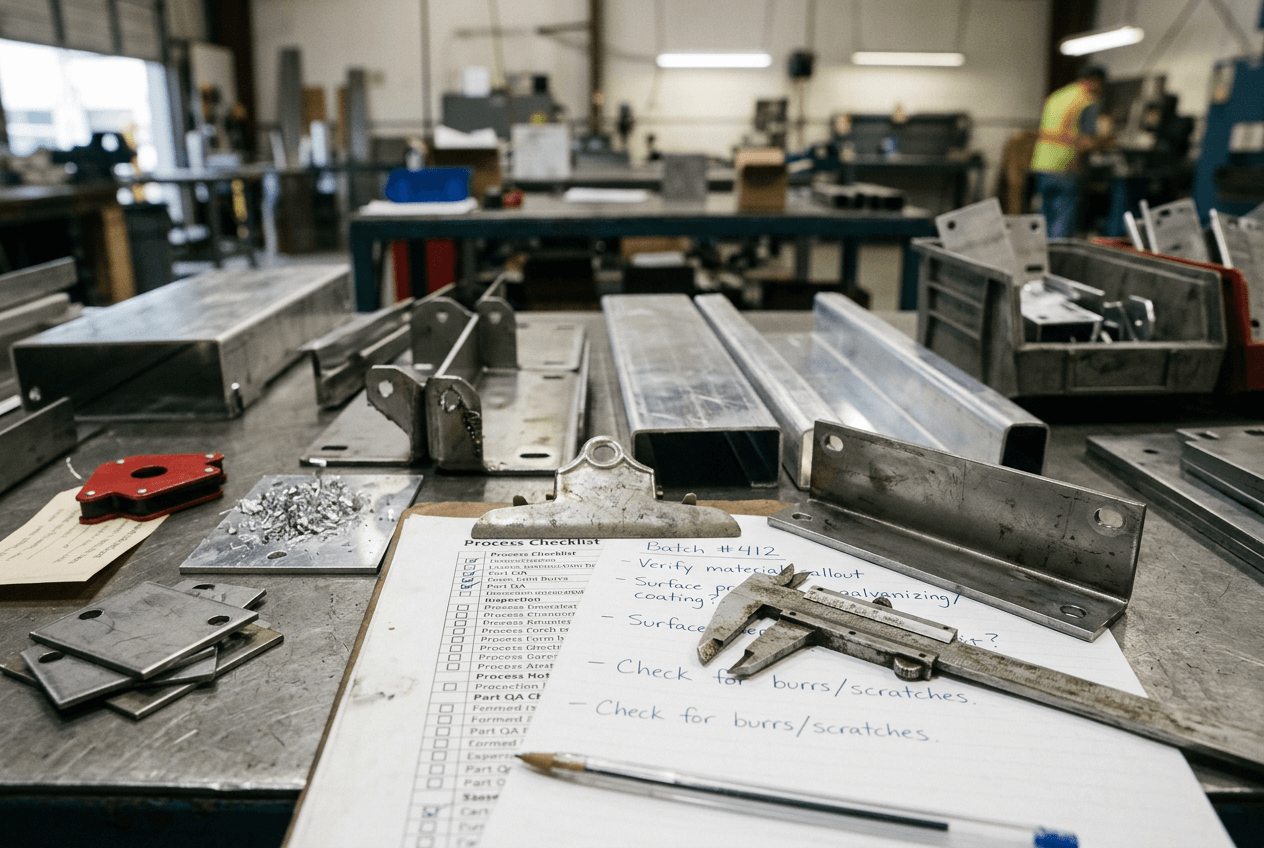
Finish is where the definition of ferrous and nonferrous becomes a schedule issue. A ferrous part may be coated, galvanized, or painted. A nonferrous part may be anodized, polished, brushed, or left with a protected mill finish. Those choices affect more than appearance. They change queue time, masking work, handling steps, and the chance of rework after coating.
Buyers often treat finish as a final note, but suppliers treat it as a process plan. A powder-coated mild-steel enclosure may need a batch to fill before it enters the coating line. A galvanized bracket may need a different pretreatment path. A brushed stainless cover may require cosmetic inspection. An aluminum panel may need extra surface protection to avoid scratches during transfer. The material family drives those steps, and the finish specification decides how much time they take.
That is why “finish required” is too vague for procurement. The supplier needs to know color, gloss, texture, coating thickness, masked areas, edge coverage, and whether welds must remain visible or hidden. If the RFQ leaves those points open, the first quote may look fast and cheap. The later correction may not be. Even a small finish change can force the factory to reprioritize the job because coating batches, visual standards, and packaging requirements all shift together.
What finish decisions really change
A buyer may think powder coating is just a color choice. In reality, it can affect hole masking, grounding points, weld visibility, and final fit. On a nonferrous aluminum enclosure, cosmetic protection may matter as much as the coating itself. On a ferrous steel frame, corrosion coverage at edges and corners may matter more than color. If the buyer wants a clean visual face for retail use, the factory may need extra handling and inspection. If the buyer wants a functional internal bracket, the finish plan can be simpler, but it still needs to be stated.
For that reason, a stronger RFQ should tell the supplier how the part will be used. Outdoor exposure, moisture, chemicals, and customer-facing surfaces all alter the production route. When the buyer provides that context, the supplier can connect the definition of ferrous and nonferrous to the actual finish risk, not just the material name.
How Tolerances and Assembly Fit Turn Material Choice into Rework
Material choice does not stop at quoting or finishing. It also affects whether parts fit after welding, bending, and coating. That is where many sheet metal jobs lose time. A drawing may look complete, but the assembly can still fail if the buyer does not state which faces are cosmetic, which holes are functional, and which interfaces must remain tight after finish build-up.
Ferrous and nonferrous parts behave differently during fabrication. Steel can be easier to weld in some structures, but weld heat may create distortion that affects hole position or panel flatness. Aluminum often needs different bend allowances and more careful handling. Stainless may hold up well in service, but it can add more inspection effort if the appearance matters. None of these are abstract technical notes. They become procurement risk when the RFQ does not tell the supplier how the part must assemble in the real product.
Consider a bracket set that mounts sensors inside an enclosure. If the holes are near a powder-coated edge, coating thickness can change fit. If the bracket is nonferrous aluminum, the bend radius and surface finish may need tighter handling to protect appearance. If it is ferrous steel with welded nuts, the weld sequence can alter alignment before the final assembly check. The part may still meet the drawing, yet the assembly may not go together smoothly.
Project example: a frame that passed inspection but missed fit
A fabricated frame for a small machine passed dimensional inspection on the flat parts, but the assembled unit bound at one corner after coating. The problem was not the cut size alone. The buyer had not defined which mating faces should stay free of coating build-up. The supplier followed the drawing, but the batch still required rework. That kind of issue usually starts with incomplete RFQ language, not with poor shop discipline.
Buyers should therefore freeze more than nominal dimensions. They should state functional tolerances, mating surfaces, weld limits, and any assembly sequence that matters. If a part includes brackets, gussets, or welded assemblies, the supplier needs to know which features affect fit at the next stage. Yishang can review those points during drawing checks for custom sheet metal parts, especially when the same part must be fabricated and assembled before finishing.
Why Prototype Approval Does Not Guarantee Batch Consistency
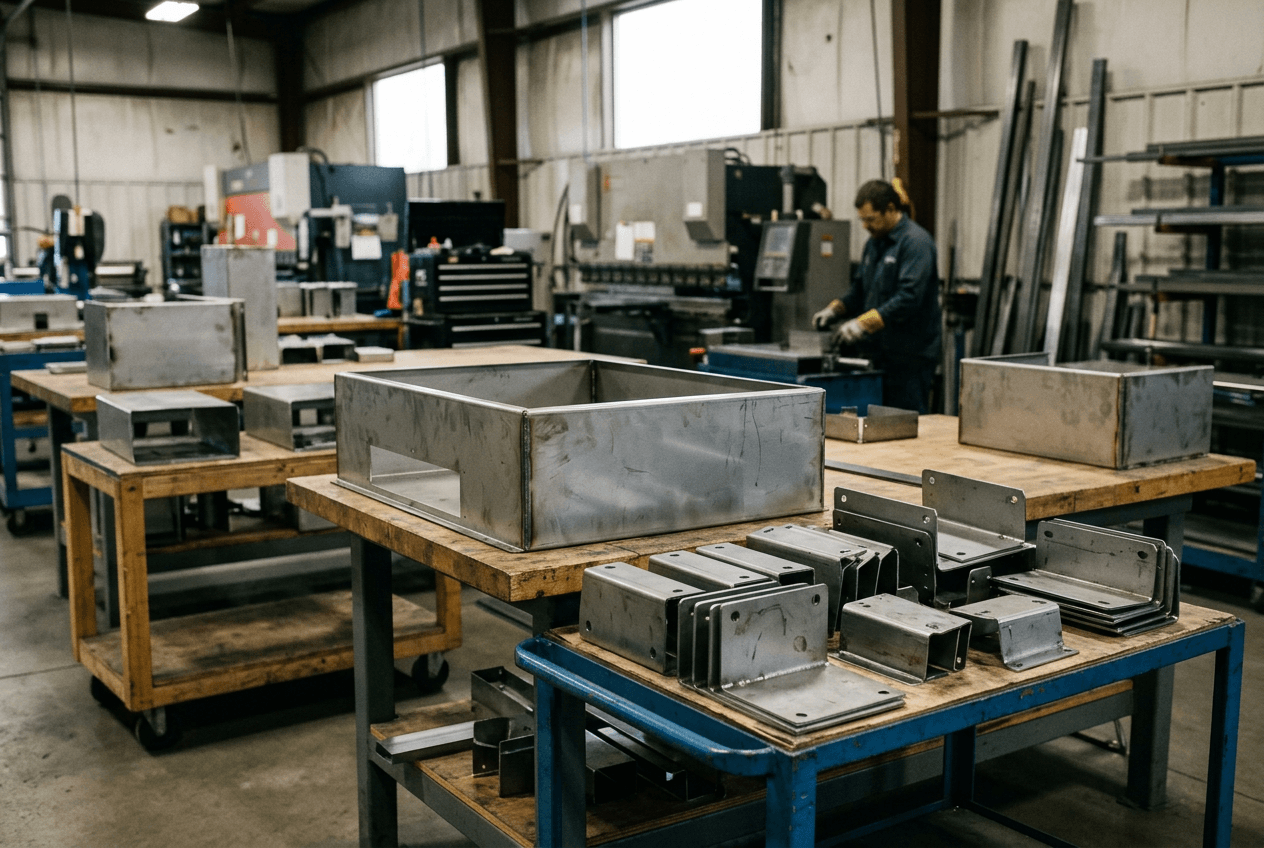
Prototype approval can create a false sense of security. A sample often benefits from manual attention, extra adjustment, and slower handling. Batch production does not. Once the order scales up, bend variation, fixture wear, weld distortion, and coating build-up can expose the gaps between the sample and the final run. That is a major buyer risk because the prototype may look fine while the release batch still needs clarification.
This matters most when the project mixes ferrous and nonferrous parts. A steel prototype may fit because a technician tuned it by hand. A later batch may shift slightly after welding or coating. An aluminum sample may look clean, but the full run may show more handling marks if the packaging plan was not fixed. In both cases, the issue is repeatability. The question is not whether one part works. The question is whether twenty, fifty, or two hundred parts will repeat the same result.
Prototype approval should therefore confirm more than shape and appearance. It should also confirm inspection points, cosmetic faces, finish acceptance, packaging method, and any substitution limits. If the first run is only a proof of concept, say so. If the project is moving into pilot batch production, say that too. A supplier can plan a very different inspection path for a prototype than for a release order. When the buyer leaves that difference unstated, the quote can be built on the wrong production assumption.
The safest way to protect batch consistency is to treat the prototype as a process test, not just a part sample. That means clarifying material family, thickness, allowed substitutions, finish standard, and assembly notes before sample approval. If the buyer and supplier agree on those points early, the batch is less likely to surprise both sides later.
What Buyers Should Freeze Before Comparing Quotes
Quote comparison only works when suppliers price the same assumptions. If one bidder sees stocked mild steel with powder coating and another sees stainless with brushed finishing, the numbers will not tell the buyer much. The larger risk is not a bad price. It is a misleading comparison. The buyer may choose the lowest quote and then discover it was built on a different material family, a different finish route, or a different inspection burden.
Before comparing suppliers, freeze the material family, thickness, acceptable grades, finish expectation, and any functional tolerance that affects assembly. State whether the part will be welded, bent, riveted, or assembled with hardware. Clarify whether the first order is a prototype, pilot batch, or release volume. If the part includes cosmetic faces, grounding points, masked holes, or mating surfaces, those details belong in the RFQ as well. They affect both cost and schedule.
It also helps to tell the supplier what kind of answer you need. Some projects need a quick budget price. Others need a production quote tied to drawings, material requirements, quantities, tolerances, and finish expectations. The second type is safer for procurement because it exposes the hidden risk earlier. For buyers sourcing enclosures, brackets, frames, or welded assemblies, that upfront clarity is often what keeps the job from slipping after award.
If you want the quote to reflect the real manufacturing path, send your drawings, material requirements, quantities, tolerances, and finish expectations to Yishang for review before you compare bids. That gives the supplier a better chance to price the same part, not three different assumptions.
Frequently Asked Questions
What is the definition of ferrous and nonferrous in sheet metal work?
Ferrous metals are iron-based, such as mild steel, carbon steel, and many stainless grades. Nonferrous metals do not use iron as the main element, such as aluminum, copper, and brass. In sheet metal fabrication, that distinction affects stock choice, welding method, finish route, and lead time.
Why does the material family matter so much in an RFQ?
Because the material family changes the production path. A ferrous enclosure may go through welding and powder coating. A nonferrous part may need different bend control or surface protection. If the RFQ says only “metal,” suppliers may quote different assumptions and create an unfair comparison.
Can a mild steel part and an aluminum part use the same quotation logic?
No. They often need different stock sourcing, handling, and finishing steps. Even if the geometry looks similar, the process risk is not the same. Buyers should ask suppliers to quote the same material family, same finish, and same inspection scope.
Why do finishes slow some ferrous and nonferrous jobs more than fabrication does?
Because coating, polishing, galvanizing, or anodizing often runs in batches. The part may already be cut and bent, but it can still wait for the right finishing queue. Color, gloss, masking, and cosmetic standards all add time if they are not defined early.
What should buyers freeze before approving a prototype?
Freeze the material, thickness, finish standard, inspection points, and any assembly surfaces that affect fit. A prototype can prove the design, but it does not always prove batch repeatability. Buyers should also confirm whether substitutions are allowed in the release run.
How can Yishang support an RFQ for custom sheet metal parts?
Yishang can review drawings, material requirements, quantities, tolerances, finish expectations, and assembly notes before quotation. That review helps expose unclear ferrous or nonferrous assumptions, finish risk, and batch-fit issues before production starts.