
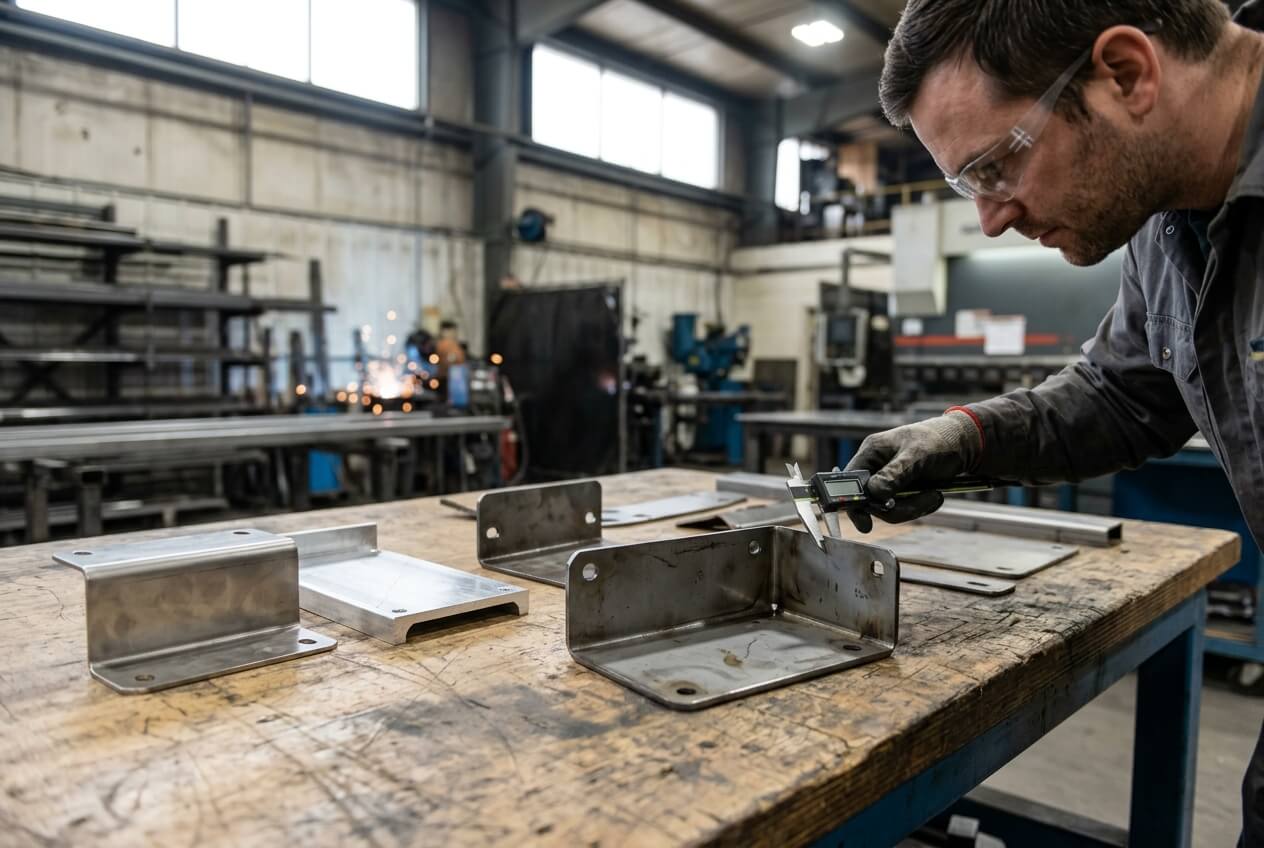
A buyer sends an RFQ for a black powder coated control enclosure. The drawing calls out “metal sheet, 1.5 mm.” A note adds “SS or AL acceptable.” Three suppliers return three very different quotes. One prices mild steel with powder coating. Another uses 304 stainless steel. A third proposes aluminum to reduce weight.
At first, the buyer sees a price spread. The real problem runs deeper. The RFQ allowed each supplier to build a different manufacturing plan. That gap affects material cost, bending behavior, welding sequence, finish preparation, corrosion risk, inspection criteria, and batch consistency.
This article answers the keyword question, what is ferrous metal and non ferrous metal, through one procurement risk: unclear material wording creates quote assumptions that buyers may not discover until sampling, assembly, or field use. In custom sheet metal fabrication, that risk can turn a low unit price into rework, rejected parts, or a product that fails in its actual environment.
Where Ferrous vs Non-Ferrous Wording Starts to Distort the Quote
A ferrous metal contains iron. Common sheet metal examples include carbon steel, galvanized steel, and most stainless steels. A non-ferrous metal does not contain significant iron. Common examples include aluminum, copper, brass, and zinc alloys. That definition helps, but it does not give a supplier enough information to quote safely.
In procurement, the category only starts the conversation. A buyer who writes “steel enclosure” may expect mild steel with powder coating. A supplier may ask whether stainless steel should replace it for corrosion resistance. Another supplier may quote galvanized sheet because the enclosure will sit near moisture. Each quote may look reasonable, yet each one carries a different cost and risk.
The same problem appears when a drawing says “stainless steel.” Stainless steel remains a ferrous family because it contains iron, but grades vary widely. A 201 stainless part, a 304 stainless part, and a 316 stainless part may share a similar appearance. They do not carry the same corrosion resistance, magnetic response, forming behavior, or price.
The buyer sees a material name; the supplier sees a process route
Fabricators do not quote metal as a label. They quote a process route. Mild steel may need laser cutting, bending, welding, grinding, pretreatment, powder coating, and packaging protection. Stainless steel may need contamination control, different grinding media, surface protection, and more careful cosmetic handling. Aluminum may need larger bend radii, insert planning, different welding controls, and scratch prevention.
When the RFQ leaves the material open, the supplier fills in the gaps. That does not always mean the supplier acts carelessly. It means the buyer has not defined the decision boundary. If the quote must allow substitutions, the quote should list them clearly. If the design cannot accept substitutions, the drawing should freeze the grade, thickness, and finish route.
A clean RFQ should answer several practical questions before suppliers calculate price. What environment will the part see? Which faces are cosmetic? Will the part contact other metals? Does magnetic response matter? Will the prototype material become the production material? Without those answers, the buyer compares assumptions instead of comparing suppliers.
Why the Cheapest Assumption Can Create Corrosion, Weight, or Magnetism Problems
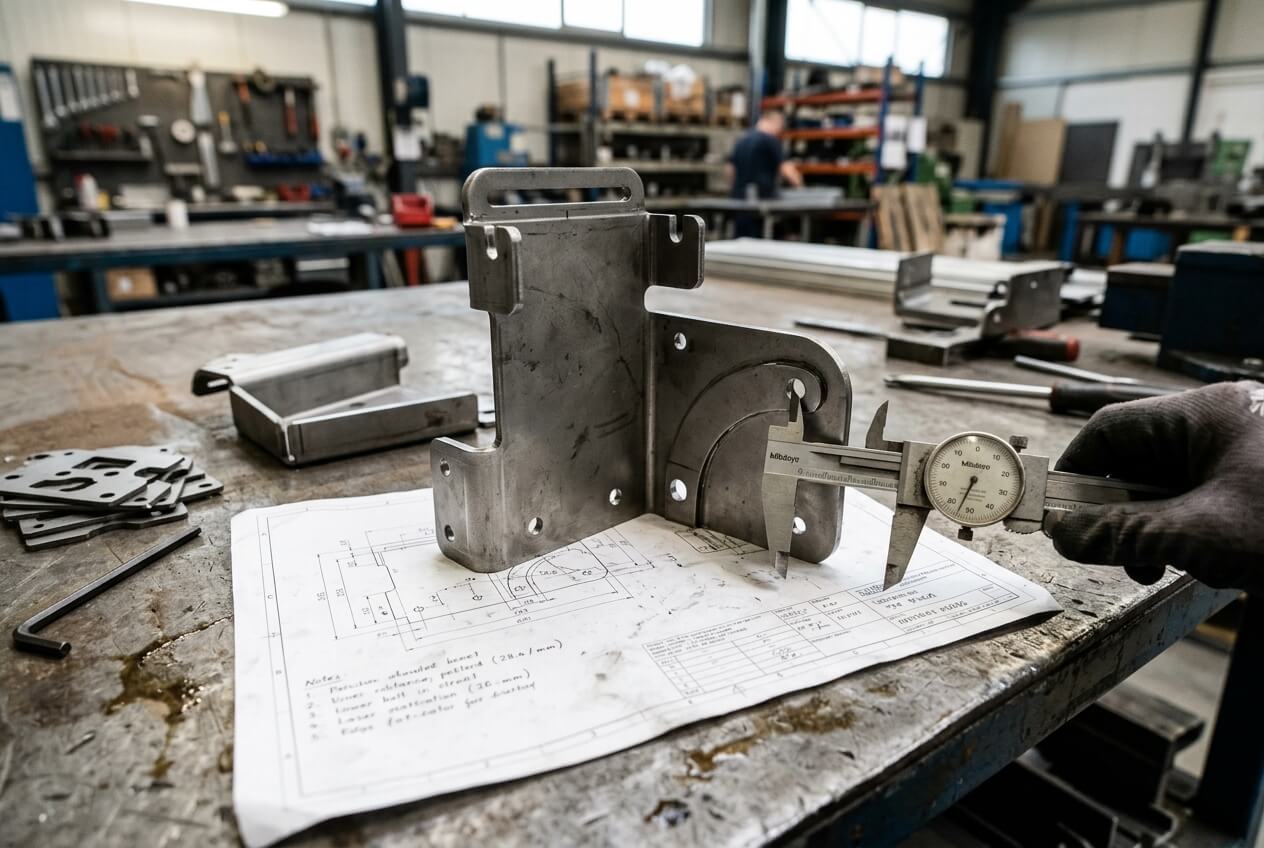
Material ambiguity often hides inside a competitive price. A supplier may quote the lowest workable material because the RFQ does not state the service condition. That quote can win approval, but the risk moves downstream. The part may pass incoming inspection and still fail once it meets humidity, handling damage, washdown, or sensor requirements.
Consider an indoor machine bracket. Powder coated mild steel may give the best balance of stiffness, weldability, and cost. Now move the same bracket to a humid packaging line where operators wash equipment. Scratches around slots and bolt holes expose bare steel. Rust starts at the edges. The buyer may blame coating quality, but the issue began with a material and exposure assumption.
Non-ferrous materials can reduce some risks and create others. Aluminum lowers weight and resists many forms of corrosion, but it scratches more easily and may need special packaging. Threaded holes may need inserts. Welded aluminum assemblies can distort if the design lacks support. Copper and brass introduce cost and finish concerns that differ from steel or stainless steel.
Magnetism creates hidden functional risk
Many buyers use a simple rule: ferrous metals are magnetic, and non-ferrous metals are not. That rule helps at a basic level, but sheet metal projects need more precision. Some stainless steels show magnetic response, especially after cold working. Others remain weakly magnetic or non-magnetic depending on grade and processing.
If a cover sits near a sensor, test instrument, medical device, magnetic latch, or measuring system, “stainless steel” does not protect the buyer. The RFQ should state whether magnetic behavior matters. It should also ask suppliers to confirm the grade and any expected magnetic response after forming.
A small instrument cover shows the consequence chain clearly. The buyer asks for stainless steel because the cover must look clean. The supplier quotes a lower-cost stainless grade. The formed part becomes mildly magnetic after bending. During assembly, the cover affects a nearby sensor. The team then pays for sorting, redesign, and urgent replacement parts. A short note in the RFQ could have avoided that cost.
How Material Assumptions Change Fabrication Steps, Not Just Unit Price
Buyers often focus on material cost when they compare ferrous and non-ferrous options. Material price matters, but it rarely tells the whole story. The material family changes the fabrication route, and the route changes cost, lead time, inspection, and repeatability.
Mild steel usually bends and welds predictably. It suits many cabinets, brackets, frames, and welded assemblies. It also needs a suitable finish if corrosion matters. Galvanized steel improves corrosion resistance in many conditions, yet welding can damage the zinc layer near joints. Stainless steel reduces rust risk, but it may increase grinding time, polishing control, and cosmetic handling. Aluminum can reduce weight, but it may require different bend radii, tooling choices, and joining methods.
Those differences matter when the drawing contains tight features. A bend close to a hole may behave differently in stainless steel than in mild steel. A long aluminum panel may need a different flatness expectation after forming. A welded stainless frame may need more heat control to keep mounting holes aligned. If the RFQ allows material changes without revising tolerances, the buyer can approve a quote that the production route cannot hold consistently.
Finish expectations must follow the material decision
Finish wording often hides inside the same RFQ ambiguity. “Black finish” can mean powder coating, wet paint, black oxide, anodizing, or a decorative brushed surface with black components nearby. Ferrous and non-ferrous metals do not use the same finish logic.
Powder coated mild steel may need pretreatment, coating thickness control, edge coverage review, and masking for threads or grounding points. Stainless steel may need brushed grain direction, weld discoloration control, passivation, or protection against carbon steel contamination. Aluminum may need anodizing, powder coating, chemical conversion coating, or protective film, depending on the function.
A telecom cabinet gives a practical example. The buyer requests “black outdoor cabinet, stainless or aluminum acceptable.” One supplier quotes 304 stainless with powder coating. Another quotes aluminum with powder coating. Both may meet the color requirement. They may not match in stiffness, grounding, hinge strength, heat dissipation, scratch behavior, or coating repair method. If the buyer compares only unit price, the wrong assumption can win.
Yishang reviews these details during drawing and RFQ discussions for custom sheet metal parts, especially when enclosures, frames, and welded assemblies have both fit and cosmetic requirements. The goal is not to force one material. The goal is to make the chosen assumption visible before price comparison.
Why Prototype Approval Does Not Eliminate the RFQ Assumption Risk
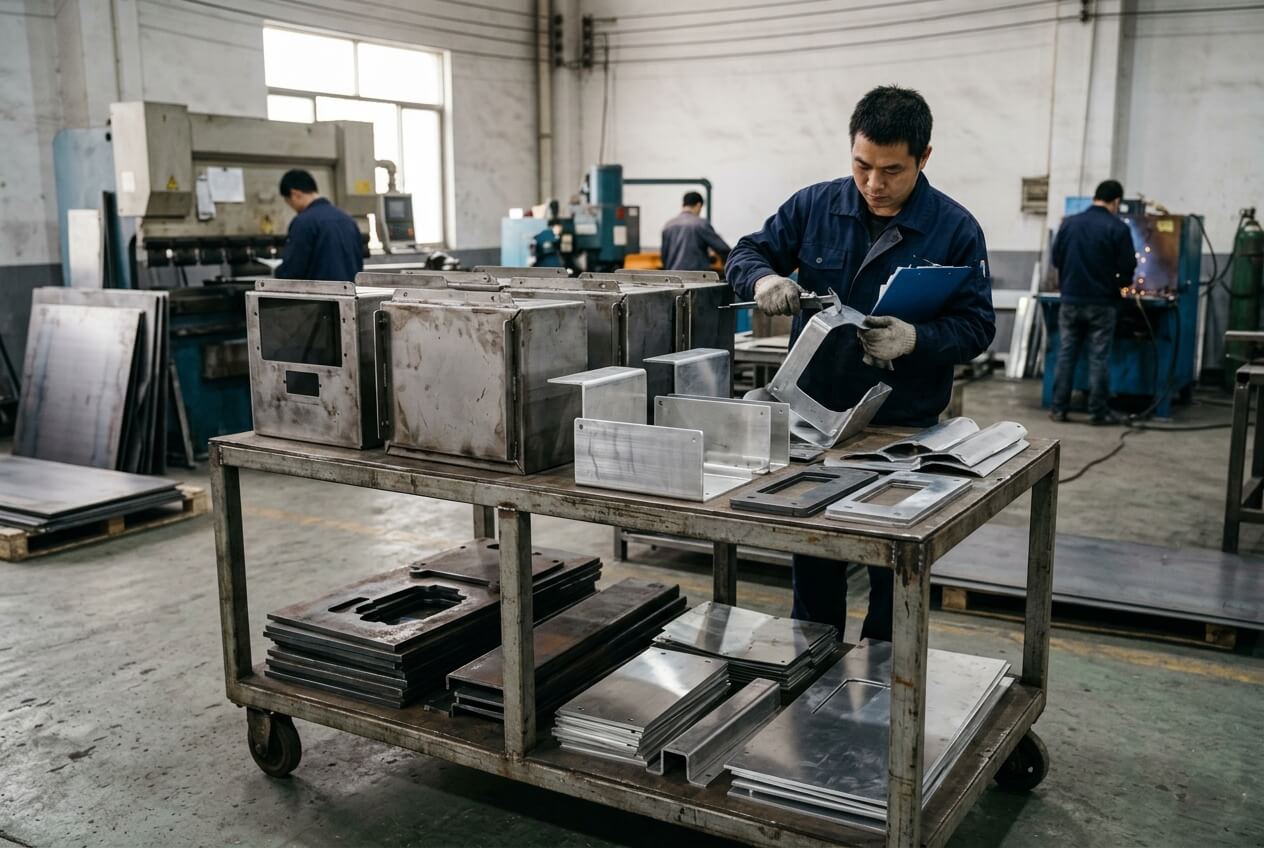
A prototype can reduce uncertainty, but it can also hide it. Buyers often approve the first sample by appearance and fit. They may not freeze the grade, temper, finish route, weld method, or inspection standard. When batch production starts, the supplier may follow the written drawing rather than the unwritten memory of the sample.
That difference matters when the drawing says only “stainless steel” or “aluminum sheet.” The prototype may use 304 stainless because that stock was available. A later batch may use another stainless grade because the drawing permits it. The parts may still look similar after polishing or powder coating, yet corrosion resistance and magnetic response can change.
Powder coated steel parts create another common trap. A hand-finished prototype may look excellent because the shop deburred edges carefully and touched up weld marks before coating. In production, faster handling, sharper cut edges, dense nesting, or different pretreatment control can expose rust-prone areas. The buyer then argues about coating failure, while the supplier points to the original drawing. Neither side benefits from that dispute.
Approved samples need written freeze points
Prototype approval should freeze more than shape. It should freeze the material grade, thickness, surface finish route, visible faces, weld appearance level, masking areas, and key inspection points. If bend radius affects assembly fit, include it. If coating thickness affects hole clearance, threads, hinges, or grounding, specify how to inspect it.
Batch consistency also depends on communication. Buyers should ask suppliers to document any proposed substitution before production. A change from mild steel to galvanized steel, from 304 stainless to 201 stainless, or from 5052 aluminum to another alloy may affect bending, welding, finish, and field performance. Even when the substitute lowers cost, the buyer needs to approve the tradeoff.
A welded equipment frame shows the risk clearly. The prototype fits the machine base because the shop controls weld sequence and straightens the frame after welding. The release drawing lists only “steel tube, black powder coat.” During batch production, another team uses a different tube grade and weld sequence. Mounting holes drift. Assembly workers enlarge holes to make the frame fit. The cost does not appear on the supplier quote, but it appears in production time and quality records.
What Buyers Should Clarify Before Comparing Ferrous and Non-Ferrous Quotes
The safest RFQ does not need a long technical essay. It needs the right freeze points. Start by naming the preferred material grade, thickness, and allowed alternatives. If alternatives can work, ask suppliers to quote them as separate options. Do not allow “steel,” “stainless,” or “aluminum” to carry the full specification by itself.
Next, describe the service condition. Indoor dry use, outdoor rain, coastal air, chemical splash, washdown, condensation, and high humidity all change the material decision. A supplier cannot price corrosion risk accurately without that context. Exposure also affects lead time because special grades, pretreatment steps, or outsourced finishing may need extra planning.
Drawings should mark fit-critical and cosmetic areas. Mounting holes for hinges, latches, PCB supports, machine frames, and mating brackets deserve clear tolerances. Cosmetic faces need agreed handling and inspection rules. Hidden faces may accept a different appearance standard. That distinction helps the supplier control cost without guessing where defects matter.
Finish notes should connect to function. If powder coating must avoid threads, grounding points, sliding surfaces, or weld nuts, call out masking. If stainless steel needs a brushed grain direction, state it. If aluminum must avoid scratches on visible faces, define protective film and packaging expectations. These details prevent a supplier from quoting a finish that looks correct but fails during assembly.
Finally, ask each supplier to list quote assumptions. The response should show material grade, finish route, tolerance exceptions, substitution options, prototype conditions, and batch production notes. This makes quote comparison fairer. It also reduces the chance that a low price comes from an assumption the buyer never intended.
Practical next step: Send Yishang your drawings, material requirements, quantities, tolerances, finish expectations, photos, samples, and assembly notes. If you already have a prototype, include the approved material and finish details. A drawing review can confirm whether the ferrous or non-ferrous assumption is clear enough before quotation or batch production.
Frequently Asked Questions
What is ferrous metal and non ferrous metal in a sheet metal RFQ?
Ferrous metal contains iron, such as carbon steel, galvanized steel, and most stainless steels. Non-ferrous metal does not contain significant iron, such as aluminum, copper, brass, and zinc alloys. In an RFQ, the category is not enough. Buyers should also define grade, thickness, exposure, finish, and any assembly or inspection requirements.
Why can “stainless steel” still create quote confusion?
Stainless steel covers several grades. A supplier may quote 201, 304, or 316 depending on cost, availability, and corrosion expectations. Those grades can differ in corrosion resistance, magnetic response, forming behavior, polishing result, and price. If the drawing only says stainless steel, suppliers may not quote the same product.
When is powder coated mild steel a risky choice?
Powder coated mild steel can work well for many indoor brackets, cabinets, and frames. It becomes riskier in outdoor rain, washdown areas, coastal air, condensation, or locations where edges and holes may chip. Buyers should clarify exposure and edge protection before assuming powder coating alone will control corrosion.
Why does “steel or aluminum acceptable” make quote comparison difficult?
Steel and aluminum usually require different fabrication decisions. They can change bend radius, welding method, flatness control, threaded features, inserts, surface protection, and packaging. If one supplier quotes steel and another quotes aluminum, the buyer is comparing two manufacturing plans, not just two prices.
What should buyers freeze after approving a prototype?
Buyers should freeze the material grade, thickness, finish route, cosmetic surface definition, critical tolerances, weld appearance level, masking areas, and inspection method. If the prototype used a specific stainless steel, aluminum alloy, or powder coated steel process, those details should move into the release documents before batch production.
Can Yishang review material assumptions before quoting custom sheet metal parts?
Yes. Yishang can review drawings, quantities, material requirements, tolerances, finish expectations, samples, and assembly notes before quotation. That review helps buyers see whether ferrous and non-ferrous options have been defined clearly enough for fair pricing and repeatable production.