
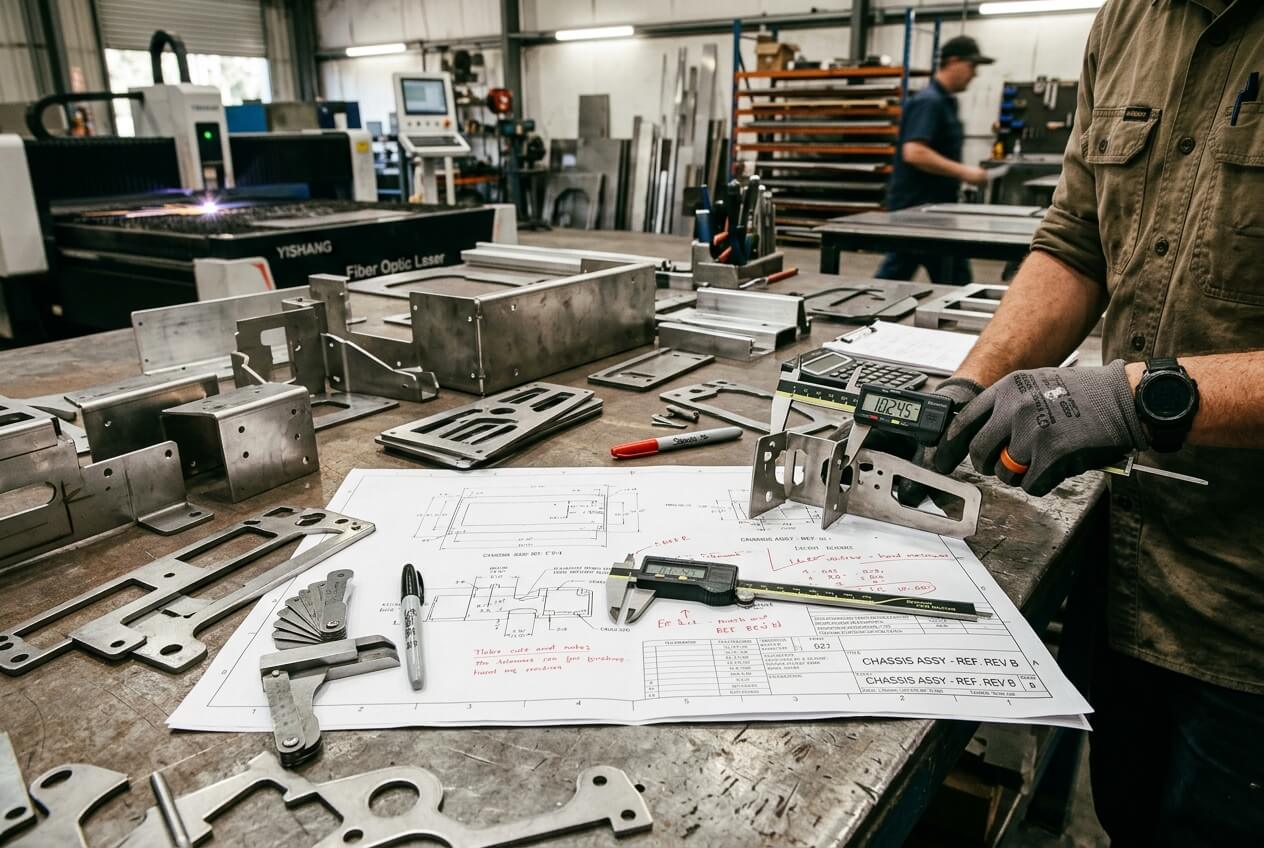
Three suppliers can receive the same enclosure drawing and return three very different prices. The gap often has less to do with the hourly rate of a fiber optic laser and more to do with the assumptions behind the quote. One supplier may price cut-only parts. Another may include deburring, inspection, bend checks, and coating allowance. A third may treat the part as a ready-to-assemble component with fit-up risk.
This creates a procurement risk that buyers often miss: the RFQ looks complete, but the production scope remains open. The lowest quote may exclude work that the assembly still needs. The higher quote may include controls that prevent rework later. Until the buyer freezes those assumptions, the comparison does not measure supplier competitiveness. It compares different jobs.
That risk matters for custom sheet metal fabrication, metal enclosures, brackets, frames, and welded assemblies. These parts rarely succeed through cutting alone. They must bend correctly, weld without excessive pull, accept coating, and fit into a larger assembly. A vague RFQ lets each supplier decide how much of that risk to price.
Where RFQ Assumptions Turn One Fiber Optic Laser Drawing Into Three Different Quotes
The problem usually starts before the supplier touches the drawing. A buyer sends a CAD file, a PDF, and a target quantity. The RFQ may mention material, thickness, and powder coating. It may not state which edges need cosmetic quality, which dimensions control assembly, or whether the price must include post-cut cleanup. The supplier then fills those gaps with internal assumptions.
Those assumptions shape the entire quote. A cut-only quote focuses on nesting, machine time, assist gas, and scrap. A fabrication quote adds bending, tapping, welding, hardware insertion, grinding, coating preparation, and inspection. A ready-to-assemble quote goes further. It prices fit checks, packaging protection, coating risk, and possible rework before shipment.
The quote gap often hides in secondary work
A fiber optic laser can cut accurate profiles, but many sheet metal parts fail after cutting. Burrs can block fasteners. Slots can shift after bending. Weld heat can pull a frame out of square. Powder coating can reduce hole clearance or make mating faces too tight. If the RFQ only asks for laser cutting, one supplier may exclude these downstream risks.
Consider a 2 mm steel control cabinet side panel. The drawing shows cutouts, mounting holes, and a formed flange. Supplier A prices laser cutting and bending only. Supplier B includes deburring around cable entry holes, bend inspection, and masking notes for grounding points. Supplier C includes powder coating and a trial fit against a mating bracket. All three quotes may look valid, but they do not cover the same deliverable.
Procurement teams should ask each supplier to confirm the included scope in plain language. Does the quote include deburring on all edges or only handling-safe edges? Are holes checked before or after coating? Does the price include welded assembly inspection? These questions do not slow sourcing. They prevent a false low price from becoming a production dispute.
Material and finish details do not deserve attention because they are textbook categories. They matter because unclear notes let suppliers price different risk levels. A fiber optic laser process changes when the job moves from thin mild steel to stainless steel, aluminum, or copper-rich materials. Thickness, reflectivity, pierce behavior, burr formation, and heat tint all affect the real fabrication plan. If the RFQ lists only “stainless steel” or “aluminum” without grade, thickness, grain direction, or visible face, the supplier must guess. Some suppliers will quote the easiest interpretation to keep the unit price attractive. Others will quote a safer process with slower cutting, more scrap allowance, and more finishing time. The buyer then sees a price spread without seeing the assumptions that created it. A hidden mounting plate can often accept a standard laser-cut edge after basic deburring. A visible front panel cannot. The same burr, dross, or discoloration may pass on an internal bracket but fail on a cabinet door. If the RFQ does not mark cosmetic faces and visible edges, suppliers may price different acceptance standards. Finish expectations also change the cut strategy. Powder coating can hide some edge discoloration, but it can reveal poor edge preparation. Plating may magnify scratches or heat marks. Brushed stainless parts may need grain direction control and careful handling. A supplier who prices only the cutting stage may not allow enough time for these finish-driven details. Imagine a 4 mm aluminum bracket used under a visible equipment rail. The drawing defines hole locations but says nothing about edge appearance. One supplier treats the bracket as structural and quotes standard cutting, bending, and basic deburring. Another supplier notices that the bracket sits near the operator interface. They allow for cleaner edges, protected handling, and tighter inspection around slots. The second price may look inflated until the first batch arrives with rough edges near the visible rail. Now the buyer faces sorting, local cleanup, schedule pressure, and possible line stoppage. The issue did not start at inspection. It started when the RFQ failed to separate structural requirements from cosmetic requirements. Clear RFQs should tie material and finish notes to function. State the material grade, thickness, coating type, visible faces, cosmetic edges, and any areas that must remain bare. If coating thickness affects assembly, call it out before suppliers quote. Yishang can review drawings and finish expectations during RFQ preparation when buyers need help identifying these risk points before pricing. Tolerances drive cost only when they control function. Many RFQs blur that distinction. Buyers may apply a tight general tolerance across the drawing, or they may leave critical dimensions under a loose default tolerance. Both choices create risk. The supplier either prices unnecessary inspection and slow processing, or they miss the features that decide assembly fit. Fiber optic laser cutting can hold tight profiles on many sheet metal parts, but the final assembly depends on more than cut accuracy. Bending changes hole positions. Welding introduces pull. Hardware insertion can distort thin panels. Powder coating adds thickness. If the drawing does not say when a dimension applies, the supplier may inspect at the wrong stage. A flat pattern hole location may look correct after laser cutting. After bending, the same hole may shift relative to a flange. After welding, a bracket may move again. After coating, a screw may no longer pass through cleanly. If the drawing does not define the inspection condition, suppliers can quote and produce to different interpretations. For enclosures, this risk often appears around doors, hinges, latch plates, and cable entries. A door can pass flat part inspection and still bind after welding and coating. A latch bracket can meet its hole tolerance before assembly but fail to align after the frame cools. These failures create expensive late-stage fixes because the parts already carry labor, coating, and transport cost. Procurement teams should ask engineering to identify the dimensions that protect assembly. These may include hole-to-bend distances, tab-and-slot fits, hinge alignment, mating flange gaps, and post-coating clearances. Other dimensions can follow a practical general tolerance. This approach helps suppliers quote the real inspection load instead of guessing which features matter. A welded machine frame shows the consequence clearly. The RFQ may include many dimensions, but only a few control installation: diagonal squareness, mounting hole position, and interface height. If the buyer does not mark these as critical, one supplier may quote minimal post-weld inspection. Another may include fixture checks and straightening allowance. The price difference reflects risk control, not just margin. Before awarding a job, buyers should confirm whether each supplier priced inspection after cutting, after bending, after welding, after coating, or after final assembly. This single clarification often explains why quotes differ. It also reduces arguments when a part meets one stage requirement but fails the assembled function. A prototype can create false confidence. The first sample often receives extra attention from engineers, programmers, welders, and inspectors. Operators may hand-deburr edges, adjust bends, or correct weld pull to make the sample fit. That effort may not appear as a line item. When the order moves to 200, 500, or 2,000 pieces, the hidden work becomes a cost and schedule problem. This risk connects directly to RFQ assumptions. If the prototype quote and batch quote do not define the same process controls, the approved sample may not represent production. The buyer approves a part. The supplier later produces to a looser or faster method. Both sides may believe they acted reasonably because the RFQ never locked the controls that made the sample succeed. Nesting strategy can change between prototype and batch. Bend order may change to improve throughput. Welding sequence may change when fixtures enter production. Powder coating racks may hold parts differently. Each change can affect flatness, hole location, cosmetic surfaces, and assembly fit. The part number stays the same, but the production risk changes. Take a welded enclosure with a laser-cut front opening and internal mounting rails. The prototype fits after a technician adjusts two rail positions before welding. The buyer approves the sample. In batch production, the supplier follows the drawing without that adjustment because the RFQ never defined rail fit as a controlled feature. The finished enclosures now require rework before electronics can be installed. The buyer sees a quality issue. The supplier sees an undefined production assumption. The real failure sits between them. The RFQ did not convert prototype learning into batch requirements. After sample approval, buyers should capture what changed during prototyping. Did the supplier increase hole size for coating clearance? Did they alter bend reliefs? Did they add tabs for weld location? Did they grind specific edges to protect assembly? These changes must move into the drawing, inspection plan, or purchase specification before batch pricing becomes reliable. For custom sheet metal parts, prototype approval should not mean “make more of these” without notes. It should mean “make more using these confirmed assumptions.” Yishang’s prototype and manufacturability review can support this step when buyers need to align drawings, tolerances, finish requirements, and assembly expectations before releasing batch quantities. The safest quote comparison starts with one question: are all suppliers pricing the same production scope? If the answer is unclear, the buyer should not treat the lowest price as the best price. They should first remove the assumptions that distort the comparison. Start with deliverable scope. State whether the supplier should quote flat laser-cut blanks, bent parts, welded assemblies, finished components, or ready-to-assemble parts. Then define the inspection stage for critical dimensions. A hole location may need checking after bending, not only after cutting. A frame width may need checking after welding, not before coating. Next, separate functional and cosmetic requirements. Mark visible faces, exposed edges, mating surfaces, grounding areas, and no-coat zones. Do not rely on a general finish note when the part has mixed surfaces. A cabinet panel, internal bracket, and exterior cover may need different edge and handling standards even if they share the same material. Clarify material and thickness by part number. Mixed RFQs need clean line items for stainless steel, mild steel, aluminum, copper, and coated or pre-finished stock. Suppliers need this information to price cutting speed, scrap allowance, assist gas use, forming risk, and finish preparation. A single blended assumption can hide the cost of the hardest part in the package. Address prototype-to-batch control before award. Ask whether the batch price includes the same deburring, fixturing, weld sequence, inspection, and coating controls used for samples. If the supplier changed anything during prototype development, capture it in the drawing package before production release. Finally, make supplier communication part of the RFQ, not a rescue step after defects appear. Ask bidders to list assumptions, exclusions, and drawing concerns with the quote. This gives procurement a fair basis for comparison. It also gives engineering a chance to resolve unclear features before tooling, coating, assembly, and shipping costs accumulate. If your team is comparing fiber optic laser quotes for enclosures, brackets, frames, or welded assemblies, send Yishang your drawings, material requirements, quantities, tolerances, finish expectations, and assembly notes through zsyishang.com. Ask for the RFQ assumptions to be reviewed before you lock the order. A clear scope makes the quote useful and reduces the risk of paying later for work that was never priced. They often differ because suppliers price different assumptions. One may include only laser cutting, while another includes deburring, bending checks, coating preparation, inspection, and assembly fit controls. The drawing may look identical, but the quoted production scope can vary widely. Define the deliverable scope, material grade, thickness, visible edges, finish requirements, critical tolerances, inspection stage, quantity, and assembly function. Also ask suppliers to list exclusions and assumptions. This makes quote comparison more reliable. Buyers should specify the stage that matches the part function. Some dimensions matter after cutting. Others matter after bending, welding, coating, or final assembly. If the RFQ does not define the inspection stage, suppliers may price different quality controls. Prototype parts may receive extra hand fitting, manual deburring, bend adjustment, or weld correction. Batch production needs repeatable controls. Buyers should capture prototype changes in the drawing or specification before releasing larger quantities. Finish expectations affect edge quality, cleanup time, handling, masking, coating allowance, and inspection. A hidden edge may need only basic deburring. A visible or coated edge may need more controlled cutting and preparation to avoid cosmetic or assembly problems. Send 2D drawings, 3D files if available, material requirements, quantities, tolerances, finish expectations, visible surface notes, assembly requirements, and any prototype feedback. This helps the supplier quote the real fabrication scope instead of guessing.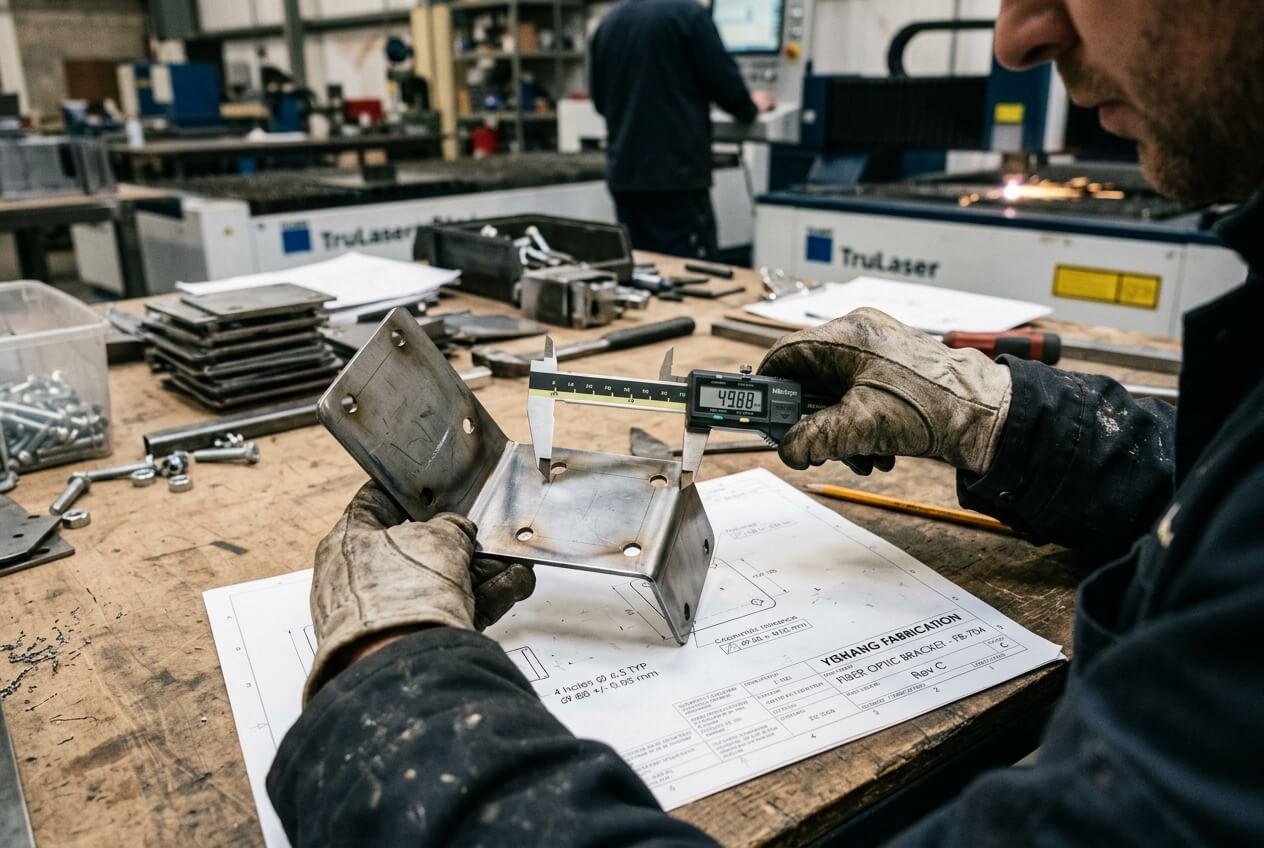
How Unclear Material, Edge, and Finish Notes Shift Cost Into Production
Visible edges change the obligation
A small bracket example with a large quote difference
Why Tolerance Notes Can Make a Low Quote Fail During Assembly
Cut dimensions and finished dimensions are not the same
Use functional tolerances instead of blanket tight tolerances
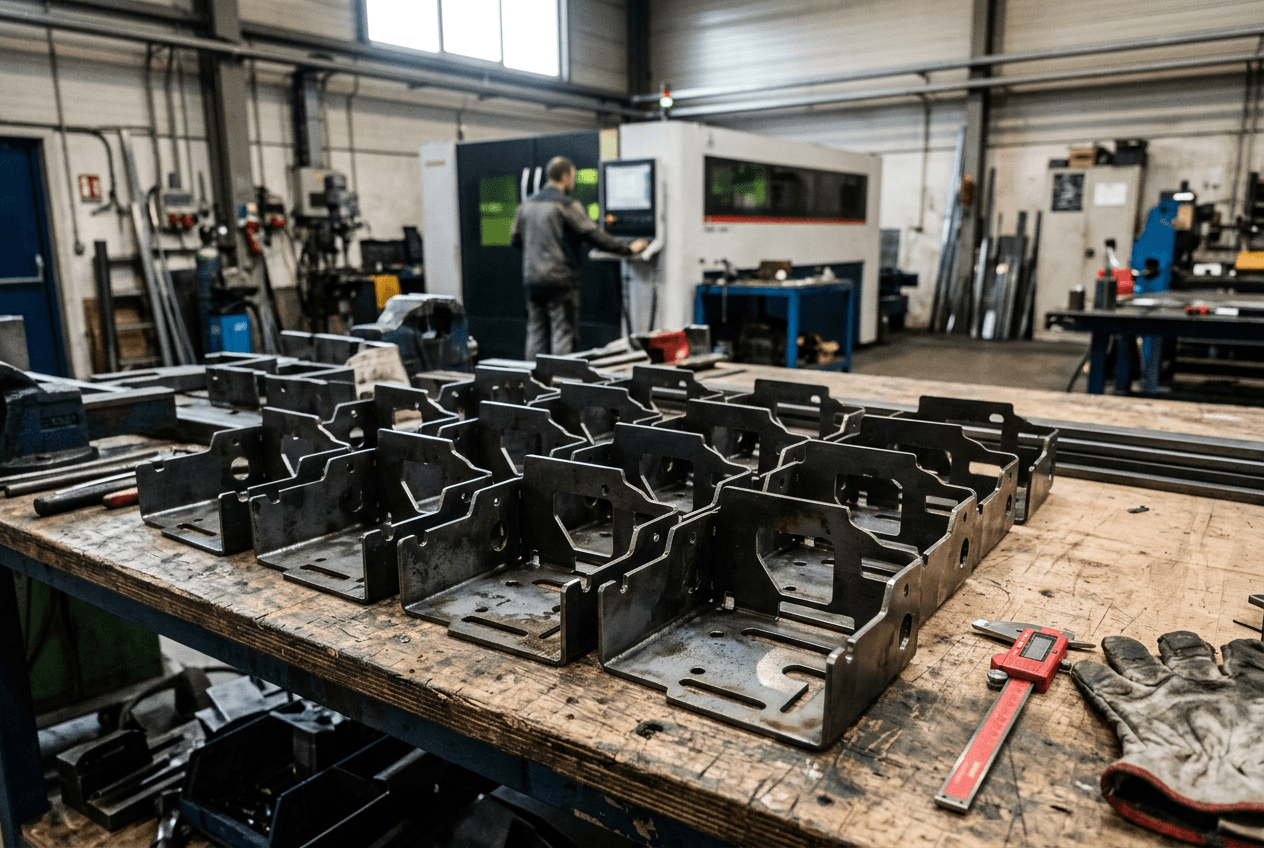
Why Prototype Approval Does Not Prove the Batch Quote Covers the Same Risk
Batch production exposes weak assumptions
Turn prototype learning into purchasing controls
What Buyers Should Clarify Before Comparing Fiber Optic Laser Supplier Quotes
Frequently Asked Questions
Why can fiber optic laser quotes differ for the same sheet metal drawing?
What RFQ details reduce the risk of a misleading low quote?
Should buyers specify tolerances after cutting or after final fabrication?
Why does prototype approval fail to guarantee batch consistency?
How do finish expectations affect fiber optic laser cutting quotes?
What should buyers send when requesting a quote for metal enclosures or welded assemblies?