
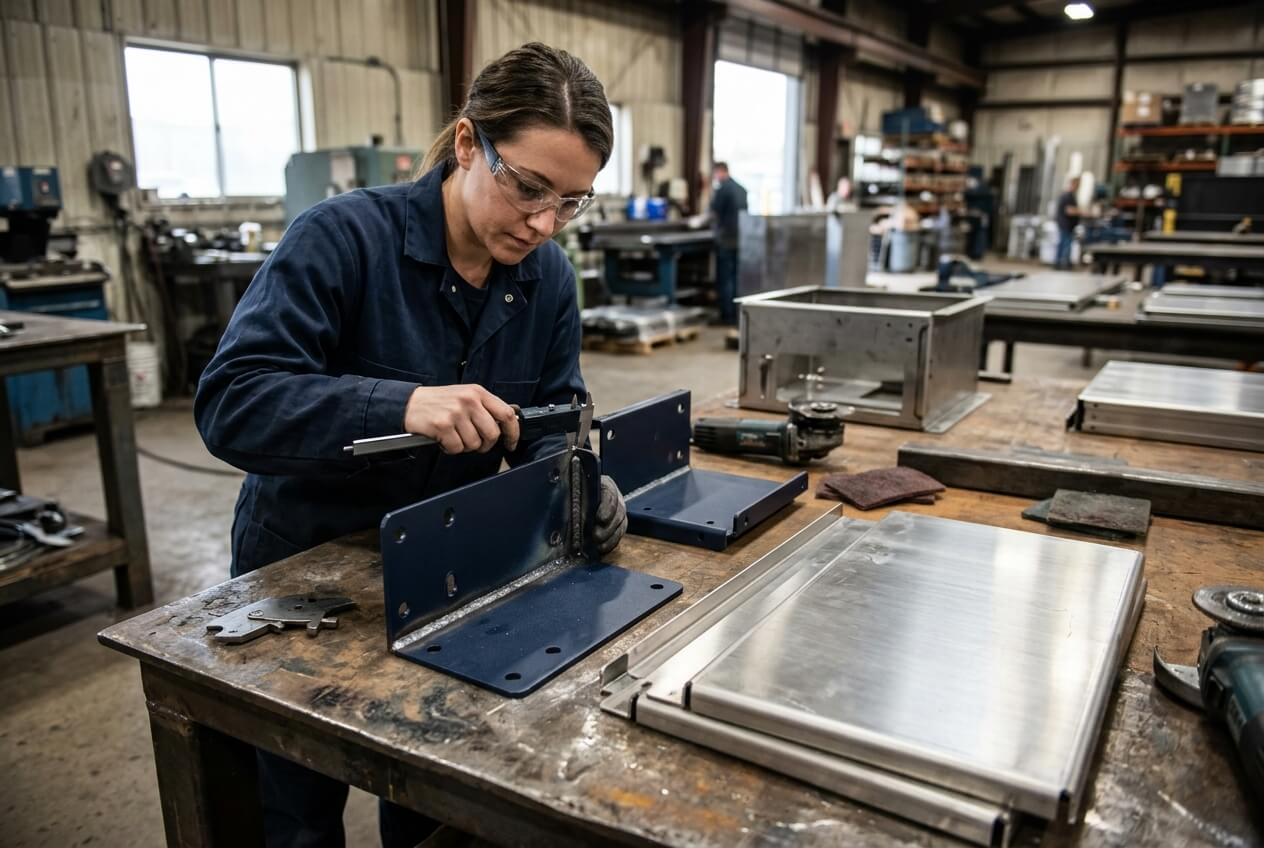
An OEM can receive three prices for the same welded cabinet and still compare three different jobs. The drawing may call out carbon steel, weld symbols, black powder coating, and a quantity. Yet it may not define which flux cored arc welding seams must look cosmetic after coating.
That gap creates the main procurement risk in this article: undefined post-weld finish acceptance. The problem starts before the first weld. One supplier quotes basic slag removal and coating. Another includes visible spatter removal, blending, masking, and extra inspection. The lowest price may only look competitive because it leaves finish risk inside the buyer’s inspection room.
For custom sheet metal fabrication, this risk affects welded enclosures, brackets, equipment frames, display structures, and powder coated assemblies. It also touches tolerance, assembly fit, cost, and lead time. A weld that meets strength requirements can still cause a coating rejection, gasket leak, door rub, grounding failure, or customer complaint.
The real risk is not FCAW—it is undefined post-weld finish acceptance
Flux cored arc welding can suit heavier sheet metal parts, frames, bases, brackets, and reinforced enclosures. It offers high deposition and practical productivity on structural welds. The process can also leave slag, spatter, bead edges, and cleanup marks that matter after finishing.
Buyers often treat welding and powder coating as separate purchasing lines. Production does not work that way. Weld cleanup affects coating adhesion. Grinding affects flatness. Coating thickness affects hole size, door gaps, and mating faces. A vague RFQ lets each supplier decide where to stop.
A note such as powder coat black gives the painter a color target, not a welded finish standard. It does not tell the fabricator whether a front seam needs flush grinding. It does not define whether small spatter remains acceptable on hidden faces. It also does not say whether threaded holes, grounding areas, or gasket seats need masking.
This is where quote distortion begins. A supplier may assume structural acceptance: remove slag, clean obvious spatter, and coat the assembly. Another may assume cosmetic acceptance: dress visible welds, blend transitions, sand exposed faces, protect holes, and inspect after coating. Both suppliers can believe they followed the RFQ.
Yishang often sees this issue when buyers send drawings for metal enclosures or welded frames without surface zoning. A short clarification before quotation can prevent a long dispute after coating.
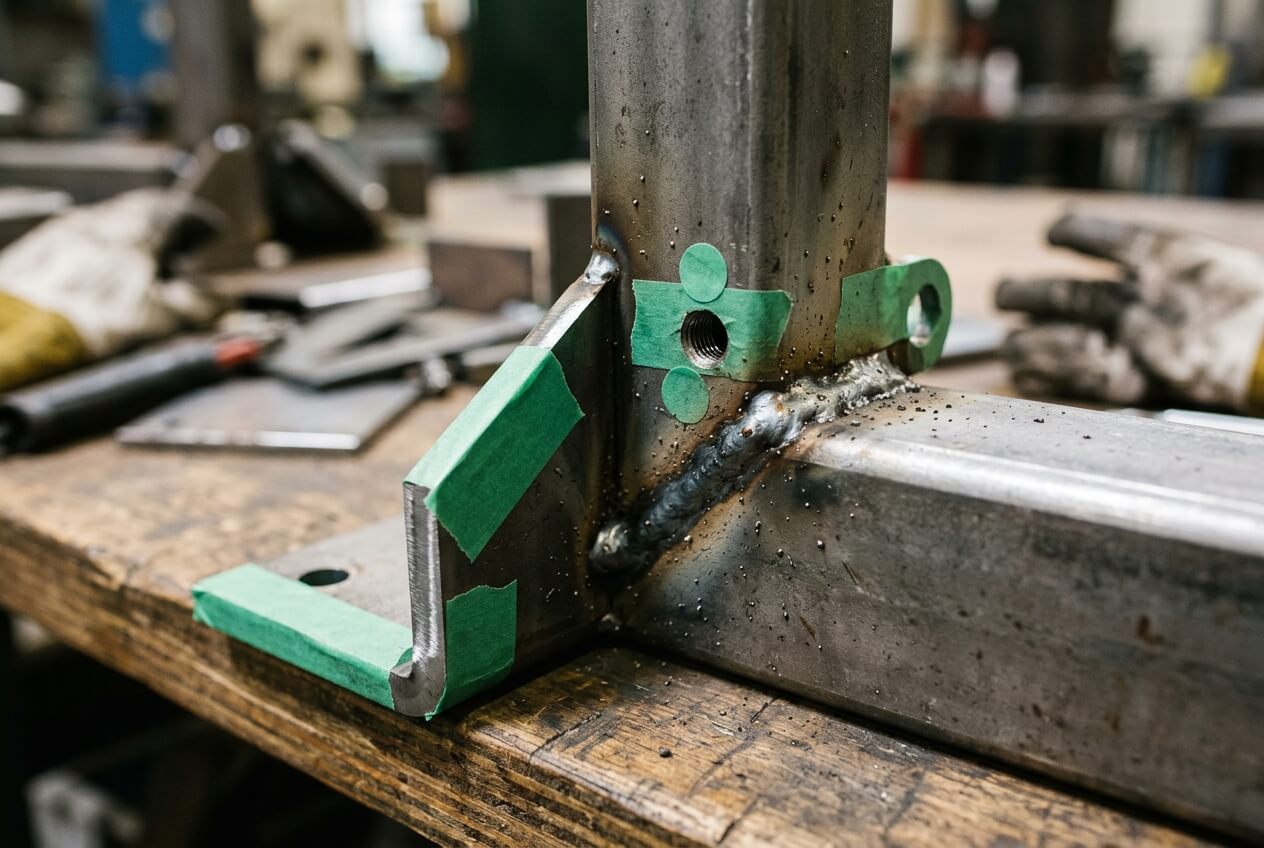
How one missing finish note turns three quotes into three different jobs
Price differences in flux cored arc welding quotes rarely come from welding time alone. They often come from cleanup scope. Slag removal, spatter removal, grinding, sanding, masking, rework allowance, inspection distance, and packaging can change the real unit cost.
Structural welds and cosmetic welds need different pricing assumptions
A hidden base weld may only need proper slag removal, sound fusion, and corrosion preparation. A front cabinet seam may need a smooth transition before powder coating. A display rack upright may need consistent appearance at eye level. If the drawing treats all welds equally, suppliers either overprice hidden areas or underprice visible ones.
Consider a powder coated equipment cabinet. The lower frame uses FCAW because the section is thick and carries load. The front edge remains visible when the door opens. If the RFQ does not mark that front edge as a cosmetic area, the supplier may leave a safe bead with minor dressing. After coating, the bead profile and spatter show clearly. Incoming inspection rejects the cabinet, even though the weld may satisfy strength needs.
The consequence chain is simple. The RFQ omits the visible zone. The quote excludes cosmetic dressing. Production follows the quoted scope. Powder coating magnifies the cleanup marks. Inspection applies a higher expectation than the supplier priced. The buyer then faces sorting, rework, recoating, and schedule pressure.
Vague words create expensive arguments
Terms such as clean weld, smooth finish, and good appearance do not control risk by themselves. They need measurable or visual reference points. Buyers can use A-surface and B-surface markings, approved samples, close-up photos, inspection distance, and clear notes for weld dressing.
A practical RFQ might state that exposed exterior welds need blended grinding before powder coating, while internal support welds may remain as welded after slag and spatter removal. It might also state that no raised spatter may appear on customer-facing faces after coating. That language helps suppliers quote the same job instead of guessing the buyer’s standard.
Where powder coating exposes FCAW cleanup assumptions during assembly
Powder coating does not hide FCAW cleanup differences. It often reveals them. Raised spatter becomes a raised coating defect. Slag residue can affect adhesion. Deep grinding scratches can telegraph through gloss or semi-gloss finishes. Heavy grinding can also create panel waves.
Assembly adds another layer of risk. Coating thickness around holes, slots, hinge points, grounding studs, and mating pads can change fit. A welded assembly may pass dimensional inspection before coating and fail during final assembly.
Fit areas need finish rules, not only tolerances
Tolerances on drawings usually control cut size, bend location, hole position, and overall dimensions. They do not always control post-coating clearance. A mounting hole with a tight screw fit can close after powder builds on the edge. A threaded insert can clog. A grounding point can lose conductivity. A door gap can shrink after coating on both surfaces.
For example, a battery enclosure may use welded steel brackets inside a powder coated outer housing. The brackets align removable panels and support a gasketed lid. If weld spatter remains near a mounting pad, grinding may happen late. If the RFQ does not define the final flatness and coating control on that pad, the panel may rock after assembly. The buyer sees an assembly defect, not a welding defect.
Another example involves a retail display frame. FCAW may work well for load-bearing crossbars, but the front hooks sit in customer view. A supplier who quotes only structural cleanup can produce safe welds that look rough after coating. A supplier who quotes cosmetic dressing will spend more time before the coating line. Without a written finish standard, the buyer may choose the lower price and pay later through rework or rejected store fixtures.
Procurement teams should connect finish notes to assembly function. Mark gasket seats, sliding surfaces, hinge zones, grounding points, threaded holes, and mating pads. State whether each area needs masking, post-coating cleaning, coating thickness control, or gauge inspection. This keeps finish expectations tied to performance, not opinion.
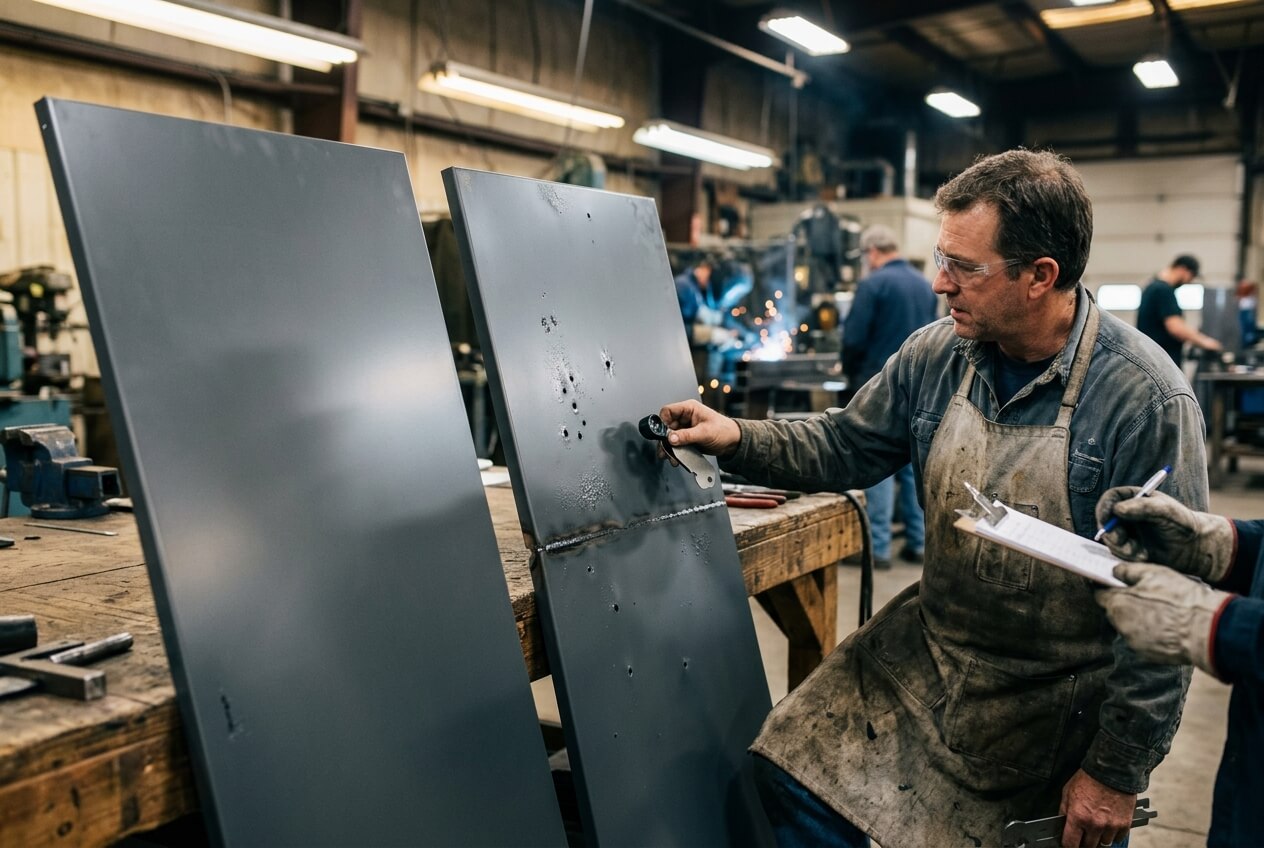
Why a clean prototype can still fail in batch production
A prototype can hide RFQ ambiguity. Teams often give samples extra attention. A welder removes more spatter. A grinder blends a visible seam more carefully. A painter handles one part with more caution. The buyer approves the sample, but the approval does not always define the batch standard.
Production exposes the missing details. Operators need repeatable instructions, not memory. If the approved prototype had flush-ground front welds, the drawing should say so. If internal welds remained as welded, that should also appear in the record. If holes worked after coating, the production plan should state whether the holes were masked, chased, or simply within a generous clearance.
Batch consistency also depends on heat input, weld sequence, fixture control, and grinding pressure. FCAW on heavier sections can introduce distortion when those sections attach to thinner sheet metal. A prototype door may close cleanly, while a batch of cabinets rubs near a hinge weld. The difference may come from weld size, cleanup pressure, or coating buildup, but the buyer only sees delayed assembly.
Sample approval should become controlled production criteria
A useful approval record includes photos, but photos alone rarely protect the buyer. Add the material grade, sheet thickness, weld size, visible-surface markings, dressing level, coating thickness range, masking locations, and inspection method. Include any functional checks, such as door closure, fastener fit, grounding continuity, or gasket compression.
Packaging also belongs in this discussion. Powder coated welded assemblies are heavy and often have protruding brackets or corners. Parts can pass finish inspection and arrive scratched because the RFQ ignored separators, corner protection, pallet stacking, or abrasion control. Finish rejection then becomes a logistics argument instead of a fabrication problem.
Yishang can review prototype comments against production drawings when buyers want the approved sample to become a repeatable batch requirement. This matters most when the first order moves from a few samples to hundreds of powder coated welded assemblies.
What to lock before comparing flux cored arc welding prices
Buyers do not need to over-specify every hidden weld. They need to remove the assumptions that distort quotes and cause coating rejections. The RFQ should let suppliers price the same finish risk, the same assembly risk, and the same inspection standard.
Start with the drawing package. Mark visible and hidden surfaces. Separate structural welds from cosmetic welds. Define where welds may remain as welded, where they need blending, and where they need flush grinding. Add notes for spatter acceptance after coating, not only before coating.
Next, connect finish to function. Identify mounting holes, threaded inserts, slots, grounding points, hinge areas, gasket seats, and sliding faces. State the required tolerances after welding and finishing where fit matters. If coating thickness can affect assembly, specify masking or post-coating treatment.
Then address cost and lead time honestly. Cosmetic grinding, extra sanding, masking, coating inspection, local repair, recoating, and protective packaging all add labor. They may still cost less than a rejected batch. A supplier cannot price these tasks accurately if the RFQ only lists material, quantity, and color.
Supplier communication should focus on assumptions. Ask what cleanup the quote includes. Ask which surfaces the supplier considers cosmetic. Ask how the team will inspect powder coated weld areas and protect finished parts in transit. Request photos of similar enclosures, brackets, frames, or welded assemblies when appearance matters.
If your RFQ includes flux cored arc welding, powder coated visible surfaces, tight mounting holes, gasket areas, or cosmetic cabinet faces, send Yishang the drawings before you approve the final quote. Include material requirements, quantities, tolerances, weld symbols, finish expectations, cosmetic face markings, masking notes, assembly concerns, photos, and prototype comments. Clear RFQ inputs help align weld cleanup, coating control, cost, and inspection before production starts.
Frequently Asked Questions
Why do flux cored arc welding quotes vary so much for powder coated parts?
Many quotes include different cleanup assumptions. One supplier may price only slag removal and basic coating preparation. Another may include visible spatter removal, blended grinding, masking, and post-coating inspection. The RFQ must define the finish acceptance standard before price comparison.
Should every FCAW weld on a sheet metal enclosure be flush ground?
No. Flush grinding every weld adds cost and can increase distortion risk. Use it where appearance, sealing, clearance, or mating contact requires it. Hidden structural welds often need sound welding, slag removal, spatter control, and proper coating preparation instead.
How can buyers define cosmetic weld areas on drawings?
Mark A-surfaces, customer-facing faces, door openings, exposed rack uprights, front panels, and visible cabinet edges. Then state the required weld condition for each area. Photos, approved samples, and inspection distance notes can reduce subjective disputes.
What coating details affect assembly fit after FCAW fabrication?
Powder coating can build up around holes, threads, hinges, gasket seats, grounding points, and mating pads. Buyers should state where masking, coating thickness control, post-coating chasing, or gauge inspection is required.
Why can an approved prototype fail to represent batch production?
Prototype parts often receive extra manual attention. If the buyer does not document weld dressing, masking, coating range, inspection method, and packaging, production operators may follow different assumptions during the batch run.
What should buyers send for an FCAW and powder coating RFQ review?
Send drawings, material requirements, quantities, tolerances, weld symbols, finish expectations, visible-surface markings, masking requirements, assembly notes, and any prototype photos or samples. These inputs help clarify finish acceptance before quotation.