
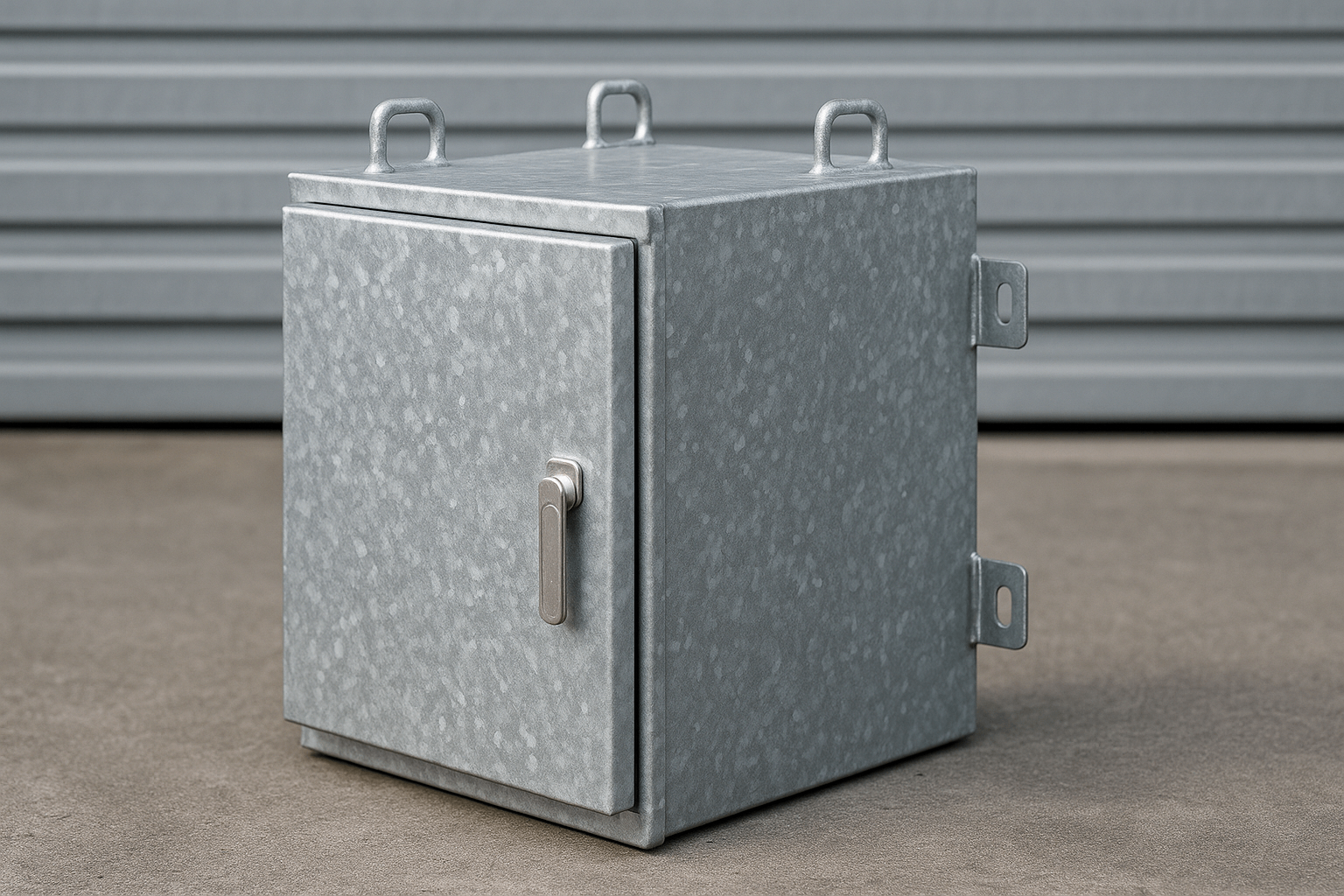
Introduction: How a Component Decision Impacts Project ROI
In industrial and infrastructure projects, enclosure selection directly affects uptime, maintenance planning, and long-term capital efficiency. A galvanized steel enclosure is not just a sheet metal product. It is part of the project’s risk-control strategy.
For procurement teams, the wrong enclosure choice can lead to early corrosion, repeated field service, unplanned replacement, and avoidable warranty exposure. The right choice improves asset protection, lowers maintenance burden, and supports stronger lifecycle ROI.
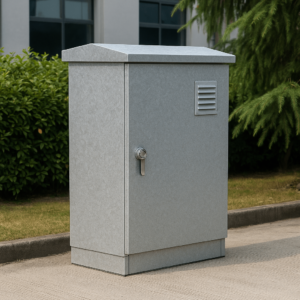
This matters especially in outdoor electrical systems, telecom deployments, utilities, and control-cabinet applications where enclosure failure can quickly become an operational problem rather than just a component issue.
Chapter 1: The Foundational Decision: How Galvanizing Process Dictates Asset Performance
Not all galvanized steel enclosures deliver the same field performance. The galvanizing method itself changes how the zinc layer protects the base steel, how long that protection lasts, and how the enclosure behaves after installation damage, handling wear, or environmental exposure.
The Core Distinction: Metallurgical Bond vs. Electrochemical Adhesion
The key difference is how the zinc layer is attached to the steel.
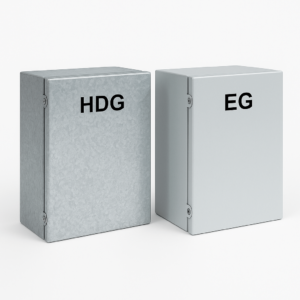
Hot-dip galvanizing creates a metallurgically bonded protective layer that becomes part of the enclosure surface system. Electro-galvanizing creates a thinner coating applied by electrochemical deposition. Both have valid uses, but they are not interchangeable when the enclosure will face outdoor weather, physical wear, or corrosive conditions.
Consequences for Project Reliability and Field Performance
For outdoor or utility-grade installations, hot-dip galvanized enclosures generally provide the stronger durability margin. Their thicker zinc protection supports longer service life and better resistance after scratches, transport marks, or normal installation damage.
Electro-galvanized enclosures can still be useful in indoor or lower-risk environments, but they usually carry more exposure risk when corrosion conditions become more aggressive.
Chapter 2: Strategic Investment Analysis: A TCO Comparison of Metal Enclosures
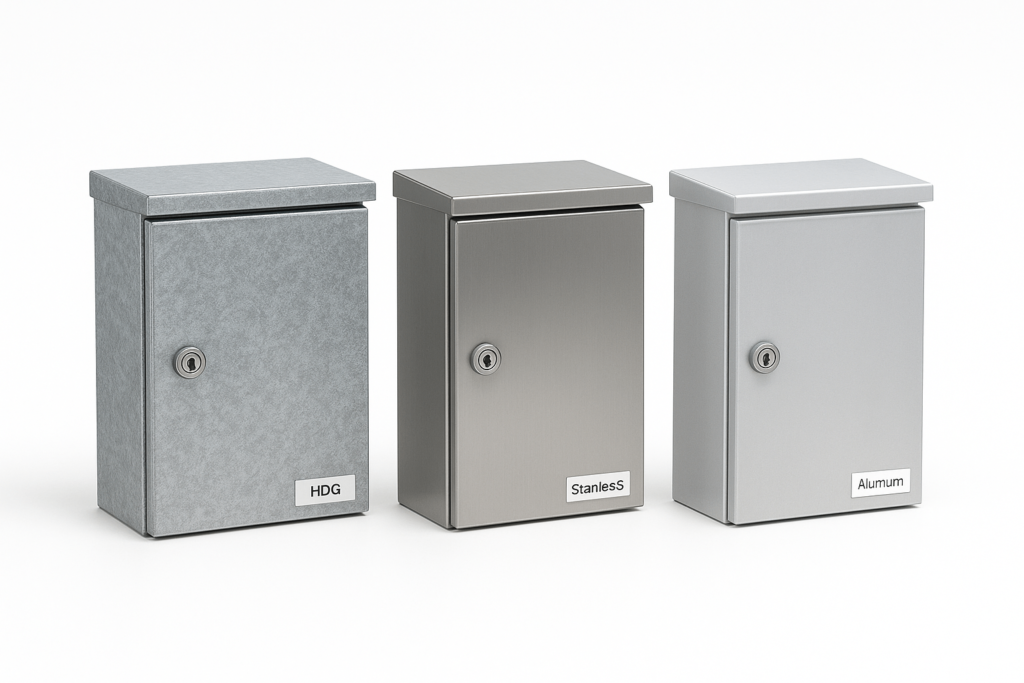
A good enclosure decision should be made through total cost of ownership, not entry price alone. Galvanized steel, stainless steel, and aluminum each solve different problems, and the best choice depends on environment, structural demand, and service expectations.
Round One: Corrosion Resistance—Matching Material to Environmental Risk
Environmental severity should drive the material decision. In mild to moderate inland conditions, hot-dip galvanized steel often gives a strong balance of cost and durability. In chloride-heavy or marine environments, stainless steel—especially 316—may justify its higher price. Aluminum performs well where low weight and corrosion resistance matter, but it is not always the best answer for mechanically demanding installations.
Round Two: Mechanical Strength—Ensuring Physical Asset Security
Mechanical strength is just as important as corrosion performance. Industrial enclosures may face vibration, handling impact, mounting loads, and field abuse. Galvanized carbon steel remains attractive because it combines useful structural strength with a cost-effective corrosion barrier.
Round Three: The Total Cost of Ownership (TCO) Calculation
For most procurement teams, the key TCO questions are practical: How long will the enclosure last in the actual environment? How often will it require maintenance? What is the cost of failure or replacement once the system is installed?
In many standard outdoor industrial environments, hot-dip galvanized steel gives one of the most cost-efficient lifecycle outcomes.
Chapter 3: The Specifier’s Guide to Mitigating Risk with Industry Standards
Specifications matter because misreading a standard can lead to the wrong enclosure being approved for the wrong environment. For buyers, standards are not paperwork. They are part of risk control.
The Protection Rating Trap: NEMA 4X Delivers More Than IP66
IP ratings and NEMA ratings are not equivalent in every respect. IP66 addresses ingress protection, while NEMA 4X adds a broader performance expectation that includes corrosion resistance. In corrosive outdoor service, that difference matters.
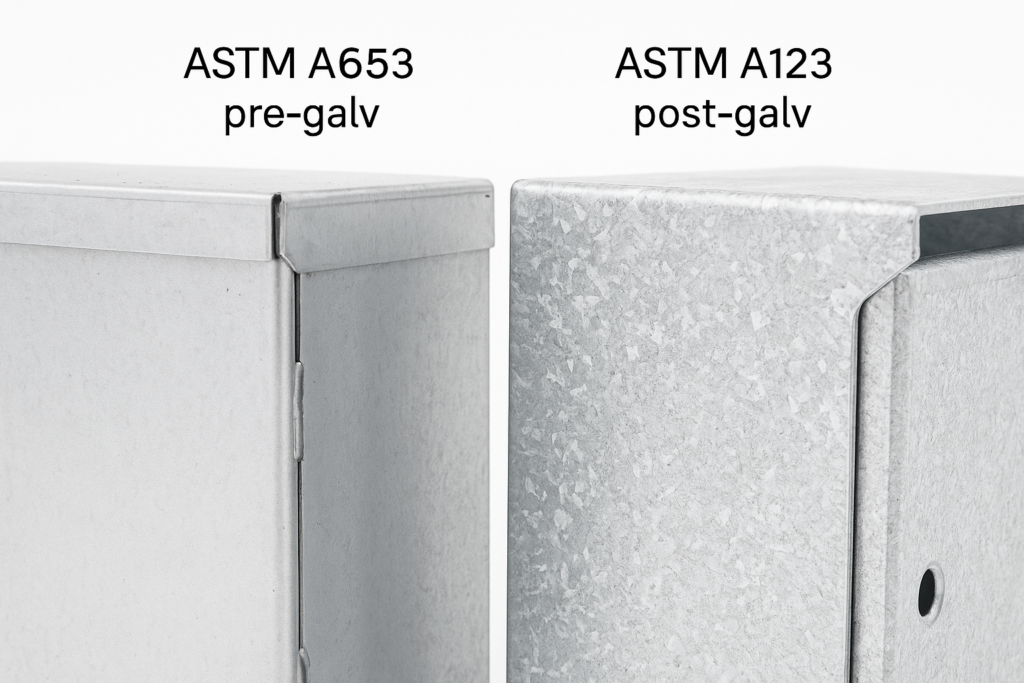
The Manufacturing Process Trap: The Critical Difference Between ASTM A653 and ASTM A123
Buyers also need to distinguish between pre-galvanized material and post-fabrication hot-dip galvanizing. If the steel is coated before fabrication, cuts and weld areas can expose raw steel unless additional protection is applied. Post-fabrication galvanizing protects the finished enclosure more completely.
The Latent Risk: Galvanic Corrosion from Dissimilar Metals
Galvanic corrosion is another risk that buyers sometimes overlook. If incompatible metals are connected without isolation, localized corrosion can accelerate and shorten enclosure life even when the base enclosure material itself is suitable.
Chapter 4: From Specification to Solution: The Value of a True Fabrication Partner
The enclosure material alone does not guarantee project success. The supplier’s fabrication capability, customization accuracy, and engineering support often determine whether the enclosure actually performs as intended in the field.
Functional Customization for Optimal Performance
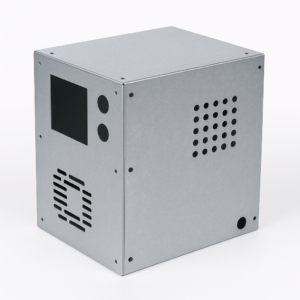
A capable supplier should be able to support cutouts, mounting provisions, cable-entry planning, thermal-management features, and internal layouts without compromising the enclosure’s required protection level.
Structural Customization and Supply Chain Integration
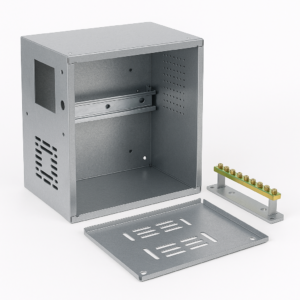
For larger programs, structural customization and integration support can reduce installation time and downstream handling. Pre-installed hardware, modular internal layouts, and coating systems matched to the deployment environment all improve project execution.
Chapter 5: Asset Lifecycle Management: Maintenance and Future-Proofing
The strongest procurement decision is one that remains effective after installation. That means planning for maintenance, damage repair, and future operating changes—not only initial delivery.
Best Practices for In-Service Maintenance and Repair
Even durable galvanized systems may need field repair after impact, modification, or wear. Buyers should confirm that acceptable repair methods, inspection expectations, and maintenance guidance are understood before deployment.
The Future of Protection: Advanced Materials and Smart Technology
New coating systems and smart-enclosure technologies are expanding what buyers can expect from industrial protection systems. For some programs, advanced coatings or sensor-enabled enclosures may improve asset monitoring and service planning over time.
Conclusion: A Procurement Framework for Choosing a Partner
The right galvanized steel enclosure is a lifecycle decision, not just a fabrication purchase. Buyers should evaluate galvanizing method, environment fit, compliance, customization capability, and total cost of ownership together.
At Yishang Metal Products Co., Ltd., we support OEM and wholesale customers with custom metal fabrication for electrical enclosures, telecom cabinets, control boxes, and other industrial metal products. With 26+ years of manufacturing experience, we support processes including laser cutting, bending, stamping, welding, CNC machining, surface treatment, assembly, packaging, inspection, and shipment.
For projects involving galvanized steel enclosures or related fabricated metal housings, we help customers align material choice, fabrication route, and export-ready quality control with real application needs.
📩 If you are evaluating galvanized steel enclosures for your next industrial, telecom, or infrastructure project, send us your drawings or requirements to discuss the most suitable manufacturing approach.