
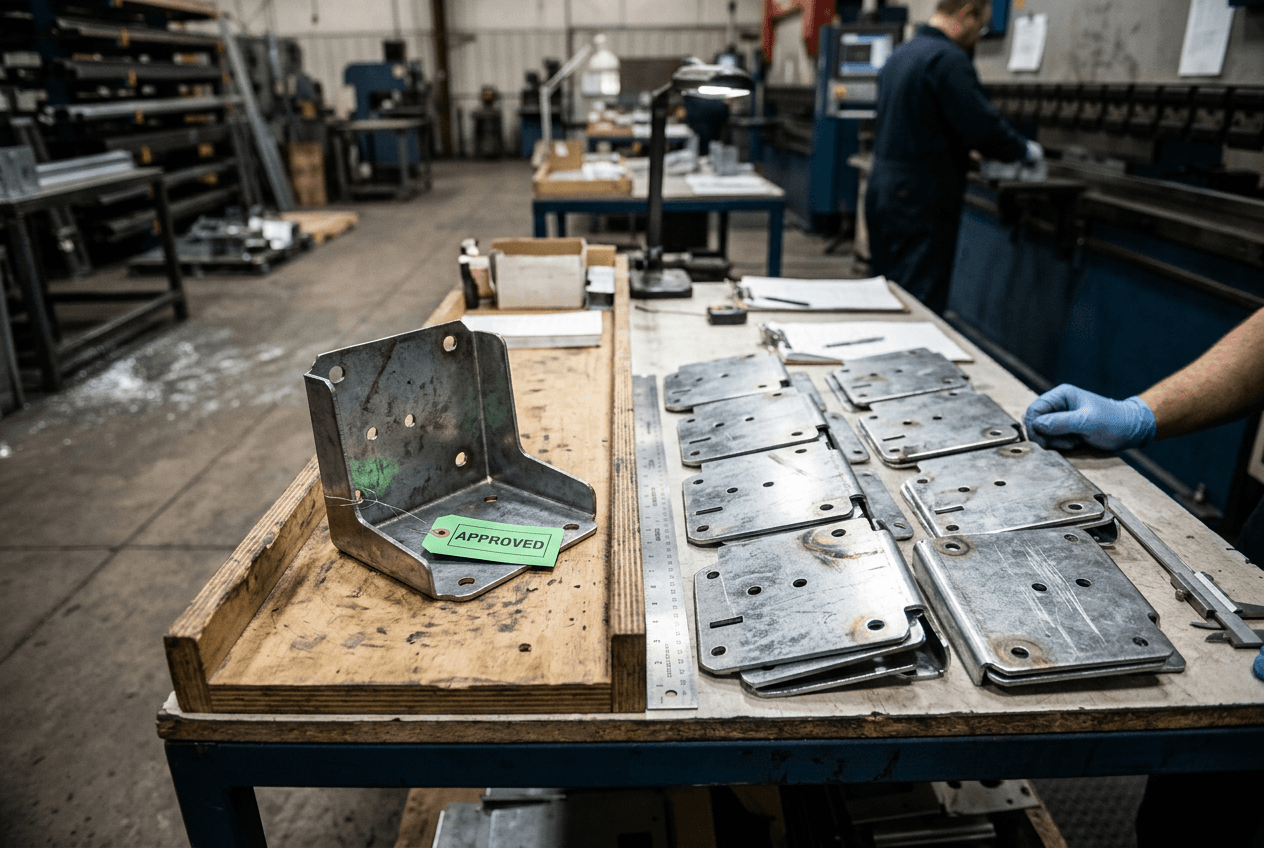
A galvanized steel metal prototype can win approval for the wrong reason. The sample may look clean because someone filed burrs, touched up welds, and straightened flanges by hand. The batch then exposes the real route: nested cutting, standard bends, normal fixture loading, and a finish process that cannot copy one-off rework. That is the buyer risk here. If the prototype does not match the production method, the quote, lead time, fit, and acceptance standard can all shift after release.
How a clean prototype hides the production route that cannot repeat
This is why a good-looking sample can mislead procurement. The prototype may include hand deburring, edge repair, or extra alignment work that never appears in the production routing. For a sheet metal fabrication project, that hidden labor can make the first sample look more precise than the batch will ever be. The buyer approves the visual result, but the supplier prices the repeatable process.
A small control cabinet shows the problem clearly. One sample fit because a technician filed the slot and nudged the hinge line into place. The batch quote later assumed standard cutting and bending only. Once production started, the mounting holes no longer lined up with the latch, and the team had to choose between rework and a second sample round.
What the sample often hides
Look for manual steps in the approval path: hand straightening, cosmetic grinding, fixture-only alignment, or zinc-rich touch-up. If those steps were needed once, they matter again in batch production. A prototype that needs special attention should never be treated as proof that the line can repeat it without cost.
The right record is not just a signed sample. It is a note that says which operations were manual, which were repeatable, and which visible defects the buyer can accept. That gives the next quote a real basis.
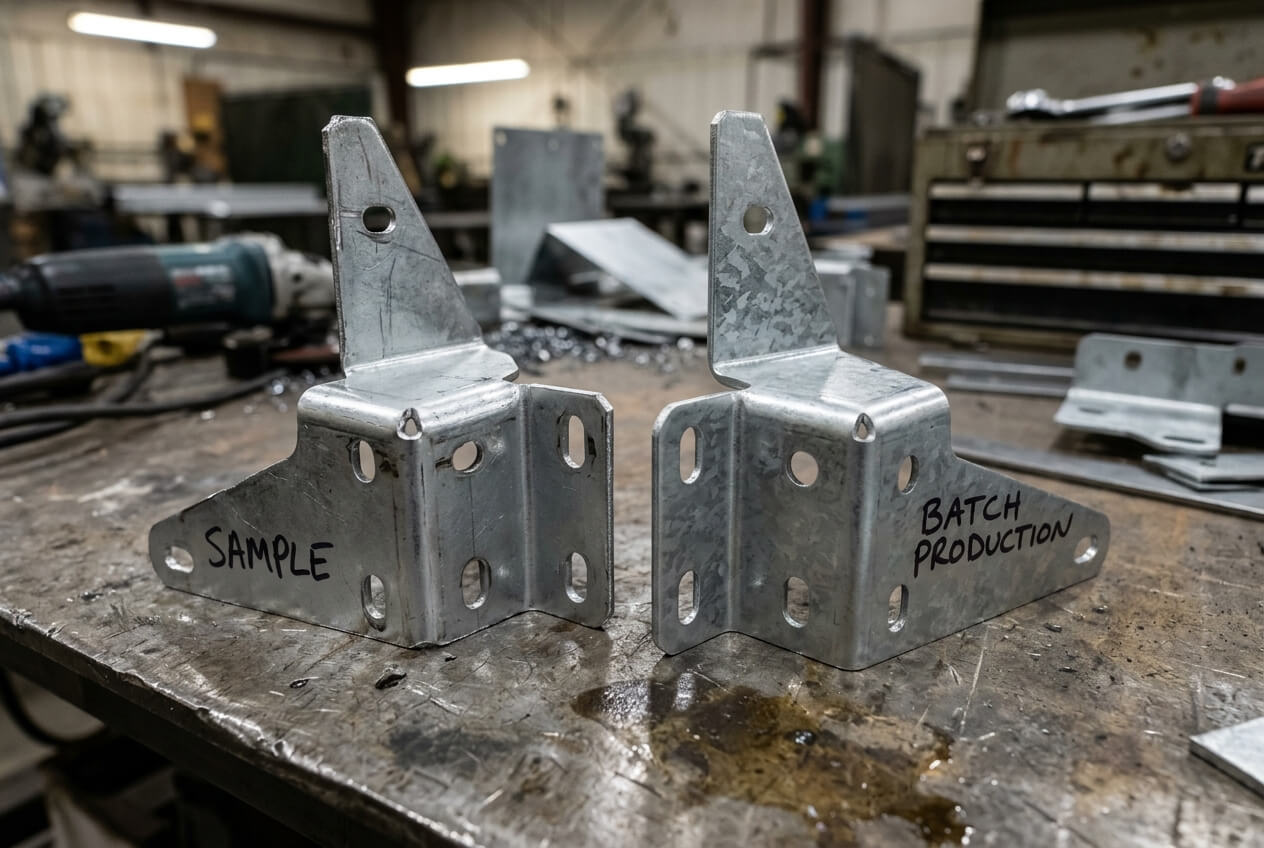
Where quote assumptions turn one sample into two different prices
Quote variation usually starts with different assumptions about the route. One supplier may read galvanized steel metal as pre-galvanized sheet with light cosmetic cleanup. Another may assume post-fabrication galvanizing, weld repair, or a topcoat over exposed edges. Both can be reasonable. They are not quoting the same job.
The difference shows up in price, lead time, and inspection. If the sample included extra finishing, that labor belongs in the quote only when the buyer writes it down. Otherwise the supplier may treat it as sample-only effort and remove it from batch pricing. The first batch then arrives with a lower price and a higher risk of visible mismatch.
The price gap usually comes from sequence, not steel
Material choice matters, but sequence changes the quote just as much. If coating happens before forming, bends can crack the finish. If coating happens after welding, the part may need more repair. If the buyer does not say which route applies, the supplier has to guess. That guess can move the price more than a small change in gauge.
A welded equipment frame is a good example. The sample looked acceptable because the fabricator cleaned every seam by hand and masked threaded inserts carefully. The buyer later sent the batch drawing without finish notes. One quote included the same touch-up labor, another did not. The lower quote looked attractive until the team realized it did not include the work that made the sample pass.
When Yishang reviews drawings for custom sheet metal fabrication, this is the first issue to check: whether the quoted process matches the sample route or only the final appearance.
Why bends, welds, and cut edges decide batch consistency
Bends, welds, and cut edges carry most of the batch risk in galvanized steel metal parts. These are the areas where coating damage shows up first and where hidden manual cleanup often lives. A prototype may survive because the operator slowed down, changed the sequence, or touched up the finish after forming. A batch will not have that freedom unless the process sheet says so.
Bends need a written radius
If the bend radius is too tight, the coating can crack or the part can spring back differently from the sample. The buyer may see a bright line, surface stress, or a small twist near the flange. That may be tolerable on a utility part, but not on a visible cabinet door or bracket face. A written radius and a clear mark standard remove the guesswork.
Welds need a repeatable cleanup method
Weld spatter, heat discoloration, and edge burn need their own rule. If the prototype was brushed, ground, or touched up by hand, the batch needs the same expectation in writing or a new acceptance standard. Otherwise the quote may exclude the labor needed to keep welded assemblies consistent.
Edge quality matters for more than looks. Burrs can interfere with gaskets, fastener seating, and paint or zinc repair adhesion. On perforated panels and mounting brackets, a slightly rough edge can become a fit problem after assembly. The defect starts as a finish issue and ends as a function issue.
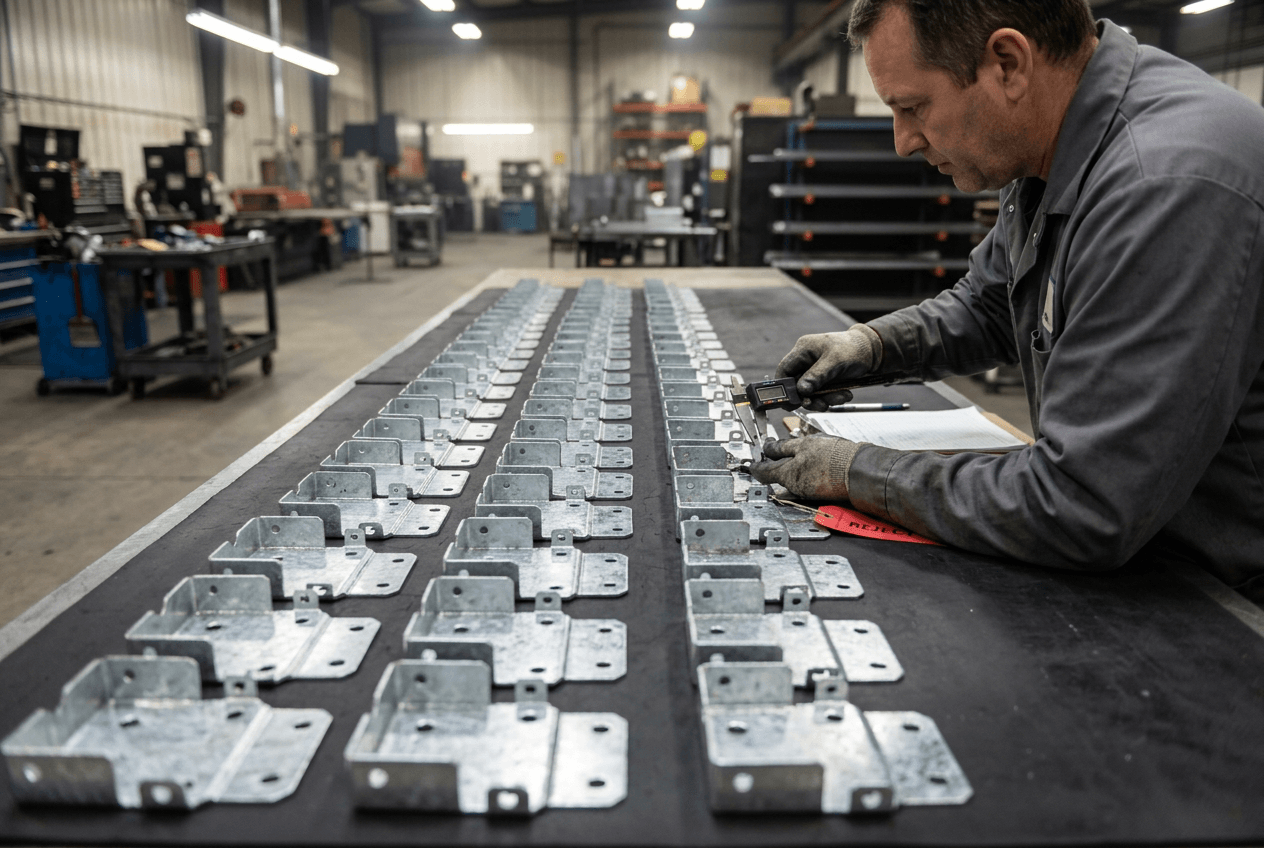
How assembly fit drifts when the prototype and batch use different setups
Assembly fit often breaks when the prototype and the batch use different setups. A sample may sit on a loose bench fixture, while production uses a faster jig or a different clamp order. That change can move holes, shift flanges, or change door reveal. Buyers notice the result as poor fit, but the source is usually process drift.
This matters most for metal enclosures, brackets, and frames that carry hardware. If a hinge line moves even a little, the latch may bind. If a mounting hole shifts, the installer will force the part into place. The part may still meet the flat drawing dimensions, yet fail in assembly because the critical datums were never defined.
Functional holes matter more than overall size
Not every dimension deserves the same tolerance. Buyers should identify the holes, edges, and faces that control assembly, then tie those features to the prototype record. That lets the supplier focus inspection where it matters and avoid spending time and cost on non-critical surfaces.
A bracket project shows the consequence chain clearly. The prototype fit the machine because the technician enlarged one slot by hand. The batch kept the published slot size. The result was a stack-up problem that delayed installation and forced a second machining step. A short note on the RFQ would have exposed the risk before pricing.
What to freeze in the RFQ before batch release
Before batch release, the RFQ should freeze the details that make the sample repeatable. Send the drawing, material requirements, quantities, tolerances, and finish expectations together. Then state whether the sample is only a visual reference or the actual production standard. That one distinction changes how the supplier prices cleanup, inspection, and rework.
Include any assembly notes for hinges, inserts, studs, gaskets, and mounting hardware. Add photos of the approved prototype if appearance matters. If the part needs the same cosmetic level after bending or welding, say so. If cut edges or repair zones can show marks, say that too. Silence forces the supplier to guess, and guessing is where batch quotes drift.
If you want a manufacturability check before release, Yishang can review the drawing set against the prototype route and point out where the quote depends on manual work, a different fixture, or a separate finishing step.
Freeze the route, not just the part number
A production-ready RFQ does more than name a part. It defines how the part got approved, what the batch must match, and which visible differences are acceptable. That keeps the commercial quote tied to the same process that the buyer signed off.
If the project is a control cabinet, frame, bracket set, or welded assembly, the final check should ask one question: can this part be built in volume without the hidden labor that made the sample look good? If the answer is unclear, the RFQ is still incomplete.
For galvanized steel metal enclosures, brackets, frames, sheet metal parts, and welded assemblies, send your drawings, material requirements, quantities, tolerances, and finish expectations to Yishang for a quick RFQ and manufacturability review.
Frequently Asked Questions
Why can a galvanized steel metal prototype pass when the batch later fails?
The prototype may include hand alignment, extra deburring, or cosmetic repair. Batch production usually removes those manual steps. If the sample approved the look but not the route, the batch can drift in fit, finish, or both.
What should an RFQ say about finish on galvanized steel metal parts?
State whether the quote should cover pre-galvanized sheet, post-fabrication galvanizing, or a galvanized part with repair or topcoat. Also define whether cut edges, welds, and bends need the same cosmetic standard as the flat faces.
Do cut edges and welds need separate acceptance rules?
Yes. Those areas change most during fabrication and often lose coating protection. A clear rule for burrs, spatter, burn marks, and touch-up keeps the supplier from guessing and keeps the batch quote closer to the real process.
When does a fixture change create assembly risk?
It matters when the fixture controls hole position, flange angle, or door alignment. A small change can turn a passing sample into a batch with latch bind, poor reveal, or mounting stack-up. Buyers should tie the critical features to the approved route.
What should buyers send before asking for a quote?
Send drawings, material requirements, quantities, tolerances, finish expectations, and sample photos if appearance matters. Add assembly notes for hinges, inserts, or gaskets. The more the supplier sees up front, the less likely the batch quote is to miss hidden work.