
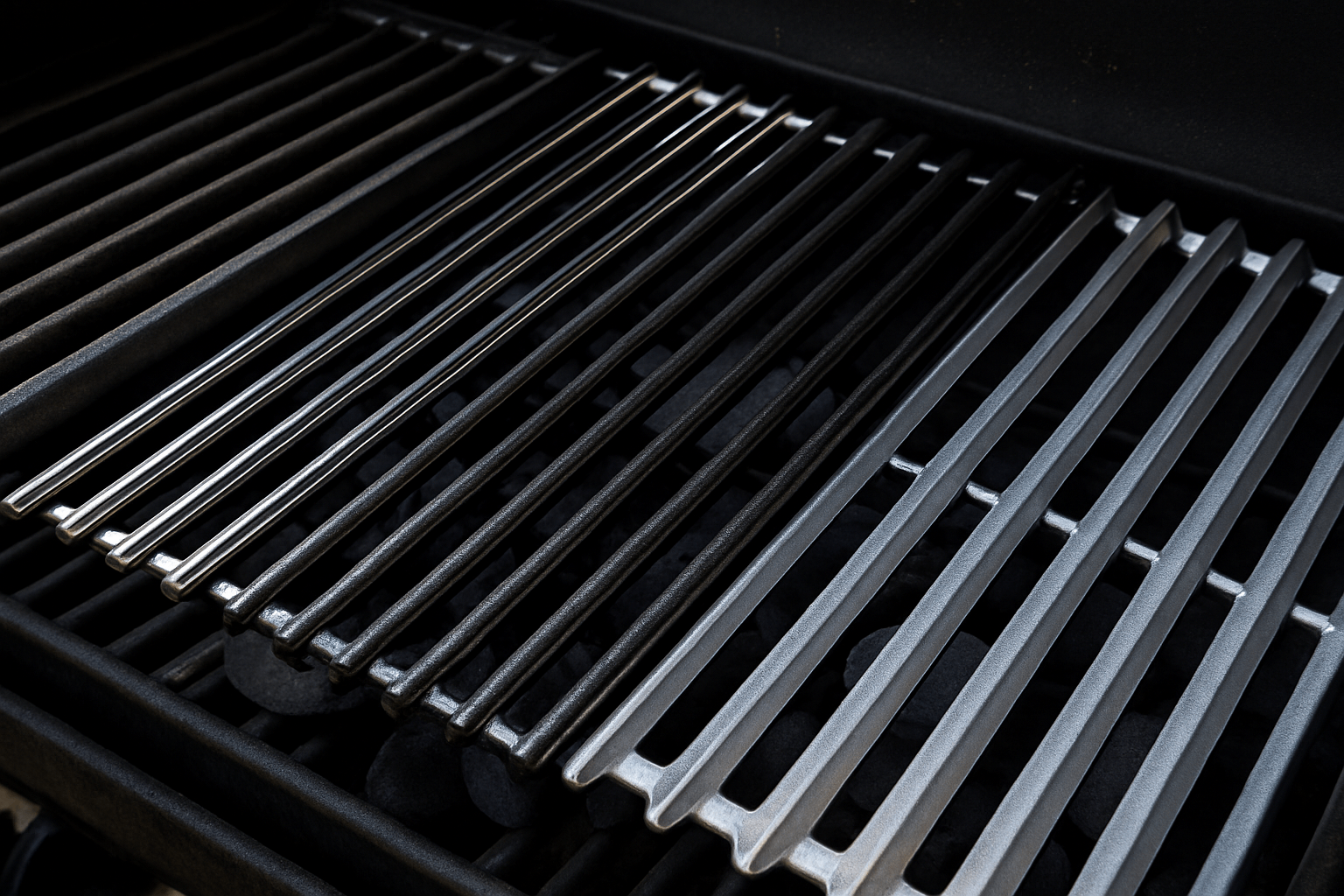
Introduction: The Critical Component Defining Product Quality and Customer Satisfaction
For procurement managers and product developers in the grilling industry, product evaluation often starts with visible details: burner output, cabinet design, lid finish, or overall appearance. Yet the long-term cooking experience is often shaped by a less glamorous component—the grill grate.
A grate is not just a surface for holding food. In practical terms, it works as a thermal engine. Its material, mass, geometry, and surface condition determine how heat is stored, transferred, and controlled. These details affect searing performance, flavor development, user maintenance, product life, and ultimately brand reputation.
This guide looks at grill grates from a manufacturing and sourcing perspective. Rather than listing materials in a generic way, it explains why certain materials perform better, where common failures occur, and how design choices can turn a basic replacement part into a premium product feature.
For OEM grill manufacturers, custom parts suppliers, and bulk purchasing teams, the goal is simple: choose grate designs that perform consistently, last longer, and support stronger customer satisfaction.
Section 1: The Foundational Science — Defining Performance Metrics for Sourcing
A good sourcing decision starts with understanding what the grate is actually supposed to do. Consumer marketing often focuses on visual grill marks, but manufacturing teams need more reliable performance metrics: heat retention, heat distribution, durability, corrosion resistance, and ease of maintenance.
The Maillard Reaction vs. Carbonization: A Critical Distinction in Flavor Science
Dark grill marks are easy to market, but they do not always indicate better cooking. From a food-science perspective, very dark lines often mean carbonization—localized burning that can create a bitter taste.
The more valuable result is the Maillard reaction, the chemical interaction between amino acids and reducing sugars that forms a deep, even brown crust and develops richer flavor. A high-quality grate should support this reaction across more of the cooking surface, not only along a few narrow contact lines.
For sourcing teams, the objective should not be “stronger marks at any cost.” It should be high, even, controllable surface heat.
The Physics of Performance: Two Pillars of Thermal Engineering
A grill grate’s performance is mainly controlled by two thermal principles:
- Thermal Mass — Heat Retention: This is the material’s ability to store heat. Heavy cast iron, for example, acts like a thermal battery. It absorbs heat and releases it steadily when cold food is placed on the surface.
- Thermal Conductivity — Heat Distribution: This describes how quickly heat moves through the material. Aluminum performs well here because it spreads heat rapidly and helps reduce hot spots.
In procurement terms, thermal mass supports strong searing, while thermal conductivity supports consistency. The best choice depends on the product’s positioning and the cooking problem it needs to solve.
Section 2: A Metallurgical Analysis of Grate Materials for Commercial Application
Material choice is the most important factor behind grate performance. Each option has advantages, but each also carries trade-offs in cost, durability, maintenance, and user experience.
Problem 1: Achieving Steakhouse-Grade Searing Performance
The Solution: Raw Cast Iron
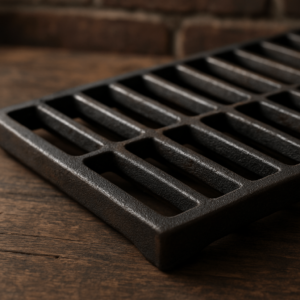
Raw cast iron remains the classic choice for strong searing. Its dense structure and high thermal mass allow it to hold heat well, which helps maintain surface temperature when food is placed on the grate.
It also develops a seasoned surface over time. This oil-bonded patina can improve release performance and protect the metal in a way that feels more integrated than a synthetic coating. That said, cast iron is not maintenance-free. Without cleaning, drying, and oiling, it can oxidize quickly.
For heavy-duty BBQ grill grates, raw cast iron is ideal when the end user values searing performance and is willing to maintain the product properly.
Problem 2: Ensuring Maximum Durability with Minimal User Maintenance
The Solution: Heavy-Duty Stainless Steel
For durability with low maintenance, 304 stainless steel is the preferred premium option. Its nickel-chromium composition forms a passive oxide layer that helps resist corrosion.
By comparison, 430 stainless steel has lower nickel content and is more prone to rust. It may fit lower-cost applications, but it is not ideal for premium grill products. Rod thickness also matters. Heavy-gauge rods of 8 mm or more improve heat retention and narrow the performance gap with cast iron, while still keeping maintenance simple.
Thin wire grates, typically 3–5 mm, do not have enough mass to store heat effectively. For commercial BBQ replacement grates, solid thick 304 stainless rods offer a better balance of durability, performance, and user satisfaction.
Problem 3: Mitigating Common Grill Design Flaws (Hot Spots & Flare-Ups)
The Solution: Hard-Anodized Aluminum
Aluminum’s strength is heat distribution. Its high thermal conductivity helps spread heat quickly and evenly, which is useful for grills with uneven burner layouts or frequent hot spots.
Hard-anodized aluminum adds a bonded oxide layer that makes the surface durable, non-reactive, and rust-proof. When combined with a solid grease-barrier design, it can also reduce flare-ups and make cooking more controlled.
This makes hard-anodized aluminum attractive for aftermarket or upgrade products, especially where buyers want laser-cut metal grill parts that solve real user complaints rather than simply replace the original grate.
Problem 4: Avoiding Premature Product Failure and Customer Complaints
The Truth About Porcelain-Enameled Grates
Porcelain-enameled grates can perform well at first. They offer a smooth surface and initial non-stick convenience. The problem is long-term durability.
The enamel coating is brittle. It can crack under thermal stress or chip from tool impact. Once the coating is damaged, moisture reaches the core metal and rust begins underneath. Over time, this leads to flaking, surface breakdown, and early replacement.
Because porcelain damage cannot really be repaired, this material can create warranty pressure and customer dissatisfaction. Procurement teams should evaluate the target market carefully before choosing it.
| Feature | Raw Cast Iron | 304 Stainless Steel (Heavy Rod) | Hard-Anodized Aluminum | Porcelain-Enameled Cast Iron |
| Primary Alloy | Iron, >2% Carbon | Iron, Chromium, Nickel | Aluminum | Iron, >2% Carbon (Core) |
| Key Metric | High Thermal Mass | High Corrosion Resistance | High Thermal Conductivity | Non-Stick (Initial) |
| Performance | Excellent Searing | Good Searing, Reliable | Excellent Searing, Even Heat | Excellent Searing (when intact) |
| Durability | Very High (with maintenance) | Very High | Very High | Low to Medium |
| Common Failure Mode | Surface Rust (if neglected) | Pitting (in extreme conditions) | N/A (does not rust) | Chipping, Flaking, Rust Creep |
| End-User Maintenance | High (Requires Seasoning) | Low | Low | Medium (Requires Gentle Handling) |
| B2B Value Proposition | Ultimate Performance | Durability & Reliability | Problem-Solving & Innovation | Initial Convenience |
Section 3: Advanced Design Engineering for Superior Performance
Material is only part of the story. The physical shape of the grate also affects heat transfer, flare-up control, flavor development, and perceived product quality. Smart design can turn the same material into a better-performing product.
Flavor vs. Control: The V-Groove vs. Round Rod Showdown
- Round Rods — The Flavor-Focused Design: Round rods allow drippings to fall toward the flame and vaporize, which can enhance smoky flavor. The downside is flare-up risk, especially with fatty foods.
- V-Groove Grates — The Control-Focused Design: V-groove grates use angled channels to direct grease away from direct flame. This reduces flare-ups and improves cooking control. The smoke flavor may be slightly less intense, but the design is safer and more predictable for commercial or OEM applications.
The Reversible Grate Advantage: Two Surfaces, Twice the Versatility
Reversible grates add value by giving users two cooking surfaces in one part. One side may have a raised profile for stronger presentation marks, while the flatter side supports more even browning for delicate foods.
For OEM grill parts suppliers and wholesale BBQ grill accessory buyers, this is a practical way to increase product versatility without adding a separate accessory.
Section 4: Product Lifecycle and Sourcing Strategy
For wholesale buyers, a grate is not only a production item. It is also part of the product lifecycle. Material selection, user maintenance, replacement timing, and aftermarket positioning all affect long-term value.
The Strategic Advantage: Aftermarket vs. OEM
OEM replacement parts often copy the original design. That may be enough for basic replacement, but it does not always create a performance upgrade.
Aftermarket grates made from upgraded 304 stainless steel or denser cast iron can offer better durability and user satisfaction. This is why wholesale customers searching for custom grill grate suppliers or bulk stainless steel BBQ grates often look for partners who can improve performance, not just reproduce the original part.
End-User Maintenance: Impact on Product Longevity
Clear maintenance guidance helps extend product life and reduce complaints.
- Cast Iron: Clean, dry, and oil regularly.
- Stainless Steel: Brush clean while hot.
- Porcelain-Enameled: Handle gently and avoid abrasive tools.
These instructions may seem simple, but they can reduce unnecessary returns and improve end-user satisfaction.
Identifying Material Failure: When to Replace
Timely replacement protects safety, performance, and brand image. Common signs of grate failure include:
- structural rust;
- chipped porcelain coating;
- cracks or warping;
- carbon buildup;
- uneven cooking.
For distributors and aftermarket suppliers, replacement guidance can also support repeat sales without feeling overly promotional.
Conclusion: A Strategic Decision in Material Engineering and Brand Reputation
Grill grate selection is a material and design decision with long-term impact on product performance, customer satisfaction, and brand reputation.
Raw cast iron supports powerful searing. Heavy 304 stainless steel provides durability with low maintenance. Hard-anodized aluminum helps solve heat distribution and flare-up problems. Porcelain-enamel offers convenience, but buyers should be realistic about its durability limits.
For OEM manufacturers, distributors, and bulk BBQ accessory buyers, the best grate is not simply the cheapest or heaviest option. It is the one that matches the target user, cooking style, maintenance expectations, and product positioning.
YISHANG supports custom grill grate and grill accessory fabrication for bulk orders, helping buyers evaluate material choice, grate structure, and manufacturability before production.