
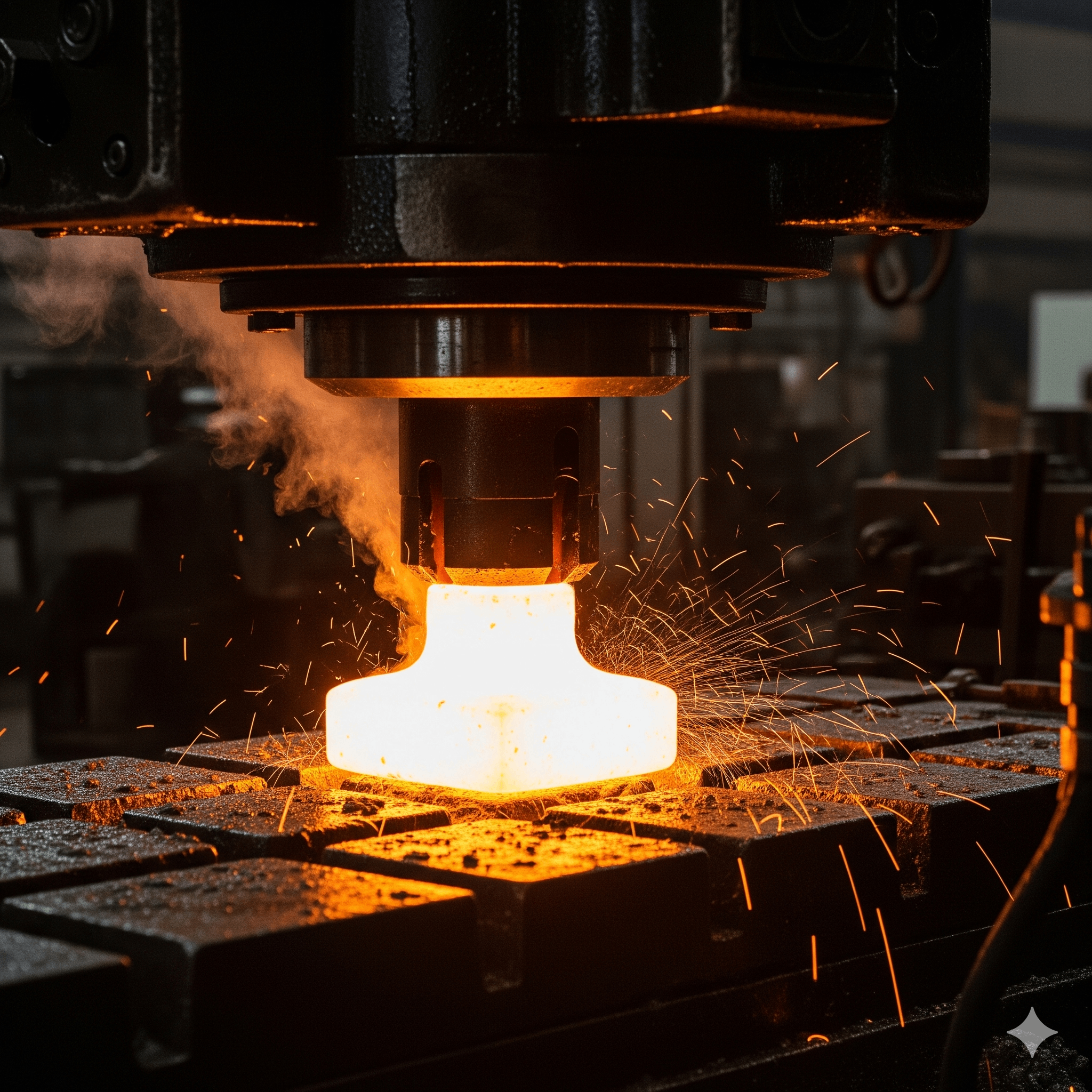
In the high-stakes world of global industrial procurement, a minor oversight in a metal component’s microstructure can lead to a catastrophic—and expensive—field failure. As overseas wholesale buyers and Tier-1 suppliers grapple with the rising demands of renewable energy, automotive infrastructure, and heavy-duty hardware, the conversation has moved far beyond just getting the dimensions right. Today, the real focus is on absolute internal structural integrity.
At YISHANG, we’ve seen firsthand that for a seasoned procurement manager, choosing a forging partner isn’t just about comparing quotes. It’s about managing long-term risk. This guide peels back the technical layers to show why hot forging remains the preferred choice for durable industrial infrastructure. By looking at how thermal dynamics and mechanical stress work together, you can better align your sourcing strategy with the performance standards the market expects in 2026.
The Metallurgical Soul: Getting the Most Out of Metal Recrystallization
The true strength of a forged part isn’t built on the press—it starts at the molecular level. It’s all about the physics of Metal Recrystallization. Whether you’re working with a stainless steel enclosure made of 304/316 or high-strength Aluminum 6061, every alloy has a “sweet spot”—a temperature threshold where the internal crystal lattice becomes mobile without turning into liquid. This state of Thermoplasticity is where the magic happens.
This process of hot shaping allows us to create complex geometries that would simply snap or crack if handled cold. From our perspective in the shop, picking the right material depends entirely on its “Forgeability” and where the part will end up. While carbon steel enclosure components flow beautifully under pressure, something like a nickel-based superalloy needs a much tighter temperature range to keep the grains from getting too coarse during the hot metal transition.
Experience tells us that having a solid material knowledge center is a strategic edge for any buyer. You need to know that your material stainless steel can handle the corrosive environment it’s headed for. At YISHANG, we back this up with a material inspection certification for every single batch. We’re not just following a raw material knowledge checklist; we’re ensuring the grain structure follows the part’s contours perfectly, which is the best insurance you can buy against unexpected field failures.
Think of it this way: casting creates a part that’s uniform but often full of tiny, hidden pores. Hot forging, on the other hand, beats the metallic grains into a continuous, “fiber-like” flow. This structural continuity is what gives a part its incredible fatigue resistance. It’s a mandatory safety requirement for anyone sourcing electrical enclosure raw materials for aerospace or subsea projects—this is exactly where forging different from casting makes all the difference.
The Realities of the Recrystallization Window
Most of the work in hot forging usually happens right at or above its recrystallization point. This means the material is soft enough that hot forging a part requires much less brute force than cold methods. For a high-volume run, this translates to less wear and tear on the enclosure enclosure by hot forging metal, which keeps the enclosure 3d design accuracy consistent whether you’re on the first piece or the ten-thousandth.
At YISHANG, we make sure the hot metal hits that high temperature uniformly before the press ever moves. If the heat isn’t right, you get internal stress, which leads to cracks during later stages like electrical enclosure foaming or electrical enclosure bending. By hitting the mark on hot forging temperatures, we also cut down on the of the material waste. This is a big win for procurement teams who are sharp on their raw material knowledge center benchmarks and want to keep the total unit cost as low as possible.
Where Engineering Meets the Shop Floor: From 3D Design to the Final Strike
In a high-volume hot forging metal environment, the die is so much more than a mold—it’s a precision-engineered pressure vessel. The harmony between the hydraulic press and the die set determines how dense and consistent your batch will be. This is why YISHANG leans heavily into electrical enclosure 3d design and 3d design electrical simulations. We want to see how that metal is going to move before we ever touch a piece of raw stock.
A detail that separate the experts from the amateurs is Flash Management. Most people see “flash”—that extra metal squeezing out of the die—as waste. In our world, it’s a functional pressure valve. The “Flash Land” is designed to restrict that metal’s exit, forcing the internal pressure to skyrocket. That pressure is what drives the metal into the tightest ribs and corners of a push button enclosure or a complex electrical meter box.
When you’re moving from a forged part to a finished junction box nema or an enclosure electrical meter, the transition has to be seamless to keep costs down. Our quality control process isn’t just a box to tick; it involves punishing bending electrical enclosure tests and precision welding electrical enclosure inspections. We’re making sure every housing hits those NEMA 4X or IP66 standards so your enclosure push button or enclosure electrical meter doesn’t fail when things get messy in the field.
The Downstream Grind: Bending, Welding, and Foaming
The journey of a stainless steel enclosure is only halfway done when it leaves the forge. At YISHANG, our electrical enclosure wire and wire drawing electrical teams make sure the internal guts are as tough as the shell. Once the forge work is done, the enclosure bending electrical and electrical enclosure bending stages use CNC equipment to stay true to the 3d design electrical specs of your control station enclosures.
We also use enclosure foaming electrical technology to get a high-performance seal on every enclosure electrical meter. Then comes the electrical enclosure cleaning, electrical enclosure polishing, and enclosure polishing electrical steps. This ensures the stainless steel enclosure doesn’t just work well but looks the part and resists corrosion for years. From enclosure welding electrical to the final enclosure cleaning electrical, our quality control process ensures by material stainless steel parts are ready for the assembly line the moment they arrive.
To make life easier for procurement teams, we’ve put together a resource catalog download and a catalog download technical drawing portal. You can grab technical drawing files and inspection report resource data whenever you need them. This level of transparency in our quality control process and faq quality control section is designed to give you total confidence in the technical drawing material accuracy and enclosure 3d design before the final electrical enclosure assembling even starts.
The Bottom Line: ROI and Supply Chain Resilience
When you’re weighing hot forging a component against cold forging is, you have to look past the initial quote and focus on the Total Cost of Ownership (TCO). Sure, the initial tooling investment for dies is an upfront cost, but for high-reliability projects like a solar battery enclosure or complex enclosures solar battery systems, the math is undeniable. The internal integrity you get means you can skip a lot of expensive non-destructive testing (NDT) later on.
At YISHANG, we’re big believers in precision economics and “Near-Net Shape” manufacturing. By forging a part that’s already close to its final form, we leave just enough room for the polishing electrical enclosure and cleaning electrical enclosure stages. This slashes secondary labor costs and machining time—two of the biggest factors in the unit cost for carbon steel enclosure or enclosure galvanized steel runs.
| What Matters to You | Hot Forging (YISHANG) | Sand Casting | Cold Forging |
|---|---|---|---|
| Can You Trust It? | Maximum (No Porosity) | Hits and Misses | High |
| Material Efficiency | High (Near-Net) | Low (Lots of Scrap) | Highest |
| Speed (Mass Production) | Very Fast | Slower Prep | Moderate |
| Will It Last? | Exceptional | Average | Good |
| Total ROI | Superior | Hard to Justify | High |
The speed of a well-run forging cycle is what keeps a supply chain moving. Our assembling about us and enclosure assembling about sections walk through how we handle enclosure wire drawing and wire drawing electrical components. This full-service approach—from enclosure carbon steel forging to the final electrical enclosure polishing—means your steel enclosure carbon or steel enclosure galvanized parts show up ready to go.
Logistics for the Global Buyer
We know the headaches that come with shipping steel enclosure aluminum or enclosure aluminum enclosure across the ocean. Our about shipping faq and shipping faq quality guides take the guesswork out of international freight and enclosure packaging inspection. We share every packaging inspection report with you, so you know the galvanized steel enclosure or enclosure galvanized steel is in perfect shape when it hits your dock.
This openness goes all the way back to our material inspection certification and report resource catalog. You can check the raw material knowledge center data or the inspection certification electrical enclosure results at any time. By providing a clear packaging inspection report resource, we help you avoid those hidden costs of damaged goods. Your mount electrical enclosure should be ready to bolt on immediately, without needing extra enclosure cleaning electrical work.
Questions We Hear Often from Wholesale Buyers
1. Does hot forging slow down the lead time for big enclosure orders?
Actually, it’s the opposite. Hot forging’s ability to create near-net shapes fast means we spend much less time on the machines later. While making the dies takes some prep, the production cycle for a stainless steel enclosure is far quicker than casting, which helps YISHANG hit those tight wholesale deadlines.
2. Is hot forging actually cheaper for custom NEMA boxes?
If you’re doing volume, yes. The die is an investment, but when you look at the reduced material waste and the fact that the parts won’t fail, the Total Cost of Ownership (TCO) drops significantly. This is especially true for carbon steel enclosure or enclosure galvanized steel projects where you can’t afford a compromise on durability.
3. Can you handle complex 3D designs for solar battery systems?
We do it every day. We use electrical enclosure 3d design software to simulate the whole forging process first. This ensures the enclosures solar battery systems are optimized for strength and heat before we even think about the electrical enclosure welding stage.
Building a Partnership That Lasts
In the world of metal, hot forging is still the final word for anyone who can’t afford to compromise. Whether it’s a simple push button enclosure or a high-tech enclosures solar battery system, YISHANG brings the technical grit and certification electrical enclosure standards you need to succeed globally. Our focus on foaming electrical enclosure tech and enclosure wire drawing precision is why we’re a trusted Tier-1 partner for distributors everywhere.
At the end of the day, picking the right manufacturing path is about balancing physics and finance. By putting structural integrity first, you’re not just buying a component; you’re protecting your reputation. Our knowledge center contact us page is always open if you need to download technical drawing files or want an update on an enclosure packaging inspection.
[Send inquiry now] or [Get instant quote] to see how YISHANG can take the stress out of your next wholesale project.