
Quick Answer — How Aluminium Is Produced in Three Main Stages
For industrial buyers, understanding how aluminium is produced is not just background knowledge. It is one of the clearest ways to judge material stability, fabrication predictability, and long-term sourcing risk.
Aluminium may look like a standard commodity on paper, but its behavior in bending, machining, welding, and finishing depends heavily on how it was refined, smelted, cast, and alloyed before it ever reached the factory floor.
Mining and Refining
The production chain starts with bauxite. This ore does not provide ready-to-use metal. It first has to be refined into alumina, which becomes the essential feedstock for aluminium production.
Smelting
The second stage is smelting, where alumina is transformed into metallic aluminium through electrolytic reduction. This is the stage where the metal’s internal quality begins to influence downstream fabrication performance more directly.
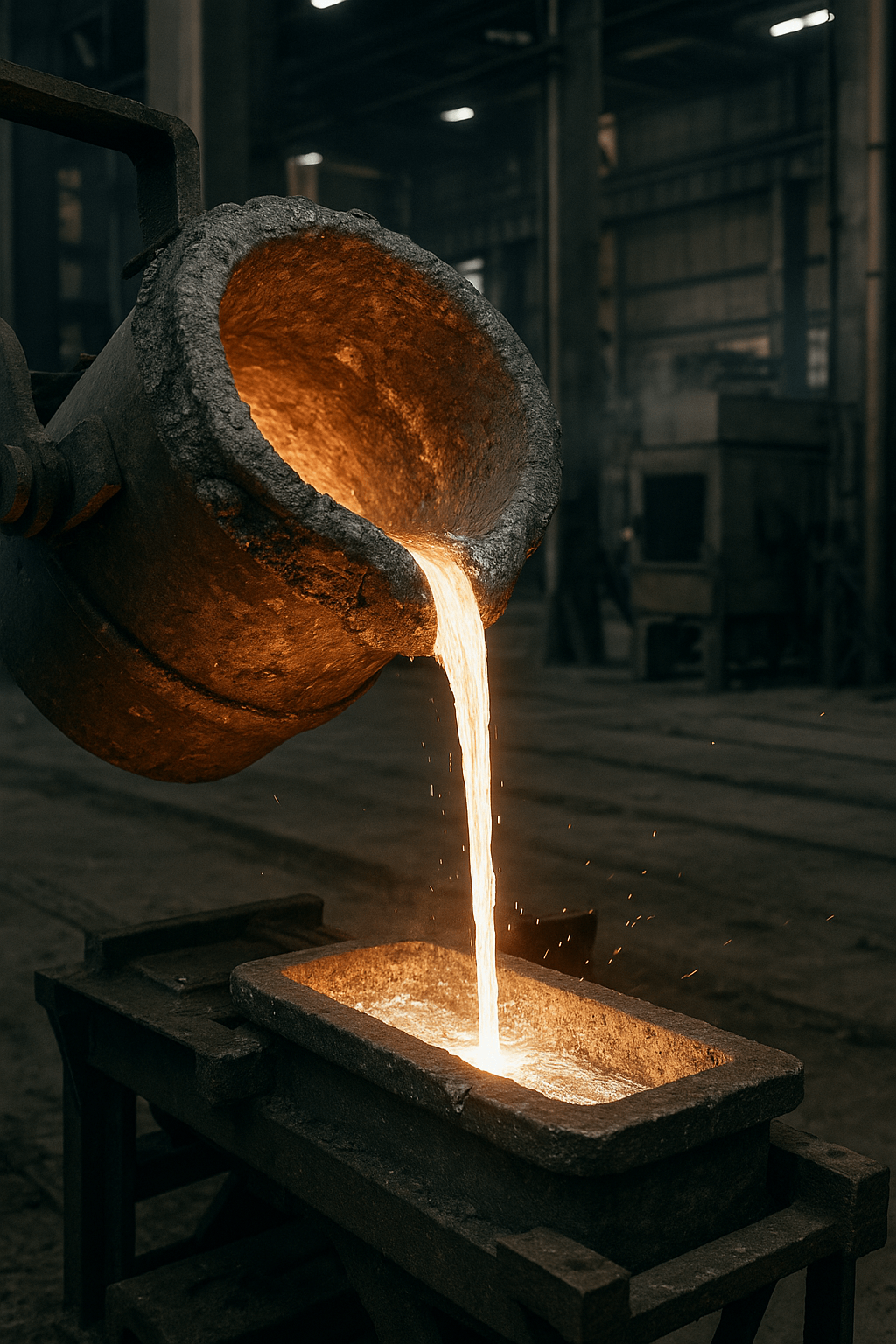
Casting and Alloying
Finally, molten aluminium is cast into manufacturing forms such as billets, slabs, coils, or ingots and alloyed for specific mechanical and processing requirements. At this point, the material begins to take the form that buyers actually source for fabrication.
Aluminium Starts with the Material Story — Why Base Metal Quality Controls Everything Downstream
For procurement teams, aluminium should not be treated as a generic light metal. Its reliability in production depends on the quality of the metal story underneath it: purity, grain structure, trace elements, alloy design, and thermal history.
These variables affect bending consistency, weldability, surface finish response, machining behavior, and rejection rate in high-volume orders.
What Makes Aluminium Unique in Manufacturing Environments
Aluminium combines low density, useful corrosion resistance, and good formability, which is why it is widely used in enclosures, brackets, cabinets, frames, and structural housings. But its high thermal conductivity and alloy-dependent forming behavior also make it highly sensitive to process conditions.
For manufacturers, this means aluminium is easy to like but not always easy to run well.
Why Purity, Grain Structure, and Trace Elements Matter for Bulk Orders
Purity and grain structure are not abstract metallurgical topics for bulk buyers. They directly influence crack resistance, dimensional repeatability, weld quality, and finishing consistency.
In large-volume projects, even modest instability in these factors can create meaningful cost through scrap, sorting, rework, and assembly delays.
From Bauxite to Alumina — Refining as the First Major Predictability Filter
The refining stage is the first major quality filter in aluminium production. It determines how effectively unwanted minerals are removed and how stable the alumina feedstock will be for smelting.
Refining as an Impurity-Control System
Refining is fundamentally an impurity-control process. Different ore sources bring different contamination risks, and inconsistent impurity control at this stage can later show up as variable behavior in forming, welding, or finishing.
The Bayer Process Viewed From a Manufacturing and Procurement Standpoint
From a buyer’s perspective, the Bayer process matters because it creates the consistency foundation for everything that follows. Stable alumina chemistry improves the likelihood of stable metal performance later in the chain.
Smelting — Where Aluminium’s Core Mechanical Behaviour Takes Shape
Smelting is the stage where alumina becomes metal, but for manufacturers it is also the stage where many future production behaviors begin to take shape. Smelting quality influences inclusion levels, porosity risk, structural uniformity, and downstream process response.
The Hall–Héroult Process and Its Structural Consequences
The Hall–Héroult process is the industrial standard for primary aluminium production. From a procurement standpoint, the important issue is not memorizing the chemistry, but understanding that control at this stage affects the internal cleanliness and structural stability of the metal.
Why Smelting Quality Directly Affects Machining, Welding, and Structural Performance
If smelting quality is unstable, the effects usually become visible later during machining, welding, or service life. Porosity, inclusion-related tool wear, or inconsistent structural behavior often trace back to this stage more than buyers expect.
Casting and Alloying — Converting Liquid Metal Into Manufacturing-Ready Material
Casting and alloying convert molten aluminium into forms manufacturers can actually process. This is where the metal becomes sheet, plate, billet, coil, or other industrial stock—and where it begins to align more directly with real application needs.
Casting Methods and Their Influence on Workability
Casting route influences grain structure, internal stress, dimensional stability, and later workability. For buyers, this matters because material that looks acceptable at receipt may still distort, crack, or behave unpredictably in production if its upstream casting quality was weak.
Alloy Design as a Procurement Decision Factor
Alloy selection is one of the most practical procurement decisions in the aluminium chain. Different alloy families change strength, formability, weldability, corrosion behavior, and finishing response.
For example, 5xxx series alloys are often favored in sheet metal structures, while 6xxx series alloys are common in profiles and machined components. The right alloy choice can reduce failure risk and improve manufacturing stability immediately.
How Aluminium Behaves During Processing — The Stage Buyers Evaluate Most Critically
This is the stage buyers see most clearly, because it is where upstream quality finally becomes visible in shop-floor performance. A supplier may describe material quality confidently, but the real proof appears in cutting, bending, welding, machining, and finishing results.
Forming and Bending — Predictability Is Essential
Forming stability matters greatly in large-volume production. Aluminium’s spring-back behavior, grain orientation, temper, and alloy series all influence whether a bend will be consistent from batch to batch.
For buyers, this is why the same alloy name alone does not guarantee the same forming result across suppliers.
Laser Cutting, Punching, and Deep Drawing — Where Material Stability Becomes Visible
Cutting and drawing behavior often reveal material stability quickly. Edge quality, burr levels, wrinkle tendency, crack resistance, and shape consistency all provide visible evidence of whether the upstream metal and the fabrication process are working together properly.
Welding and Joining — The Most Sensitive Stage for Evaluating Upstream Quality
Welding is often the most sensitive stage of all. If aluminium quality is inconsistent, defects such as porosity, cracking, or unstable bead appearance often become visible here first. That makes welding results a useful indicator for evaluating both metal quality and supplier process discipline.
Surface Treatments — Aluminium’s Entire Production History Revealed at the Final Stage
Surface treatment is often where hidden instability becomes visible. Anodizing, powder coating, and brushing do not just decorate aluminium—they expose whether the metal has been produced and processed consistently.
Anodizing, Powder Coating, and Brushing — Influenced by Upstream Metallurgy
Finish quality depends heavily on alloy chemistry, surface condition, and process stability. If upstream metallurgy varies too much, buyers may see color inconsistency, poor adhesion, streaking, or visible texture differences even when the finishing line itself is controlled properly.
What Surface Consistency Tells Buyers About Material Stability
Stable finish appearance across multiple lots is often one of the clearest signs that the full aluminium production and fabrication chain is under control. In that sense, finish quality is not just cosmetic—it is a practical audit signal for buyers.
Connecting the Chain — Understanding Aluminium Production as a Single System
Aluminium production should be understood as one connected system. Refining, smelting, casting, alloying, and fabrication are not separate stories. Weak control in any earlier stage can create visible cost and quality problems later.
Why Production Route Determines Lifecycle, Strength, and Performance
Lifecycle, strength, fatigue behavior, weld durability, and surface performance are all linked to the production route. Buyers who understand that chain are better positioned to identify root causes and choose more reliable suppliers.
What Buyers Should Expect From Aluminium Suppliers
Buyers should expect suppliers to do more than quote alloy names. A capable supplier should understand how material selection affects fabrication, recommend suitable alloys for the real process route, and maintain consistency over repeat orders.
FAQ — Direct Answers to Common Aluminium Production Questions
Where does aluminium come from?
Aluminium ultimately comes from bauxite ore. It is refined into alumina and then smelted into metallic aluminium before being cast into industrial stock forms.
Is aluminium man-made?
The element exists naturally, but industrial metallic aluminium is man-made in the sense that it must be extracted and processed through refining and smelting.
How do you get aluminium from ore?
Bauxite is refined into alumina, and alumina is then electrolytically reduced into aluminium metal. That metal is later cast and alloyed into manufacturing-ready forms.
What is aluminium made of?
Industrial aluminium is mainly the element aluminium itself, usually combined with controlled alloying additions such as magnesium, silicon, manganese, zinc, or copper depending on the intended application.
How is aluminium production relevant to procurement decisions?
Because the production route influences forming behavior, weld quality, machining stability, finish consistency, and long-term performance. For procurement teams, that makes production knowledge directly relevant to cost, quality, and supply reliability.
Conclusion — Aluminium Production Knowledge Strengthens Procurement Decisions
Understanding how aluminium is produced gives buyers a practical advantage because it helps them connect raw material quality to real manufacturing outcomes. That understanding improves supplier evaluation, strengthens RFQ preparation, and reduces avoidable sourcing risk.
At Yishang Metal Products Co., Ltd., we support OEM and wholesale customers with custom metal fabrication for aluminium enclosures, brackets, cabinets, frames, covers, and other industrial metal parts. With 26+ years of manufacturing experience, we support processes including laser cutting, bending, stamping, welding, CNC machining, surface treatment, assembly, packaging, inspection, and shipment.
For projects involving aluminium parts, we help customers align alloy selection, fabrication method, and export-ready quality control with real application needs.
📩 If you are evaluating aluminium components for your next project, send us your drawings or requirements to discuss the most suitable manufacturing approach.