
Introduction
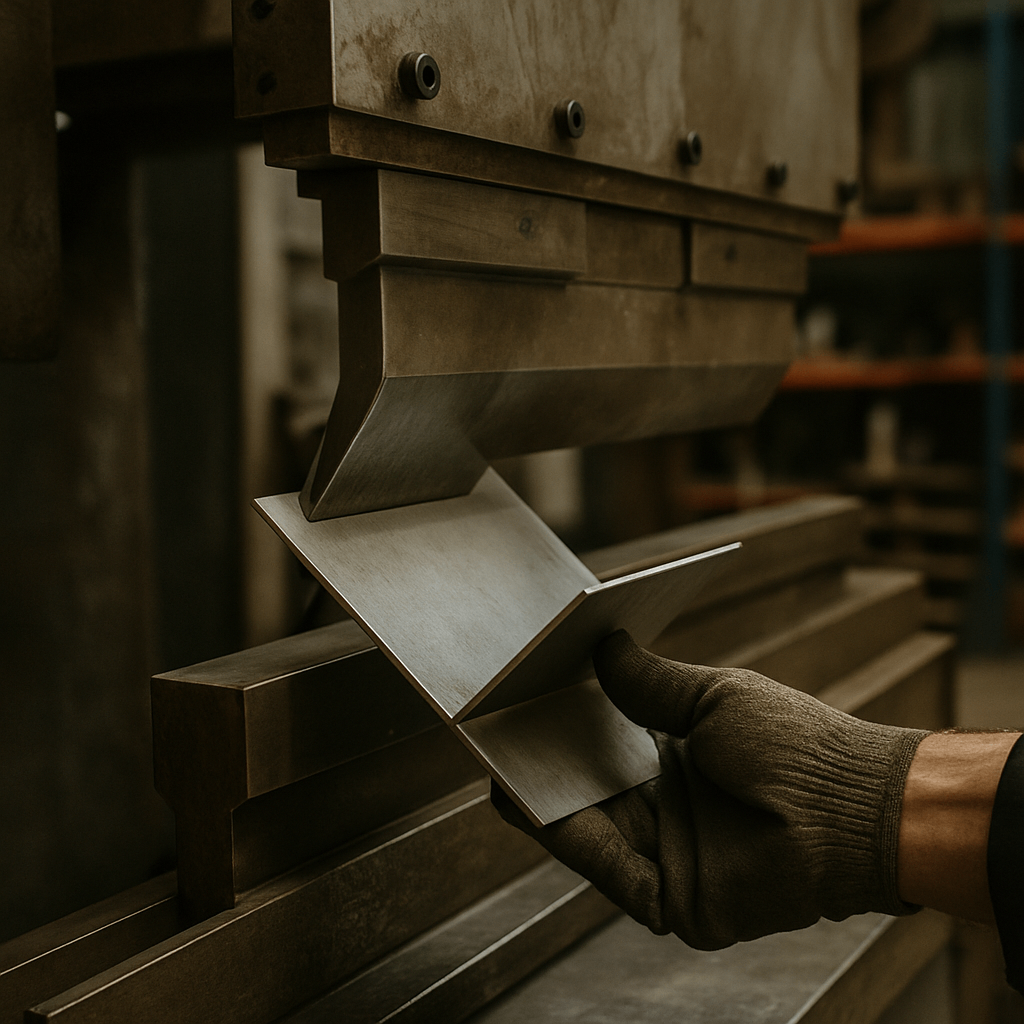
Sheet metal bending is one of the most important forming steps in industrial fabrication because it affects dimensional accuracy, structural consistency, assembly fit, and downstream production efficiency.
For wholesale buyers and OEM sourcing teams, bending is not just a workshop operation. It directly influences whether parts arrive ready for welding, coating, assembly, and export use without costly correction later.
In large-scale production, bending quality often becomes one of the hidden factors behind whether a project runs smoothly or accumulates rework, delays, and fit issues.
Why Choose YISHANG for Sheet Metal Bending?
Buyers usually look for more than bending capacity alone. They need a supplier that can support repeatability, process control, scalable output, and reliable communication from RFQ to shipment.
At Yishang Metal Products Co., Ltd., we support OEM and wholesale customers with custom metal fabrication backed by 26+ years of manufacturing experience, export service across 50+ countries, and integrated capabilities including laser cutting, bending, stamping, welding, CNC machining, surface treatment, assembly, packaging, inspection, and shipment.
For industrial buyers, that kind of integrated capability helps reduce coordination burden and improves project predictability across the full order cycle.
Key Fundamentals of Industrial Sheet Metal Bending
Sheet metal bending reshapes flat material through controlled force while preserving the part’s required geometry and structural function. In industrial projects, the main challenge is not simply creating a bend, but creating the right angle, radius, repeatability, and material behavior across full production volume.
Industrial Applications
Bending is widely used in automotive brackets, construction supports, enclosures, battery housings, HVAC parts, cabinets, covers, and general industrial hardware.
For buyers, this matters because bending quality affects not only the individual part, but also the stability of the full assembly process.
Material Selection for Consistent Bending Results
Material choice strongly affects bend quality. Buyers should consider ductility, thickness, coating condition, grain direction, and minimum bend radius before approving production.
A material that performs well in flat-sheet form may still crack, deform, or spring back unpredictably if it is not well matched to the bending process. That is why bending projects should always review the material together with the bend design.
Good sourcing decisions in this stage help avoid later problems such as cracked corners, surface damage, or dimensional drift after bending.
Tools and Equipment for Precision Bending
Precision bending depends heavily on equipment choice. Press brakes, CNC bending systems, roll benders, and supporting fixtures all influence the final result.
Our Standard Equipment Includes:
Depending on project requirements, industrial bending may involve press brakes for general forming, CNC-controlled systems for tighter angle repeatability, hydraulic solutions for heavier work, and roll-based equipment for curved forms.
Equipment Choice Based on Project
The correct setup depends on material type, sheet thickness, bend radius, tolerance target, production volume, and delivery schedule.
For procurement teams, this means the best supplier is not the one with the longest equipment list, but the one that matches the right equipment to the real project demand.
Safety, Standards, and Compliance
Industrial bending should operate within a controlled framework that includes safe handling, machine protection, traceable production control, and documented compliance practices.
For buyers, this is relevant because poor safety and process discipline often correlate with inconsistent output and avoidable production risk.
In practical sourcing terms, a disciplined factory environment usually supports more stable quality results as well.
Pre-Bending Preparation for Industrial Projects
Industrial bending should operate within a controlled framework that includes safe handling, machine protection, traceable production control, and documented compliance practices.
For buyers, this is relevant because poor safety and process discipline often correlate with inconsistent output and avoidable production risk.
In practical sourcing terms, a disciplined factory environment usually supports more stable quality results as well.
Our Step-by-Step Mass Production Bending Process
For mass production, bending quality depends on process discipline.
A stable workflow usually includes drawing review, tooling selection, material securing, controlled force application, and springback management. When each step is controlled properly, buyers gain better dimensional consistency and fewer downstream fit problems.
The value of a standardized process is not only technical accuracy. It also improves quoting confidence, planning reliability, and shipment readiness.
Types of Sheet Metal Bending Techniques Explained
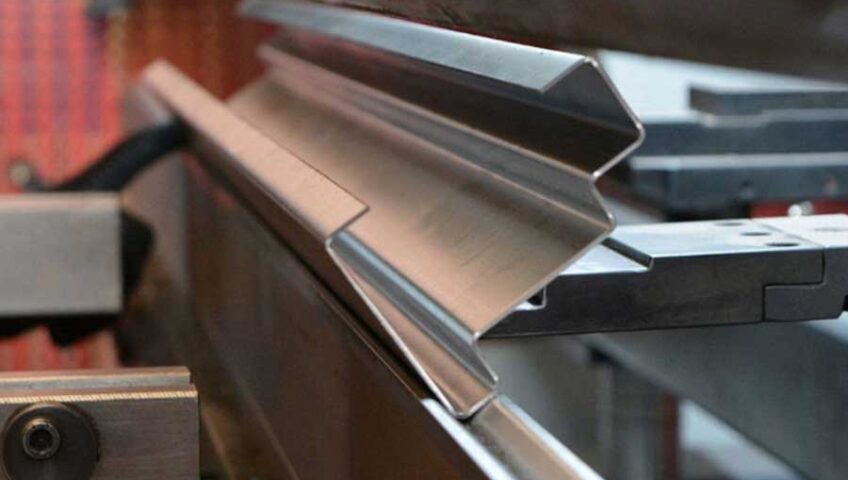
Different bending methods suit different part shapes and production goals.
Common techniques include V-bending, air bending, bottoming, coining, roll bending, and rotary bending. Each method affects angle precision, material stress, surface condition, and production speed differently.
For buyers, the right choice depends on whether the priority is flexibility, repeatability, surface protection, or tighter final geometry.
Cost Optimization Strategies for Large Volume Sheet Metal Projects
Cost control in bending projects usually comes from better planning rather than from simply pressing for a lower quoted price.
Material utilization, process selection, bend simplification, tooling efficiency, and grouped production all affect the true cost per part. For large-volume orders, these factors often matter more than a small difference in nominal machine rate.
That is why good DFM support often creates better long-term savings than late-stage cost cutting.
YISHANG’s Quality Control System for Mass Production
Bending quality should be supported by structured inspection, not visual judgment alone.
For buyers, useful quality control usually includes first-article approval, in-process checks, final audits, dimensional verification, and shipment documentation. These controls become especially important in multi-batch projects where consistency matters more than one successful sample.
When quality systems are stable, buyers gain more confidence that part #1 and part #10,000 will perform in the same way.
Logistics and Fulfillment Services Overview
For export-focused buyers, bending is only one part of the project. Packaging, delivery timing, phased shipment planning, and product protection during transport can be just as important.
A capable supplier should be able to support not only fabrication, but also the logistics details that protect bent parts from damage before they reach final assembly.
Expanded Case Study Section
Case studies are useful when they show how process control translates into sourcing value.
For bending projects, the most relevant outcomes are usually dimensional consistency, reduced assembly time, lower rejection rate, and stable delivery across full order volume. Buyers should focus on those practical indicators when evaluating supplier capability.
FAQs: Practical Answers for Procurement Teams
Q1: How do I request a quotation?
The most effective RFQs usually include drawings, material information, thickness, surface requirements, tolerances, and estimated order volume.
Q2: Can you provide pre-production samples?
For many industrial projects, sampling is important because it confirms bend quality, fit, and manufacturability before mass production starts.
Q3: How do you guarantee on-time delivery?
Reliable delivery depends on engineering review, production planning, quality control, and logistics coordination working together.
Q4: Do you support phased deliveries?
Yes, phased production and split shipment planning are often useful in larger or staged projects.
Q5: Are third-party inspections accepted?
For export and OEM programs, third-party inspection support is often an important part of buyer approval workflow.
Q6: What are your payment terms and after-sales support policies?
These should be discussed clearly during quotation and order confirmation so that both commercial and quality expectations stay aligned.
Conclusion
Reliable sheet metal bending depends on more than equipment alone. It requires correct material choice, process planning, stable tooling, dimensional control, and dependable logistics support.
For buyers managing OEM, ODM, or repeat industrial orders, the best results usually come from working with a supplier that can control the full process from drawing review to shipment.
At Yishang Metal Products Co., Ltd., we support custom sheet metal projects with integrated manufacturing capabilities and export-oriented service for global buyers.
📩 If you are evaluating sheet metal bending solutions for your next project, send us your drawings or requirements to discuss the most suitable manufacturing approach.