
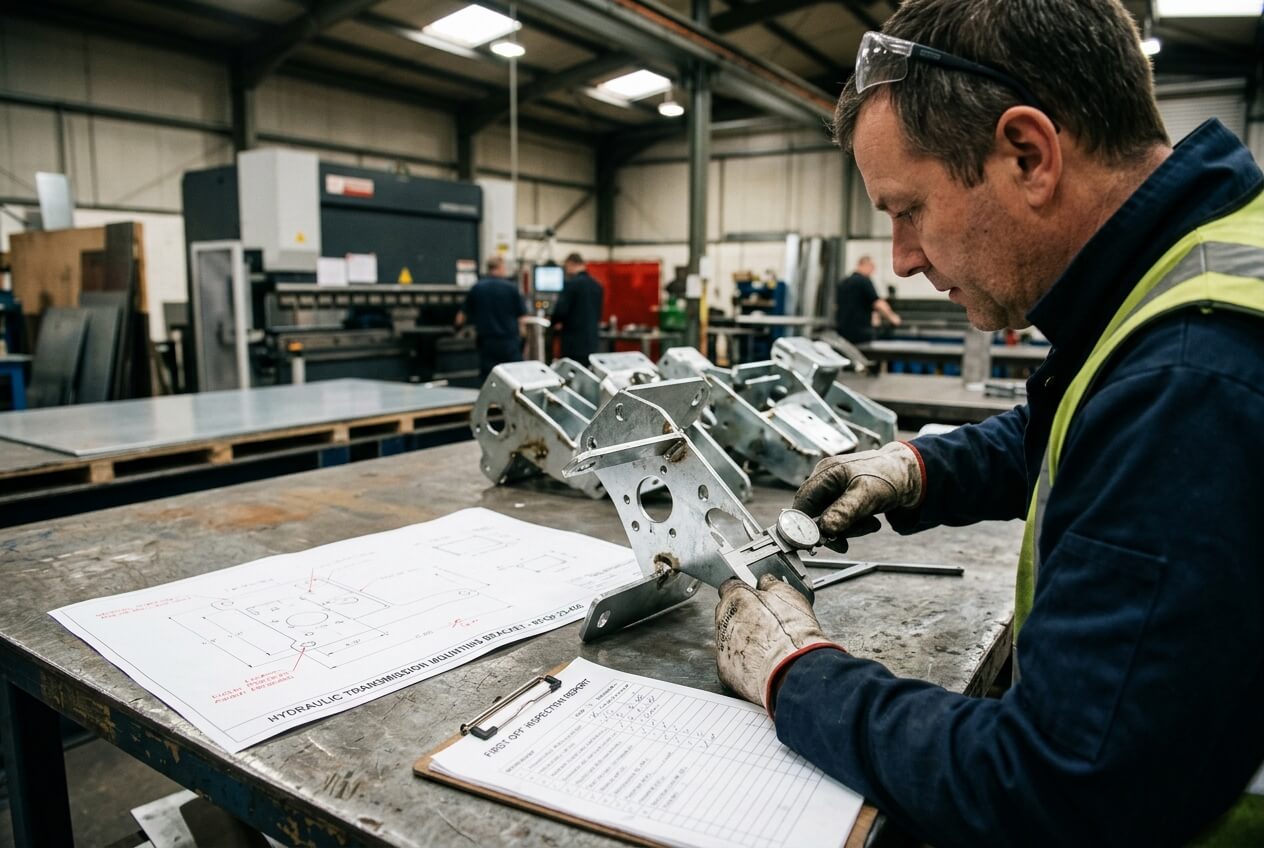
A hydraulic transmission sheet metal RFQ can look complete while leaving the most expensive decisions undefined. The drawing may show a cabinet, bracket, frame, or access cover clearly. Yet the quote may still hide assumptions about hole control, bend sequence, weld distortion, powder coating masks, and prototype corrections.
This creates a procurement risk that buyers often see too late. Three suppliers may quote the same hydraulic transmission enclosure, but they may not quote the same level of manufacturing control. One price may include only standard laser cutting and bending. Another may include fixture checks, masked threads, and inspection after coating. A third may assume the buyer will solve fit issues during assembly.
The lowest price does not always cause the problem. The real risk starts when unclear RFQ details allow each supplier to define the job differently. For hydraulic transmission equipment, those assumptions can affect pump alignment, hose clearance, vibration, service access, grounding, sealing, and batch repeatability.
This article focuses on one buyer risk: quote assumptions that remain hidden until parts reach assembly. Buyers can reduce that risk by making functional requirements visible before they compare prices.
Where RFQ Assumptions Start to Distort Hydraulic Transmission Quotes
Most quote distortion starts before the supplier issues a price. A sourcing team sends drawings for hydraulic transmission cabinets, pump brackets, welded base frames, or control panels. The drawing defines shape and size. It may not define which features control final assembly.
Under quotation pressure, suppliers fill those gaps with shop assumptions. That may work for simple covers. It becomes risky when sheet metal parts carry hydraulic components, support vibration loads, or control access to pumps, motors, reservoirs, and valves.
Functional Features Need Different Treatment
A cabinet side panel may include hose exits, fan openings, hinge holes, and mounting slots. These features do not carry equal risk. A cosmetic vent can usually follow standard tolerance. A valve mounting pattern may need inspection after bending. A grounding point may need a clean metal contact area after powder coating.
If the RFQ treats all features the same, suppliers quote different process routes. One supplier may laser-cut holes and powder coat the full panel. Another may mask grounding areas and check the mounting pattern after forming. Both quotes may look valid, but they do not protect the buyer in the same way.
Incomplete Drawings Create Silent Cost Choices
Hydraulic transmission projects often combine fabricated sheet metal with purchased components. The buyer may control the pump, valve block, motor, sensor, or reservoir design. The sheet metal supplier only sees the fabricated part drawing. Without assembly context, the supplier may not know which holes need alignment and which slots allow adjustment.
A useful RFQ should identify critical interfaces. Mark pump mounting holes, valve faces, hinge points, hose clamp brackets, threaded inserts, and removable access panels. Also define whether inspection happens before bending, after bending, after welding, or after finishing. Each timing choice changes the true scope of the quote.
Yishang can review drawing packages for custom sheet metal fabrication when buyers need these assumptions exposed before quote approval. The goal is not to over-specify every surface. The goal is to prevent uncontrolled assumptions from reaching assembly.
How a Cheap Assumption Becomes an Expensive Assembly Problem
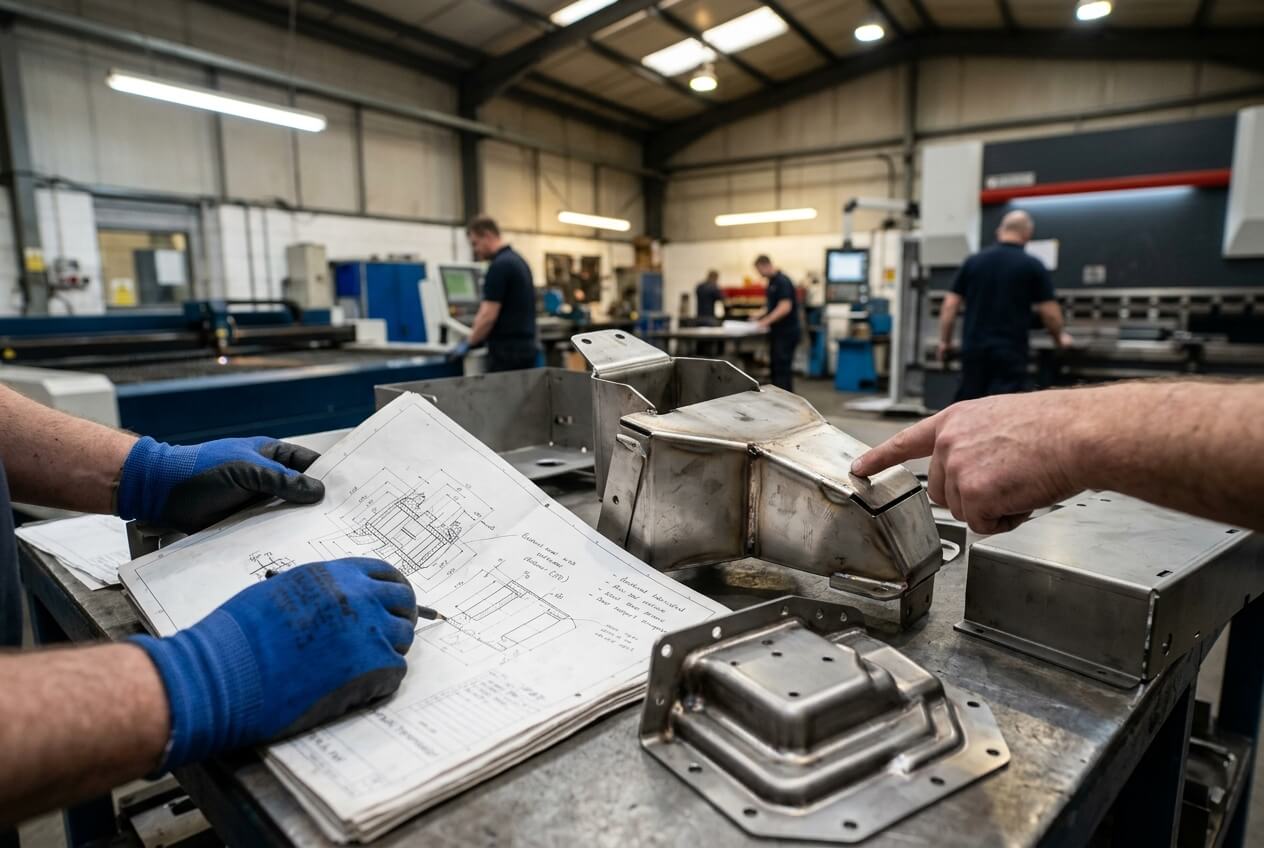
Hidden quote assumptions rarely fail in isolation. They create a chain. The RFQ leaves a requirement unclear. The supplier chooses a cheaper default. Production follows that default. The assembly team discovers the missing control only when hydraulic equipment no longer fits cleanly.
That chain matters because hydraulic transmission systems leave little room for trial-and-error fitting. Pumps create vibration. Hoses need bend radius. Motors and reservoirs add weight. Service doors must open without disturbing nearby tubing. Small fabrication choices can move stress into the final equipment.
Example: Valve Cabinet With Coated Mounting Threads
Consider a powder-coated valve cabinet for a hydraulic transmission test unit. The drawing shows tapped holes for a valve manifold and several cable gland openings. The RFQ states the coating color but does not list masked areas. A low quote assumes full powder coating after tapping.
The first batch arrives with coating inside several threads. The assembly team chases the threads by hand. That adds labor, delays cabinet installation, and risks damaging the coating near the valve face. The issue started as a missing masking note, not as a coating failure.
The buyer could have clarified three points earlier: which holes need thread protection, which mounting faces need coating control, and whether the supplier should inspect threads after finishing. Those details would have changed the quotation, but they would also have protected assembly time.
Example: Pump Bracket With Hole Shift After Bending
A pump support bracket for a compact hydraulic transmission module creates a different risk. The flat drawing shows a hole pattern close to a bend line. The supplier quotes standard laser cutting and press brake forming. No one asks whether the hole pattern must locate the pump after bending.
During assembly, the bracket shape looks acceptable. The pump bolts do not align smoothly. Workers enlarge holes to install the pump. That correction may pass on one unit, but it weakens repeatability and hides a tolerance problem inside the assembly process.
Earlier clarification would have changed the path. The buyer could mark the hole pattern as functional, define acceptable slotting, or request inspection after forming. The supplier could then price the bracket with the right control instead of assuming standard forming tolerance.
Why Drawings Alone May Not Reveal the Real Hydraulic Transmission Interface
A drawing shows dimensions. It does not always show why those dimensions matter. That gap creates the main procurement risk in hydraulic transmission sheet metal sourcing. A supplier may manufacture the part according to general drawing requirements while missing the assembly function behind key features.
Buyers can reduce risk by adding short notes that connect fabricated features to equipment interfaces. These notes do not need to become a long specification. They should tell the supplier which surfaces, holes, bends, and welded areas control fit.
Tolerances Should Follow Function
Not every dimension on a metal enclosure needs tight tolerance. Applying precision everywhere raises cost and can slow lead time. Ignoring functional tolerance creates rework. The best RFQ separates fit-critical features from general fabrication features.
For hydraulic transmission parts, tighter control often belongs on pump bases, motor brackets, valve panels, hinge lines, rail mounting holes, and sensor cutouts. Broader tolerance may suit removable covers, cosmetic side panels, and non-mating guards. This distinction helps suppliers choose practical processes and quote them honestly.
Inspection timing also matters. A hole pattern checked on the flat sheet may shift after bending. A frame that measures square before welding may move after weld cooling. A threaded insert may pass before powder coating and fail after finish. The RFQ should state when the dimension matters.
Material and Finish Notes Affect Fit, Not Only Appearance
Material and finish details influence more than unit cost. Sheet thickness affects bend radius, stiffness, and hole movement. Material grade can influence weld behavior and deformation. Powder coating adds thickness around edges, holes, hinges, and sliding areas.
When buyers state only color and thickness, suppliers may quote the easiest finish route. That can work for exposed covers. It can fail around close-fitting doors, grounding studs, masked labels, gasket faces, and hydraulic component mounts.
A practical RFQ should define finish expectations where finish changes function. Mark no-coat zones, masked threads, contact surfaces, cosmetic faces, and acceptable texture. If parts need assembly after coating, clarify whether the supplier should protect holes and inserts or whether the buyer will clean them later.
These choices also affect lead time. Masking, secondary drilling, reaming, tapping after coating, and fixture inspection add steps. Buyers need those steps visible before they compare supplier prices. Otherwise, a shorter quoted lead time may only reflect missing controls.
Why Prototype Approval Can Still Leave Batch Consistency Uncontrolled
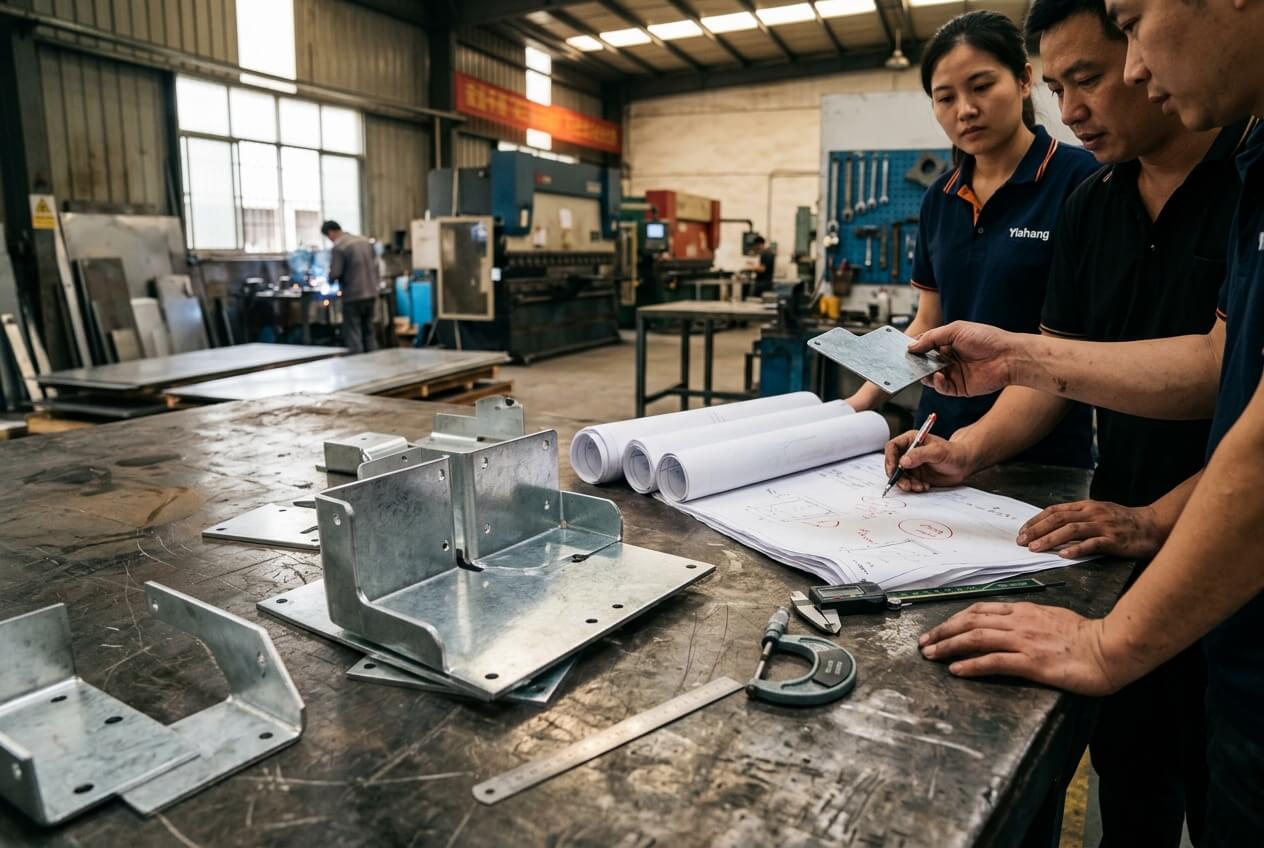
A prototype often gives buyers confidence. It also creates a false sense of security when the supplier fixes the sample by hand. Hydraulic transmission sheet metal parts frequently pass first-article review because someone adjusted a bracket, cleaned a thread, straightened a frame, or enlarged a slot before shipment.
The sample may fit. The process may still remain uncontrolled.
This matters when buyers approve a prototype and release a batch order. If the supplier does not record the corrections, batch production repeats the original assumptions. The buyer then sees variation across units, even though the approved sample looked good.
Sample Corrections Must Become Production Rules
A welded base frame for a hydraulic transmission skid offers a common example. The prototype frame supports a pump, reservoir, and motor guard. After welding, the mounting plate pulls slightly out of flat. The supplier straightens the first frame and ships it. The buyer installs the equipment and approves the sample.
Batch production then starts without a weld fixture, straightening limit, or flatness inspection point. Some frames fit well. Others require shimming. The root cause was not poor welding alone. The RFQ and prototype approval failed to convert sample learning into production control.
Buyers should ask what changed between the first sample and the approved sample. Did the supplier adjust holes, clean coating, change bend allowance, add shims, modify weld sequence, or hand-finish cosmetic areas? Each correction needs a decision. Either include it in the drawing, add it to the inspection plan, or accept it as controlled manual work.
Batch Pricing Should Reflect Locked Controls
Prototype feedback can change cost. A fixture, mask, inspection gauge, or secondary operation may raise the unit price. That increase may still cost less than assembly rework across a batch. Procurement teams should avoid treating prototype approval as a simple pass or fail event.
Instead, use the prototype to freeze controls. Confirm critical dimensions, finish masks, weld sequence, inspection timing, packaging protection, and acceptable adjustment methods. Ask the supplier to update the quotation if those controls affect production cost or lead time.
Yishang is relevant at this stage when buyers need prototype observations translated into repeatable instructions for sheet metal parts, metal enclosures, brackets, frames, and welded assemblies. Clear documentation protects both sides before batch release.
What Buyers Should Clarify Before Comparing Hydraulic Transmission Sheet Metal Suppliers
Price comparison only works when suppliers quote the same job. For hydraulic transmission fabrication, that means buyers must make hidden assumptions visible before they rank quotes. The RFQ does not need to become complicated. It needs to show which decisions affect assembly risk.
Start with the drawing package. Mark functional holes, datum faces, bend-sensitive features, welded mounting surfaces, service openings, gasket areas, grounding points, and masked finish zones. Add assembly photos if the drawing does not show nearby pumps, hoses, motors, reservoirs, or control valves.
Next, define what the supplier should inspect and when. Some features need checks after cutting. Others only matter after bending, welding, or coating. Ask suppliers to state their inspection timing in the quote. This prevents a supplier from claiming compliance based on a stage that does not reflect final assembly.
Then compare cost drivers openly. A quote that includes fixture welding, thread masking, secondary tapping, flatness checks, or protective packaging may cost more. It may also reduce assembly labor and reduce field risk. A lower quote may still be valid for simple panels, but buyers should know which controls it excludes.
Supplier communication should focus on evidence. Useful suppliers ask focused questions before quoting. They explain where tolerance, finish, material, welding, or inspection decisions change risk. They also list exclusions instead of hiding them behind general shop standards.
If you are sourcing sheet metal parts for hydraulic transmission cabinets, pump brackets, valve panels, welded frames, access covers, or custom enclosures, send Yishang your drawings before you freeze the quote. Include material requirements, thickness, quantities, functional tolerances, finish expectations, assembly photos, mating component details, prototype notes, and any batch consistency concerns. Yishang can review manufacturability and help identify the assumptions that affect mounting accuracy, coating control, weld distortion, inspection scope, and repeatable production. Visit Yishang to share your RFQ package.
Frequently Asked Questions
What is the biggest RFQ risk in hydraulic transmission sheet metal fabrication?
The biggest risk is hidden quote assumptions. A supplier may price standard cutting, bending, welding, and coating while the assembly needs controlled mounting holes, masked threads, fixture welding, or inspection after finishing. Buyers should identify functional features before comparing prices.
Which hydraulic transmission sheet metal features should buyers mark as critical?
Mark pump and valve mounting holes, motor brackets, hose exits, hinge areas, grounding points, gasket surfaces, welded datum faces, threaded inserts, and service door clearances. These features can affect fit, vibration, maintenance, and assembly labor.
Why can two suppliers quote the same hydraulic transmission cabinet differently?
They may assume different process controls. One supplier may include standard laser-cut holes and full powder coating. Another may include masking, post-bend inspection, thread protection, and packaging controls. Written assumptions help buyers compare the real scope, not just the unit price.
How should buyers handle prototype changes before batch production?
Ask the supplier to record every correction made to the prototype. Hole adjustments, coating cleanup, weld straightening, bend changes, and fixture changes should become production instructions or inspection requirements before the batch order starts.
When does powder coating become an assembly risk?
Powder coating becomes risky when it reaches threads, grounding areas, hinge points, sliding surfaces, gasket faces, or close-fitting hydraulic component mounts. Buyers should define no-coat zones, masked holes, and inspection after finishing in the RFQ.
What should buyers send with a hydraulic transmission sheet metal RFQ?
Send drawings, material requirements, thickness, quantities, tolerances, finish expectations, assembly photos, mating component information, prototype notes, and batch volume plans. This gives the supplier enough context to quote the controls needed for reliable production.