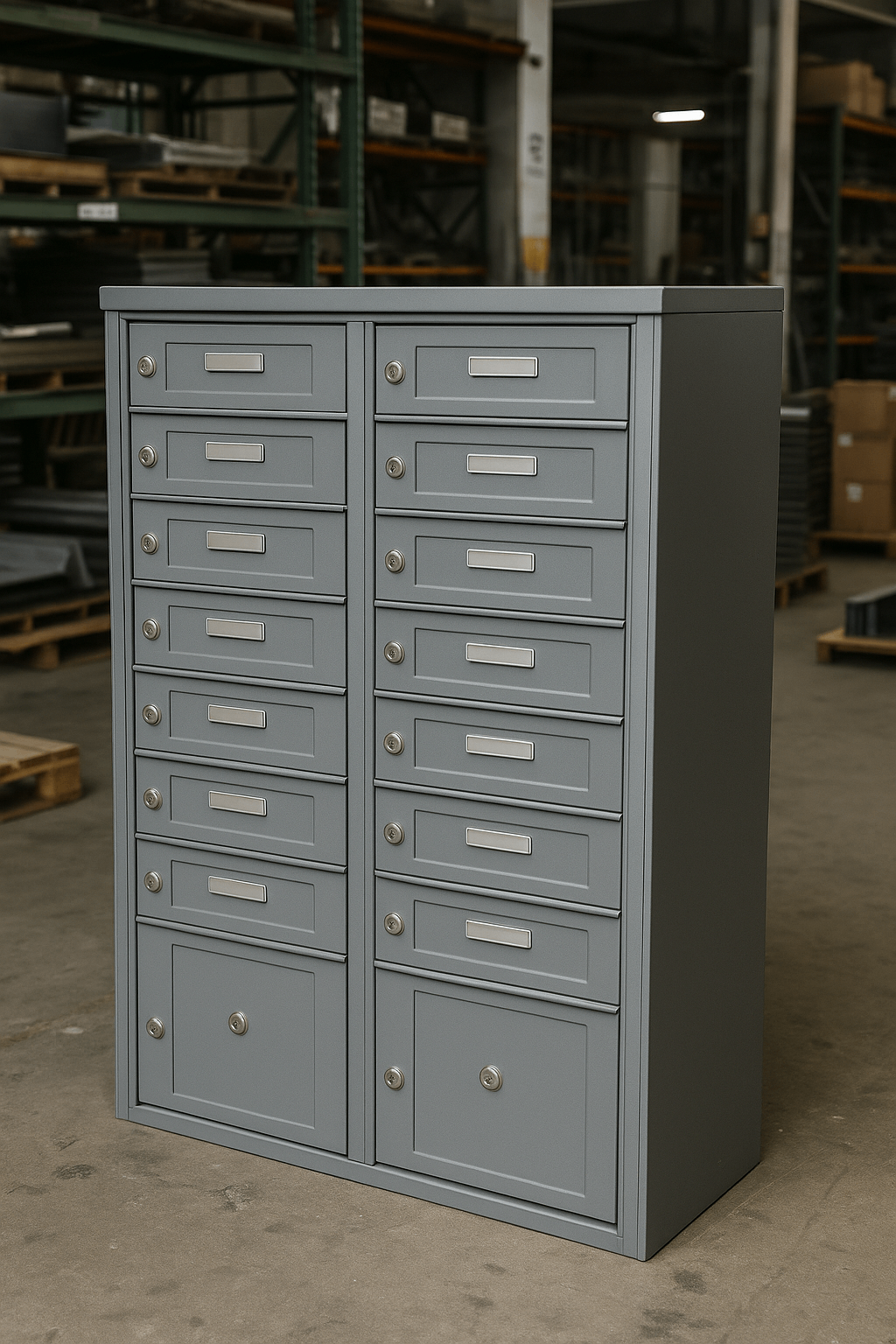
Rethinking Mail Infrastructure for Industrial Buyers
In a factory, logistics park, bonded zone, or industrial office cluster, incoming mail is rarely just letters. It can include:
supplier samples
customs or compliance documents
test kits
maintenance paperwork
courier-delivered envelopes tied to urgent approvals
small spare parts or controlled-access packets
When receiving infrastructure is not designed for those realities, simple deliveries start creating hidden friction. Teams waste time coordinating pickups, documents move too slowly, and couriers may bypass the preferred receiving point altogether.
A mailbox in this context is not decorative hardware. It is part of a controlled receiving environment.
Why This Comparison Matters to Procurement Professionals
Procurement professionals usually care less about the mailbox itself and more about what the wrong choice disrupts.
That includes:
whether major couriers can actually complete the drop
whether site staff can receive materials without extra coordination
whether documents remain visible, protected, and traceable
whether the installation survives long-term outdoor or high-use conditions
whether the receiving point fits site security and branding requirements
A residential or consumer-oriented solution may look acceptable at first glance, but industrial buying decisions have to be made around repeat use, courier handling, environmental exposure, and lifecycle value.
Industrial Metal Mailboxes: Built for Performance
A purpose-built industrial metal mailbox is designed around fixed-location use, repeated handling, and environmental exposure.
That usually means the product is expected to offer:
durable metal construction
secure locking systems
weather resistance suitable for outdoor placement
mounting flexibility for walls, gates, posts, or fences
receiving openings sized for real courier use rather than standard letter-only access
In industrial environments, steel mailboxes are often preferred because they hold shape better, tolerate impact more reliably, and support custom openings, engraved identification, or compartment-based designs more easily than lightweight consumer alternatives.
This is where a purpose-built steel mailbox separates itself from a standard mailbox product. It is designed as equipment for a receiving point, not just as a place to collect mail.
PO Boxes: Limited Fit for Industrial Shipping
A PO Box works well when the goal is centralized personal mail collection through a postal provider. That model breaks down quickly in industrial procurement and logistics settings.
The problem is not that PO Boxes are bad. It is that they are built for a different use case.
For industrial buyers, common limitations include:
off-site pickup requirements
restricted acceptance depending on courier or delivery type
limited parcel handling capacity
poor fit for document-plus-sample workflows
weak alignment with secured facility receiving procedures
If a site needs mail and courier items to arrive directly at the operational location, a PO Box usually adds an extra layer instead of simplifying the process.
Why PO Boxes Are Not Suitable for Global Procurement
Global procurement often depends on direct handoff, site traceability, and predictable receiving windows. PO Boxes are not designed for that. They may still work for administrative correspondence, but they are usually a poor fit for logistics-sensitive industrial operations where site-level receipt matters.
Courier Compatibility: Designed for Third-Party Logistics
One of the biggest practical reasons industrial buyers choose metal mailboxes over PO Boxes is courier compatibility.
Industrial receiving points often need to work smoothly with:
DHL
FedEx
UPS
regional parcel carriers
third-party logistics operators
internal site transport staff
A fixed-location steel mailbox can be designed around that need. Buyers often look for:
courier-friendly slot or access dimensions
engraved address or ID visibility
secure mounting and anti-tamper features
weather protection for documents and padded envelopes
compartment layouts suited to mail, samples, or access packets
What Type of Mailbox Supports DHL Delivery for Industrial Sites?
In practical terms, the best fit is usually a fixed-location steel mailbox with clear address identification, secure construction, and drop-slot sizing that matches real courier use. The more a site depends on frequent direct delivery, the more important that design logic becomes.
Material Selection by Environmental Conditions
Material choice matters because the mailbox often sits outdoors, near traffic, or in mixed industrial conditions for years at a time.
A good procurement decision starts with the site environment.
Common Material Fit by Site Type
316 stainless steel works well in coastal, humid, or salt-exposed environments.
Powder-coated steel is often suitable for inland industrial zones where appearance and abrasion resistance both matter.
Galvanized steel is practical for heavy-use settings where cost control and structural durability matter more than premium appearance.
Aluminum may make sense where lower weight is important, though it is not always the first choice for high-impact or abuse-prone locations.
The right mailbox material is not the one that sounds strongest on paper. It is the one that matches the actual combination of weather, handling, maintenance expectation, and installation method.
Best Mailbox Material for Coastal Manufacturing Zones
For coastal or marine-exposed industrial areas, 316 stainless steel is usually the safest long-term choice because it resists salt-driven corrosion better than standard painted or lightly protected steel options.
Customization: From Branding to Compliance
Industrial buyers often need more than a standard box with a slot.
In many projects, the mailbox must align with site identity, receiving procedure, or compliance visibility. That can include:
laser-etched branding or numbering
custom compartment layouts
dedicated windows or label areas
lock options matched to site access control
mounting methods suited to fences, walls, or modular site structures
Customization matters because the mailbox may be part of a larger controlled site system. When the product is matched to that system from the beginning, installation becomes cleaner and long-term use becomes easier.
Cost Structure: One-Time vs Recurring
One reason buyers revisit the metal mailbox vs PO Box decision is that the cost logic is different.
A purpose-built industrial mailbox is usually a hardware investment. A PO Box is usually an ongoing service expense.
Cost Comparison Overview
| Feature | Purpose-Built Metal Mailbox | Standard PO Box |
| Courier Compatibility | High | Often limited |
| On-Site Access | Yes | No |
| Customization | Available | Minimal |
| Maintenance Cycle | Long-life hardware | Service-based |
| Recurring Fees | No monthly rental in normal use | Yes, typically recurring |
| Best Fit | Factories, ports, depots, industrial campuses | Personal or administrative mail pickup |
The mailbox may cost more upfront, but if it removes repeated coordination, site travel, or recurring access limitations, the long-term cost picture often changes in its favor.
Common Mistakes Buyers Make Before Choosing
Ignoring Environmental and Material Fit
A mailbox that works in a sheltered office park may fail quickly in a coastal loading area or dust-heavy industrial site. Material selection should follow exposure, not habit.
Assuming Universal Courier Compatibility
Some buyers assume any lockable mailbox is acceptable for third-party delivery. In industrial practice, slot size, address visibility, mounting position, and site access all matter.
Prioritizing Unit Price Over Lifecycle Value
A lower-priced mailbox can become expensive if it rusts early, cannot support real courier use, or forces manual workarounds.
Overlooking Regulatory and Label Compliance
Industrial receiving points often need clear numbering, document visibility, or barcode-linked identification. Those details should be defined before ordering, not improvised afterward.
Real-World Applications
Purpose-built steel mailboxes are typically used in places where mail and small courier items need to be received at the operational site itself.
Typical examples include:
logistics depots
bonded warehouse gates
supplier-receiving zones at OEM facilities
industrial office compounds
secure sample-drop locations at R&D sites
export-oriented manufacturing campuses
In all of these environments, the mailbox is part of access control and receiving efficiency—not just part of the building exterior.
Procurement FAQ: What Buyers Ask Before Ordering
Can I receive DHL or UPS at a steel mailbox?
In many cases, yes—provided the mailbox is designed with suitable access dimensions, visible address identification, and fixed-site installation suitable for courier use.
Can the mailbox be mounted to a wall, gate, or fence?
Yes. Industrial mailboxes are commonly designed for wall, post, gate, or fence mounting depending on the site layout.
Do industrial metal mailboxes support export projects?
Yes, as long as the supplier can provide the required specifications, packaging, and production details for export handling.
What MOQ usually applies?
That depends on the design and level of customization. Standardized industrial models may support lower MOQs, while custom mailbox programs generally scale better with larger quantities.
Can the mailbox be customized for compliance or site identification?
Yes. Numbering, logo marking, identification plates, windows, and compartment variations can all be built into the design when defined early.
Final Word: Industrial Mail Solutions That Scale
Courier-grade logistics require barcode-ready, lockable, export-compliant mailbox systems. PO Boxes lack this integration. YISHANG mailboxes support global freight, ERP integration, and field use durability.