
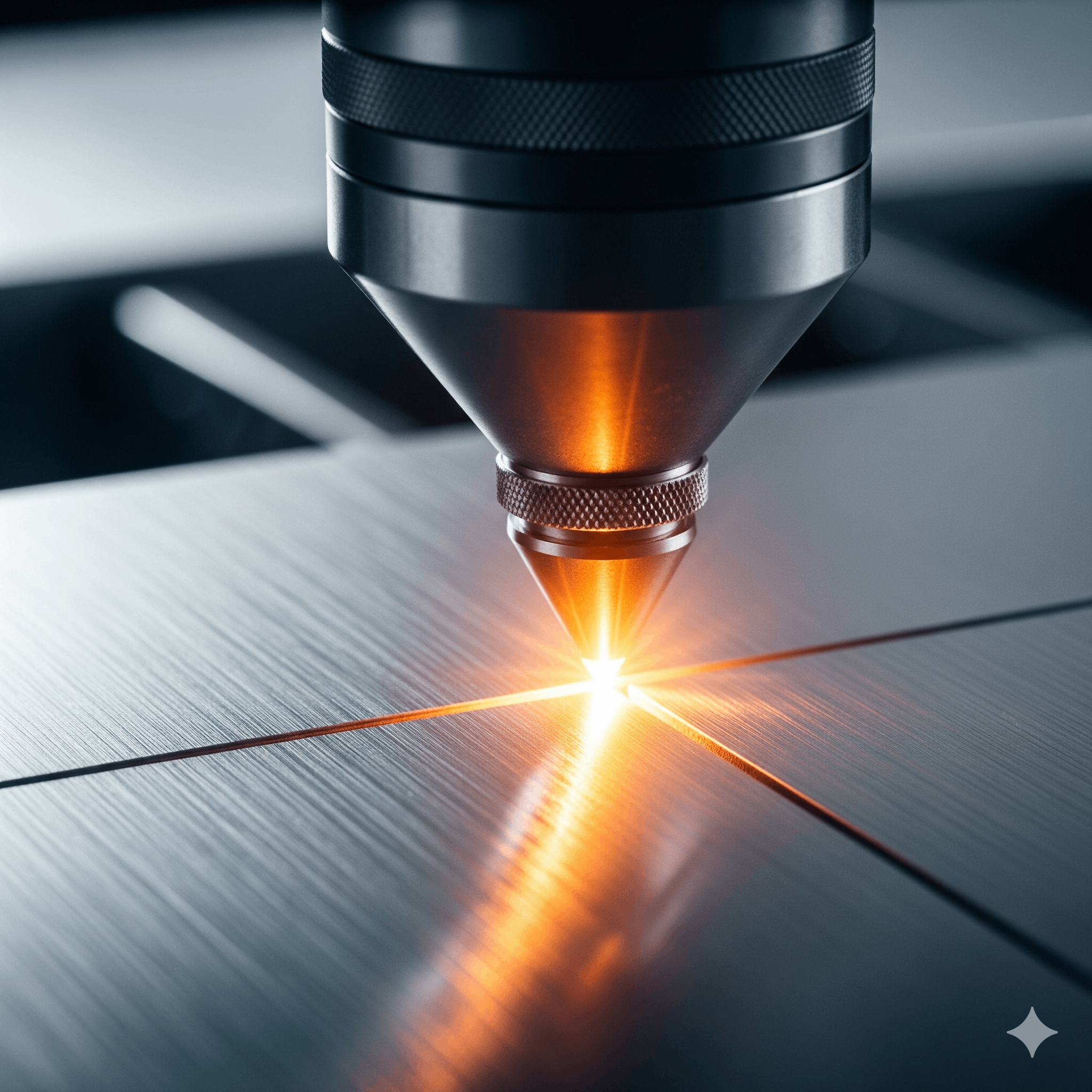
In the context of high-stakes international metal fabrication, supply chain reliability is defined by precision. For overseas procurement managers, laser engraving is no longer just a peripheral branding task. Instead, it has become a core requirement for technical compliance and long-term asset management. This guide moves beyond basic tutorials. It addresses the strategic variables that minimize Total Cost of Ownership (TCO) in global OEM/ODM projects.
At YISHANG, we understand that high-volume manufacturing requires a metallurgical perspective. Specifically, we focus on how light interacts with structural alloys. Professional manufacturers do not just “mark” parts. Rather, they engineer a surface interaction that aligns with your durability standards. Consequently, understanding these technical frameworks is essential for any technical buyer. These insights help optimize metal product sourcing and supply chain resilience.
I. Material Selection Matrix: The Foundation of Unit Economics
For wholesale buyers, material choice is the primary lever for controlling production speed. Moreover, it directly impacts the final unit price. Each substrate possesses a unique “optical signature.” This signature dictates the required laser engraving process. A deep understanding of these interactions allows for optimized settings. As a result, manufacturers can maximize throughput without compromising structural integrity.
1. Ferrous Alloys: Balancing Corrosion Protection and Cost
Stainless steel enclosures (Grade 304/316) are essential for harsh industrial environments. However, they present a specific engineering challenge regarding surface oxidation. The laser must create a high-contrast mark without disrupting the passive chromium oxide layer. Therefore, a professional-grade anneal is required to maintain salt-spray resistance. This is critical for a junction box NEMA rated for outdoor or maritime use.
Conversely, a carbon steel enclosure offers a lower upfront material cost. Specifically, it is ideal for indoor applications. However, the engraving process removes the protective finish, such as zinc or powder coating. Consequently, this necessitates an immediate post-processing seal to prevent oxidation. When sourcing an electrical meter box, procurement teams must weigh these initial savings. They must consider long-term maintenance costs if the technique is not perfectly calibrated.
2. Aluminum and Galvanized Steel: Managing Reflectivity
Aluminum is a “laser-sensitive” material. This is due to its high thermal conductivity and reflectivity, which causes heat to dissipate rapidly. For an aluminum enclosure, anodization provides the perfect canvas. The laser vaporizes the colored anodic coating to reveal the bright aluminum beneath. Furthermore, this enables high-speed processing for control station enclosures. This method slashes lead times for large-batch orders by avoiding deep material ablation.
For a galvanized steel enclosure, the laser must penetrate the zinc layer precisely. This ensures legibility without causing the coating to flake or peel. Whether you are sourcing a solar battery enclosure or complex enclosures solar battery systems, YISHANG utilizes pulse-width modulation. Consequently, this technique preserves the galvanized integrity. It also achieves the permanent traceability required by global energy standards and UL certification requirements.
| Material | Reflectivity | Engraving Speed | Durability | Best Use Case |
|---|---|---|---|---|
| 316 Stainless | Low | Moderate | Extreme | Marine / Medical |
| Anodized Al | Low (Surface) | High | High | Electronics / Branded Enclosures |
| Galvanized Steel | Moderate | Moderate | Moderate | Outdoor Solar / Infrastructure |
| Copper / Brass | High | Low | High | Electrical Connectors |
II. Technical Architecture: Scaling Precision and ROI
The technology behind a laser engraving machine determines the amortized cost. Moreover, it ensures the precision of the final output. For a wholesale buyer, the decision-making focus should be on the machine architecture. Specifically, look at how it influences the “Cost Per Mark” across a 10,000-unit run. In addition, downtime and calibration errors are the hidden killers of B2B margins.
1. Fiber vs. MOPA: Strategic Performance Differences
The Q-switched fiber laser is the workhorse of the industry. It offers high uptime and low maintenance for standard laser marking metals. However, some projects require high-contrast black marks on aluminum or multi-color branding. In these cases, MOPA (Master Oscillator Power Amplifier) technology is the industrial benchmark. MOPA allows for independent control of pulse duration. Consequently, it prevents the “burning” effect on thin-gauge metals while ensuring a repeatable finish.
In the debate of laser etching vs engraving, depth is the deciding factor. Laser etching is faster and more cost-effective for surface branding. In contrast, laser engraving creates a deeper cavity. For an enclosure electrical meter, deep engraving is often mandated. This ensures the mark remains legible after years of industrial cleaning or exposure to abrasive particulates in the field.
2. UV Laser Cold Marking for High-Precision Enclosures
For ultra-sensitive components found in medical or telecommunications frames, the UV laser offers a “Cold Marking” solution. It operates at a 355nm wavelength. Consequently, it breaks molecular bonds photochemically rather than thermally. This eliminates the Heat Affected Zone (HAZ). As a result, thin-gauge metal parts remain perfectly flat. For instance, internal brackets remain stable without the warping caused by standard infrared lasers.
When you laser engrave metal, the recommended wattage of laser engraving must be precise. It must be tuned to the material’s specific absorption rate. Over-powering can lead to micro-cracking and material deformation. On the other hand, under-powering results in faint marks. Therefore, YISHANG engineers calibrate the laser engraving process to the specific alloy’s profile. This ensures that every part meets rigid industrial tolerances for clarity.
III. The Economics of Engraving: Driving Wholesale Value
In large-scale OEM/ODM projects, small design adjustments can lead to significant cost reductions. Therefore, understanding the “Cost Drivers” of laser engraving is essential. It allows procurement managers to optimize their budgets without sacrificing quality.
- Cycle Time Optimization: The complexity of the logo impacts the time a part spends under the laser. Simplification of vector paths can reduce cycle times by 15-20%.
- Tooling and Setup: Laser engraving is a tool-less process. Consequently, it eliminates the recurring costs of physical dies or silk-screen frames. This makes it highly cost-effective for serial numbering.
- Batch Sizing: While setup time is minimal, high-volume batches allow for automated systems. These systems further reduce labor costs and ensure identical precision for each enclosure carbon steel part.
By consulting with YISHANG during the design phase, technical buyers can ensure high impact. Specifically, they can ensure their branding via engraving is cost-optimized for mass production.
IV. Quality Assurance: Compliance in the Global Supply Chain
In wholesale procurement, the “how” of production is as important as the “what.” A professional industrial workflow is non-linear. Specifically, it is built around quality gates that prevent batch-wide failures. At YISHANG, our standard operating procedures are designed to eliminate common risks. We focus on maintaining high standards in complex supply chains.
1. Resolving the Passivation Paradox and Surface Integrity
A frequent failure in engraving on metals is the disruption of the metal’s protective oxide layer. Consequently, this can lead to localized rust. To mitigate this “Passivation Paradox,” YISHANG utilizes a chemical passivation process. This restores the passive layer on stainless steel. Therefore, it meets ASTM B117 salt spray standards for 1,000+ hours. This is a non-negotiable requirement for NEMA-rated industrial hardware.
Surface management is equally critical. Contaminants like drawing oils can cause the laser’s absorption rate to fluctuate. For this reason, our protocol includes an ultrasonic cleaning phase. This ensures a uniform surface tension across the entire production run. As a result, the 1st unit and the 5,000th unit are visually and structurally identical. This remains true regardless of the chosen laser engraving technique.
2. Environmental Compliance and ESG Goals
Modern laser engrave identification is the backbone of supply chain compliance. Laser technology is inherently eco-friendly. As a non-contact process requiring no inks, it is 100% RoHS and REACH compliant. This aligns with the strict ESG targets of global corporations. Therefore, it provides a “Green” solution for nameplates engraving and signage engraving.
For wholesale buyers, the laser engraving cost is usually secondary to compliance risks. YISHANG provides detailed quality reports for every batch. We ensure that the laser engraving technique used is optimized for the specific alloy. From branding via engraving to high-precision marketing materials engraving, our approach eliminates guesswork. Consequently, we ensure high-quality engraved metal parts.
V. Industrial FAQ: Strategic Answers for Wholesale Buyers
Q: Does laser engraving affect the IP rating of a sealed enclosure? A: If the engraving is too deep, it can create stress points. However, YISHANG maintains a “safety depth” (typically <10% of wall thickness). This ensures the enclosure retains its IP65/IP66 sealing integrity.
Q: Can we engrave large-format solar battery enclosures? A: Yes. Large enclosures solar battery systems require high-speed galvo scanners. We use 3D dynamic focusing to maintain focal consistency. Consequently, the mark remains sharp even on slightly curved or oversized surfaces.
Q: Is laser engraved metal parts permanent in corrosive environments? A: Yes. The mark is integrated into the molecular structure. Therefore, it cannot be dissolved by solvents or eroded by salt air. This makes it the only choice for long-term carbon steel enclosure marking.
Conclusion: Engineering a Sustainable Partnership
Laser engraving on metal is where high-speed efficiency meets the strength of metallurgy. For the overseas buyer, a serial number is a promise of quality. By leveraging 26 years of experience and mastering laser parameters, YISHANG ensures industrial rigor.
If you are looking for a reliable manufacturing partner, let YISHANG solve your metal fabrication challenges with industry-leading technology.