
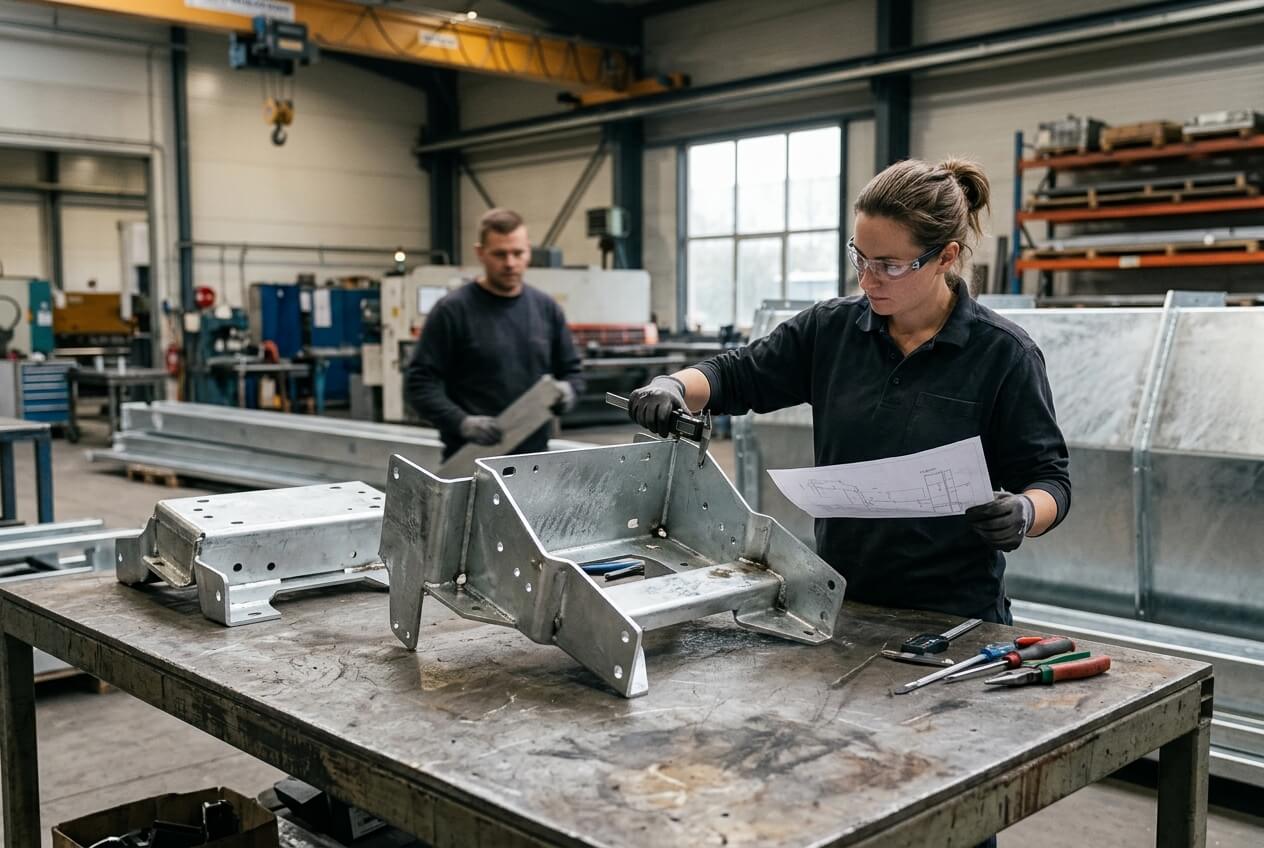
An OEM buyer may send the same drawing for galvanized brackets, cabinet frames, or welded enclosures to three suppliers and receive three very different quotes. One supplier prices hot-dip galvanizing after fabrication. Another assumes electrogalvanized sheet. A third adds vent holes, masking, thread chasing, and post-coat inspection. The lowest quote looks attractive until the first sample arrives with tight holes, rough zinc near hinges, or a frame that no longer sits square.
This risk starts before production. It starts when the RFQ uses a short note such as “iron galvanizing” or “galvanized finish” without defining the zinc process, coating expectations, post-coat tolerances, assembly interfaces, and inspection condition. For custom sheet metal fabrication, that missing detail changes more than appearance. It can change the forming route, weld preparation, hole sizing, coating method, batch inspection plan, cost, and delivery date.
The dominant procurement risk is not choosing galvanizing. The risk is comparing quotes built on different assumptions. Once fabrication starts, those assumptions become expensive. A missing vent hole can stop hot-dip galvanizing. An undefined hinge clearance can create assembly rework. An unmarked cosmetic face can cause disputes after handling marks appear. Buyers reduce this risk when they make the RFQ describe the coated part they expect to receive, not only the raw steel shape they want fabricated.
Vague iron galvanizing notes make supplier quotes look comparable when they are not
A drawing can look complete and still leave the finish open to interpretation. The title block may define steel thickness, bend angles, and hole locations. Then the finish line says only “galvanized.” That single word can point to different production routes. Hot-dip galvanizing after fabrication, electrogalvanized sheet, zinc plating, zinc spray repair, and duplex systems with powder coating do not create the same cost, thickness, appearance, or assembly risk.
Procurement teams often notice the problem only after quote comparison. One supplier may price a light zinc-coated sheet and normal fabrication. Another may quote completed welded assemblies that need dipping, drainage, jigging, and post-coat checks. Their unit prices do not measure the same scope. The cheaper quote may exclude the work that protects fit-up after coating.
The quote gap usually hides in assumptions
Several assumptions can change the final price. The supplier may need to enlarge clearance holes before coating. Welded frames may need vent and drain openings. Threaded holes may require masking or tapping after galvanizing. Visible cabinet faces may need extra handling protection. If the RFQ does not mention these items, each supplier prices its own version of the job.
That gap also affects lead time. A fabricator who discovers galvanizing constraints after cutting or welding must stop and ask for a drawing revision. The buyer then loses time to approval, rework, and new inspection rules. A clear RFQ prevents this by forcing the finish route and coated-part condition into the quotation stage.
Yishang often reviews drawings for this exact mismatch during RFQ preparation. The useful question is simple: did every supplier quote the same coated, inspected, assembly-ready part? If not, procurement has a comparison problem, not only a price problem.
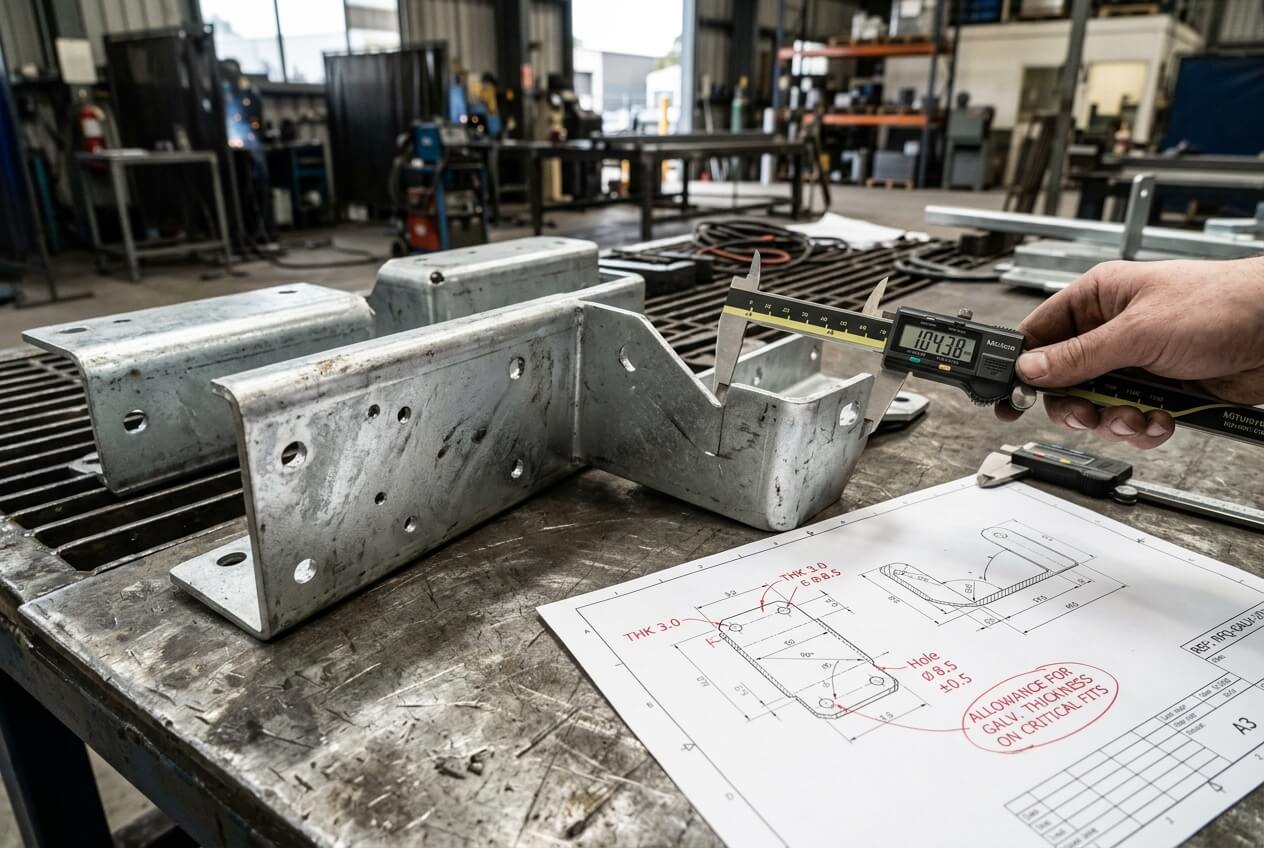
Undefined coated dimensions turn normal tolerances into assembly risk
Iron galvanizing adds material to surfaces, edges, holes, slots, and welded corners. That sounds obvious, but many drawings still apply tolerances as if the part will remain bare steel. A hole that fits a pin before coating may feel tight after galvanizing. A tab that slides into a slot during prototype fitting may bind when zinc builds on both edges. A hinge bracket may pass dimensional inspection before finishing and fail during final assembly.
The RFQ should identify which dimensions matter after coating. Not every dimension needs the same rule. Overall frame length may allow normal fabrication tolerance. A hinge axis, latch location, grounding point, mounting hole, or mating flange may need final confirmation after galvanizing. Without that distinction, suppliers can quote lower by avoiding the extra inspection and rework planning that the part actually needs.
Where fit problems often appear
Small features create the largest surprises. Round holes, slotted holes, tabs, keyways, folded seams, door returns, cable gland openings, and locating faces all react to coating build-up. Threaded features add more risk. If the buyer does not allow thread chasing, masking, or post-coat tapping, the supplier may deliver parts that meet the general finish note but do not accept fasteners during assembly.
Consider an outdoor sensor enclosure with a galvanized mounting back plate. The prototype may close well after a technician cleans two hinge holes by hand. If that adjustment does not enter the drawing, the first batch can arrive with inconsistent hinge movement. The assembly team then spends time reaming holes, sorting parts, or adjusting doors. The cost moves from the supplier quote to the buyer’s production floor.
A better RFQ marks functional features directly on the drawing. Buyers should state whether hole sizes apply before or after galvanizing. They should also define whether the supplier may ream, tap, chase, or clean features after coating. This turns a hidden assumption into a priced process step.
Closed shapes and weld details can stop galvanizing after fabrication has already started
Hot-dip galvanizing creates a different risk from simple sheet coating because the finished fabrication enters a cleaning and molten zinc process. Closed tubes, box sections, welded pockets, deep corners, and trapped overlaps can hold air, acid, flux, or zinc. The part must breathe and drain. If it cannot, the galvanizer may reject the assembly or require added holes after fabrication.
This creates a costly consequence chain. The buyer requests corrosion protection for an outdoor frame. The RFQ shows a welded rectangular structure, but it does not show vent paths. The supplier quotes fabrication and galvanizing based on a normal process. During production review, the galvanizer flags trapped sections. Now the buyer must approve hole locations, update drawings, possibly remake parts, and accept visible openings that no one planned.
Welded assemblies need finish-aware design review
Weld quality also affects coating results. Heavy spatter, sharp weld toes, slag, enclosed laps, and rough corners can lead to uneven zinc build-up or poor appearance. A structural weld note may satisfy strength requirements, but it may not satisfy finish expectations on a visible cabinet frame. Grinding every weld smooth adds cost and time, so the RFQ should not leave this choice to guesswork.
A project-style example shows the issue clearly. A buyer sources galvanized display rack frames for outdoor retail use. The drawing includes welded cross-members and capped tube ends. The first quote excludes drain holes because the drawing does not show them. After fabrication starts, the galvanizing review requires vent openings near several joints. The change delays coating, adds cutting work, and forces the buyer to accept holes on semi-visible surfaces.
Procurement can avoid this by asking suppliers to review venting and drainage before quoting final production. The drawing should show allowed hole locations, cosmetic restrictions, and any surfaces where openings are unacceptable. Yishang can support this kind of manufacturability review when buyers send 2D drawings, 3D files, assembly context, and finish expectations early.
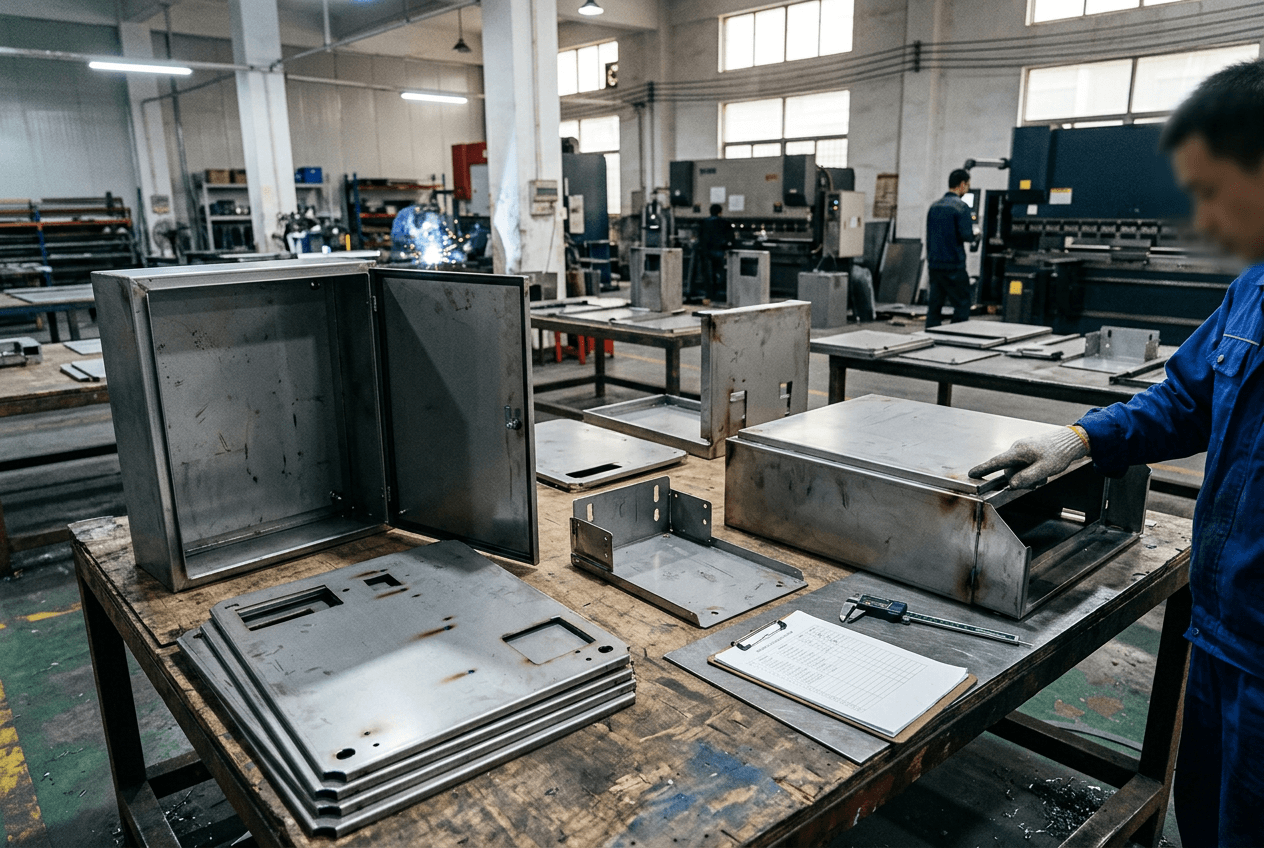
Prototype approval can hide manual corrections that will not repeat in batch production
A galvanized prototype often receives more attention than a production lot. Operators may clean a slot, open a tight hole, adjust a hinge, flatten a flange, or choose the best-looking part for approval. The sample then passes fit and appearance checks. Batch production later reveals the real process variation because dozens or hundreds of parts must pass without special treatment.
This does not mean the prototype has no value. It means buyers should separate sample approval into appearance, coating process, and assembly fit. A sample can look acceptable while still hiding a hole-sizing issue. It can assemble once while still requiring manual work that no one priced into the batch. If procurement treats the prototype as proof of all future output, it may release production with unresolved assumptions.
Record every correction made to the sample
The most important prototype question is not only whether the part passed. Buyers should ask what changed before it passed. Did the supplier chase threads after galvanizing? Did an operator grind zinc from a latch edge? Were hinge holes reamed? Did the door require adjustment? Each action should become a drawing note, inspection item, or approved production step.
For example, a galvanized equipment cabinet may pass prototype review after the latch engages smoothly. During batch assembly, several doors require extra force because zinc build-up near the latch return varies from part to part. The root problem was not the latch. The RFQ never defined the coated clearance or allowed post-coat correction. The supplier and buyer then argue over whether the batch meets the drawing.
Another common case involves galvanized brackets with slotted mounting holes. The prototype fits because one part was checked and cleaned. The batch reaches the installation team, and bolts scrape through rough zinc on many slots. Installation slows down, and the buyer loses the savings gained from the low quote. A controlled prototype review would have defined slot size after coating and the allowed clean-up method.
Before comparing prices, lock the coated-part condition suppliers must quote
Buyers do not need to turn every RFQ into a long engineering manual. They do need to remove the assumptions that change cost and risk. The most useful RFQ describes the part after galvanizing, including the process, critical interfaces, appearance zones, post-coat operations, and inspection method. That gives suppliers the same baseline and makes price differences more meaningful.
Start with the finish line. State whether the requirement is hot-dip galvanizing after fabrication, electrogalvanized material, zinc plating, or another specified system. If the environment drives the choice, include it. Outdoor exposure, coastal air, washdown areas, chemical vapors, and indoor dry service can point to different finish strategies. Do not ask suppliers to guess from the application name alone.
Clarify the features that carry procurement risk
Next, mark the features that must function after coating. These often include hinge holes, latch points, threaded holes, grounding pads, mounting slots, cable entries, locating tabs, mating flanges, and surfaces that contact another assembly. State whether masking, capping, reaming, tapping, thread chasing, or post-coat machining can be used. If the supplier cannot use those steps, specify the final coated tolerance instead.
Cosmetic expectations also belong in the RFQ. A galvanized support frame may tolerate rougher areas and handling marks. A visible metal enclosure front panel may not. Buyers should identify A-surfaces, acceptable roughness concerns, and any zones where runs, spikes, or heavy build-up could interfere with assembly. This avoids disputes after parts meet a corrosion note but fail the buyer’s visual expectation.
Finally, connect the RFQ to batch release. Ask the supplier to confirm the active drawing revision, production quantity, material grade and thickness, weld finish, galvanizing process, inspection points, packaging needs, and any first-article checks. The goal is not to add paperwork. The goal is to prevent a low quote from becoming rework, sorting, delayed installation, or rejected assemblies.
If your project involves galvanized brackets, frames, cabinets, metal enclosures, or welded assemblies, send Yishang the drawings, material requirements, quantities, tolerances, finish expectations, service environment, assembly notes, and prototype feedback. The team can review iron galvanizing assumptions before quotation so venting, drainage, masking, coating build-up, weld cleanup, and post-coat fit are priced clearly. Start with your RFQ files at https://zsyishang.com/.
Frequently Asked Questions
How should an RFQ define iron galvanizing for sheet metal parts?
The RFQ should name the zinc process, such as hot-dip galvanizing after fabrication or electrogalvanized sheet. It should also mark critical holes, mating faces, threaded areas, cosmetic zones, grounding points, and service environment. These details help suppliers quote the same coated part instead of pricing different assumptions.
Why do galvanized holes and slots become tight after coating?
Zinc adds thickness to hole walls, slot edges, tabs, and mating faces. Small clearances can disappear after coating, especially around hinges, latches, mounting slots, and pins. Buyers should state whether dimensions apply after galvanizing and whether reaming, tapping, masking, or thread chasing is allowed.
When do welded frames need vent holes and drain holes?
Vent and drain holes become important when frames include closed tubes, box sections, deep pockets, capped ends, or welded areas that can trap air, cleaning solution, or molten zinc. Buyers should confirm these features before fabrication starts because late changes can add cost, delay coating, and affect appearance.
Can prototype approval guarantee batch consistency for galvanized parts?
No. A prototype may pass after hand cleaning, hinge adjustment, thread chasing, or slot correction. Those actions must be recorded before batch release. Buyers should inspect coated prototypes for appearance and assembly fit, then convert any manual correction into a drawing note or approved production step.
What information helps suppliers quote galvanized enclosures and brackets accurately?
Suppliers need drawings, revision level, material grade and thickness, order quantities, tolerance notes, finish process, cosmetic surface requirements, assembly interfaces, service environment, weld expectations, and any prototype feedback. Clear inputs reduce quote gaps and prevent later disputes over coating build-up or fit.
Should cosmetic requirements be included for iron galvanizing projects?
Yes. Galvanizing mainly protects against corrosion, but visible enclosures, cabinet faces, and display frames may also need appearance control. Mark A-surfaces, handling-sensitive zones, and areas where zinc runs, spikes, or rough build-up could create visual or assembly problems.