
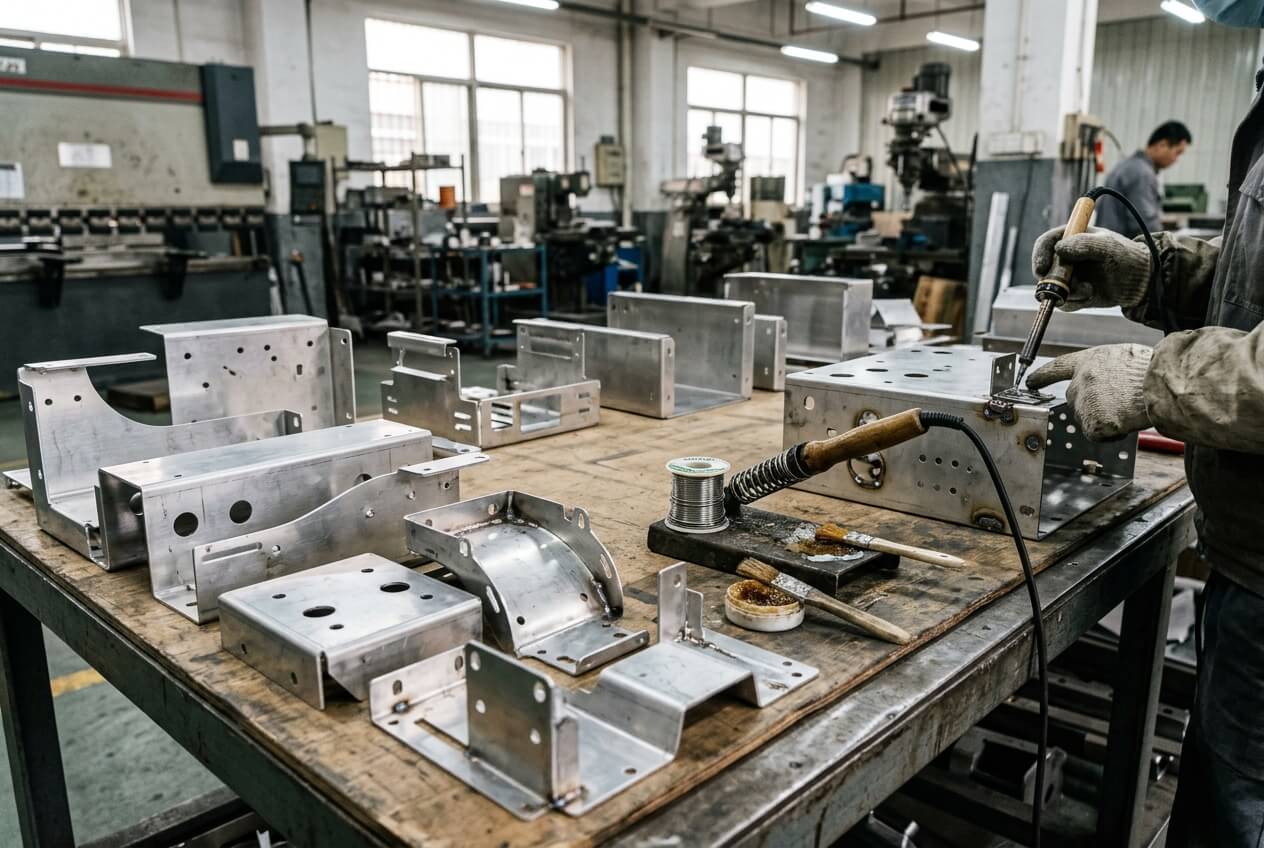
An OEM buyer sends an RFQ for a sheet metal enclosure with bent side flanges, internal brackets, a cosmetic front panel, and one old drawing note: “iron soldering on seams.” Three suppliers review the same file. One prices manual soldering. One assumes spot welding will replace it. A third adds cleaning, polishing, masking, and rework time because the seam sits near a powder-coated face.
The price spread looks like normal supplier variation. It is not. The buyer has asked suppliers to quote different manufacturing assumptions without realizing it. The drawing does not explain whether iron soldering protects conductivity, sealing, appearance, low heat input, or only repeats an old prototype method.
This article focuses on one procurement risk: RFQ ambiguity around a legacy process note. When buyers do not separate fixed functional requirements from flexible fabrication methods, suppliers price different parts. That risk affects custom sheet metal parts, metal enclosures, brackets, frames, cabinets, and welded assemblies. It also affects lead time, prototype approval, inspection disputes, and batch consistency.
A Process Note Turns One RFQ Into Several Different Quotes
A drawing note such as “iron soldering,” “solder all seams,” or “join as sample” often comes from an earlier prototype. Procurement may treat it as a fixed requirement. Engineering may see it as a historical detail. Suppliers must then decide whether to follow the note exactly or quote the function they believe the part needs.
That single decision changes the quote. Manual iron soldering can require slower handling, operator skill, flux control, local cleaning, tip maintenance, and visual inspection. A redesigned formed seam or hidden spot weld may need different tooling, fixtures, and inspection points. A riveted or clinched joint may change appearance, hole control, and assembly sequence.
Why the lowest quote may not describe the same part
One supplier may include all soldering labor because the drawing says so. Another may remove the soldering step and assume process freedom. A third may include extra finish work because solder residue can affect coating. The unit prices cannot be compared fairly unless the buyer knows which route each supplier priced.
This problem appears often in enclosure RFQs. A small control box cover may show soldered corners because a repair shop built the first sample by hand. At 20 prototypes, that method may look acceptable. At 2,000 pieces, the same note may create avoidable manual labor and inconsistent corners. If the real requirement is only a closed corner under powder coating, a formed return flange with spot welding may control cost better.
Buyers can reduce the risk before sourcing starts. Instead of asking suppliers to follow a copied process note, define what the joint must do. Does it need to conduct electricity? Seal dust or water? Carry load? Look smooth from a customer-facing angle? Hold a mating part in position? Those answers let suppliers quote the same requirement.
When Yishang reviews drawings for custom sheet metal fabrication, this is often the first question: is iron soldering the requirement, or is it only one possible way to meet the requirement?
The Real Cost Starts When Iron Soldering Replaces Joint Function
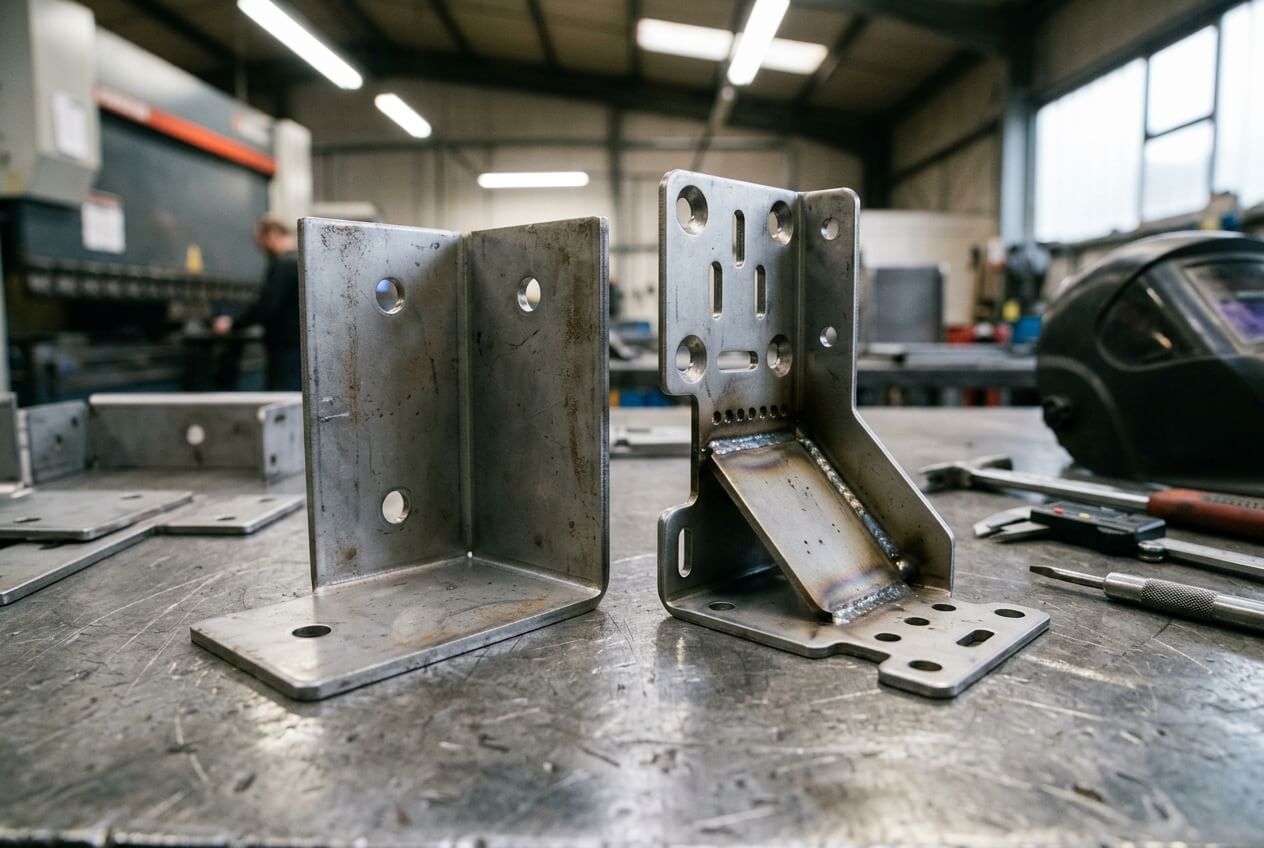
Iron soldering is not automatically wrong. It can suit certain thin sheet joints, small contact areas, repairs, or low-load features. The risk starts when the process name replaces the joint function. The supplier then protects the quote against every possible interpretation.
For sheet metal enclosures and frames, a soldering note can hide several different needs. A seam may need electrical continuity for grounding. A visible cap may need a smooth appearance. A cabinet corner may need enough closure to prevent coating gaps. A bracket may need strength and repeatable position. Each need calls for a different quotation basis.
Conductivity, sealing, strength, and appearance are not the same requirement
If the joint needs conductivity, the buyer should define the contact area and test expectation. The supplier may need to protect bare metal during coating, add masking, or plan a continuity check. If the joint needs sealing, the RFQ should say whether the buyer expects a visual seam closure, a dust barrier, or a leak test.
Strength creates another route. A load-bearing bracket inside a cabinet may not benefit from manual soldering. Welding, tabs, gussets, rivets, or a formed bracket may give better repeatability. If the drawing only says “solder,” a cautious supplier may still quote soldering and add rework allowance. A more aggressive supplier may change the method and create approval risk later.
Appearance also needs clear limits. A decorative display frame may require smooth visible corners. That does not always mean iron soldering should remain mandatory. Stainless steel, mild steel, galvanized sheet, and aluminum assemblies respond differently to heat, polishing, and coating. A small weld with local finishing, a hidden tab, or a redesigned bend may deliver the visible result with less variation.
Consider a retail display frame with small decorative end caps. The buyer asks for soldering because the sample looks seamless. One supplier prices careful hand work and polishing. Another proposes welded tabs and powder coating. The quotes differ because the RFQ never states the viewing distance, acceptable corner radius, or whether the cap carries load. The buyer may choose the lower price, then reject the first sample for a mark that was never defined.
The consequence chain is predictable. The process note enters the drawing. Suppliers guess the function. Quotes include different labor, fixtures, cleaning, and inspection. Prototype feedback then exposes the missing requirement. By that point, the buyer may face revised pricing, delayed approval, or a supplier dispute.
Fit and Finish Assumptions Move the Risk Into Prototype Review
A prototype can make RFQ ambiguity look solved. One technician can hand-solder a seam, polish a mark, adjust a bracket, and deliver a sample that appears acceptable. The sample proves the part can be made once. It does not prove that the quote supports stable batch production.
Iron soldering increases this risk because heat input, joint access, flux residue, and operator technique all affect results. Thin panels may distort. Holes near the seam may move slightly. Powder coating may reveal contamination. A cosmetic face may need more polishing than the quote allowed.
Fit-critical features need priority before the sample
Buyers often mark every dimension as important because they want to prevent quality problems. That choice can backfire. If the drawing treats hidden seams, exterior faces, hinge locations, PCB mounting holes, and latch cutouts with the same priority, suppliers quote a conservative route. They may add fixtures, slower soldering, extra inspection, and more rework time.
A better RFQ identifies assembly interfaces first. For an electronics enclosure, the front panel opening, PCB standoffs, hinge line, latch position, and mating edges may drive fit. A rear soldered seam may only need to close cleanly under the coating. For a cabinet bracket, the rail slot may need tight control, while the outer edge remains hidden after assembly.
This hierarchy affects both quotation and inspection. Suppliers can protect critical holes during bending, welding, soldering, polishing, and coating. They can also avoid spending time controlling surfaces that do not affect assembly. Without that hierarchy, the buyer may pay for precision where it brings no value and still miss the feature that causes field assembly problems.
Finish expectations near soldered areas must be visible in the RFQ
Finish risk often appears late. A soldered seam near a powder-coated face may need flux cleaning, surface leveling, masking, or extra inspection. If the buyer expects a Class A appearance, the quote must include that work. If the seam sits inside the enclosure, normal fabrication marks may be acceptable.
One common example involves powder-coated cabinets with internal grounding tabs. The tab may require conductivity after coating. The risk does not sit in the word “solder.” It sits in the masking boundary, coating thickness, contact area, and inspection method. A prototype may pass because one operator masked it carefully. Batch parts may fail when the drawing does not define the protected area.
Before prototype approval, buyers should ask what the supplier corrected by hand. Did the seam need extra polishing? Did heat affect flatness? Did hole positions shift after soldering or welding? Did coating hide or amplify the joint mark? Did the sample use the same process planned for production? These questions prevent a polished prototype from becoming an expensive batch surprise.
Freeze the Cost-Driving Assumptions Before Comparing Unit Prices
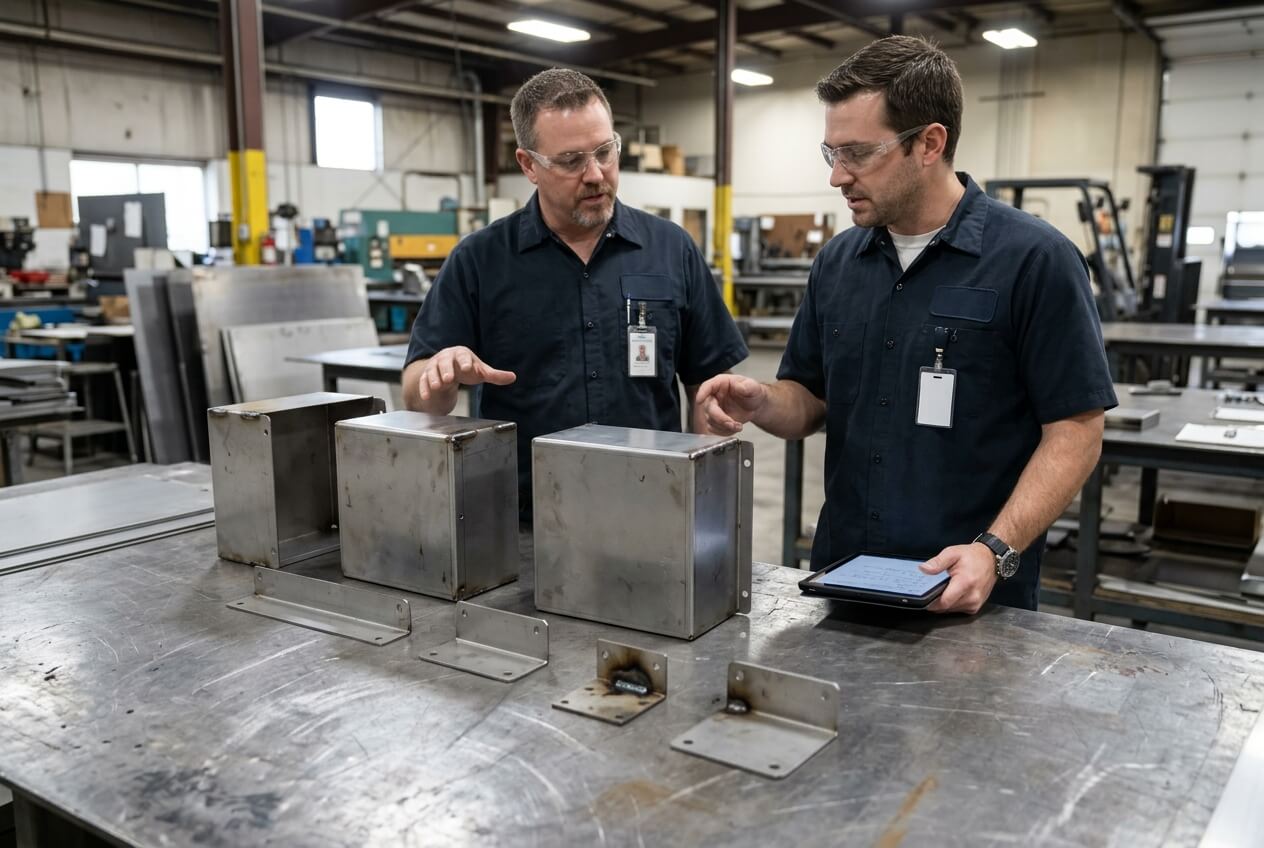
Quote comparison should not start with the unit price. It should start with the assumptions behind the unit price. A low quote may exclude cleaning, fixtures, masking, finish rework, inspection, or a production-capable joining method. A higher quote may include those items because the supplier treated iron soldering as mandatory.
The buyer does not need to control every detail. In fact, over-control can raise cost and reduce manufacturability. The buyer needs to freeze the requirements that drive function, fit, finish, and approval. The remaining details can stay open for supplier recommendations.
Clarify what must stay fixed
State whether iron soldering is mandatory or only preferred. If it is mandatory, explain why. If the process can change, say that welding, clinching, riveting, tabs, formed seams, or other fabrication routes may be acceptable if they meet the same function.
Mark fit-critical features clearly. Identify mounting holes, slots, hinge points, latch positions, PCB standoffs, mating edges, and bracket faces. Add realistic tolerance priorities instead of blanket notes such as “all dimensions critical.” Blanket control often creates conservative pricing and still leaves the supplier unsure which features protect assembly.
Define finish expectations where the joint sits. Note visible faces, acceptable polishing marks, coating requirements, masking zones, and areas where discoloration or residue cannot remain. If a seam is hidden, say so. This can reduce unnecessary finishing cost.
Ask suppliers to expose assumptions in the quote
RFQ communication should force assumptions into the open. Ask each supplier which joining method they priced, which features need fixtures, which inspection steps they included, and whether the prototype method matches the batch method. Also ask whether the quoted lead time includes tooling, samples, coating trials, or assembly checks.
This step helps procurement compare real alternatives. A supplier may propose a lower-cost route, but the buyer can evaluate it against the same functional requirements. Another supplier may insist on manual soldering, but the buyer can see whether that choice adds value or only follows a legacy note.
For welded assemblies, frames, brackets, and enclosures, early manufacturability review can prevent quote revisions after sampling. Yishang can review drawings, samples, assembly notes, and finish expectations when a soldering note may be driving unnecessary fabrication cost. The review should focus on requirements, not on defending one process.
Practical next step: If your RFQ includes iron soldering, soldered seams, welded brackets, cosmetic faces, or unclear fit-critical holes, send your drawings, material requirements, quantities, tolerance priorities, finish expectations, samples, photos, and assembly notes to Yishang. Ask for the quote to state the joining method, finish assumptions, inspection points, prototype plan, and any recommended manufacturability changes before you compare supplier prices.
Frequently Asked Questions
Should an iron soldering note remain on a sheet metal drawing?
Keep it only when the process itself matters. It may matter for repair compatibility, customer approval, or a specific electrical contact method. If the real need is strength, closure, appearance, or sealing, rewrite the note as a functional requirement and allow suppliers to propose other joining routes.
Why does iron soldering create quote gaps between suppliers?
Suppliers may interpret the same note differently. One may include manual soldering, cleaning, masking, and inspection. Another may assume welding or formed seams are acceptable. The prices then reflect different production routes, not different efficiency levels.
What should buyers clarify when soldered seams sit near powder coating?
Mark visible faces, coating requirements, masking areas, and unacceptable defects. Soldered seams can leave residue, heat marks, or uneven build-up. If the area needs a cosmetic finish, the quote should include cleaning, surface preparation, and inspection.
Can a prototype prove that manual soldering will work in batch production?
Not by itself. A prototype may include hand touch-up that the batch quote cannot support. Buyers should ask which steps were manual, whether fixtures were used, how the seam was cleaned, and whether the production batch will use the same joining method.
How should buyers handle tolerances on parts with soldered or welded joints?
Identify the features that control assembly first. These may include mounting holes, PCB standoffs, hinge lines, latch cutouts, slots, and mating edges. Hidden seams or non-functional edges can often follow normal sheet metal fabrication practice.
What information helps Yishang review a soldering-related RFQ?
Send drawings, material grades, quantities, tolerance priorities, finish expectations, photos, samples, and assembly notes. This information helps separate fixed requirements from flexible fabrication methods before quotation or prototype approval.