
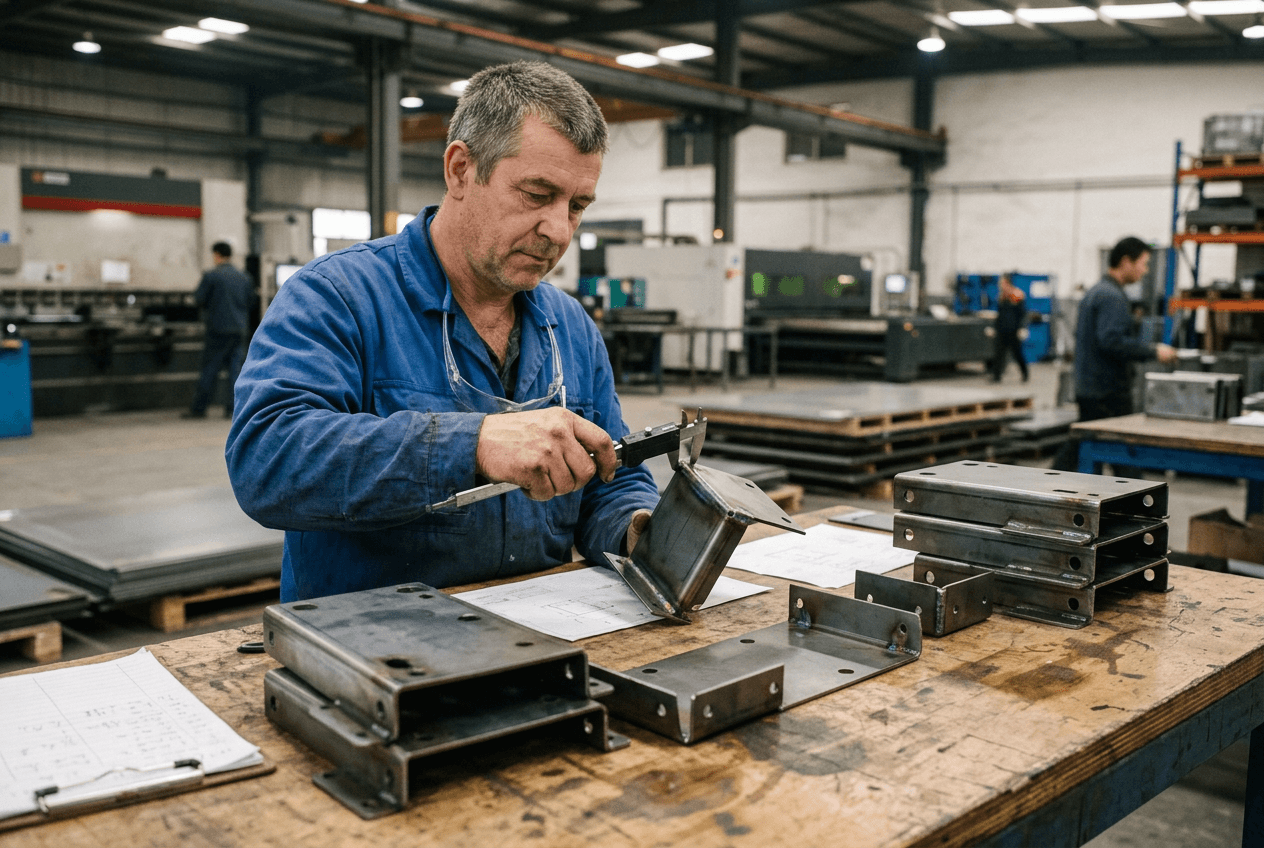
An OEM buyer sends one RFQ for a powder-coated enclosure, a stainless-looking control panel, and several bent brackets. The drawings say “metal parts” in one area and “steel” in another. One supplier quotes cold-rolled mild steel with powder coating. Another quotes 304 stainless steel. A third proposes aluminum 5052 to reduce weight.
The buyer now has three prices, but not three prices for the same part. That is the real procurement risk behind the question “is steel non ferrous.” Steel is not non-ferrous. Steel contains iron, so it is ferrous. In custom sheet metal fabrication, however, the bigger danger is not the definition. The bigger danger is an RFQ that lets suppliers choose different material systems, finish routes, and forming assumptions.
When that happens, a purchasing team may select the lowest quote without seeing what changed. The cost gap may come from a missing coating, a different grade, wider tolerances, untreated edges, or a simplified weld finish. Later, those quote assumptions can become assembly gaps, corrosion complaints, cosmetic rework, or batch variation. Buyers prevent that risk by making the material decision visible before suppliers price the work.
Where an unclear “steel” note starts to distort the RFQ
The word “steel” looks precise, but it rarely gives a fabricator enough information. Steel may mean cold-rolled mild steel, hot-rolled steel, galvanized steel, stainless steel, or another iron-based grade. Each option changes how the shop cuts, bends, welds, deburrs, coats, inspects, and packs the part.
That matters because sheet metal quotes carry assumptions. If a drawing only says “steel enclosure,” one supplier may assume mild steel because it keeps the unit price low. Another may choose galvanized steel because the part looks exposed to moisture. A third may quote stainless steel because the buyer mentioned corrosion resistance in an email. The RFQ has already split into different manufacturing routes.
The definition is simple; the quote risk is not
Steel is ferrous because it contains iron. Non-ferrous metals include aluminum, copper, brass, and other metals without iron as the main element. Procurement confusion often starts when buyers use “non-ferrous” to mean “rust-resistant” or “not plain mild steel.” That shortcut creates quoting problems.
For example, 304 stainless steel resists corrosion better than mild steel, but it is still ferrous. Aluminum is non-ferrous and light, but it does not bend, weld, or hold hardware exactly like steel. A powder-coated mild steel enclosure may meet an indoor requirement at a lower cost. A stainless enclosure may suit washdown conditions. Both choices can work, but they are not interchangeable quote lines.
A vague material note creates hidden supplier decisions
Most quote gaps start before pricing. They start when the buyer sends drawings without a material grade, surface expectation, or service environment. The supplier must then decide what the part needs. That decision may affect stock availability, minimum order quantities, tooling setup, welding method, coating subcontracting, and inspection time.
A clean RFQ does not need excessive detail. It does need enough detail to stop suppliers from solving different problems. If the part must be ferrous steel, say which steel. If stainless steel can replace coated mild steel, list it as an alternate. If aluminum is only a cost-reduction idea, label it as a review option, not as an equal substitute.
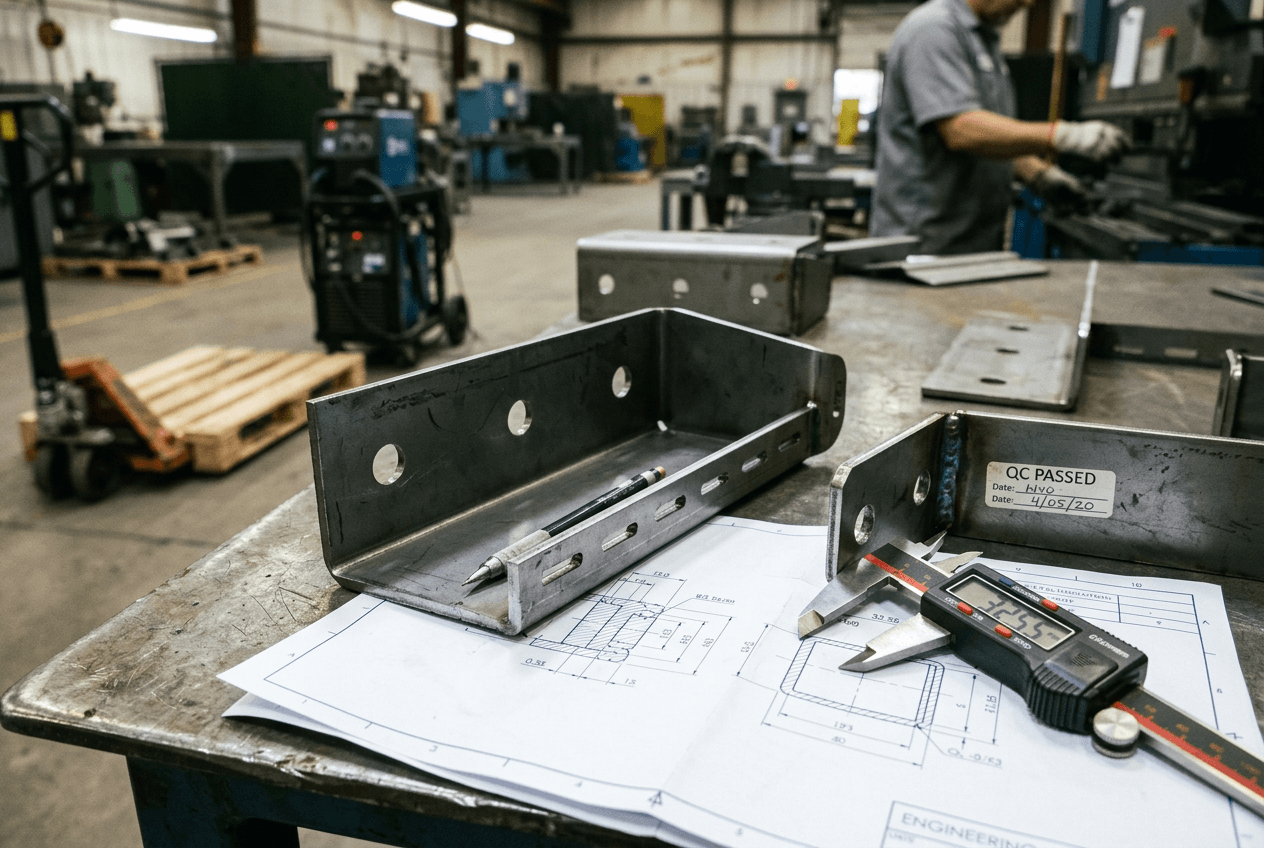
How one material assumption changes price, fit, and finish in the same part
Buyers often compare unit prices first. Fabricators price process risk first. That difference explains many disappointing sourcing results. A material change does not only change the sheet price. It can change bend compensation, springback, weld distortion, grinding effort, coating thickness, hardware choice, and cosmetic handling.
A quote for mild steel with powder coating includes a corrosion strategy based on coating coverage. A quote for stainless steel may reduce coating needs but increase material cost and surface handling. A quote for aluminum may cut weight but change bending rules and thread strength. These differences affect the final part, even when the CAD file stays the same.
Bends and holes move when the material system changes
Sheet metal parts often fail at small details. A mounting hole near a bend line may look harmless on the drawing. In production, material behavior decides whether the hole stays round, shifts position, or distorts after forming. Stainless steel usually springs back more than mild steel. Aluminum may need a larger bend radius to avoid cracking.
That shift can break assembly fit. A cover may no longer align with inserts. A bracket may force the installer to enlarge holes. A hinged panel may rub after coating. The buyer sees a fit problem, but the root cause started with an RFQ that did not lock material and bend expectations.
Welded assemblies magnify the assumption
Welding adds another consequence chain. Mild steel frames may weld efficiently, but exposed seams often need grinding and powder coating. Galvanized steel raises zinc burn-off and weld-prep concerns. Stainless steel requires more control over heat tint, surface marks, and finishing if the welds stay visible.
Consider a welded equipment frame with four mounting plates. A supplier quotes mild steel and includes weld grinding only on the front face. Another quotes stainless steel and assumes visible TIG welds are acceptable. Both quotes may look complete. Yet the delivered frames will not match if the RFQ never defined weld appearance, flatness, or critical hole spacing after welding.
Finish decisions can hide inside material decisions
Finish expectations often sit outside the drawing, especially during early sourcing. A buyer may say “black steel cabinet” and expect powder coating, smooth visible faces, deburred edges, and protected threads. A supplier may quote only fabrication and list coating as excluded. Another may include coating but skip masking and cosmetic packing.
Those omissions change cost and lead time. Powder coating requires cleaning, hanging points, masking decisions, cure temperature review, and thickness allowance. Stainless brushing needs grain direction control. Aluminum anodizing or powder coating needs surface preparation. If suppliers do not price the same finish scope, the lowest quote may simply exclude the work that prevents complaints.
Why prototype approval does not remove RFQ ambiguity
A prototype can pass approval and still leave the batch exposed. This happens when the sample succeeds because a technician adjusts it by hand. The workshop may open a slot, tweak a bend angle, grind a weld, or chase a thread. If nobody updates the drawing, the next production run may repeat the original mistake at scale.
Material ambiguity makes that risk worse. A prototype made from mild steel may bend differently than a batch made from stainless steel. A sample without coating may fit, while the coated batch binds at tabs and slots. A frame may sit flat after manual correction, but a batch may show the real weld distortion pattern.
Example: a control enclosure that fit before coating
An electronics buyer approves a mild steel control enclosure after checking the bare prototype. The door closes well, the hinge line looks straight, and the cable openings align. The batch then receives powder coating. After assembly, the door rubs at the return flange, and several threaded studs need rework.
The coating did not create the whole problem. It exposed a missing clearance decision. The RFQ never stated coating thickness allowance, masked areas, or critical mating gaps. The drawing also failed to mark which faces required cosmetic protection. A better RFQ would connect material, finish, and fit before prototype approval.
Example: brackets that changed after a material substitution
A purchasing team sources bent support brackets and lists “steel or equivalent” to encourage competitive pricing. One supplier samples cold-rolled steel. Later, the buyer accepts a stainless option for corrosion resistance. The bracket geometry stays unchanged, but the hole pattern shifts slightly after bending because the springback compensation differs.
The assembly team then struggles to align the bracket with a mating frame. The issue does not look like a material problem at first. It looks like poor hole accuracy. In reality, the RFQ allowed a material substitution without rechecking bend radius, flat pattern development, and functional tolerances.
Capture sample adjustments before batch release
Prototype learning only protects production when buyers turn it into controlled information. Record the actual material grade, sheet thickness, bend radius, finish route, hardware type, and any shop corrections. Then revise the drawing or add controlled notes before placing the batch order.
Not every dimension needs a tight tolerance. Buyers should identify the features that control assembly: hole centers, mating flanges, hinge locations, panel gaps, hardware positions, and welded frame datums. This approach keeps inspection practical while reducing the chance that batch parts drift away from the approved sample.
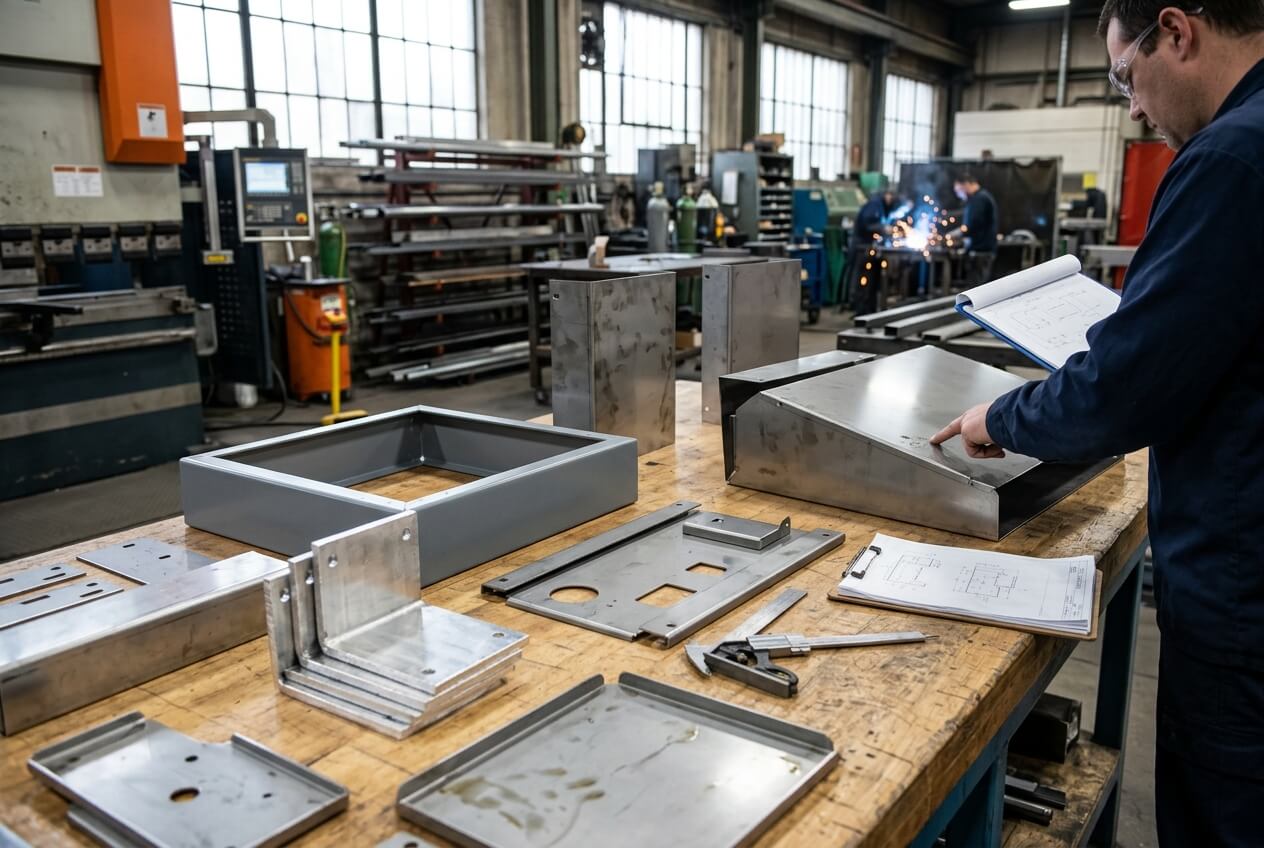
What buyers should clarify before comparing steel, stainless steel, and aluminum quotes
The safest quote comparison does not start with the lowest unit price. It starts by asking whether each supplier quoted the same part, the same finish, and the same acceptance standard. If the RFQ lets one supplier price coated mild steel and another price brushed stainless steel, the spreadsheet comparison will mislead the buyer.
Clear RFQ notes reduce that risk. They also help suppliers give useful manufacturability feedback instead of guessing. A fabricator can often flag a tight bend, a hard-to-source thickness, a risky weld sequence, or a coating conflict before production. But the supplier needs enough project context to make that feedback relevant.
Name the material route, not just the metal family
Use exact wording where possible: cold-rolled steel, galvanized steel, 304 stainless steel, 316 stainless steel, or aluminum 5052. If alternates are acceptable, separate them into priced options. Do not let “steel” and “non-ferrous” carry the whole material decision.
Also state the reason behind the choice. If the part needs corrosion resistance, say whether indoor humidity, outdoor rain, chemical exposure, or washdown cleaning drives the requirement. If weight matters, give the target or the concern. When suppliers understand the performance driver, they can propose changes without changing the project silently.
Connect finish expectations to functional fit
Finish notes should do more than name a color. They should identify visible faces, acceptable weld marks, edge deburring requirements, masking areas, and coating-sensitive fits. A powder-coated enclosure may need clearance at tabs, hinges, slots, and covers. A stainless panel may need grain direction and scratch-control expectations.
These notes prevent cost surprises. They also prevent late arguments about what the quote included. If a quote excludes coating, hardware insertion, masking, weld grinding, or protective packing, the buyer should see that exclusion before issuing the purchase order.
Make tolerance priorities visible
General tolerances help, but they do not replace functional priorities. Mark the holes, bends, mating faces, and welded assembly dimensions that decide whether the part fits. Keep non-critical dimensions reasonable. Over-tightening every feature increases inspection cost and may extend lead time without improving the assembly.
For welded assemblies, define datums and critical hole spacing after welding. For enclosures, define panel gaps, cover fit, and coating-sensitive clearances. For brackets, show the relationship between bend angle, hole location, and mounting face flatness. These details keep quotes aligned with real production risk.
How to turn a risky RFQ into a quote suppliers can compare honestly
A good RFQ does not remove every engineering decision. It makes the important assumptions visible. That protects the buyer from comparing a low quote that excludes finishing against a higher quote that includes coating, hardware, inspection, and packaging. It also reduces avoidable redesign after sampling.
Before sending drawings, check whether the file answers four practical questions. What material grade should the supplier price? What finish route should protect or present the part? Which dimensions control assembly? What quantity and batch expectation should the supplier use for process planning?
Use alternates without losing control
Alternates can reduce cost or improve manufacturability, but they need rules. Ask suppliers to quote the required material first. Then allow alternates as separate line items with clear labels. For example, request one price for powder-coated mild steel and one option for 304 stainless steel. If aluminum is acceptable, require notes on bend radius, hardware, finish, and weight impact.
This format keeps sourcing flexible without mixing unlike parts. It also lets engineering approve or reject each alternate based on function, not only price. The purchasing team can then compare total cost, lead time, inspection needs, and production risk with fewer blind spots.
Bring manufacturability feedback into the RFQ stage
Suppliers can only quote cleanly when they see the real constraints. Send 2D drawings, 3D files if available, quantities, target lead time, finish requirements, tolerance priorities, and assembly notes. Photos of existing samples or mating parts often reveal risks that drawings miss.
Yishang can review custom sheet metal fabrication drawings for enclosures, brackets, frames, panels, and welded assemblies when the material note or finish route remains unclear. That review should happen before final quote comparison, not after the first batch fails inspection. Early discussion helps buyers catch conflicts between material choice, bending, welding, coating, and assembly fit.
Close the loop before the purchase order
Before releasing the PO, ask each supplier to confirm the material grade, sheet thickness, finish process, included hardware, deburring level, weld finish, inspection basis, and packaging method. Ask them to list exclusions. This final step may feel simple, but it prevents many disputes.
The question “is steel non ferrous” has a short answer. No, steel is ferrous. The procurement lesson is larger. If the RFQ does not define which steel, which finish, and which functional dimensions matter, suppliers may quote different parts. Send drawings, material requirements, quantities, tolerances, and finish expectations to Yishang if you want a fabrication review before comparing final quotes.
Frequently Asked Questions
Is steel non ferrous in sheet metal fabrication?
No. Steel is ferrous because it contains iron. The procurement risk starts when an RFQ uses “steel” too loosely and lets suppliers choose different grades, finishes, and fabrication routes.
Is stainless steel non-ferrous?
No. Stainless steel is still ferrous, although it contains alloying elements that improve corrosion resistance. Buyers should specify the stainless grade, such as 304 or 316, instead of using “non-ferrous” as a shortcut.
Why can two steel enclosure quotes be so different?
The suppliers may have priced different assumptions. One may include mild steel, powder coating, masking, and weld grinding. Another may exclude coating or assume stainless steel. The buyer should compare material, finish, hardware, tolerances, and inspection scope.
When should a buyer allow aluminum as an alternate to steel?
Aluminum can help when weight or corrosion resistance matters, but it changes bend radius, welding, hardware strength, and finish choices. Buyers should request aluminum as a separate alternate, not as an unlabeled substitute.
How does material ambiguity affect prototype-to-batch consistency?
Different materials bend, spring back, weld, and accept coating differently. A prototype may pass after manual adjustment, but batch parts can drift if the drawing does not capture the actual material, tolerances, finish, and assembly-critical dimensions.
What should buyers send for a clearer sheet metal RFQ?
Send 2D drawings, 3D files when available, material requirements, approved alternates, quantities, tolerance priorities, finish expectations, assembly notes, and sample photos. These details help suppliers quote the same manufacturing problem.