
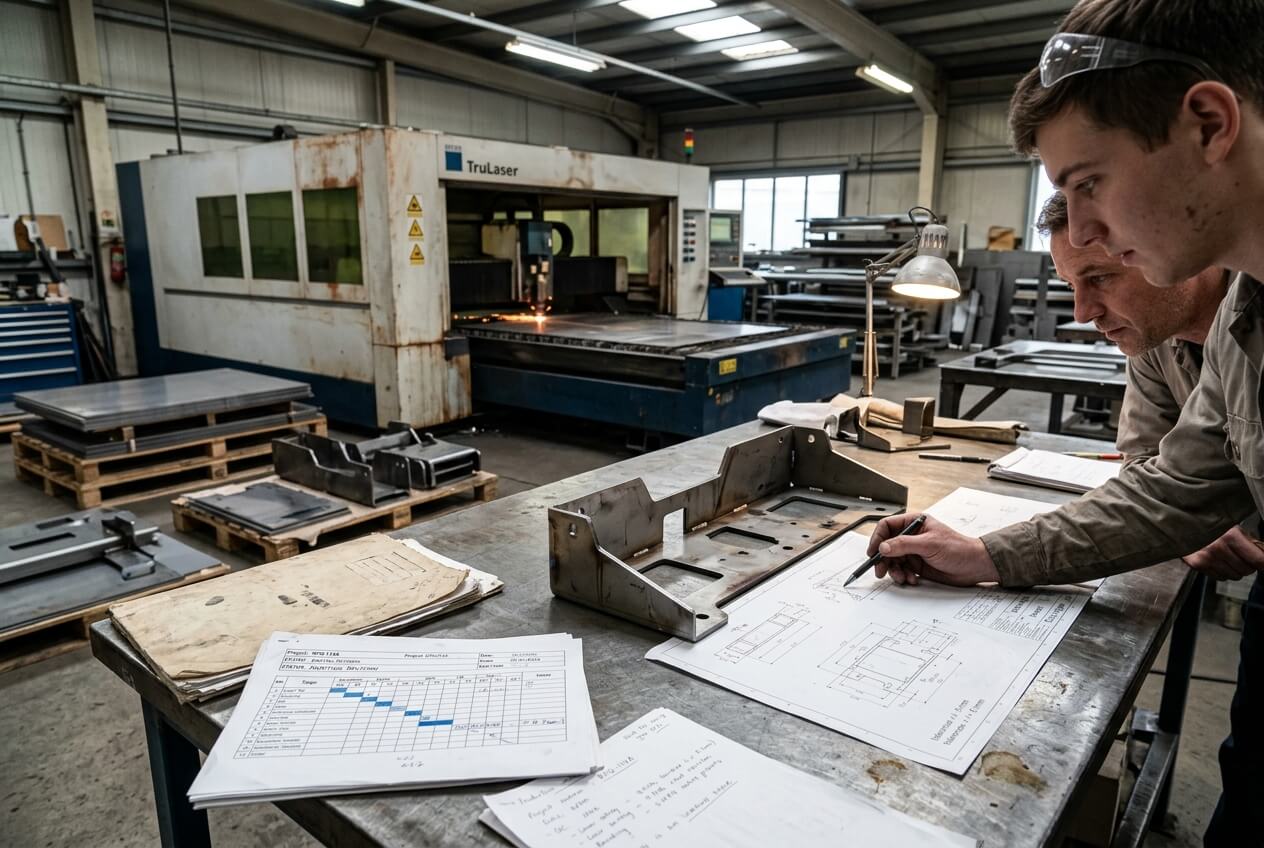
A buyer sends an RFQ for a powder-coated control enclosure, two internal brackets, and a laser cut front panel. The drawing package looks complete at first glance. It includes CAD files, a PDF drawing, quantity targets, and a requested delivery date. Three suppliers reply with similar prices. Each one says it can meet good laser cutting precision.
The lowest-risk quote may not be the fastest quote. A fast quotation can hide assumptions about which dimensions matter, when tolerance applies, how coating affects clearance, and whether inspection happens before or after forming. Those assumptions usually surface after the purchase order, when the buyer has less schedule flexibility.
For OEM sheet metal buyers, the dominant risk is RFQ ambiguity. The laser may cut accurately, yet the order can still lose days through drawing questions, reprogramming, sample rework, fixture changes, coating problems, or late inspection requests. A safer RFQ tells the supplier which precision requirements protect assembly fit and which features can follow standard shop tolerance.
The Real Risk Is a Quote Based on the Flat Blank, Not the Finished Part
Laser cutting precision often describes the cut profile on a flat sheet. Many OEM parts do not ship as flat blanks. They become bent brackets, welded frames, powder-coated panels, cabinet doors, or assembled metal enclosures. The precision that matters to procurement is the precision that survives the full route.
A note such as ±0.1 mm general tolerance can look decisive. In practice, it can create confusion. Does it apply to hole diameter, hole-to-hole location, bend-to-hole location, outside size, flatness, or the final mounted position? Each answer changes programming, bend setup, inspection time, and sometimes the quoted price.
Consider a laser cut front panel for an industrial controller. The switch openings may need tight size control. The ventilation slots may only need a clean appearance. The mounting holes may matter most after powder coating because the panel must align with threaded inserts in the enclosure. If the RFQ treats every feature equally, the supplier may either overprotect the part or underquote the actual control work.
This is where lead-time risk begins. The supplier quotes from the drawing, but production later discovers that the critical dimension belongs to the finished assembly. The team then needs confirmation, a revised inspection plan, or a trial part. The delay did not start at the laser cutter. It started when the RFQ failed to define the precision target.
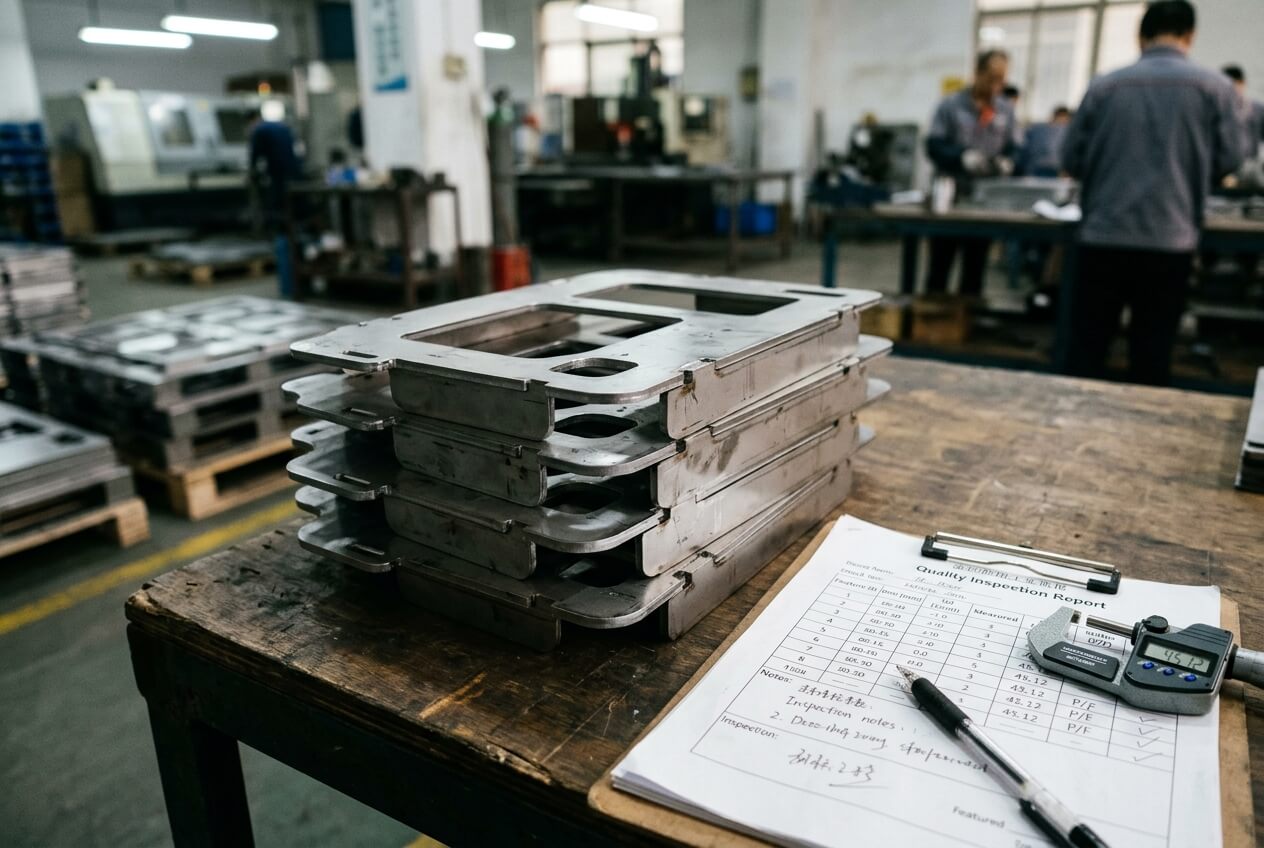
Where RFQ Ambiguity Turns Into Quotation and Production Delays
Buyers often compare unit prices before they compare assumptions. That can reward the supplier that left out the most risk. A serious quote should show whether the lead time includes drawing review, material purchase, laser cutting, deburring, bending, welding, finishing, assembly, inspection, packing, and export preparation.
CAD geometry does not explain function
CAD files show shape. They do not always show which holes locate a PCB, which edge faces the customer, which slots must stay open after powder coating, or which flange controls assembly fit. When every dimension looks critical, a cautious supplier adds review time. When nothing looks critical, a fast supplier may skip controls that the buyer expects later.
Tolerance notes need a timing point
A tolerance before bending differs from the same tolerance after bending. A tolerance before coating differs from the same tolerance after coating. RFQs should state whether critical dimensions apply to the flat blank, formed part, welded assembly, or finished coated part. That single clarification helps the supplier plan bend deduction, fixtures, masking, and inspection before quoting.
Finish expectations can change real clearance
Powder coating, brushing, polishing, and deburring all affect production time. They also affect fit. Coating buildup can reduce clearance in slots, hinge holes, latch areas, grounding points, and removable covers. If masking appears after sample approval, the batch may need new work instructions and extra handling.
A stronger RFQ does not need to describe every manufacturing step. It should identify the features that cannot drift without creating assembly trouble. Mark mating edges, connector openings, hinge holes, latch holes, PEM fastener locations, cosmetic faces, masked zones, and inspection points. Yishang can review those notes with drawings and separate cutting assumptions from forming, finishing, and assembly risks.
One Tight Feature Can Control the Whole Fabrication Route
Procurement teams sometimes treat tight features as isolated details. Production rarely works that way. One slot, hole pattern, or bend-to-hole relationship can decide the route for the entire part. It can require slower cutting, extra deburring, test bending, a fixture, coated-part inspection, or a first article report.
Bracket example: accurate holes still move after bending
A U-shaped stainless steel bracket may include four mounting holes and two side flanges. The laser can cut the holes accurately in the flat pattern. After bending, the final hole position depends on material thickness variation, bend radius, tooling, springback, and datum selection. If the bracket mounts a motor or sensor, the buyer should state which formed surfaces create the datum. Without that note, suppliers may quote different inspection bases and different schedules.
Enclosure example: coating turns precision into fit risk
An electrical enclosure door may include a latch opening, hinge holes, gasket contact area, and several switch cutouts. The laser cutting precision of the blank matters, but coating thickness may decide whether the latch works smoothly. If the buyer requests tight clearance after coating but does not mention masking or coated inspection in the RFQ, the supplier may quote a faster route than the job can safely support.
Welded frame example: accurate parts can lose square
A welded display frame may start with accurate laser cut plates and tabs. Welding heat can still pull the assembly out of square. If outer panels later attach to threaded holes, the RFQ should call out the assembled dimensions and inspection method. Otherwise, the supplier may quote only part-level accuracy and discover the frame-level requirement during trial assembly.
These examples share the same consequence chain. The RFQ defines precision too broadly. The quote assumes a simpler route. Production finds the real control point later. The buyer then faces questions, rework, added inspection, or a missed shipping date.
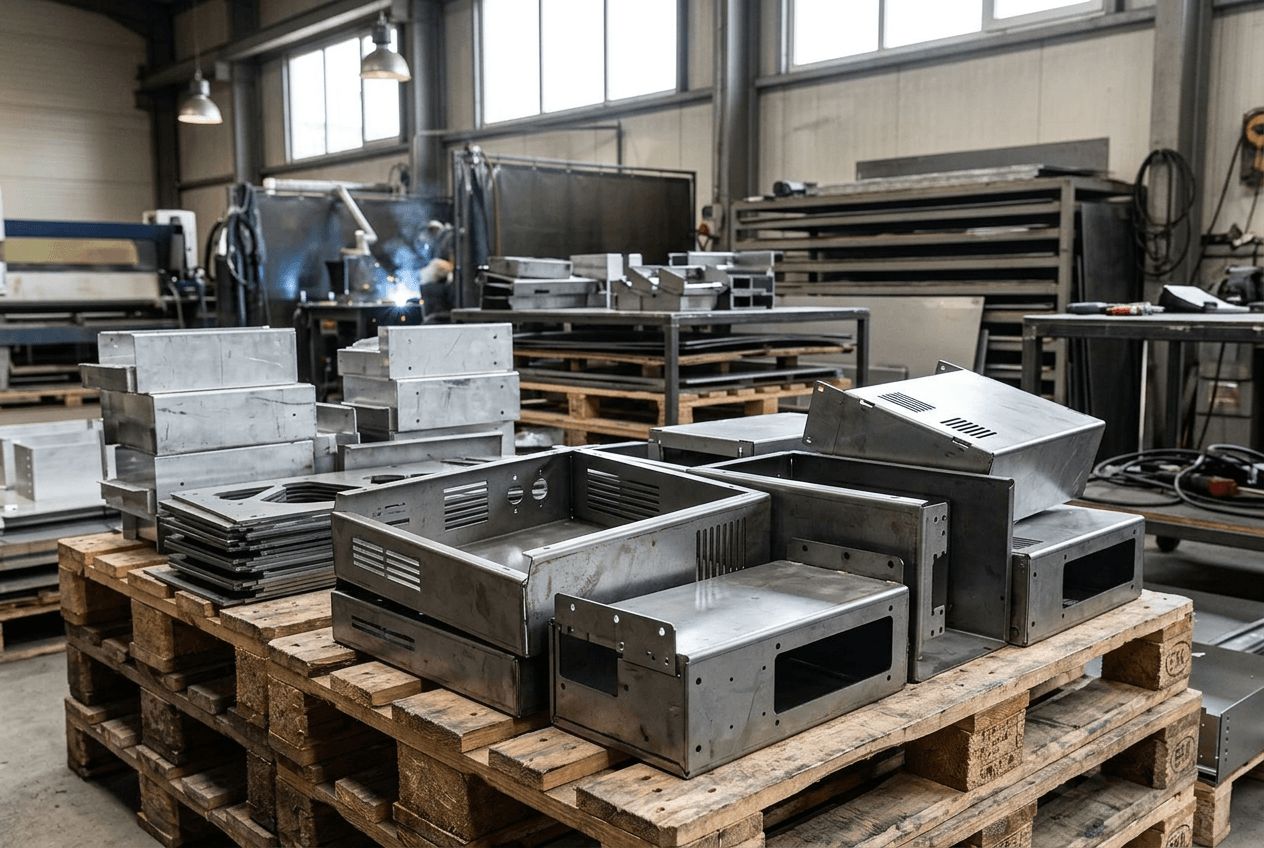
Prototype Approval Does Not Automatically Protect Batch Consistency
A prototype can look acceptable and still leave the batch exposed. Prototype technicians often spend extra time on manual deburring, bend adjustment, weld correction, or finish touch-up. Batch production needs repeatable controls, not one-off fixes.
This gap becomes costly when buyers approve samples by photos or trial fit only. A front panel may fit the switches during prototype review. Later, the buyer may request inspection reports for connector openings after powder coating. The supplier then must measure coated parts, sort panels, or adjust masking. Delivery moves because the inspection requirement entered too late.
Batch consistency also depends on material lot, nesting plan, bend tooling, weld sequence, coating queue, packaging, and sampling rules. Repeat orders improve only when the approved sample locks these details. If the drawing remains vague, the second order can repeat the first order’s questions.
Use prototype approval to freeze the production intent. Record critical dimensions, accepted burr level, cosmetic direction, coating limits, masked areas, assembly fit points, and inspection records. For custom sheet metal fabrication, that record protects the next batch more than a single approved photo.
How Buyers Can Compare Quotes Without Rewarding Missing Assumptions
A clean comparison does not start with price alone. It starts with the same precision assumptions. Ask each supplier when the quoted lead time begins. It may start from PO receipt, deposit, drawing confirmation, material arrival, sample approval, or finish approval. Those differences can create a hidden one- to three-week gap.
Then ask what the quote includes. A metal cabinet project may require drawing review, material sourcing, laser cutting, bending, welding, grinding, powder coating, hardware installation, assembly check, inspection, packing, and export documents. If a short quote does not mention curing time, masking, fixture checks, or final inspection, treat the delivery date as conditional.
Buyers do not need to over-specify every dimension. They need to protect the dimensions that control fit, function, appearance, and repeatability. Mark critical tolerances separately from general tolerances. Identify the datum after forming or assembly. State material grade and thickness. Define finish expectations and coating-sensitive features. Separate prototype approval time from batch production time.
Practical next step: If your delivery date depends on laser cutting precision for enclosures, brackets, frames, panels, or welded assemblies, send Yishang your drawings, material requirements, quantities, tolerances, finish expectations, assembly notes, and prototype comments. Ask the team to separate cutting assumptions from bending, finishing, inspection, and approval timing before you compare supplier schedules.
Frequently Asked Questions
What should OEM buyers prepare before requesting a sheet metal fabrication quote?
Buyers should prepare drawings, material grade, sheet thickness, quantities, tolerance notes, finish expectations, and any assembly or inspection requirements. The clearer the RFQ, the fewer assumptions the supplier needs to make during quoting.
Why do sheet metal fabrication quotes vary between suppliers?
Quotes often vary because suppliers make different assumptions about tolerances, material yield, finishing steps, welding complexity, inspection needs, packaging, and lead time. A detailed RFQ helps buyers compare quotations on the same technical basis.
How can tolerance requirements affect fabrication cost?
Tight tolerances may require more controlled cutting, forming, fixturing, inspection, or secondary work. Buyers can control cost by separating fit-critical dimensions from non-critical dimensions instead of applying tight tolerances everywhere.
When is a prototype recommended before batch production?
A prototype is useful when the part has tight fit-up, visible surfaces, welded assemblies, complex bends, or mating components. It helps confirm manufacturability, assembly behavior, and finish expectations before larger quantities are produced.
What surface finish details should be included in an RFQ?
Buyers should specify finish type, color, coating thickness if required, cosmetic surfaces, corrosion expectations, masking areas, and any visual acceptance standard. This avoids finish-related rework or quote changes later.
How can Yishang support custom sheet metal fabrication projects?
Yishang can review drawings, clarify fabrication requirements, discuss materials and finishes, support prototypes, and prepare for batch production based on the buyer’s RFQ details.