

An RFQ for a lathe machine guard set often looks complete at first glance. The buyer sends 2D drawings for side panels, a rear cover, a chip tray, cable brackets, and a small welded frame. The drawings show material thickness and outside dimensions. A prototype photo shows extra welded tabs, but the CAD file does not. The coating note says “black powder coat.” The mounting holes appear dimensioned, yet the drawing never states which edge controls installation.
That package can create three different quotations for the same visible part. One supplier prices a simple cut-and-bend job. Another adds fixture time, coating masks, and inspection after forming. A third assumes wider tolerances and minimal deburring. Procurement may read the price spread as supplier competitiveness. In reality, the RFQ asked each supplier to solve missing information in a different way.
This article focuses on one buyer risk: RFQ ambiguity that makes sheet metal quotes non-comparable and pushes fit problems into prototype or batch production. For lathe machine guards, enclosures, brackets, frames, trays, and welded assemblies, unclear drawings affect cost, lead time, inspection, finish, and assembly fit. The goal is not to add every possible note. The goal is to define the features that decide how the part works on the machine.
Where RFQ Ambiguity Starts to Distort a Lathe Machine Quote
Ambiguity usually starts in the gap between part geometry and machine function. A drawing may define the shape, but not the assembly relationship. For a lathe machine side guard, the hinge holes may matter more than the outer blank size. For a cable bracket, the slot width may matter less than the distance from the mounting face to the cable clamp. If the drawing does not show that priority, the supplier must choose an assumption before quoting.
Those assumptions change the fabrication route. A hole near a bend may need a larger bend relief or a revised sequence. A tab may distort during forming unless the supplier changes tooling or moves the feature. A welded corner may need grinding if operators can touch it. The same corner may need no cosmetic work inside a cabinet. Each decision affects labor, inspection, finishing preparation, and rework probability.
Project example: hinged guard panel
An OEM sources a hinged steel guard for the front of a lathe machine. The drawing dimensions all holes from the left outer edge. During fabrication, the panel bends along that same side. The bend allowance variation moves the hinge hole position slightly. The sample installs after technicians loosen the hinge, but the batch creates uneven door gaps. The problem began with a datum choice, not with cutting accuracy.
A clearer RFQ would mark the hinge edge or hinge hole pattern as the functional datum. It would state which dimensions need inspection after bending and coating. It might also allow one slotted mounting hole to absorb normal assembly variation. That small change gives suppliers the same quoting basis and reduces installation adjustment.
Project example: sensor bracket near the spindle area
A small bracket carries a sensor and cable clamp near the spindle cover. The drawing says “fit to machine frame,” but it does not identify the critical face. One supplier treats the bracket as a general bent part. Another quotes tighter perpendicularity on the mounting face and checks the hole pattern after powder coating. Both suppliers may quote honestly, but only one understood the function.
Buyers can prevent this split by marking critical-to-fit features on the drawing. They should also attach a machine-side photo when the surrounding clearance matters. A photo cannot replace dimensions, but it helps the fabricator understand why a flange direction, slot length, or face flatness matters.
Undefined Datums and Tolerances Turn Low Prices Into Installation Work
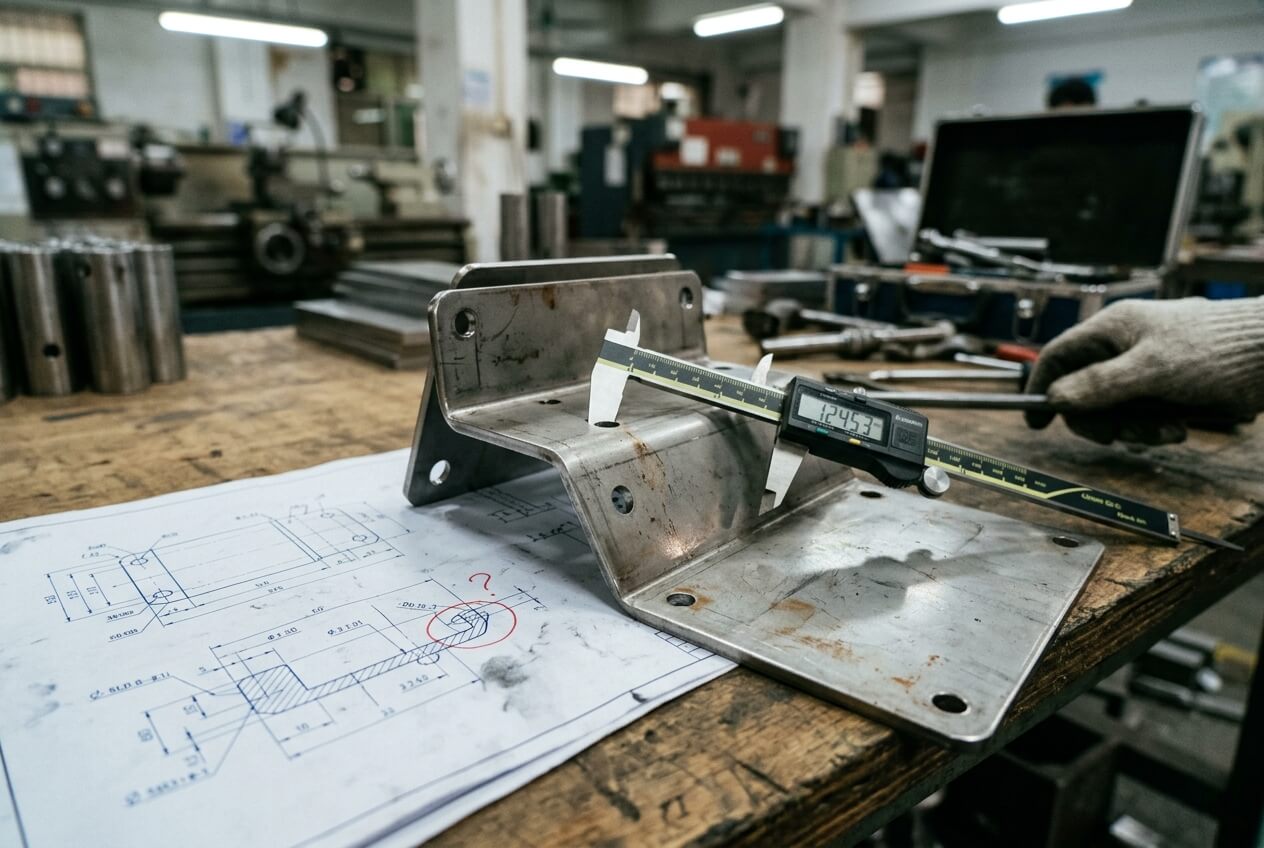
Low prices often hide missing tolerance decisions. Sheet metal fabrication does not need tight tolerances everywhere. It needs practical control where the lathe machine assembly depends on it. If an RFQ uses only general tolerances, suppliers may price a fast route and leave assembly risk with the buyer. If the buyer adds tight tolerances across the whole drawing, suppliers may add inspection cost without improving machine fit.
The best RFQ separates functional dimensions from non-critical dimensions. Hole centers for hinges, access doors, motor covers, and machine-frame interfaces may need tighter control. Outer cover edges, hidden return flanges, or internal stiffeners may follow normal shop capability. This distinction helps suppliers price the real risk instead of guessing.
Hole locations near bends need earlier review
Laser-cut holes can move or distort when they sit too close to bend lines. Slots can also narrow after coating. If a bracket bolts to a cast base, the hole pattern should reference the same datum used during installation. A supplier can then evaluate bend sequence, relief cuts, and inspection points during quotation.
Without that review, the consequence chain becomes expensive. The buyer compares quotes based on unit price. The supplier produces parts to a drawing that lacks functional priorities. Assembly discovers that holes need hand reaming or that a guard binds at the hinge. Production loses time, and the next RFQ may receive unnecessary tight tolerances across the entire part.
Flatness, squareness, and weld distortion need limits tied to use
Welded assemblies create another source of quote distortion. A chip tray, cabinet base, or support frame may look simple in finished geometry. Yet welding introduces heat, pull, and twist. If the drawing lacks flatness or squareness limits at the mating areas, one supplier may quote basic welding. Another may include fixtures and post-weld correction.
Procurement should define where distortion affects the lathe machine. A coolant tray may need leak control and stable mounting points, but not precision flatness across the full base. A cabinet frame may need controlled twist so doors and covers align. A motor cover bracket may need one perpendicular face, not perfect geometry on every edge. This function-based approach keeps quotes comparable and avoids both underquoting and overengineering.
Finish Notes Create Hidden Quote Gaps When They Ignore Function
Finish ambiguity creates some of the largest differences between sheet metal quotes. A note such as “black powder coat” does not tell the supplier enough. It does not identify gloss, texture, coating thickness, masking needs, cosmetic faces, grounding points, threaded holes, or sliding surfaces. For a lathe machine, these details can affect both appearance and assembly.
A front access panel may need a consistent cosmetic face because operators see it every day. An internal support bracket may only need corrosion protection and safe edges. If the RFQ treats both parts the same, suppliers will price finish work differently. One may grind visible welds and protect threads. Another may apply a basic coating and chase threads only if the buyer complains later.
Coating build-up can change fit after approval
Powder coating adds thickness to edges, holes, slots, and contact surfaces. That build-up can reduce clearance around hinges, cable glands, latch points, and sliding covers. It can also interfere with grounding points and screw seating areas. If suppliers do not know which surfaces need masking, they may quote and produce different parts.
The risk often appears late. A prototype may fit before coating, or technicians may clean the holes by hand. Batch parts then arrive with tight slots or coated threads. The drawing still looks correct, but the production process no longer matches the assembly requirement. Buyers should state which dimensions require inspection after coating, not only after cutting and bending.
Cosmetic expectations must separate visible and hidden faces
Weld grinding and surface preparation also need clear boundaries. A cabinet door, operator-facing guard, and control-side panel may require smooth exposed welds and consistent texture. Hidden welds inside a rear cover may only need strength and safe edges. If the buyer expects both standards but writes neither, suppliers will quote different labor levels.
A practical RFQ marks A-surfaces, hidden faces, welds to grind, welds to seal, and areas where minor tooling marks are acceptable. This does not make the drawing complicated. It stops finish assumptions from becoming a price advantage during sourcing and a quality dispute during receiving inspection.
Prototype Approval Does Not Remove RFQ Ambiguity Unless the Process Is Captured
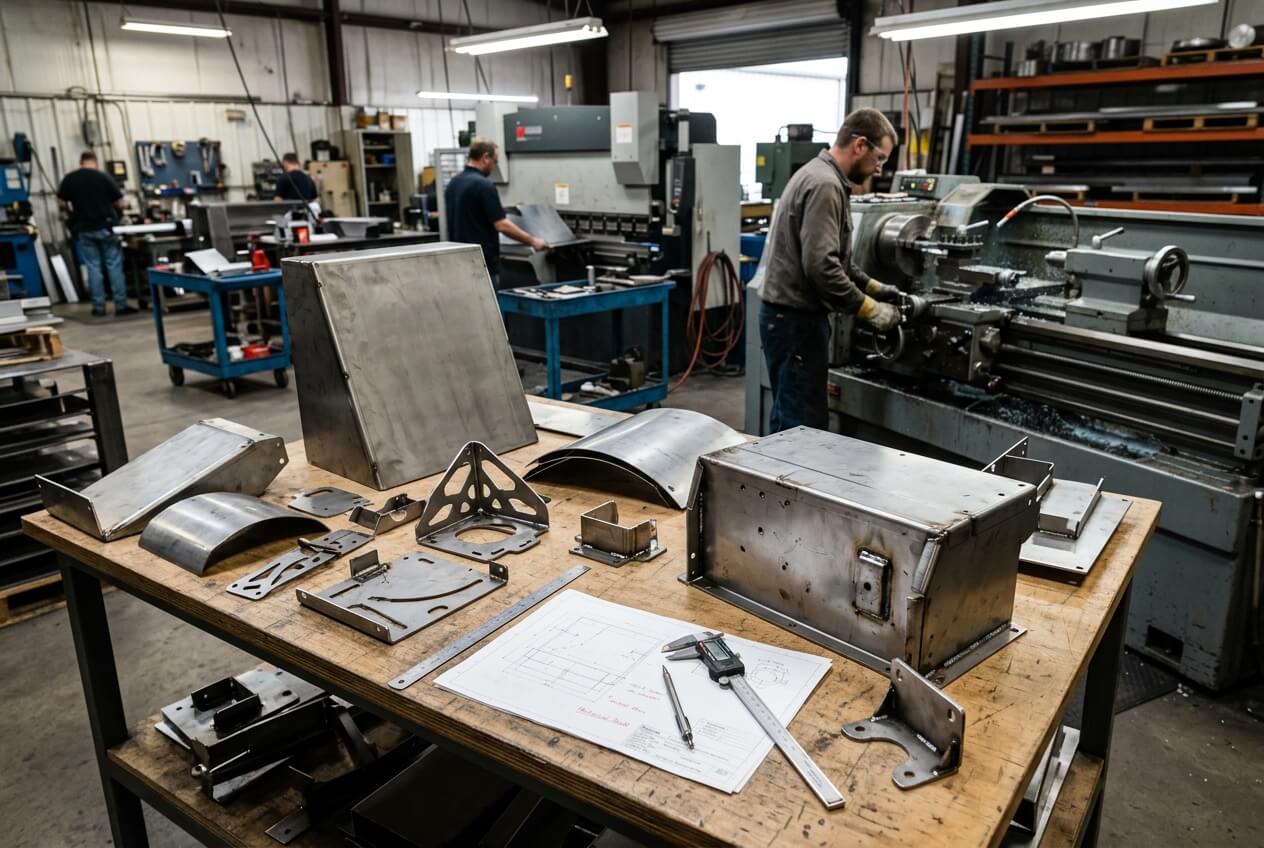
Many buyers approve a prototype and expect the batch to match it. That expectation can fail when the prototype succeeded because someone adjusted it by hand. A senior technician may open holes after coating, correct a flange angle, grind extra weld material, or mask a grounding point without recording the change. The approved sample then becomes a physical exception, not a repeatable standard.
Lathe machine sheet metal parts often move through several process steps: laser cutting, bending, welding, grinding, powder coating, assembly checking, and packing. A small change at one step can affect the next step. If the prototype record does not capture that change, batch production may follow the original drawing and recreate the original problem.
Prototype feedback should become drawing or production notes
Useful prototype feedback uses specific language. “Increase this slot by 0.5 mm after coating” gives the supplier a repeatable target. “Grind the two front welds smooth; leave internal welds as laid” controls labor and appearance. “Mask these four grounding pads before powder coating” protects electrical contact. These notes help suppliers quote batch production on the same basis as the approved sample.
Vague feedback creates new ambiguity. Phrases such as “make it fit better” or “finish like the sample” may work during a single trial. They do not tell a batch team which dimension, surface, or process caused acceptance. Procurement should push sample corrections back into drawings, inspection plans, or production notes before releasing volume orders.
Batch consistency depends on fixtures and inspection points
Welded frames and trays need special attention. A prototype frame can fit because one welder clamps it carefully and corrects distortion after welding. In batch production, different operators may use different clamping pressure or weld sequence. Width, squareness, and hole alignment can drift if the RFQ never defined fixture points or post-weld checks.
Yishang can review custom sheet metal fabrication drawings before quotation when parts include bent flanges, welded tabs, powder coating, and assembly fit requirements. The most useful review identifies assumptions that affect quote comparison. It should not replace the buyer’s design responsibility. It should make missing details visible before price comparison and sample approval.
Clarify These RFQ Details Before Comparing Supplier Prices
Procurement does not need to turn every lathe machine part into a complex inspection project. It needs to remove the assumptions that change cost, lead time, and assembly risk. A strong RFQ tells suppliers which details protect the machine build and which details can follow standard fabrication practice.
Start with the function of each part. A guard must open, close, and protect operators. A chip tray must fit the base and manage coolant flow. A cabinet panel must align with doors, hinges, latches, and visible surfaces. A bracket may only need accurate mounting features. A welded frame may need controlled mating faces more than perfect outside edges.
Then connect the drawing to assembly reality. Include machine-side photos, mating part details, bought-out hinge models, latch locations, cable gland sizes, grounding areas, and clearance limits when they affect fabrication. If the supplier cannot see the machine, the RFQ must show which features matter.
Materials and thickness also need clarity because they influence bending, weld distortion, coating behavior, and cost. State the grade or acceptable equivalent, thickness, grain or surface requirement if relevant, and any replacement restrictions. Do not leave suppliers to choose a cheaper substitute if stiffness, grounding, corrosion resistance, or forming behavior matters.
Finish expectations deserve the same precision. State powder coat color, texture or gloss when required, cosmetic surfaces, masking areas, threaded holes, grounding pads, and post-coating inspection dimensions. If lead time matters, define whether prototypes need assembly checking before full batch release. Supplier communication should focus on these risk points, not on general promises.
Before awarding the job, compare quotes against the same assumptions. Check whether each supplier included weld grinding, fixtures, coating masks, post-forming inspection, post-coating checks, prototype corrections, and packaging that protects cosmetic surfaces. A quote that excludes these items may look cheaper but move cost into rework, delayed machine assembly, or field adjustment.
Send Yishang your lathe machine sheet metal drawings, 3D files if available, material requirements, quantities, critical tolerances, finish expectations, coating masks, assembly photos, and prototype feedback. The team can review guards, enclosures, brackets, frames, chip trays, cabinets, and welded assemblies for RFQ gaps that may distort price comparison or batch fit. Visit Yishang to share project files and request a practical manufacturability review.
Frequently Asked Questions
Why do lathe machine sheet metal quotes vary so much for the same drawing?
Large quote gaps often come from different assumptions, not only different labor rates. Suppliers may assume different datums, tolerances, weld finishing, coating masks, inspection points, or prototype requirements. Clarify the features that control assembly fit before comparing unit prices.
Which datum should a buyer mark on a lathe machine guard drawing?
Mark the datum that the assembler uses on the machine. For a hinged guard, that may be the hinge edge or hinge hole pattern. For a bolted cover, it may be the mating machine edge. Avoid relying only on outside blank dimensions when bending affects hole location.
When should tolerances be tighter than general sheet metal tolerances?
Use tighter tolerances where dimensions control fit, movement, sealing, safety, or alignment with other machine components. Keep non-critical edges, hidden flanges, and internal supports under practical general tolerances unless they affect assembly. This approach controls cost while protecting function.
How can powder coating create assembly problems after fabrication?
Powder coating adds thickness to holes, slots, edges, hinges, screw seats, and grounding areas. It can reduce clearance or block threads. Mark masking areas and dimensions that need inspection after coating, especially on enclosures, access panels, brackets, and sliding covers.
Why can a prototype fit but batch sheet metal parts fail during assembly?
The prototype may have received manual corrections that never reached the drawing or production notes. Examples include opened holes, adjusted flanges, extra weld grinding, or informal masking. Record every prototype change before batch approval so the process stays repeatable.
What should buyers include in an RFQ for welded lathe machine frames or trays?
Include material and thickness, finished dimensions, functional datums, critical hole locations, weld symbols or weld expectations, acceptable distortion limits, fixture or inspection points, finish requirements, masking areas, quantities, and any machine-side assembly photos. These details help suppliers quote the same production scope.