
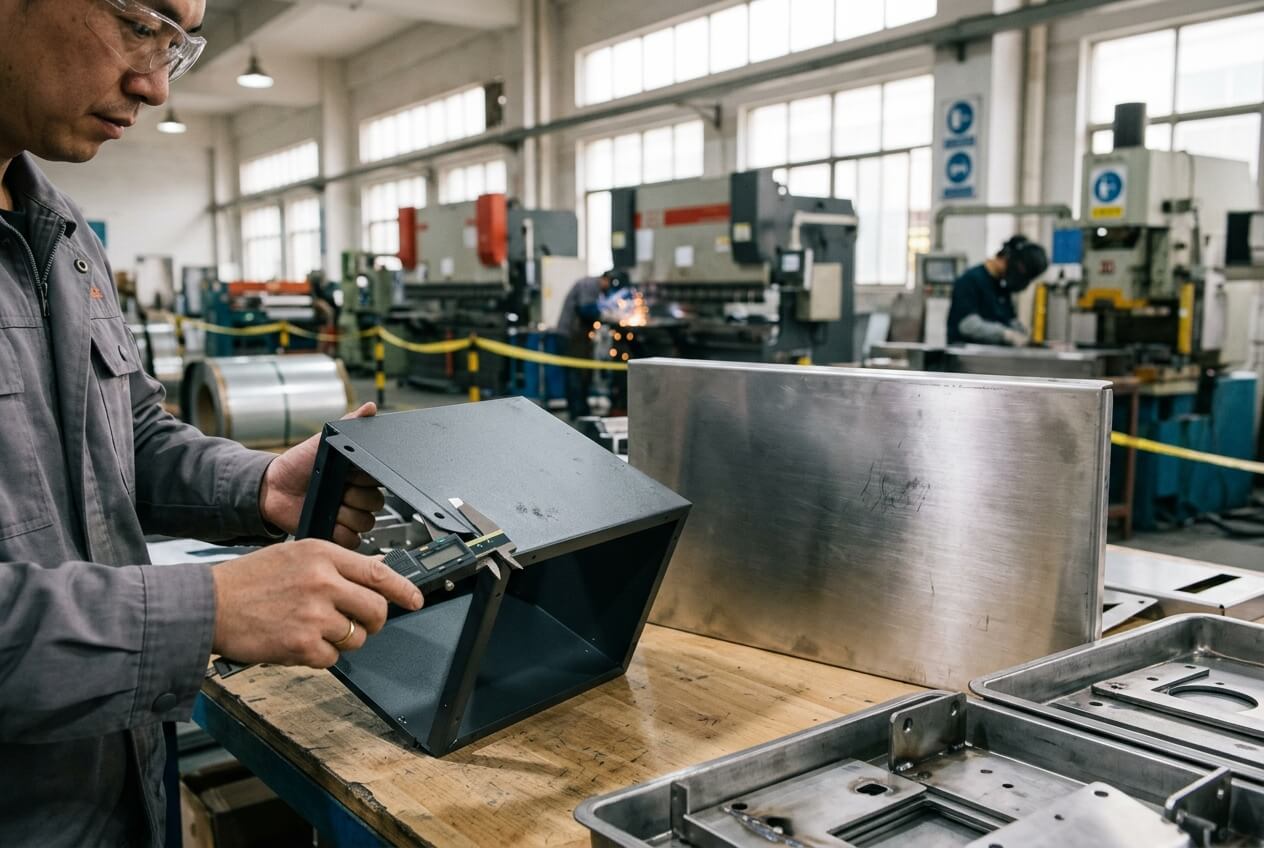
A sourcing engineer can compare three quotes for the same control enclosure and still compare three different jobs. The drawing may show laser cut panels, bent covers, welded brackets, PEM hardware, and several lathe working inserts used as threaded bushings or spacers. The RFQ says “powder coat black” and attaches a 3D model. One supplier quotes much lower, so procurement approves the prototype.
The prototype looks acceptable under office lighting. The first production batch does not. Front panels show rack marks. Threads contain powder. A brushed stainless trim piece has mixed grain direction. The hinge holes passed inspection before coating, yet the doors rub after assembly. The supplier says the RFQ never defined cosmetic faces, masking, coating thickness, inspection timing, or handling rules.
This article focuses on one procurement risk: unclear finish and post-coating requirements make quotes look comparable when they are not. That risk matters when custom sheet metal parts, welded assemblies, enclosures, frames, brackets, and lathe working components come together. The buyer does not only risk a cosmetic dispute. The buyer risks rework, shipment delay, assembly failure, and a batch that no one priced correctly.
Undefined visible surfaces make the lowest quote look safer than it is
Many RFQs describe geometry better than appearance. Drawings often define hole locations, bend angles, outside dimensions, and material thickness. They may not identify which faces the end user will see after installation. That gap lets each supplier decide how much cosmetic control to include.
A wall-mounted electronics enclosure shows the problem. The front cover faces operators every day. The rear plate sits against a wall. Internal brackets disappear after assembly. If the RFQ only says “powder coat, black texture,” one supplier may protect the cover as an A-surface. Another may treat all surfaces under one normal shop standard. Both can claim compliance, but they did not quote the same risk level.
Cosmetic priority changes process cost
Visible faces affect grinding, handling, racking, coating inspection, and packing. A small rack mark on an inside flange may be acceptable. The same mark on a front panel may cause rejection. Light weld print-through may not matter on a hidden rear frame. It can ruin a retail display part under store lighting.
The quote difference often hides inside labor. A supplier that protects A-surfaces may plan extra polishing, controlled hanging points, separator packing, and more careful inspection. A supplier that assumes normal industrial finish may quote less. The lower price may only reflect missing controls, not better efficiency.
Lathe working parts need surface priority too
Turned parts inside sheet metal assemblies create another assumption. A lathe working spacer may only set distance between panels. A turned stainless sleeve on a front cover may become a visible detail. A threaded bushing welded into a cabinet may need clean threads after powder coating, even if the outside surface will be coated.
Buyers should not expect suppliers to guess which machined surfaces matter. Mark customer-facing, operator-facing, internal, mating, grounded, masked, and non-critical areas. Add photos when the product has an existing finish standard. Yishang can review drawings at RFQ stage and flag visible surfaces that need clearer notes before quote comparison.
Masking assumptions change unit price, inspection results, and assembly time
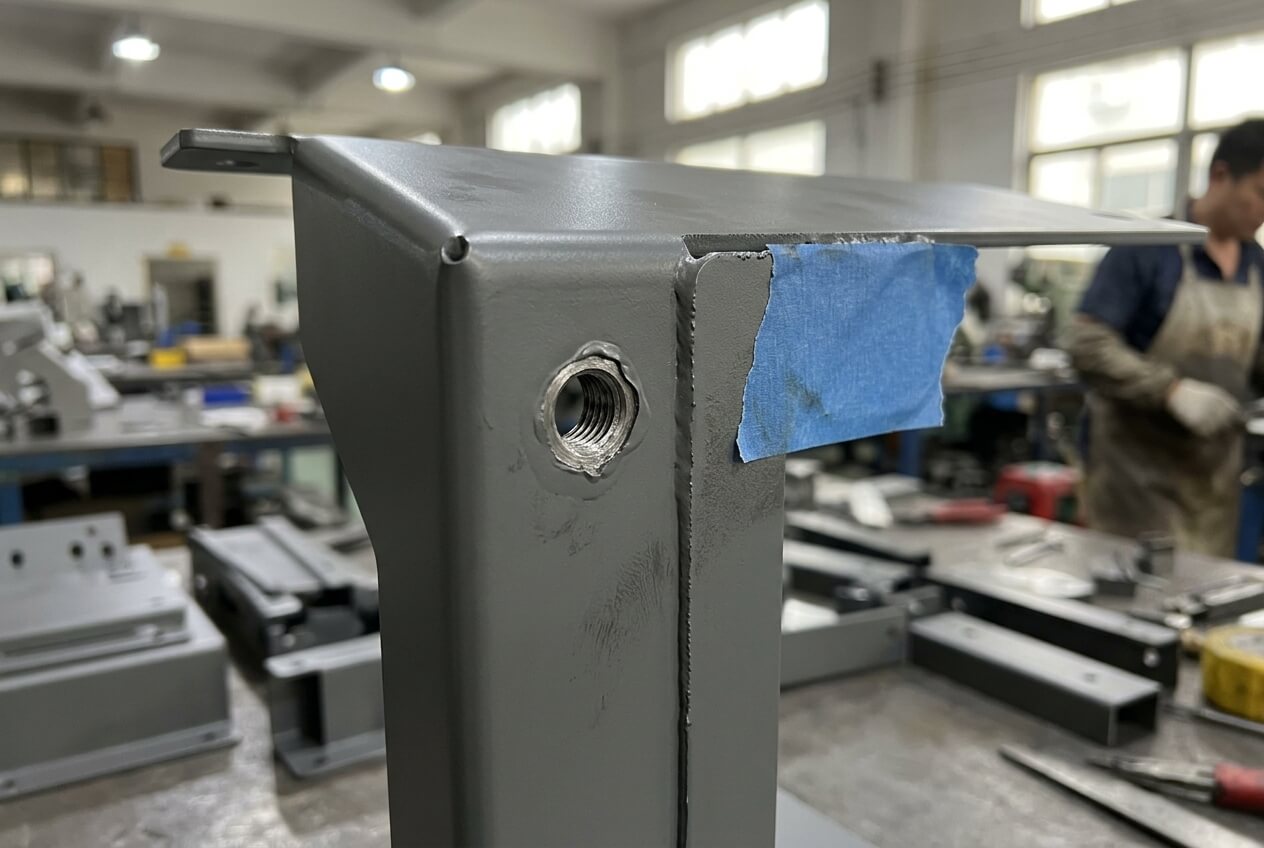
Masking looks like a small detail, but it can change the production route. Threads, grounding pads, bearing seats, latch contact areas, sliding faces, press-fit holes, and lathe working sleeves may need protection. If the RFQ omits these points, suppliers make different assumptions.
Consider a powder coated cabinet door with welded M4 threaded inserts. One supplier may quote no masking and plan to chase threads only if screws bind. Another may include silicone plugs for every thread. A third may recommend installing hardware after coating. These routes carry different costs, lead times, and risks.
The buyer may see three unit prices. In reality, the buyer received three different assembly strategies. If procurement chooses the cheapest quote without clarifying masking, the savings can disappear during final assembly. Operators may spend hours cleaning threads. Some screws may cross-thread. Grounding tests may fail because powder covered a contact area.
Coating thickness can turn a passed part into a failed assembly
Powder coating adds thickness. That thickness may not matter on a flat side panel, but it matters near hinge slots, latch brackets, covers, sleeves, and close-clearance brackets. A part can pass bare-metal inspection and still fail after coating.
A removable access cover gives a simple example. The laser cut holes and bent flanges meet the drawing before coating. After coating, the cover fits tightly against the enclosure body. Repeated opening creates scratches along the flange. The supplier argues that the dimensions passed before finish. The buyer argues that the finished product cannot function cleanly.
Both sides could have avoided the dispute by defining inspection timing. State whether critical dimensions apply before coating, after coating, or both. Add direct notes such as “cover must open without rubbing after coating” or “M5 threads must pass gauge check after powder coating.” These notes turn an expectation into a quoted requirement.
Masking decisions also affect lead time
Late masking changes rarely stay small. Once the supplier sets rack fixtures, coating flow, and packing methods, a new masking requirement can disrupt production. It may require plugs, tape, extra labor, inspection changes, or a different assembly sequence. That adds cost and can extend lead time.
Procurement teams should clarify masking before they compare quotes. Send drawings that mark thread protection, contact pads, exposed machined surfaces, and post-coating fit points. The supplier can then quote the real process instead of a simplified version that looks cheaper on paper.
Prototype approval can hide the batch risks created by an unclear RFQ
A clean prototype often gives buyers confidence. It can also hide the exact risks that appear in batch production. Prototype finishing usually receives more manual attention, easier hanging choices, slower handling, and flexible rework. Batch production needs repeatable routing.
A prototype control enclosure cover may hang alone on a coating rack. The operator can choose a hidden hole and avoid the front face. In a 500-piece batch, the coating line needs density. Operators may hang more parts per rack, use faster handling, and pack parts in a tighter sequence. If the RFQ never approved rack mark locations, the batch may show marks in places the buyer rejects.
The same problem appears in welded frames. A one-off frame may look smooth after careful grinding and coating. In production, weld heat, grinding pressure, and coating build-up vary more. If the approved sample only means “looks good,” the buyer and supplier lack a repeatable acceptance basis.
Record what the prototype proves
Prototype approval should document the details that must repeat. Record color, gloss, texture, rack mark locations, masking method, thread inspection, brushed grain direction, packing method, and assembly fit. Photos help because they show visible faces and acceptable areas more clearly than broad wording.
For assemblies with lathe working inserts, include the machined details in the prototype record. Did the threaded bushing pass after coating? Did the visible sleeve remain free from tool marks? Did the turned knob sit clear of the powder coated face? If the buyer expects the batch to match those conditions, the supplier must price and inspect them.
Yishang can support prototype review by checking whether a sample depends on hand correction that may not scale. That review matters most before batch routing begins. Once the production process starts, changing a prototype expectation into a batch requirement can create rework and delay.
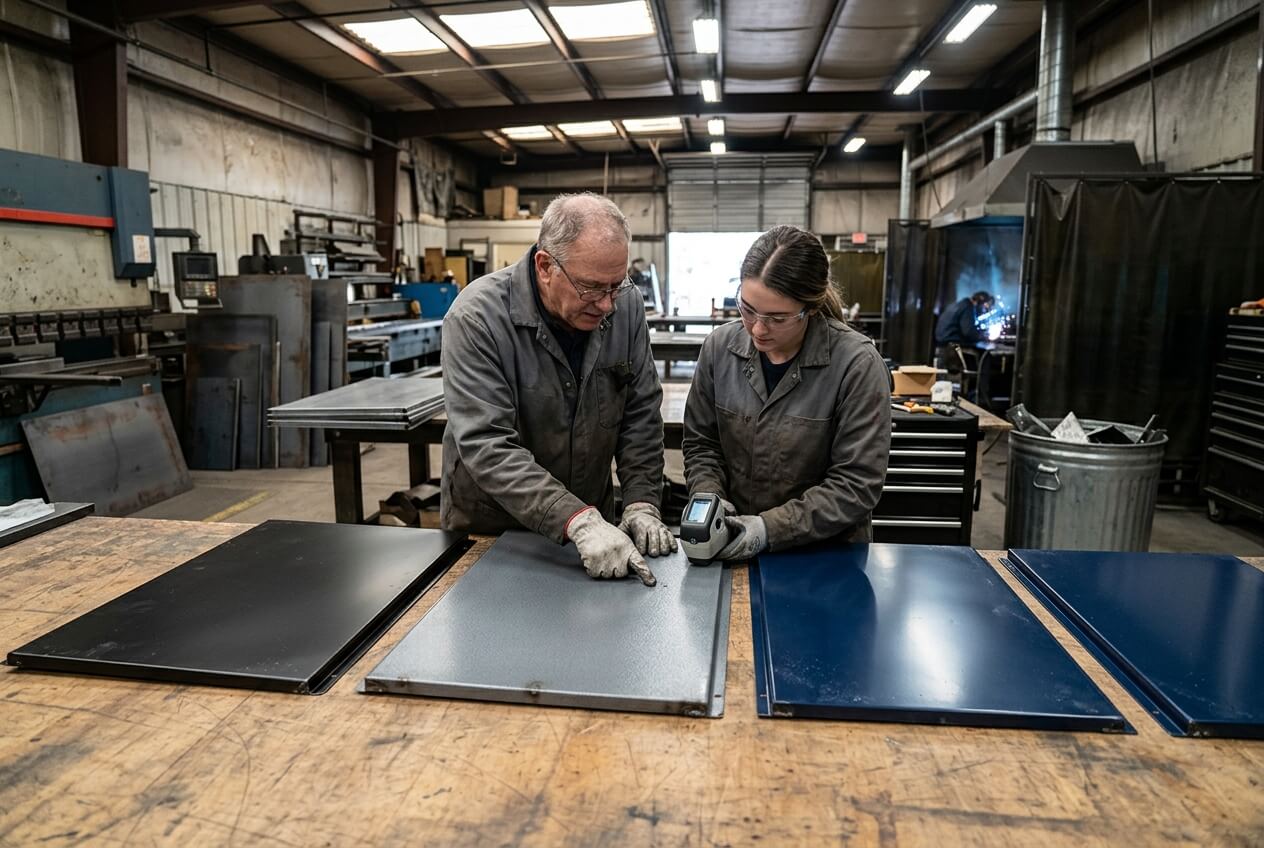
Assembly fit disputes often start as finish assumptions, not dimensional errors
Finish complaints often begin at final assembly. A buyer may report scratches, tight doors, uneven panels, or contaminated threads. The root cause may sit in an earlier RFQ assumption about coating thickness, masking, grain direction, or inspection timing.
Take a small electrical cabinet with a hinged door and latch bracket. The bare-metal door swings correctly. After powder coating, paint build-up around the hinge slots reduces clearance. The door rubs, scratches the coating, and sits slightly proud. The visible defect appears on the finish, but the actual risk came from an undefined post-coating fit requirement.
Now add a turned bushing welded into the hinge area. If powder enters the thread, the assembler may force the screw. That can damage the thread, chip nearby coating, or misalign the hinge. One missed masking note can create a chain of thread cleaning, hardware damage, cosmetic rework, and delayed shipment.
Brushed and polished parts add orientation risk
Stainless trim panels create another assembly-related finish risk. A brushed panel can meet size and still look wrong if grain direction changes from part to part. A front trim piece mounted next to a powder coated housing may also show handling marks after film removal.
The RFQ should define grain direction after assembly, not only on the flat drawing. A note such as “visible brushed grain runs horizontally when installed” removes guesswork. It also helps the supplier plan cutting direction, protective film handling, and packing.
Assembly notes should connect directly to finish notes. Use practical wording: “latch must close without scraping after coating,” “grounding pad remains uncoated,” “visible turned sleeve must remain clean after assembly,” or “protect front face with film until final packing.” These instructions make production choices visible before price approval.
Compare supplier quotes by assumed risk, not just by unit cost
Competitive pricing still matters. The goal is not to choose the highest quote. The goal is to make each supplier price the same requirements. When finish expectations remain vague, the lowest quote may only exclude work the buyer assumed was included.
Ask each supplier what the quote includes for visible surfaces, masking, coating thickness, rack locations, post-coating inspection, assembly checks, sample approval, and packing. Request clarification before placing the order. This step protects both sides. The buyer gains a clearer acceptance basis, and the supplier avoids unpriced obligations.
A strong RFQ for finish-sensitive sheet metal fabrication should include 2D drawings, 3D files when available, material requirements, quantities, tolerances, finish expectations, A-surface markings, masking locations, prototype approval criteria, and assembly notes. If the project involves metal enclosures, brackets, frames, welded assemblies, or lathe working inserts, show how the parts fit together. Assembly context often reveals finish risks that single-part drawings hide.
Packaging also belongs in the same discussion. Powder coated panels can leave the factory acceptable and arrive with corner rub marks. Sea freight, pallet compression, mixed-part packing, and rough handling can damage cosmetic faces. If the product needs protective film, foam separators, corner guards, or individual wrapping, specify that before quote approval.
The safest time to remove ambiguity is before tooling, fixtures, coating route, and batch packing methods become fixed. Early clarification may raise a unit price, but it can prevent rejected batches, emergency rework, and missed launch dates. A cheaper quote only helps when it covers the real production risk.
Before approving a finish-sensitive quote, send Yishang your 2D drawings, 3D files, material requirements, quantities, tolerances, finish expectations, A-surface notes, masking needs, photos, samples, assembly requirements, and prototype records. If your enclosure, cabinet, bracket, welded frame, or lathe working insert has visible surfaces or tight post-coating fit, the RFQ should define those risks before production pricing is locked.
Frequently Asked Questions
Why do powder coated sheet metal quotes vary so much for the same drawing?
Suppliers may assume different cosmetic standards, masking methods, rack locations, coating thickness ranges, inspection timing, and packing protection. If the drawing only defines geometry, each supplier prices a different level of finish control. Clarify visible surfaces, masking, and post-coating checks before comparing unit prices.
How should buyers mark visible surfaces on metal enclosures or cabinets?
Mark customer-facing and operator-facing surfaces directly on the drawing. Separate them from hidden brackets, rear plates, internal faces, mating surfaces, and grounded areas. Add limits for scratches, rack marks, weld print-through, orange peel, handling marks, and packing protection where appearance matters.
Do lathe working inserts need special notes in a sheet metal RFQ?
Yes, when the insert affects appearance, threads, grounding, or assembly fit. State whether threads need masking or gauge checks after coating. Also define whether exposed turned sleeves, knobs, bushings, or spacers are cosmetic surfaces or functional-only components.
What should prototype approval include before batch production?
Record the approved color, gloss, texture, visible surface photos, rack mark locations, masking method, thread condition, post-coating fit, packing method, and any manual adjustment. A prototype should become a repeatable batch standard, not only a visual memory.
How can coating thickness create assembly fit problems?
Powder coating adds material to edges, holes, slots, hinges, latches, and close-clearance surfaces. A part may pass bare-metal inspection but rub, bind, or scratch after finish. Define which dimensions and functions must pass after coating.
What files and notes should buyers send for a clearer RFQ?
Send 2D drawings, 3D models, material requirements, quantities, tolerances, finish expectations, A-surface markings, masking locations, assembly context, prototype records, and photos of accepted or rejected samples. This helps suppliers quote the actual production route instead of filling gaps with assumptions.