
Introduction: Why Magnesium Density Matters in B2B Sourcing
For procurement professionals and technical buyers, magnesium density is more than a number on a material datasheet. It affects part weight, freight cost, design performance, material forecasting, and sometimes even whether a product can meet its weight target at all.
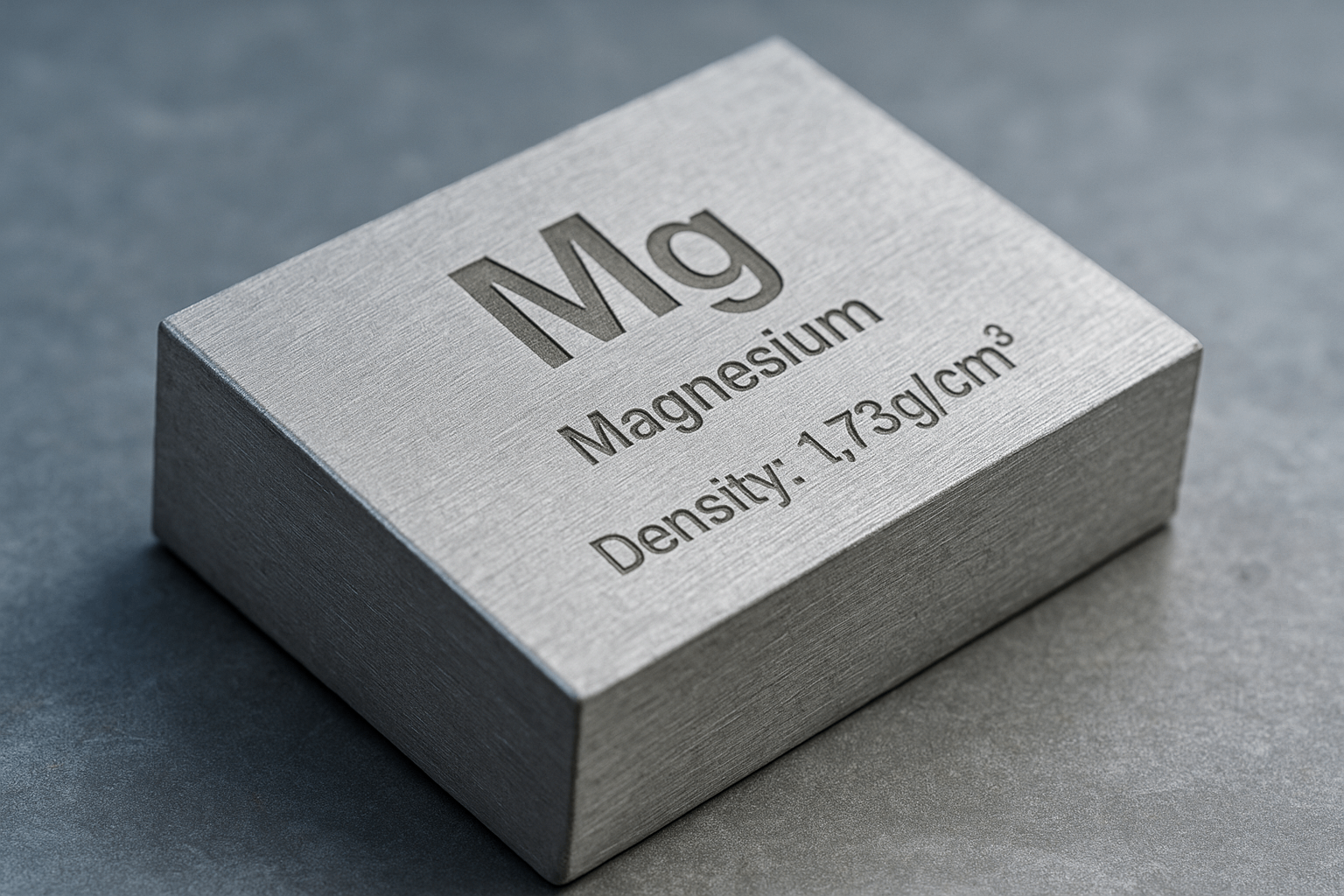
Magnesium is widely valued as the lightest structural metal, with a standard density of 1.738 g/cm³ at 20°C. That makes it useful in lightweight assemblies, high-throughput manufacturing, and shipping-sensitive projects where every gram eventually becomes a cost or performance variable.
This guide explains magnesium density from a practical B2B sourcing perspective. It is written for buyers, engineers, and specifiers who need to connect material data with real manufacturing outcomes: RFQ accuracy, alloy selection, density verification, and design-to-delivery consistency.
Magnesium Density and Standard Conversions
Reference Densities in Global Units
The standard reference density of magnesium at 20°C is commonly expressed in several unit systems:
- 1.738 g/cm³
- 1738 kg/m³
- 0.063 lb/in³
- 1.0047 oz/in³
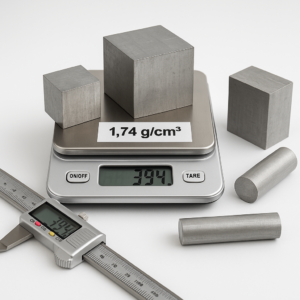
These conversions are useful when drawings, quotations, or customer specifications use different measurement systems. For example, a 10 × 10 × 10 cm magnesium block weighs about 1.738 kg. That is why magnesium becomes attractive in projects where reduced shipping weight, lower moving mass, or faster mechanical response matters.
What Causes Real-World Variations
In actual production, measured density may differ from the theoretical value. Common reasons include:
- casting porosity or trapped gas pockets;
- surface treatments or powder coatings;
- microstructural inconsistencies.
For example, AZ91 die-cast housings often show measured densities around 1.80–1.82 g/cm³, especially in thin-wall components. This does not automatically mean the material is wrong. It means buyers need to understand how alloy choice, process route, and finishing layers influence the final measured result.
That distinction helps avoid confusion when checking supplier reports or validating incoming parts.
Why Magnesium Is So Light — And What That Means in Practice
Atomic Structure and Specific Volume
Magnesium is light because of both its atomic weight and crystal structure. It has a low atomic weight of 24.3 u and a hexagonal close-packed (HCP) structure. Compared with FCC metals such as aluminum, this structure limits how tightly the atoms pack together.
The result is a metal with fewer mass units per volume. In simple buyer language: magnesium gives engineers more volume for less weight.
Relevance for Industrial Buyers
For industrial buyers, magnesium’s low density can support several practical goals:
- lower freight cost per unit;
- improved weight-to-strength ratio;
- faster response in moving parts or rotating assemblies.
The advantage becomes commercially meaningful in sectors such as electric vehicles, medical robotics, aerospace panels, and lightweight equipment housings. In these applications, a few grams saved per part can become meaningful when multiplied across assemblies, batches, or full production programs.
Manufacturing Influence on Final Density
Processing Methods and Density Outcomes
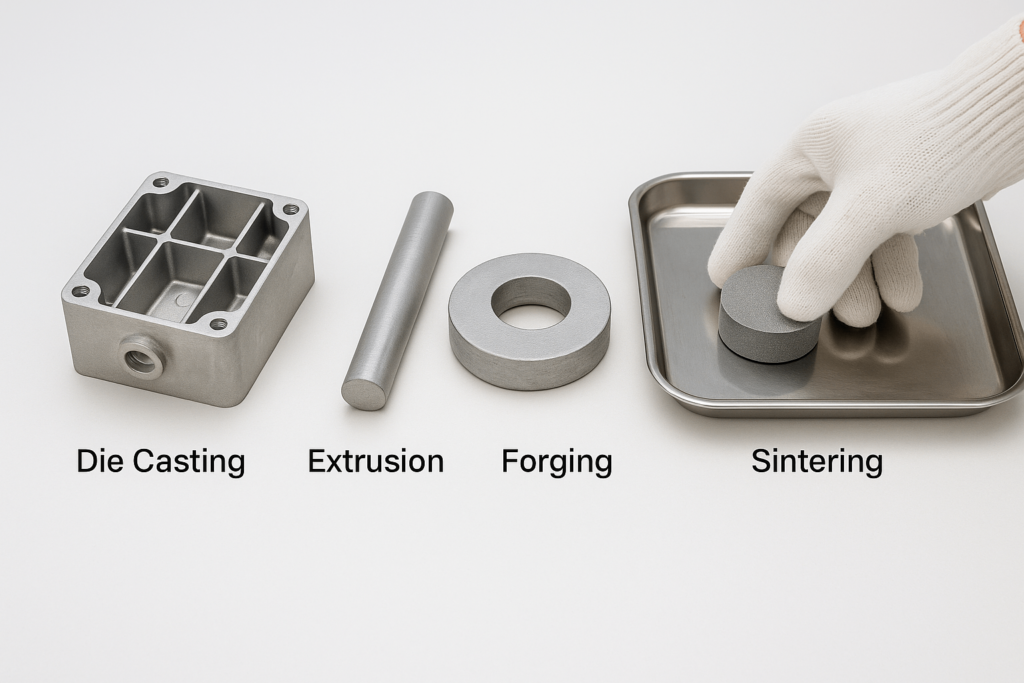
Manufacturing method has a direct influence on final part density. The same alloy may behave differently depending on whether it is die cast, extruded, forged, or sintered.
| Process | Density Outcome | Use Case |
| Die Casting | Moderate (porosity risk) | High-volume casings, brackets |
| Extrusion | High (low porosity) | Load-bearing rails, arms |
| Forging | Very High | Impact-prone structures |
| Sintering | Lower density | Small intricate designs |
Density variation usually comes from cooling rate, trapped gas, thermal gradients, and microstructure quality. For buyers, this means density should not be evaluated separately from the production route.
Specifying Density Requirements to Suppliers
For high-performance magnesium parts, vague material descriptions are not enough. A useful RFQ should define density expectations clearly.
Buyers should specify:
- alloy and process, such as AZ31 forged;
- required density range, such as 1.77 ± 0.01 g/cm³;
- whether inserts, coatings, anodized layers, or secondary operations are included in the final weight.
YISHANG can support density test certification, including Archimedes testing and micro-CT scans, when required for qualified orders.
Magnesium Alloy Density Comparison Table
Density Chart by Alloy and Application
Different magnesium alloys have slightly different densities because alloying elements change both composition and performance.
| Alloy | Density (g/cm³) | Key Alloying Elements | Applications |
| AZ91 | 1.81 | Al 9%, Zn | Gear housings, engine brackets |
| AZ31 | 1.77 | Al 3%, Zn | Aerospace panels, laptop chassis |
| ZK60 | 1.83 | Zn, Zr | Forged frames, racing components |
| WE43 | 1.85 | Y, Rare Earths | Biomedical implants, satellites |
A useful sourcing decision should consider more than density alone. Strength-to-density ratio, corrosion behavior, process compatibility, and end-use environment often matter just as much.
Visual Density Distribution (Optional Chart Area)
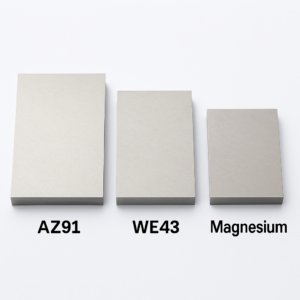
A visual density chart can help engineering and purchasing teams compare alloy options quickly. A simple bar chart or gradient scale showing AZ31, AZ91, ZK60, and WE43 can make density differences easier to review during design meetings or supplier evaluation.
Density in Design: What Engineers and Buyers Must Align On
Balancing Weight Reduction and Part Performance
Reducing weight does not mean simply choosing the lightest material and stopping there. In structural components, density must be considered together with geometry, stiffness, and service conditions.
For example:
- thicker ribs or wall supports may be needed to offset lower material density;
- vibration damping can vary between alloys;
- coatings and surface treatments can change final part volume and weight.
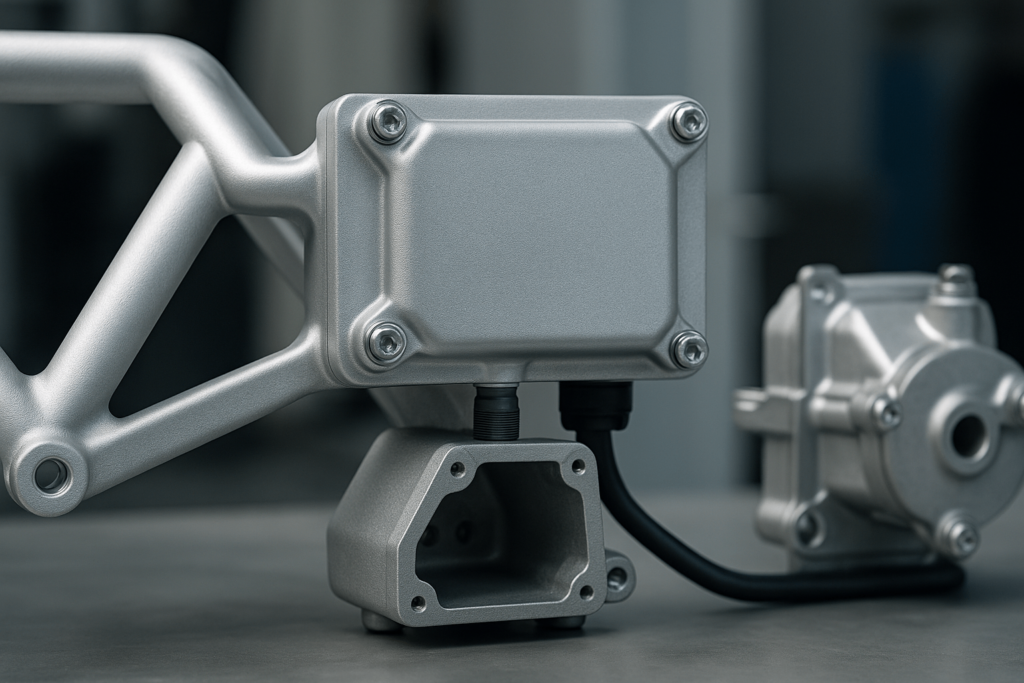
A lightweight housing may still need reinforced ribs or thicker local sections to handle torque, vibration, or thermal cycling. This is especially important in powertrain components, aerospace enclosures, and structural magnesium parts.
Design-to-RFQ Translation for Accurate Quoting
Accurate quoting depends on translating design intent into supplier-friendly RFQ language. Buyers should include:
- CAD weight tolerances based on the target alloy;
- load-bearing and non-load-bearing zones in the BOM or drawing notes;
- machining allowances and secondary operations that may remove material.
These details reduce quotation errors, prevent rework, and help suppliers estimate material usage more accurately.
Specifying Density in Documentation and RFQs
3-Step Density Declaration Checklist
A clear density declaration should include three elements:
- Alloy + process name, such as ZK60 extruded.
- Density range and tolerance, such as 1.83 ± 0.01 g/cm³.
- Inspection method, such as CT scan or immersion testing.
This keeps engineering, purchasing, and supplier quality teams aligned before production starts.
Density Verification Techniques
Different verification methods fit different applications. A general mechanical part may not require the same inspection method as an aerospace component or powder-based R&D sample.
| Method | Accuracy | Ideal For |
| Archimedes Method | ±1% | General mechanical parts |
| X-ray CT Scan | ±0.5% | Aerospace, defense, implants |
| Helium Pycnometry | ±0.3% | R&D, powder-based materials |
Specifying the preferred method in the RFQ improves supplier alignment and avoids disputes later. YISHANG offers these methods for qualified projects when density verification is part of the quality requirement.

Buyer-Focused FAQs: Magnesium Density Explained
Is magnesium always lighter than aluminum?
Yes. Magnesium is roughly 33% lighter by volume than aluminum. This advantage can be valuable in drone arms, EV brackets, satellite frames, and other lightweight structures.
Why does my part weigh more than specified?
Common reasons include trapped gas, shrinkage cavities, coating layers not deducted from raw weight, or alloy contamination. The first step is to confirm whether the measured weight includes coatings, inserts, or secondary features.
Can I request density tests?
Yes. Buyers can specify the preferred method, such as Archimedes testing or CT scan, in the RFQ. YISHANG can provide density compliance reports when required.
What’s a practical density tolerance?
For machined or structural parts, ±0.01 g/cm³ is a practical reference. For die-cast or decorative elements, ±0.02 g/cm³ may be more realistic.
How do I calculate magnesium part weight?
Use the formula:
Volume × Alloy Density
For example, a 500 cm³ part using AZ31 at 1.77 g/cm³:
500 × 1.77 = 885 g
Final Thoughts: Density as a Strategic Metric in Sourcing
Magnesium density is not just a material property. It affects forecasting, freight cost, design performance, inspection planning, and final part consistency.
For B2B buyers sourcing magnesium components, density should be treated as a strategic metric rather than a passive datasheet value. When alloy, process, tolerance, coating, and verification method are clearly defined, projects become easier to quote, manufacture, inspect, and deliver.
YISHANG helps procurement teams align magnesium alloy selection, density expectations, and inspection requirements for industrial casings, lightweight structures, and aerospace-related enclosures.