
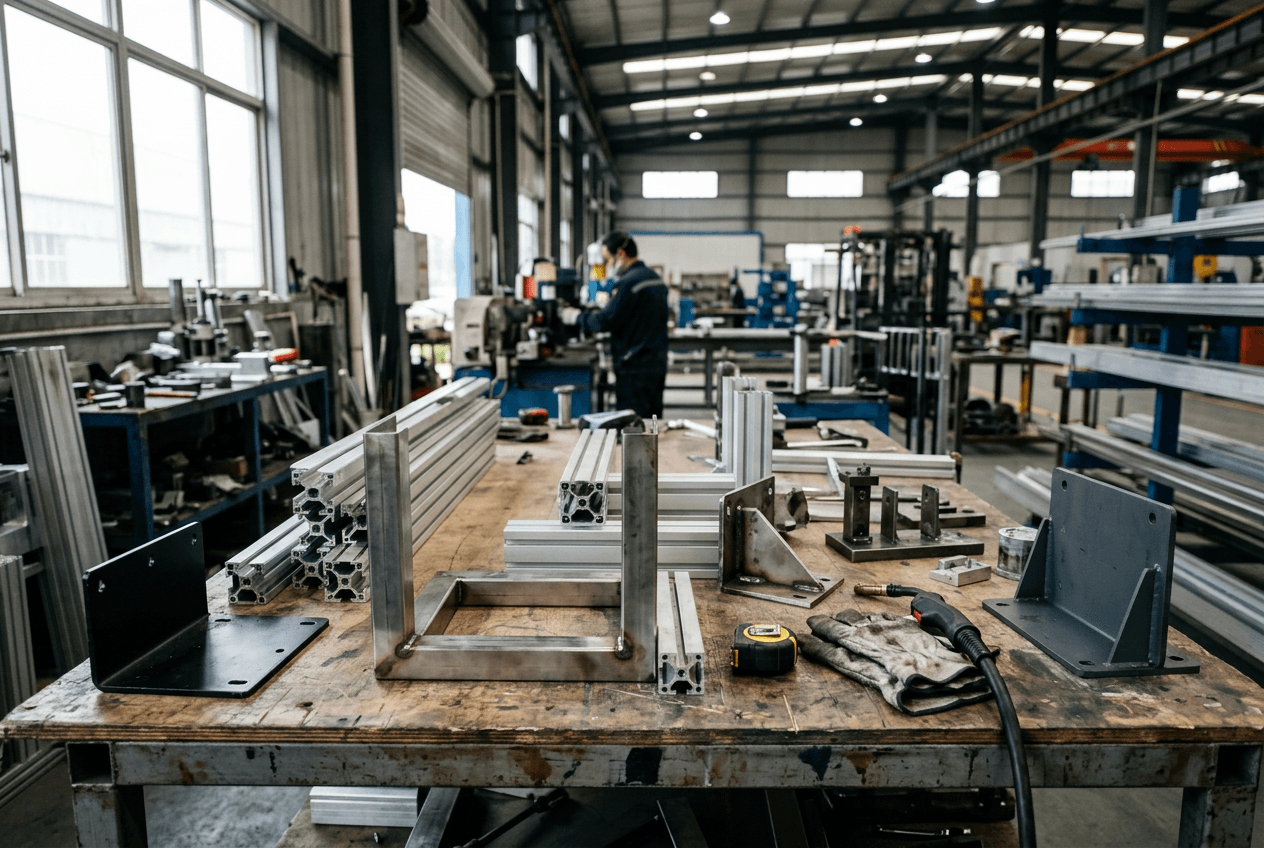
Two suppliers can quote the same metal extrusions drawing and still price two different jobs. One may assume a stock profile with simple cut-to-length work. Another may assume a custom profile, secondary machining, coating, and assembly fit checks. The numbers can look close on paper, yet the production risk is not close at all.
That gap is the real buyer problem. When an RFQ leaves profile details, mating parts, hole references, finish zones, or quantity stages open, each supplier fills the blanks differently. The quote then reflects the supplier’s assumptions, not the buyer’s intent. In sheet metal fabrication projects, that mistake often shows up late, when brackets do not align, welded frames pull out of square, or an enclosure needs rework before approval.
This article focuses on one procurement risk: quote distortion caused by incomplete RFQ assumptions. That risk matters whether the extrusion becomes a cabinet rail, a machine frame member, a welded bracket, or a visible trim piece. The part may look simple. The consequences rarely are.
Where RFQ Assumptions Start to Distort Metal Extrusions Quotes
A quote begins to drift the moment the buyer says only “metal extrusions.” That phrase does not tell the supplier whether the part is stock, modified, or newly tooled. It does not define the wall thickness, the alloy family, the cut length, or the critical face. It also leaves open whether the profile must accept drilling, punching, milling, or welded attachment later in the build.
Those unknowns change cost fast. A stock profile may need only sawing and deburring, but a custom profile can bring tooling charges, extrusion setup time, and a different inspection route. If the profile is intended for a sheet metal enclosure, the supplier also needs to know whether the extrusion sits inside the cabinet, carries a panel, or forms a visible edge. Each use case changes the quote logic.
Buyers often underestimate how much one missing note can change the offer. If the drawing does not show the mating sheet metal part, a supplier may assume generous clearances. If the wall thickness is vague, the supplier may pad the price to cover risk or quote a thinner section that later proves too weak for hardware torque. The quote does not fail because the supplier made a mistake. It fails because the RFQ left too much room for interpretation.
A small omission can become a big price gap
Consider a control cabinet rail built from metal extrusions. The buyer wants a clean front edge, two end holes, and room for a gasketed door. One supplier quotes a simple cut and drill job. Another assumes the holes need a fixture, the front face must stay cosmetic after machining, and the rail must align with a bent side panel. The second quote looks higher, but it may be the only one that reflects the actual build.
This is where Yishang can help buyers early in the RFQ stage. A drawing review can separate the visible part from the functional part and expose where the quote is relying on guesswork.
How Missing Datums Turn an Extrusion Quote Into an Assembly Fit Problem
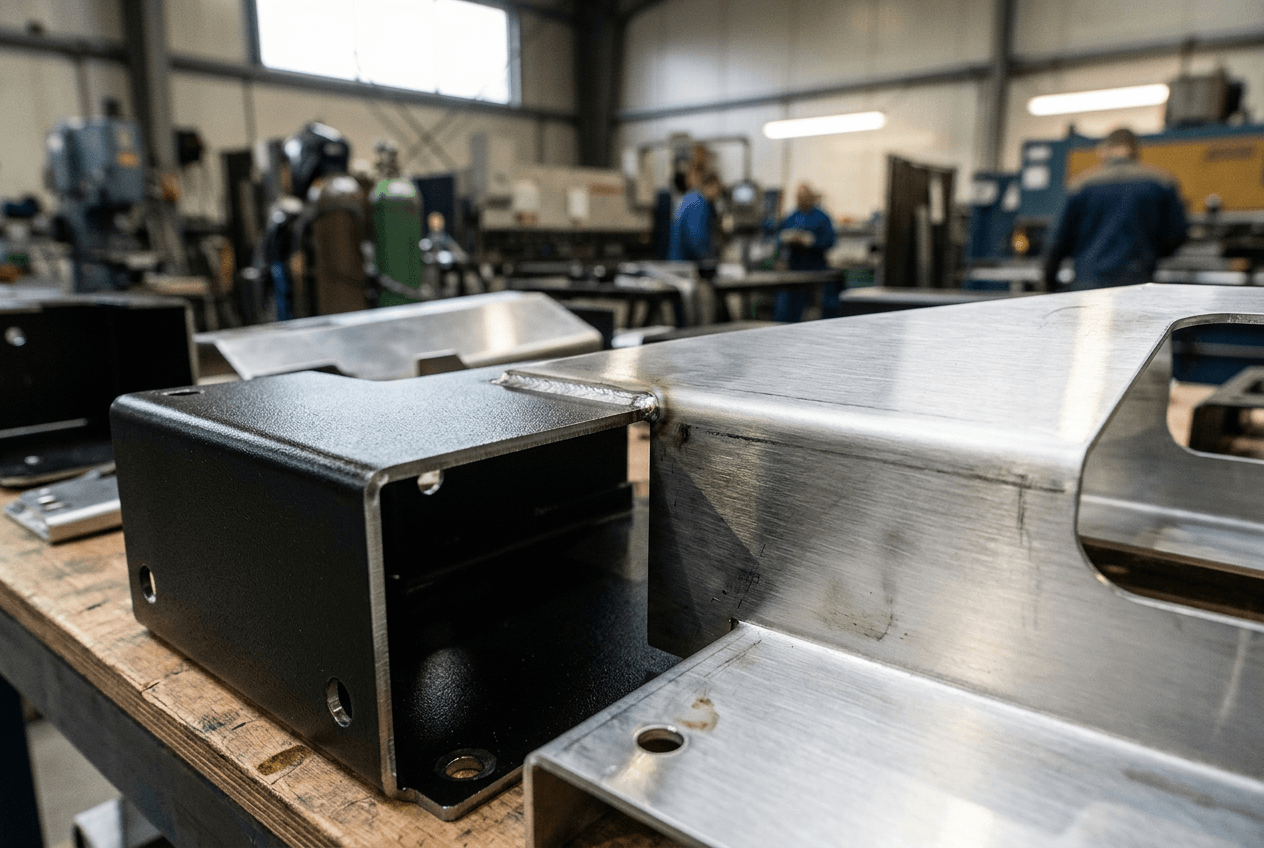
Many buyers compare quotes by unit price, then discover the real issue during assembly. The extrusion may meet the sketch, but it still fails when it meets bent sheet metal, welded brackets, or a cabinet opening. That failure usually starts with unclear datums. If the supplier cannot see which face controls the assembly, the quoted process may not protect the dimensions that matter most.
Fit risk grows quickly in multi-part builds. A bracket can be cut correctly and still miss the mounting slots if the reference face shifts. A frame rail can be straight on its own and still pull a door out of square after welding. A profile can meet size on the extrusion line and still leave no room for fasteners, gasket compression, or service access once it enters the enclosure.
Example: a welded machine guard frame
A buyer specifies metal extrusions for a machine guard frame and later adds a bent cover panel. The supplier quotes the frame as a straightforward cut-and-join assembly. During build review, the panel flange collides with one corner and the latch space disappears. The issue did not start in welding. It started when the RFQ failed to show the relationship between the profile, the cover, and the latch hardware.
That same risk appears in welded assemblies. Heat input can move an extrusion enough to change hole position or create a door-gap issue. If the buyer never states which faces must stay square after welding, the production team may choose a sequence that works structurally but misses the fit target. Once that happens, rework often costs more than the original machining.
Buyers should therefore send the mating parts with the RFQ whenever possible. Show the bent panel, the welded bracket, the fastener path, and the clearance zones in the same drawing set. If assembly fit matters, define the datum that controls the fit, not just the part outline. That detail often decides whether the quote is realistic or merely optimistic.
Why Finish and Secondary Operations Change More Than Surface Price
Finish is not a cosmetic afterthought when metal extrusions join fabricated assemblies. It often changes the process route, the inspection method, and even the order of operations. A bare profile may look inexpensive, but once the buyer adds powder coating, anodizing, polishing, masking, or weld touch-up, the supplier has to plan more than a surface step. The quote must cover handling, protection, rework risk, and the effect of the finish on fit.
That matters because finish and secondary operations can change dimensions. Coating builds thickness on edges and inside corners. Masking can leave transition lines where parts meet. Machining after coating creates touch-up requirements. If the RFQ never states which faces are visible and which can be hidden, the supplier may quote a process that meets function but misses appearance. Or the supplier may price in extra protection to avoid a finish rejection later.
Buyers also need to define when secondary work happens. A drilled hole before coating has a different cost and risk profile than a hole added after coating. The same applies to slots, tapped holes, and end machining. If the extrusion will be welded into a frame, the welding sequence may affect the finish route. A hidden weld zone can still create a visible defect on the outer face if the build order is wrong.
Example: a display rack upright
A retail display rack uses metal extrusions for uprights and shelf supports. The front face must look clean, but the rear face sits inside the structure. If the buyer does not label those surfaces, the supplier may coat or polish more than needed, or leave visible marks where a customer will see them. Later, the buyer may reject the batch because the front edge looks inconsistent, even though the part met the original written dimensions.
For this kind of project, the RFQ should state visible faces, allowed masking, weld-zone touch-up, and any cosmetic standard that applies to the assembly. If Yishang is reviewing the drawing, that is the stage to separate appearance requirements from purely functional ones before the quote is frozen.
Why Prototype Approval Does Not Guarantee Batch Consistency
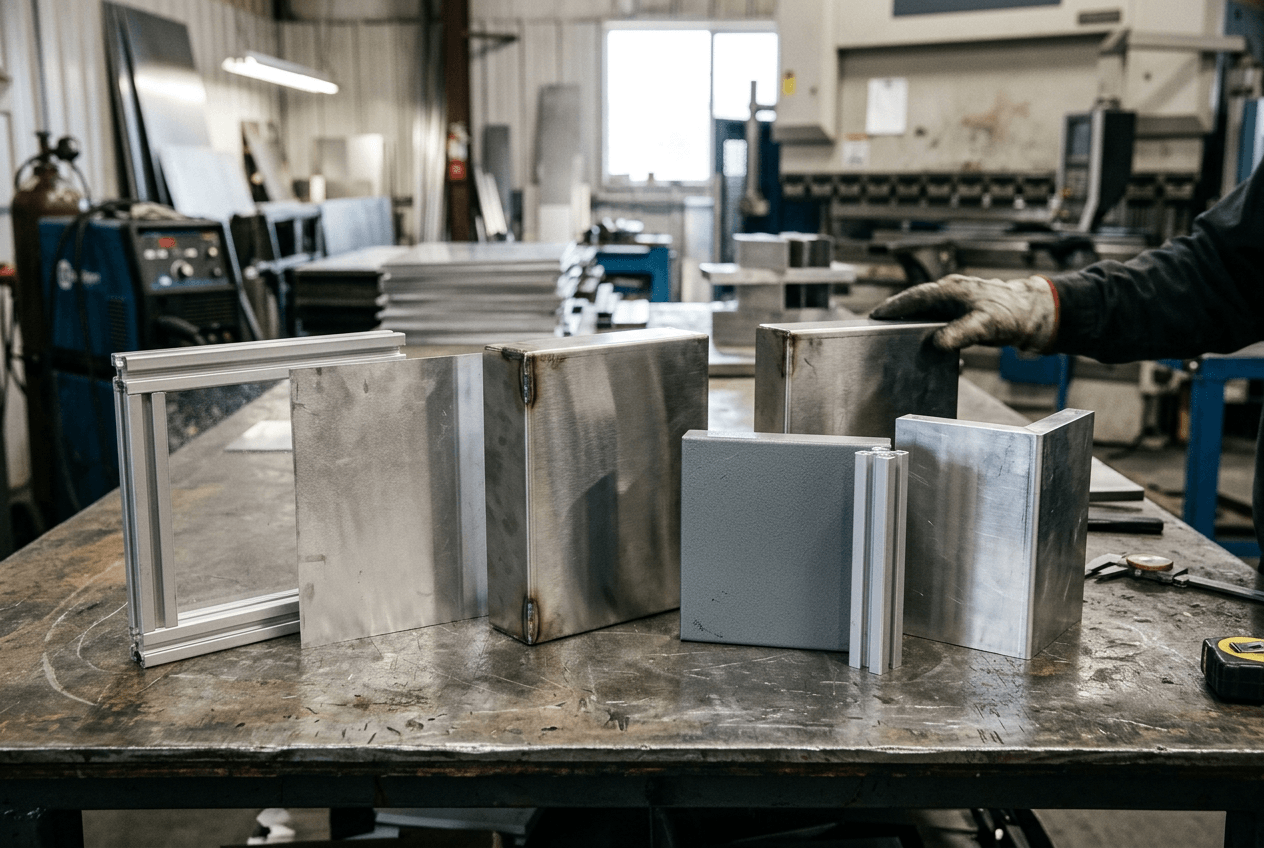
A prototype can pass for the wrong reason. It may succeed because a technician hand-fits the part, a fixture gets adjusted on the fly, or the sample uses a shorter run than production. When the batch order begins, the same part can drift. Hole position, straightness, coating thickness, and assembly stack-up all become more visible when the supplier repeats the job dozens or hundreds of times.
This risk appears often with frames, cabinets, and brackets built from metal extrusions. A sample door frame may close perfectly when the installer trims it by hand. The batch order then exposes a problem because the welded side rail, punched slot, and coated surface all consume tolerance at once. The prototype did not prove the process was stable. It only proved one sample could be made to fit.
Buyers should compare the sample route with the intended production route. Was the first article made with the same profile, the same temper, the same cutting method, and the same finish line? Did it use production tooling, or did the shop hand-correct the fit? If the sample came from a different route, it cannot fully support a production quote.
The procurement consequence is simple. A cheap sample can hide an expensive batch correction. Once production starts, the supplier has less room to improvise, and the buyer has less room to accept variation. If the RFQ did not state the first-article standard, the approval may not protect the batch at all.
What a production-ready sample should prove
The sample should prove that the quoted route can repeat the fit, not just the shape. It should use the same mating parts, the same critical datums, and the same finish sequence planned for production. It should also show the inspection method for hole location, straightness, and assembled squareness. Without that, the sample only proves that one part can pass once.
What to Freeze Before Comparing Metal Extrusions Quotes
If the buyer wants a quote that survives production, the RFQ has to freeze the assumptions that drive fabrication, assembly, and inspection. Start with the part role. Is the extrusion structural, cosmetic, or both? Then define whether it is a stock profile, a modified profile, or a new profile. State the wall thickness, cut length, and the faces that control the build. These basics keep the supplier from pricing a different part.
Next, tie the extrusion to the assembly. Show the mating sheet metal parts, welded brackets, fasteners, gaskets, and service access. Add the datums that matter most. If the part will be welded, note the sequence or the faces that must stay square. If the part will be drilled, punched, or milled later, call out which operation happens first. That sequence often changes setup time and scrap risk.
Finally, lock down the commercial shape of the order. Prototype, pilot, and production quantities should not live in the same bucket if the process route changes between them. A one-piece sample may need extra handling, but a batch may need fixture control and incoming inspection. If the buyer mixes those stages, the quote can look competitive before the hidden setup cost appears.
For teams that want a second set of eyes before pricing, Yishang can review drawings, material notes, quantity splits, tolerances, finish expectations, and assembly photos to spot where the RFQ still leaves room for costly assumptions. That review is most useful before the quote is compared, not after the order is already locked.
If you are preparing an RFQ for metal extrusions, send the drawings, material requirements, quantities, tolerances, and finish expectations first. That gives suppliers a clear basis for pricing and reduces the chance that the lowest quote belongs to the wrong build.
Frequently Asked Questions
Why do metal extrusions quotes vary so much between suppliers?
They often vary because each supplier is pricing a different assumption set. One may assume a stock profile and simple cutting, while another includes tooling, secondary machining, coating, or assembly fit checks. The RFQ usually drives the spread more than the metal itself.
What drawing details should buyers freeze before requesting quotes?
Freeze the profile type, wall thickness, cut length, critical datums, hole and slot references, finish zones, and the relation to any bent or welded parts. If those items stay open, the quote can reflect the supplier’s interpretation instead of the buyer’s build intent.
How do metal extrusions create assembly fit risk in cabinets and frames?
The profile may fit on its own but fail once it meets a door, gasket, bracket, or welded panel. Missing datums and unclear clearances cause the supplier to quote a part that does not protect the final assembly geometry.
Why can a prototype pass when batch production fails?
A prototype often gets hand-fit, adjusted, or built under different conditions. Batch production repeats the process at scale, so variation in hole location, straightness, coating thickness, and assembly sequence becomes much harder to hide.
Which finish details matter most in an RFQ for visible metal extrusions?
State the visible faces, masking limits, touch-up expectations, gloss or texture targets, and any scratch or hanger-mark limits. Finish can change both appearance and fit, so it should never be treated as a vague afterthought.
Can Yishang review drawings before batch pricing?
Yes. If you send drawings, material requirements, quantities, tolerances, and finish expectations, Yishang can review manufacturability and flag places where the RFQ still leaves room for costly quotation assumptions.