
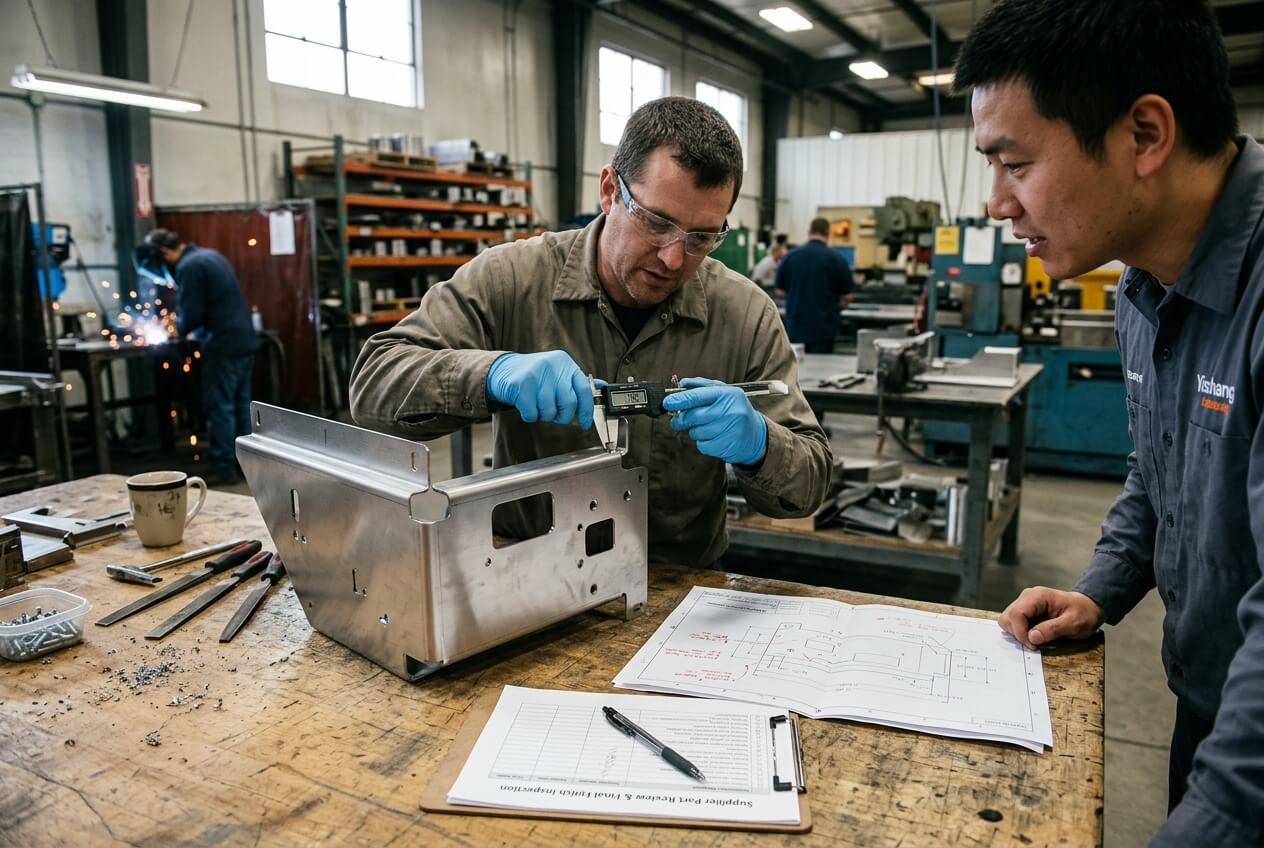
An OEM buyer sends one RFQ for a powder coated electronics enclosure, two welded support frames, and a set of retail display brackets. The fabrication prices look close. The metal finishing services lines do not. One supplier lists “powder coating.” Another includes deburring, weld cleanup, masking, and packing protection. A third asks which faces customers will see, whether PEM inserts need protection, and how much coating thickness the hinge holes can accept.
That difference is not only a pricing detail. It exposes a procurement risk: buyers compare quotes before they know which finishing assumptions each supplier has made. The lowest quote may exclude the work that protects assembly fit, appearance, corrosion performance, and batch consistency. Once the purchase order moves into production, those exclusions become rework, delayed shipment, scope disputes, or customer rejection.
For custom sheet metal parts, the finish is not a decorative line added after fabrication. It interacts with material choice, laser cutting, bending, welding, threaded inserts, tolerances, masking, inspection, and packaging. A buyer who defines only a finish name, color, and quantity leaves each supplier to fill the gaps. This article focuses on that single risk: unclear RFQ scope for finishing creates unequal quotes and weak production control.
Where RFQ Assumptions Start to Distort Metal Finishing Services Quotes
Two suppliers can quote the same finish name and price very different scopes. “Black powder coating” may mean coat all parts after fabrication. It may also include edge breaking, weld cleaning, masking, film thickness control, color matching, inspection, and protective packing. A sourcing table rarely shows those differences unless the buyer asks for them.
The problem often starts with scattered information. The 2D drawing lists RAL 9005. The 3D model shows hinge holes and PEM nuts. An email says the front panel must look cosmetic. A photo shows an old sample with a fine texture. Purchasing sends all files together, but no document states which details control the quote.
Each supplier then protects itself in a different way. One assumes standard industrial appearance. Another includes extra polishing because the part looks customer-facing. A third adds masking labor for threads and grounding points. The buyer sees a price gap, but the gap reflects assumptions, not efficiency.
A quote can hide missing work
Consider a powder coated control enclosure with a removable door, gasket flange, ventilation slots, and welded studs. If the RFQ only says “mild steel, powder coat black,” one supplier may coat the door and body without discussing build-up around the flange. During assembly, the gasket compresses poorly and the door sits proud. The issue started in the RFQ, not in final assembly.
A better RFQ would mark the gasket surface, hinge holes, insert locations, and cosmetic exterior faces. It would state whether the inside needs the same appearance as the outside. It would also ask the supplier to confirm expected coating thickness where fit matters. Those details let buyers compare the same finishing outcome, not the same finish label.
Cost drivers should appear before award
Finish-related cost drivers often sit outside the coating booth. Deburring sharp laser edges takes labor. Grinding visible welds adds time and can affect distortion. Masking threads, sliding surfaces, electrical contact points, and grounding zones requires planning. Special colors, gloss levels, textures, and small batches can change minimum charges and lead time.
Some finishes also require outside processing or special documentation. Anodizing, passivation, electroplating, e-coating, or salt spray testing may add scheduling risk. Buyers do not need to over-specify every process. They do need to ask whether the quote includes preparation, masking, inspection records, certificates, and packaging controls. Without that clarity, the purchase price can move after production starts.
Yishang reviews fabrication drawings and finish notes together during RFQ clarification for custom sheet metal fabrication. That review helps identify areas where coating, polishing, welding, bending, inserts, or assembly clearances may change the quoted scope.
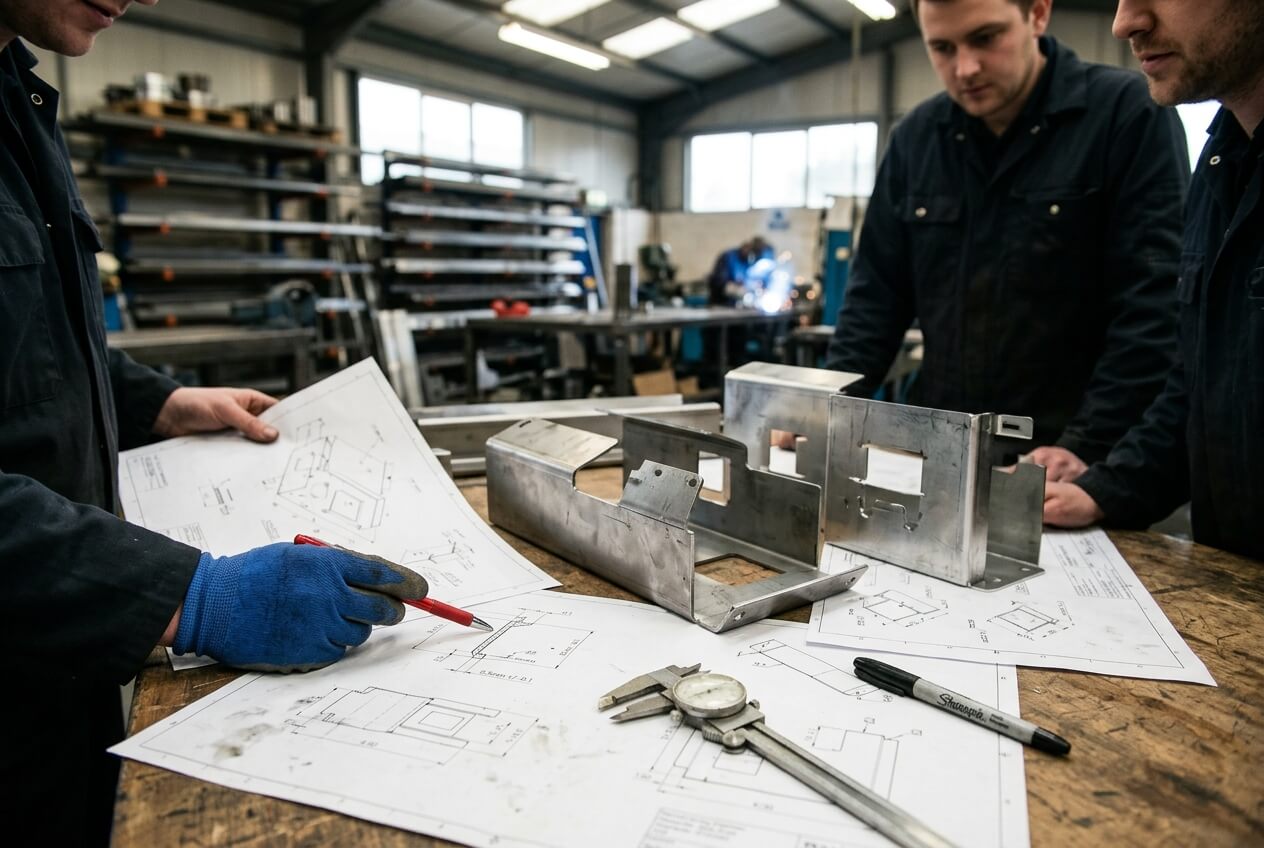
Why Fabrication Details Decide Whether the Finish Will Fit and Survive
Finishing failures often begin before finishing. Laser cut edges, punched holes, weld seams, bend radii, closed corners, and part geometry all influence the final surface. If procurement treats metal finishing services as a separate after-process, the buyer may miss risks that the finisher cannot correct cheaply.
A finish-only processor usually receives parts after cutting, bending, welding, and insert installation. At that point, the part geometry already controls spray access, drainage, hanging points, and coating build-up. If the design creates a trap for pretreatment liquid, the finish can stain later. If a tight hole receives coating, a screw may not fit. If weld spatter remains, powder coating can make the defect more visible.
Geometry can create finish defects
Deep cabinets, narrow slots, closed channels, and overlapped seams create practical finishing problems. Pretreatment chemicals need to drain. Powder needs line of sight and electrostatic attraction. Liquid coatings need controlled flow. Polishing tools need access. When the design blocks access, the supplier may need drain holes, larger gaps, different hanging points, or a different process.
For example, a welded machine guard frame may look simple on a drawing. The RFQ calls for outdoor powder coating. During production, the supplier finds small overlapped tube joints that trap pretreatment fluid. After curing, liquid seeps out and stains the coating near the welds. The visible defect appears after finishing, but the cause came from joint design and drainage assumptions.
Assembly fit can disappear after coating
Coating thickness matters when the design allows little clearance. Threads, hinge holes, sliding brackets, mating flanges, key slots, and gasket areas may work in bare metal but fail after finishing. A prototype can hide the risk if a technician clears holes by hand or adjusts parts during sample assembly.
Buyers should not simply ask whether a supplier can powder coat, plate, polish, or passivate a part. They should ask where finishing will change dimensions or contact surfaces. If tolerances are tight, the drawing should identify critical-to-fit features. The supplier can then recommend masking, larger hole clearance, post-finish tapping, controlled coating thickness, or a design adjustment.
Materials also influence finishing assumptions. Mild steel, stainless steel, aluminum, and galvanized sheet behave differently during pretreatment, welding cleanup, polishing, and coating. A finish that works well on one material may require extra preparation on another. Procurement should connect material requirements to finish expectations before comparing prices.
How Prototype Approval Can Fail to Control Batch Finish Consistency
A good prototype does not automatically prove that batch production will match it. Samples often receive extra manual attention. A senior technician may inspect every surface. A small coating run may avoid crowding, rack marks, or color variation. Once the order moves into quantity production, the process faces fixtures, operators, oven loading, handling, inspection speed, and packaging pressure.
The procurement risk appears when the buyer approves the sample by photo or short comment. “Approved” may mean the color looked acceptable under office lighting. It may not define the acceptable gloss range, texture, viewing distance, scratch limits, masking edges, or rack mark locations. Production then follows a process that no one fully documented.
Appearance approval is not process approval
A buyer may approve a powder coated display bracket because the visible face looks smooth. In batch production, the same part shows small rack marks on a customer-facing edge. The supplier explains that the part needed a hanging point. The buyer assumed the mark would be hidden. Both sides worked from different assumptions because the sample approval did not mark allowable hanging or contact areas.
Appearance approval should cover color, gloss, texture, visible weld condition, scratch limits, and surface categories. Process approval should cover masking drawings, coating thickness targets, rack or hanging points, inspection method, packaging method, and rework rules. Buyers need both levels when the parts support a brand image, seal an enclosure, or assemble into a larger system.
Batch consistency depends on repeatable notes
Prototype notes should become production requirements. Useful records include approved color chips, annotated photos, first article inspection results, masking diagrams, and packaging instructions. If the buyer approves a sample with extra hand cleanup, that cleanup must become a defined operation or the batch will differ.
A second example shows the risk clearly. An OEM approves a welded stainless bracket after the supplier polishes the visible welds. The batch later shows uneven polish direction across several brackets. The welds meet strength requirements, but the appearance varies on the installed product. The missing control was not “polishing” as a finish. It was the standard for visible weld blending, grain direction, and inspection distance.
Lead time also changes when prototype expectations become batch controls. Special colors may require scheduled coating runs. Corrosion testing may need extra days. Outsourced plating or passivation may depend on minimum lot timing. Buyers should ask about these timing points before awarding the order, not after sample approval.
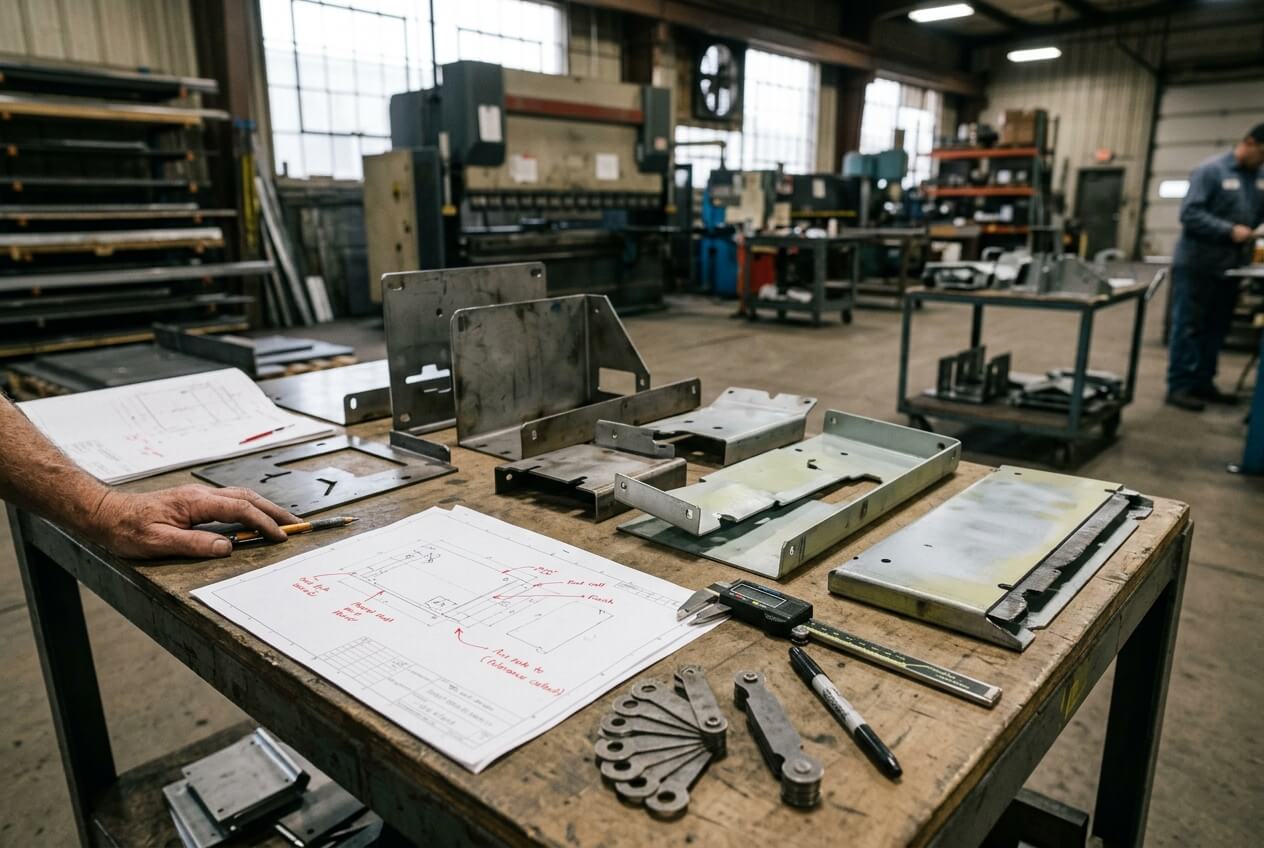
What Buyers Should Clarify Before Comparing Supplier Quotes
Buyers do not need a long textbook specification for every sheet metal part. They do need a finish scope that removes the assumptions most likely to change cost, lead time, or acceptance. A short, clear RFQ package usually works better than a vague request supported by many disconnected files.
Start with the part function. An indoor electrical enclosure, an outdoor welded frame, a retail display bracket, and an internal mounting plate do not need the same finish controls. The RFQ should explain the service environment, expected handling, corrosion exposure, and cosmetic importance. That information helps suppliers quote the right preparation and inspection level.
Define surface categories and fit-sensitive areas
Mark A-surfaces, B-surfaces, and hidden surfaces on drawings or annotated images. A-surfaces include customer-visible panels, front doors, display faces, and any exposed decorative welds. B-surfaces may allow minor handling marks. Hidden internal surfaces may need protection but not cosmetic inspection. This simple map prevents suppliers from guessing where appearance matters.
Next, identify fit-sensitive areas. Threads, PEM inserts, hinge holes, grounding points, gasket lands, sliding slots, bearing surfaces, mating flanges, and tight clearance holes need special attention. The RFQ should state whether these areas need masking, post-finish cleaning, or dimensional allowance. If the drawing includes tight tolerances, ask the supplier to review whether the tolerance applies before or after finishing.
Ask what the quote includes and excludes
A comparable quote should explain preparation, finishing, inspection, and packing. Buyers can ask direct questions: Does the price include deburring before coating? Are welds ground or only cleaned? Which holes will be masked? What film thickness range will the supplier target? Where will rack marks appear? How will coated parts avoid abrasion during shipment?
Supplier communication matters most before award. A supplier that asks detailed questions may look slower during sourcing, but those questions often prevent expensive changes later. If a supplier gives a low price without asking about visible surfaces, masking, fit, or environment, procurement should treat the quote as incomplete until the assumptions become clear.
Documentation requirements should also appear in the RFQ. Some projects need RoHS, REACH, material certificates, coating data sheets, salt spray reports, first article inspection, or batch traceability. These items affect cost and lead time. They also reduce dispute risk when customers audit the finished parts.
Yishang can review drawings, material requirements, tolerances, finish expectations, prototype feedback, and assembly notes before quotation. This review helps buyers convert informal finish expectations into clear fabrication and finishing requirements.
The Safest Award Decision Compares Controlled Outcomes, Not Finish Names
Procurement teams often need to move quickly. A clean comparison table helps, but only when each supplier quotes the same outcome. If one quote includes masking, cosmetic inspection, weld cleanup, and protective packing while another includes only coating, the table compares different products.
The safest award decision tests how each supplier handles uncertainty. Did the supplier flag tight holes, insert protection, drainage, visible welds, or large cosmetic panels? Did it explain outsourced finishing steps and timing risks? Did it separate standard industrial appearance from customer-facing appearance? Did it state what happens if coating thickness affects assembly?
A low unit price can still be the right choice. It becomes risky when the supplier has not priced the work required to meet the buyer’s actual acceptance standard. Rework can exceed the original savings. Missed shipment dates can damage launch schedules. A cosmetic rejection can force sorting, repacking, discounting, or emergency remanufacture.
Before issuing a purchase order, buyers should ask suppliers to confirm the finishing assumptions in writing. That confirmation can be brief. It should cover surface categories, color or texture reference, coating thickness concerns, masking zones, inspection criteria, packaging protection, documentation needs, and lead-time dependencies. Once those points match, price comparison becomes meaningful.
Practical next step: If your sheet metal project includes powder coating, polishing, passivation, plating, masking, welded seams, inserts, tight holes, or cosmetic panels, send Yishang your drawings, material requirements, quantities, tolerances, finish expectations, photos of approved samples, and assembly notes. Ask for an RFQ review that checks fabrication and finishing assumptions before you select the lowest unit price.
Frequently Asked Questions
Why can two metal finishing services quotes differ for the same sheet metal part?
They may include different assumptions. One quote may cover only the finishing process. Another may include deburring, weld cleanup, masking, coating thickness control, cosmetic inspection, certificates, and packaging. Buyers should compare the included preparation and control steps before comparing unit price.
What finish details should buyers include in a sheet metal fabrication RFQ?
Include the finish type, color reference, gloss or texture expectation, material, quantity, service environment, visible surface map, masking zones, tolerance concerns, inspection requirements, and documentation needs. Add photos or approved samples when appearance matters.
When does coating thickness create assembly risk?
Coating thickness creates risk around threads, hinge holes, gasket flanges, sliding slots, mating brackets, grounding points, and tight clearance holes. These areas may need masking, design allowance, post-finish cleaning, or a tolerance review before prototype approval.
How should buyers control cosmetic expectations for enclosures or display brackets?
Mark A-surfaces, B-surfaces, and hidden surfaces on drawings or annotated photos. Define color, gloss, texture, viewing distance, scratch limits, visible weld appearance, and acceptable rack mark locations. This prevents suppliers from applying a general industrial standard to customer-facing areas.
Why does prototype approval not guarantee batch finish consistency?
A prototype may receive extra handwork or special inspection. Batch production adds fixtures, operators, oven loading, handling, packaging, and repeatability limits. Buyers should turn sample approval notes into production controls, including masking drawings, inspection criteria, and packing instructions.
What should buyers ask before accepting the lowest finishing quote?
Ask what the quote includes and excludes. Confirm surface preparation, weld cleanup, masking, film thickness range, rack marks, inspection method, certificates, outsourced process timing, and packing protection. A low price only has value when the supplier has quoted the required outcome.