
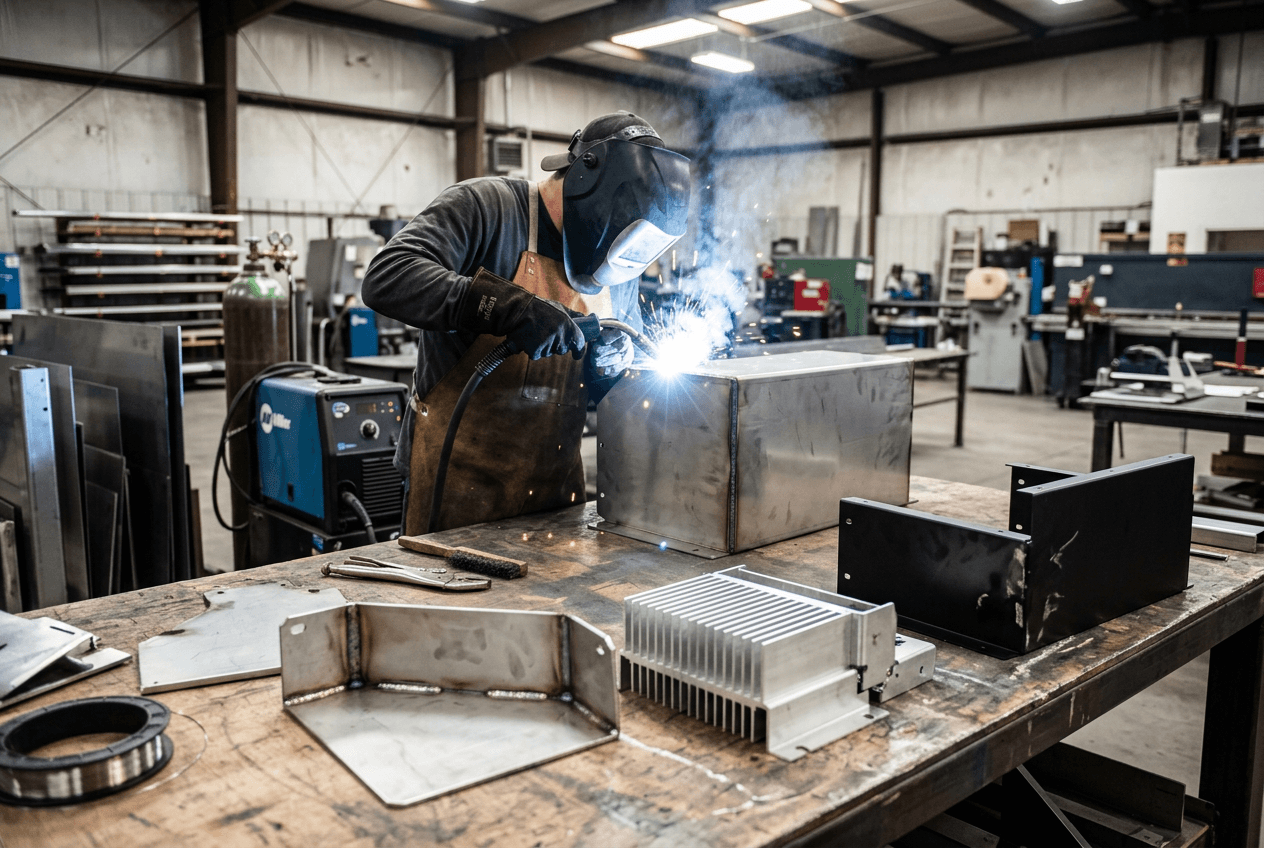
An OEM buyer can send the same enclosure drawing to three suppliers and get three very different answers. One quote looks attractive because it treats the weld as a quick tack job. Another assumes full seam welding and cosmetic grinding. A third includes fixture time, inspection, and finishing work that the drawing never stated clearly. The part looks identical on paper, but the scope is not.
That is the main procurement risk in metal inert gas welding for sheet metal fabrication. The process is common for enclosures, brackets, frames, cabinets, and welded assemblies. The problem is not the arc itself. The problem is that RFQs often leave weld intent, visible surfaces, post-weld dimensions, and batch controls open to interpretation. When that happens, the lowest price usually reflects the narrowest assumption, not the full job.
Buyers then pay for the gap later. The cost shows up as rework, sample delay, coating defects, door or panel fit issues, or a batch that no longer matches the approved prototype. If you want a quote that reflects the real part, you need to define the weld scope early and tie it to the drawing, the finish, and the assembly context. Yishang can review those assumptions when buyers share CAD files, drawings, and finish notes, but the first job is to make the RFQ unambiguous.
When a Weld Note Hides Three Different Fabrication Scopes
A drawing note like “weld as shown” sounds clear until a supplier has to price it. In sheet metal fabrication, that note can mean three very different things. It may mean a light tack for location only. It may mean a functional seam weld that must hold load or seal a joint. It may mean a cosmetic weld that needs grinding before coating. Each version uses different labor, setup, and inspection time.
Metal inert gas welding is flexible enough to serve all three cases. That flexibility is why procurement teams need more detail, not less. If the RFQ does not define seam length, weld continuity, bead appearance, or whether the joint is visible after assembly, suppliers will fill in the blanks themselves. Their assumptions often vary by shop practice, not by buyer intent.
One enclosure, two quotes, and one hidden dispute
Consider a wall-mounted control box made from 1.5 mm steel. The front face is visible to customers, and the internal bracket supports electronics. If the RFQ only says “corner welded,” one supplier may quote short tacks and minimal cleanup. Another may quote full outside seams with flush grinding because the corners will sit under powder coating. The prices look unrelated because the work is unrelated.
That gap becomes a problem when the first sample arrives. The enclosure may fit the CAD model in general shape, but the external corners show weld build-up, or the door opening is slightly tight after welding. The supplier did not necessarily quote badly. It quoted a different fabrication route. A good RFQ makes those routes visible before price comparison starts.
The same issue appears on welded brackets. A buyer may want a simple support bracket for an internal machine panel. One supplier assumes a tack-and-go part. Another assumes a fully welded bracket with post-weld straightening so the bolt holes stay aligned. Those are not the same products, even if the DXF looks similar.
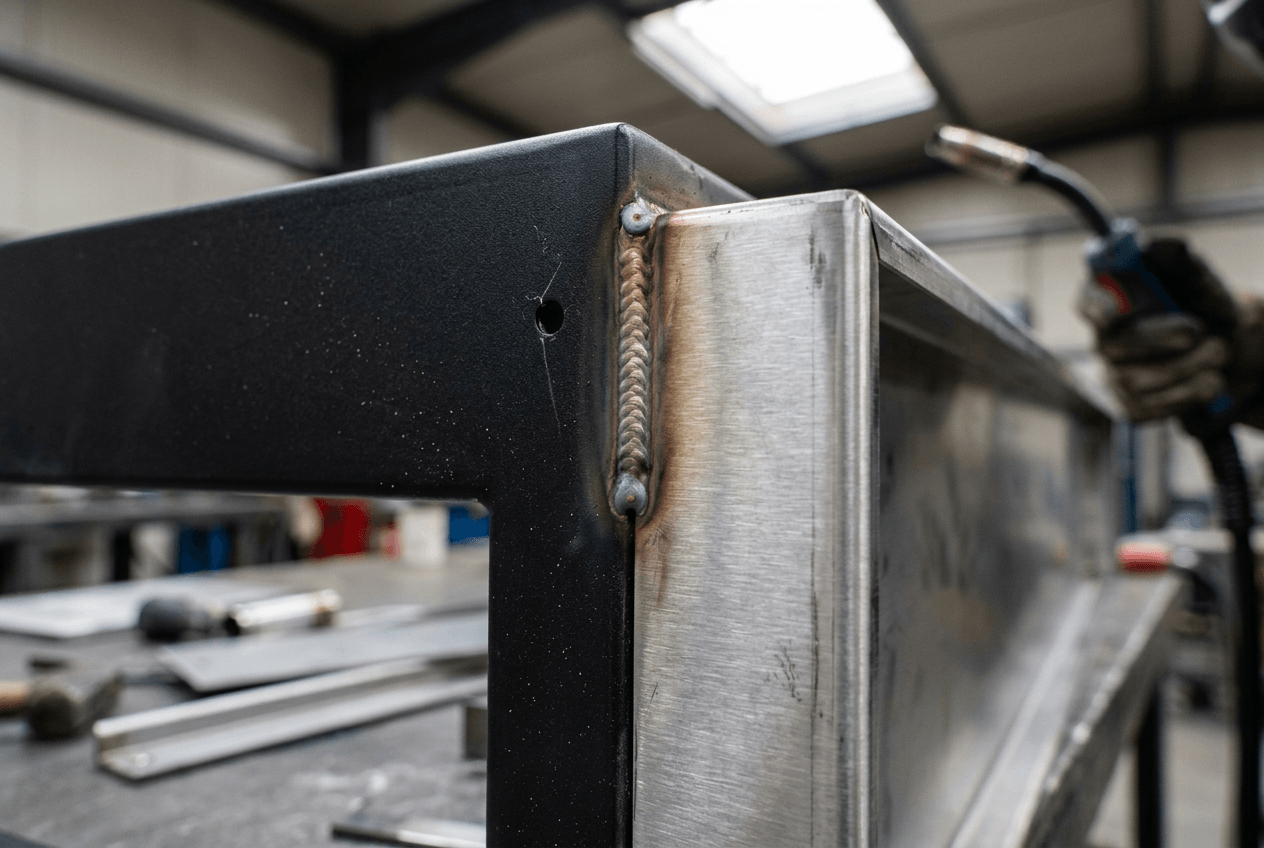
Why Access, Joint Design, and Fixture Time Change the Quote Before the First Arc Starts
The quote usually changes long before welding begins. Joint access controls how the torch reaches the seam. Edge condition affects how much filler the weld needs. Part size determines whether the operator can hold alignment by hand or needs a fixture. Thin material demands tighter control because heat distortion can move fast.
That is why buyers should not treat labor as a single welding line item. In metal inert gas welding, the actual cost depends on setup, access, bead length, and how much correction the part needs after the weld cools. A short internal seam may be cheap. A long visible seam on a powder coated cabinet can require much more handling, grinding, and cleanup.
When access drives labor and lead time
A welded frame for a display system is a good example. If the joints are open and easy to reach, the shop may weld quickly and hold squareness with a basic fixture. If the frame has boxed corners, overlapping flanges, and nearby mounting bosses, the operator needs more repositioning. That extra handling increases labor and may also extend lead time because the shop has to build or adjust a jig.
That fixture decision matters in procurement. A buyer may compare one low quote against another quote that includes a welding jig. The second quote looks higher, but it may reduce variation, reduce inspection effort, and protect repeat orders. If the project is a prototype or a one-off, manual alignment might be acceptable. If the buyer plans a batch, the jig cost often protects the schedule later.
This is also where supplier communication becomes part of cost control. A supplier that asks about weld length, access, and visible faces is not being difficult. It is trying to price the real operation. That is the point where a drawing review from Yishang can help buyers separate basic fabrication from the extra controls a specific assembly really needs.
How Welding Heat Turns a Correct Drawing into a Fit Problem
Laser cutting and bending can produce accurate parts, but welding changes the geometry. Heat pulls metal as it cools. Shrinkage can tighten a door opening, change a bracket angle, or move a hole pattern just enough to create assembly friction. The drawing may still be correct. The welded part may no longer match it.
This risk often surprises buyers because it starts downstream of cutting. The blank parts look right. The bend lines look right. The weld then introduces movement that the RFQ never accounted for. If the buyer only inspects cut dimensions, the real fit problem stays hidden until assembly or coating.
For example, a stainless steel cabinet with internal stiffeners may look fine after welding, but the front panel can wave slightly because the heat pulled the sheet unevenly. A powder coated bracket may pass dimensional checks before welding and still miss its mating part afterward. A sealed enclosure may close on the bench and scrape once coating adds thickness to the mating flange. These are not coating problems alone. They often begin with weld planning.
Prototype fit is not the same as production fit
Buyers sometimes approve a prototype because the sample fits after hand adjustment. A skilled welder may tap the frame square, rework a corner, or grind a seam until the sample passes. That result does not prove the batch will behave the same way. It only proves the sample got more attention.
Batch production needs repeatable controls. That usually means a defined welding sequence, stable fixturing, first-article checks, and a decision on which dimensions matter after welding, not before. If the RFQ does not name post-weld critical dimensions, the supplier may inspect the wrong features. A tight hole pattern is useless if the mating face moved. A clean seam means little if the door gap is off by a few tenths and the latch no longer aligns.
This is the point where buyers should link weld scope to assembly fit. A welded chassis, a mounted bracket, and a cabinet door all need different checkpoints. If the part must fit another part, that interface should be identified on the drawing. Otherwise, the quote may be based on a shape that is technically complete but operationally unusable.
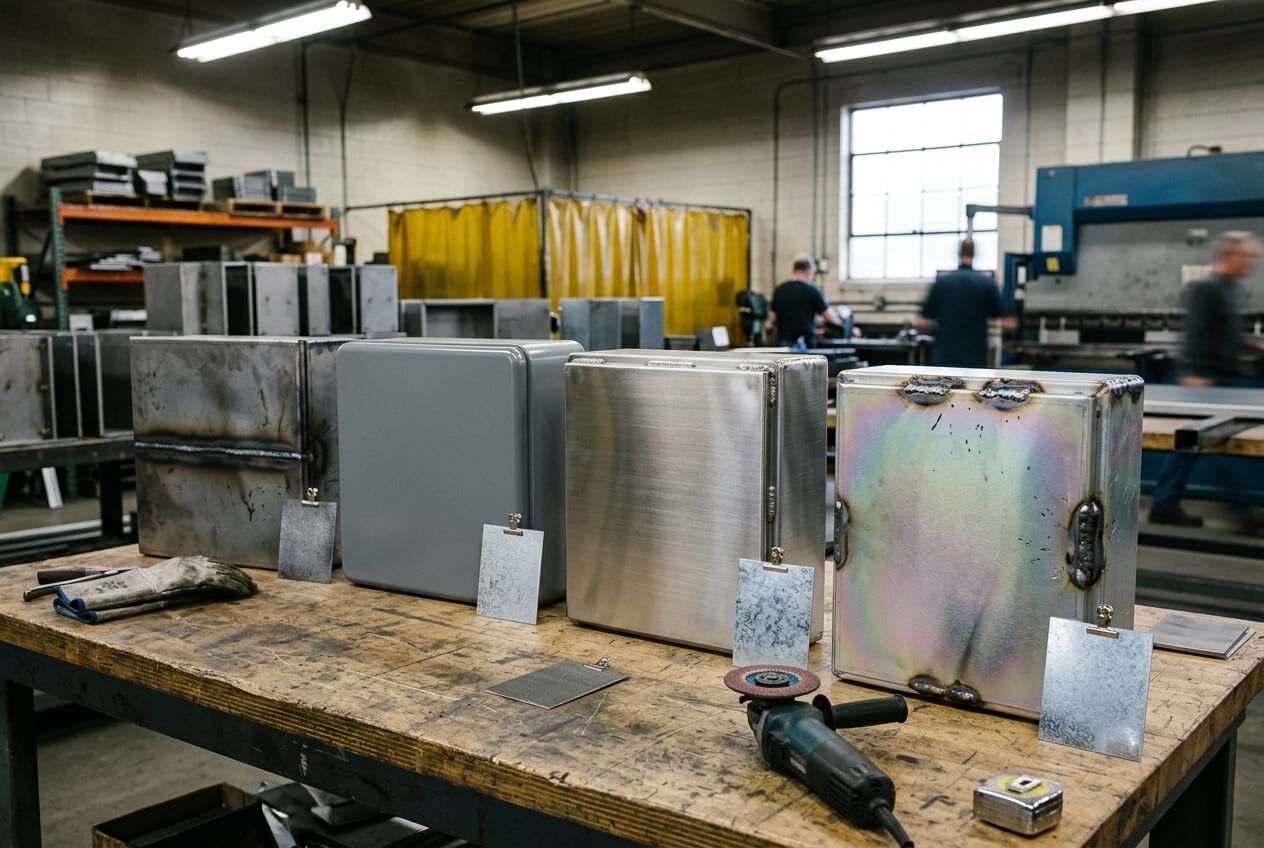
Why Prototype Approval Can Still Fail in Batch Production
Prototype approval can create false confidence. A sample may pass because the shop works slowly, adjusts every seam by hand, and spends extra time on cleanup. Batch production rarely gets that same freedom. Operators need a repeatable method, and the quote needs to include the controls that make repeatability possible.
This is especially important for welded assemblies with visible seams and mating parts. A welded equipment frame may look acceptable as a one-piece sample, but a production lot can drift if the fixture is weak or the sequence changes between shifts. Once the assembly moves through coating or final assembly, the variation becomes expensive to correct.
Buyers should ask what the sample actually proved. Did it prove the geometry, or only the welder’s skill? Did it prove the finished appearance, or only a hand-finished one-off? Did it prove that the batch can hold the same flatness after coating, or only before coating? Those questions sound small, but they protect the purchase order.
Project example: a welded cabinet that passed sample but failed repeatability
An industrial cabinet sample may come back with perfect door gaps and a smooth front seam. The buyer approves it. Then the batch starts, and the gaps close slightly on every third unit because the welding sequence shifts under production pace. The doors still mount, but the latch force changes and the gasket compresses unevenly. What looked like a finish issue is really a process-control issue.
The fix is not to demand “better quality” in the abstract. The fix is to define what batch consistency means: fixture use, weld sequence, inspection points, and the dimensions that must survive welding and coating. If the project is important, ask for first-article photos, inspection records, and a simple assembly trial before full release. That saves more time than arguing over a failed batch later.
What Buyers Should Lock into the RFQ Before Comparing MIG-Welded Quotes
Procurement teams get better pricing when every supplier prices the same scope. The RFQ does not need to become a long specification, but it does need to remove the biggest welding assumptions. That is the fastest way to make metal inert gas welding quotes comparable across enclosure, bracket, frame, and welded assembly projects.
Start with the weld itself. State whether the seam is continuous, stitch, tack, plug, or sealed. Mark which welds are structural and which are cosmetic. Call out visible faces, especially on front panels, cabinet corners, and customer-facing surfaces. Then identify post-weld dimensions that matter after cooling, not just after cutting or bending. Hole location, door opening size, squareness, flatness, and mating-face alignment usually matter more than a generic overall size note.
Finish notes also need precision because finish changes both labor and fit. If the part will be powder coated, say which seams need flush grinding and which hidden welds can stay as-welded. If the part needs polishing or brushed stainless appearance, define the acceptable seam direction and visible heat tint. If coating thickness affects hinge, slot, or insert clearance, say so before pricing. Otherwise, a low quote may exclude the cleanup needed to make the assembly usable.
Finally, make the batch expectation clear. If the project is only for a prototype, say so. If the part must scale into production, ask the supplier to price the fixture or process control separately. That helps the buyer compare unit price against real repeatability. Yishang can support that review when buyers send drawings, material requirements, quantities, tolerances, and finish expectations for quote review or prototyping.
Need a MIG-welded sheet metal quote that reflects the real work? Send your drawings, material requirements, quantities, tolerances, finish expectations, and any photos or samples that show how the part must fit and look. If visible seams, door gaps, mounting holes, flatness, or coating interfaces matter, mark them clearly before price confirmation. Yishang can review the welding, bending, finishing, and batch-control assumptions so the RFQ matches the part you actually need.
Frequently Asked Questions
Why do two metal inert gas welding quotes differ so much for the same sheet metal part?
They usually differ because each supplier made different assumptions about weld length, continuity, grinding, inspection, and fixture time. One quote may cover only basic joining, while another includes cosmetic cleanup and repeatability controls. Compare the weld scope before comparing unit price.
What should buyers mark on a drawing when a seam will be visible after coating?
Mark the visible face, the seam location, the required grind level, and the finish type. A powder coated cabinet corner needs different prep from an internal support weld. If the surface is customer-facing, say whether flush grinding, blending, or simple spatter removal is acceptable.
When does a welded frame need a fixture instead of manual alignment?
A fixture becomes important when the frame must hold squareness, hole alignment, door gaps, or flat mating faces across a batch. Manual alignment may work for one prototype, but it rarely gives stable repeatability for production. Ask whether the quote includes fixture cost or treats it as an extra.
Why can a sample pass and still create batch fit problems later?
A sample may receive extra hand adjustment, slower welding, or more grinding than production can sustain. Batch parts often follow a faster sequence and less manual correction. If the RFQ does not define the controls behind the sample, the approved part may not repeat in volume.
What details help suppliers price welded sheet metal assemblies more accurately?
Share drawings, material grade, thickness, quantities, tolerances, finish expectations, visible surfaces, and any mating parts that affect fit. Add notes on weld type, critical post-weld dimensions, and whether the part needs fixture-based production. Those details reduce quote gaps and avoid later scope disputes.