
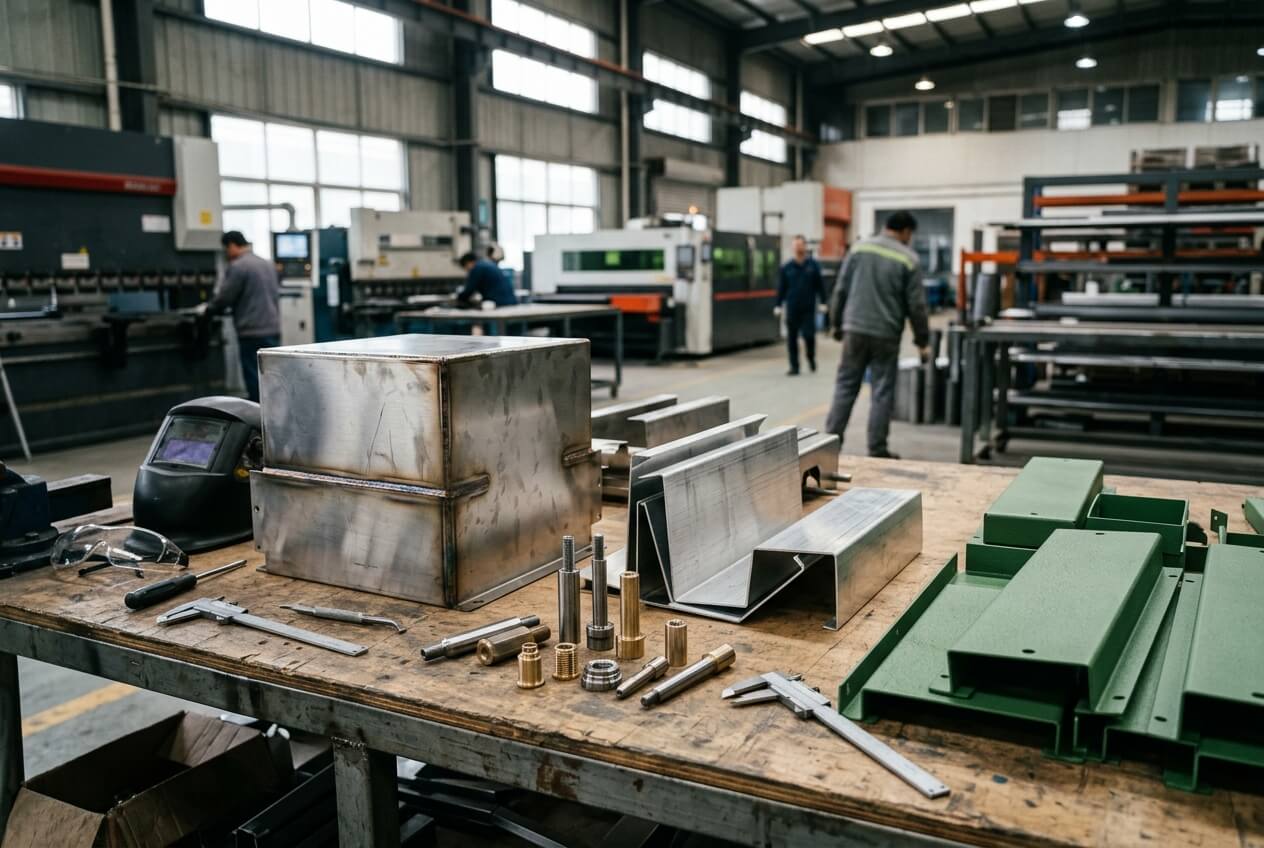
Many OEM buyers see a spacer, hinge pin, threaded sleeve, or round insert and treat it as one of many simple projects for a metal lathe. The part looks small. The drawing may show a diameter, a length, a thread, and a material callout. On its own, the item seems easy to quote.
The sourcing risk starts when that round part becomes part of a sheet metal product. A turned spacer may set the final width of a cabinet. A hinge pin may decide whether a powder-coated door swings freely. A threaded sleeve may carry load in a welded frame. A standoff may align a removable cover after bending, welding, and finishing.
This article focuses on one dominant buyer risk: RFQ ambiguity around lathe-style parts can make suppliers quote different products under the same part number. One supplier may price only the machined component. Another may include weld fixtures, coating masks, assembly checks, thread gauges, and rework allowances. The lower price may not be better. It may simply exclude the work that makes the assembly fit.
For buyers sourcing custom sheet metal fabrication, metal enclosures, brackets, frames, and welded assemblies, the key question is not whether a supplier can make the round part. The question is whether the RFQ defines the finished condition well enough to protect quotation accuracy, prototype review, batch consistency, and final assembly fit.
Where a Small Lathe-Style Part Starts to Distort the Whole RFQ
RFQ ambiguity often begins with a drawing that isolates the turned feature from the fabricated assembly. The buyer may send a sleeve drawing and request pricing for stainless steel or aluminum. The supplier sees a straightforward machined part. Later, the buyer expects that sleeve to arrive welded into a powder-coated enclosure, aligned to a cover hole, and clean enough for visible use.
That gap changes the quote. A loose sleeve needs material, turning, tapping, deburring, and packing. An installed sleeve may need weld access, a fixture, heat control, masking, coating clearance, thread protection, and assembled inspection. These are different supply boundaries, not small price differences.
A cabinet hinge pin that controls more than rotation
Consider a control cabinet with a powder-coated steel door and a stainless hinge pin. The pin diameter may meet the turning drawing. The door can still bind if the hinge leaves shift during welding or if powder coating reduces the running clearance. If the RFQ does not show hinge stack-up, finish condition, and acceptable door sag, suppliers must guess the real requirement.
The issue starts with an incomplete RFQ. It moves into quotation when one supplier assumes a pin-only scope and another assumes fitted door assembly. It reaches production when the coated cabinet needs reaming, polishing, or hinge adjustment. Buyers should clarify earlier whether the pin is a loose component, an installed feature, or a functional fit point in the finished enclosure.
A spacer that quietly sets the final assembly width
A retail display frame can create a similar problem. Turned spacers between bent side panels may look like simple metal lathe projects. In reality, spacer length may control the finished frame width, shelf alignment, and panel gap. If the drawing only gives the spacer length, the supplier may not protect the finished assembly dimension.
The RFQ should state what the spacer contacts, whether those surfaces receive coating, and which final dimension matters. It should also identify whether washers, pads, or protective films can change the stack-up. Without that context, buyers may approve a good spacer and still receive a poor assembly.
Why Material and Finish Assumptions Create False Price Comparisons
Material choice becomes risky when the RFQ names a metal but omits the assembly environment. Aluminum, stainless steel, brass, and carbon steel each behave differently when they contact coated panels, welds, fasteners, gaskets, or cosmetic surfaces. A supplier cannot price the same risk without knowing how the part joins the fabricated product.
For example, an aluminum threaded insert may reduce weight and machining cost. It may also mark a painted steel panel during assembly. A stainless insert may resist corrosion but raise machining cost and increase galling risk with stainless screws. Carbon steel may weld cleanly into a frame, yet it needs coating coverage, plating, or another corrosion plan. Brass may machine well, but it can create color, cost, or galvanic-contact concerns.
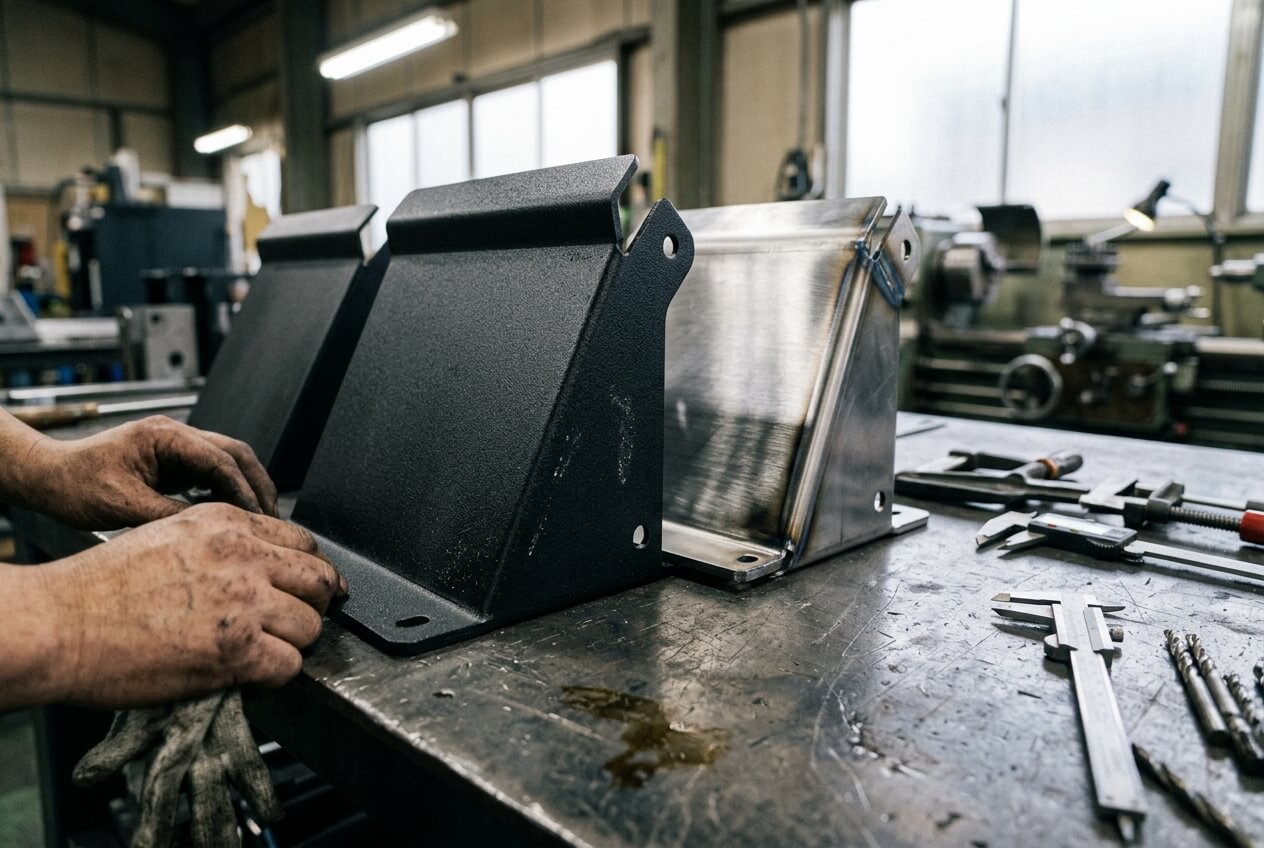
The problem does not end with material price. It affects finishing sequence. A welded carbon steel boss may need coating after welding. A threaded sleeve may need masking before powder coating. A visible stainless pin may need a brushed direction or scratch limit. If the RFQ only says “stainless” or “powder coat black,” suppliers will price different assumptions.
The finish may change the functional dimension
Powder coating can reduce clearance in holes, slots, hinge barrels, and threaded features. Plating can change thread feel. Polishing can soften edges or change cosmetic expectations. These finish effects matter when a turned part controls movement, spacing, or fastening.
Buyers should define whether dimensions apply before or after finishing. They should also state which surfaces need masking and which threads require protection or post-finish chasing. This detail helps suppliers quote the process route, not just the raw component.
Installed inserts need a manufacturing route
A threaded insert in a sheet metal enclosure can arrive by several routes. The supplier may press it, rivet it, weld it, screw it in, or install it after coating. Each route changes cost, lead time, tooling, inspection, and failure risk. A pressed insert may depend on sheet thickness and hole tolerance. A welded sleeve may shift under heat. A post-coated insert may protect threads but add assembly labor.
Buyers do not need to solve every process detail before sending the RFQ. They do need to describe the required outcome. State the pull-out expectation, mating screw, grounding need, visible surface rules, coating condition, and quantity. A fabrication supplier such as Yishang can then review whether the material and installation route match the enclosure, bracket, frame, or welded assembly.
When Prototype Approval Hides Manual Fitting Around Turned Features
Prototype approval can create false confidence when technicians make undocumented adjustments. This risk appears often in fabricated assemblies that include turned bushings, sleeves, pins, spacers, and standoffs. The first sample may work because someone reamed a hole, polished a pin, chased a thread, shimmed a bracket, or corrected weld pull by hand.
Those actions may look harmless during sample build. They become expensive during batch production. A production team cannot repeat hidden hand fitting across hundreds or thousands of units without adding labor, delay, and inspection variation. The buyer may then face rework charges, late shipments, or inconsistent field fit.
A bushing through laser-cut panels
Imagine a sheet metal housing with a lathe-turned bushing passing through two laser-cut side panels. During prototype assembly, one hole sits slightly off because bend springback changed the panel position. A technician reams the hole and the bushing rotates smoothly. The sample passes visual review.
If no one records the reaming, the batch drawing still looks approved. Production parts may meet the drawing but fail during assembly. The issue began as RFQ ambiguity around the functional fit. It became hidden prototype labor. It finally appeared as a repeatability problem after material, bending, and coating had already been purchased.
A welded frame with threaded leveling sleeves
A welded equipment frame with threaded leveling sleeves creates another common chain. The prototype may sit flat after a worker adjusts sleeve alignment before coating. In batch production, welding heat pulls some sleeves out of square. Powder coating reduces thread engagement. The leveling feet bind or sit at an angle.
The RFQ should ask the supplier to report any manual correction used during sample build. Buyers should then decide whether the correction becomes a fixture, tolerance change, slot, weld sequence, inspection check, or design revision. Prototype approval should confirm a repeatable route, not just an acceptable sample.
This distinction also affects lead time. A quick prototype may rely on flexible bench work. A stable production order may need fixtures, gauges, coating masks, and documented inspection points. Buyers who clarify this before price comparison reduce late changes and protect launch schedules.
How Tolerance Notes Can Trigger Overpriced Parts or Undercontrolled Assemblies
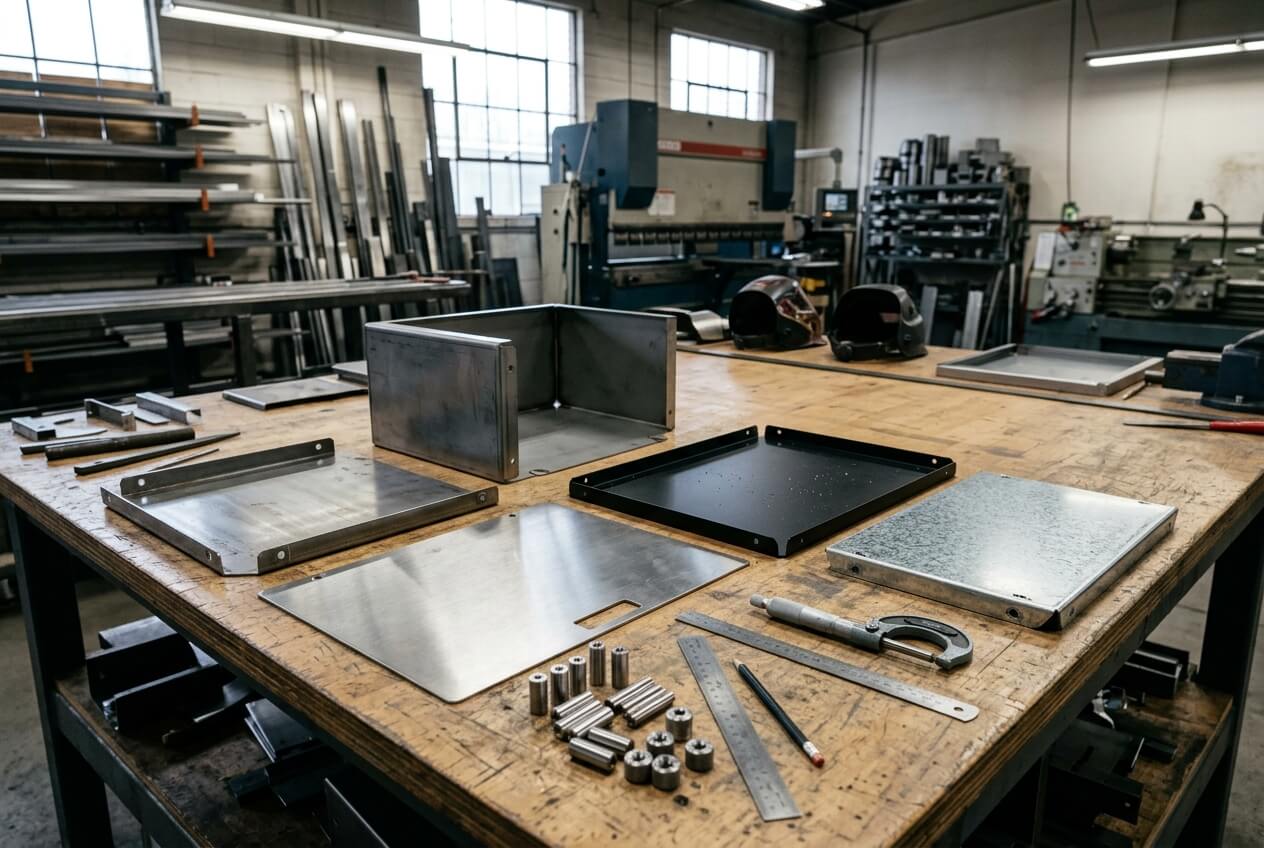
Turned parts often carry tight tolerances because machining can hold them. Sheet metal assemblies do not always benefit from the same precision. Bending, welding, material thickness variation, hole position, and coating buildup can dominate the final fit. If the RFQ applies machining-level tolerance everywhere, buyers may pay for precision that does not improve the product.
The opposite mistake also causes trouble. Buyers may leave functional dimensions loose because the round part looks simple. Then the assembly fails because a spacer stack, hinge line, shaft position, or threaded insert location controls the final product. Both errors come from the same root problem: the RFQ does not connect tolerances to assembly function.
Choose tight control where the assembly feels it
A stainless shaft mounted between two bent brackets may need a controlled diameter for rotation. The bracket spacing may need a different strategy. Slots, shims, formed tabs, or an assembly fixture may deliver better value than tight tolerances across every bend and hole.
A welded standoff with tapped holes also needs careful wording. If the standoff gets welded after laser cutting, heat can move the tapped position. If the supplier installs it after powder coating, coating around the mounting hole can affect seating. The RFQ should state whether the mating part uses clearance holes, fixed pins, slots, or a gasket that changes compression.
Inspect the condition that the customer receives
Inspection should follow the finished risk. A sleeve may pass diameter checks before welding but fail angle checks after welding. A tapped boss may pass thread gauges before coating but fail screw assembly after powder buildup. A spacer may meet length tolerance but still scratch a visible panel face.
Buyers should identify critical-to-assembly features and the inspection condition. Useful notes may include finished gap, pin rotation after coating, thread gauge after finish, frame flatness after welding, and cosmetic limits on visible faces. These notes help suppliers quote the real inspection effort and avoid disputes after production starts.
Yishang often reviews these tradeoffs during drawing discussions for custom sheet metal parts, enclosures, brackets, frames, and welded assemblies. The goal is not to make every dimension tighter. The goal is to control the few dimensions that protect fit, function, and appearance.
What to Clarify Before Comparing Suppliers on Unit Price
Unit price comparisons fail when suppliers quote different boundaries of supply. This happens often when buyers send the same RFQ to a machining shop and a sheet metal fabrication supplier. The machining quote may cover only the round item. The fabrication quote may include laser cutting, bending, welding, powder coating, assembly, packing, and final fit checks.
Before comparing prices, buyers should define what the supplier must deliver. Is the order for loose parts that resemble projects for a metal lathe? Or is it for a finished enclosure, cabinet, bracket, frame, or welded assembly with those parts installed and inspected?
Quantity changes the answer. A batch of 15 prototype brackets with welded spacers may not justify a dedicated fixture. A repeat order of 2,000 units likely does. If the RFQ hides that volume path, one quote may look expensive because it includes production planning. Another may look low because it assumes short-run bench work.
Supplier communication should focus on assumptions, not vague confirmation. Ask what the quote includes and excludes. Confirm who buys the inserts, who masks threads, who checks assembled fit, who owns rework caused by unclear drawings, and which changes affect lead time. These questions prevent conflict when the first article moves into batch production.
A strong RFQ package includes 2D drawings, 3D files if available, material requirements, quantities, tolerance notes, finish expectations, photos, samples, and assembly context. It also identifies critical dimensions in the finished condition. That package allows suppliers to price the same product instead of interpreting the same drawing in different ways.
Need a quote that reflects the finished assembly, not only the small turned feature? Send Yishang your drawings, material requirements, quantities, tolerances, finish expectations, photos, samples, and assembly notes for spacers, inserts, hinge pins, standoffs, sleeves, brackets, enclosures, frames, or welded assemblies. Share your RFQ details at Yishang so the material, forming, welding, coating, assembly, and inspection assumptions can be reviewed before production pricing hardens.
Frequently Asked Questions
When do projects for a metal lathe become risky in a sheet metal RFQ?
They become risky when the turned part controls spacing, rotation, alignment, load, grounding, or cosmetic fit inside a fabricated assembly. The RFQ should show mating parts, finish condition, installation method, and the finished dimension that matters. Otherwise, suppliers may quote different scopes under the same part number.
Should buyers quote a threaded sleeve as a loose part or an installed feature?
Quote it as an installed feature if the supplier must place it in an enclosure, bracket, cabinet, or welded frame. Define the material, thread standard, installation route, coating or masking need, mating fastener, and inspection condition. This prevents false comparison between a machining-only quote and a complete fabrication quote.
How can buyers prevent powder coating from causing fit problems around pins or spacers?
State whether key dimensions apply before or after coating. Identify masked surfaces, protected threads, clearance areas, and the final gap or movement requirement. If a pin must rotate or a spacer controls a cabinet width, ask for inspection in the finished coated condition.
Why can an approved prototype still fail in batch production?
A prototype may pass because a technician used hand fitting, reaming, polishing, shimming, or manual alignment. If those adjustments do not enter the drawing, fixture plan, or inspection method, batch parts may meet the drawing but fail assembly. Ask suppliers to report all prototype corrections.
Which tolerances matter most for lathe-style parts in fabricated assemblies?
The most important tolerances are the ones that protect function in the finished assembly. These may include pin diameter, sleeve angle, spacer stack length, thread condition after coating, frame flatness, or cover alignment. Avoid applying tight machining tolerances to features that sheet metal variation will dominate.
What information should I send for an RFQ involving turned parts and sheet metal fabrication?
Send 2D drawings, 3D files if available, material requirements, quantities, tolerance notes, finish expectations, photos, samples, and assembly notes. Mark critical fit points and finished-condition inspection needs. This helps the supplier quote the real assembly scope, cost drivers, lead time, and production risks.