
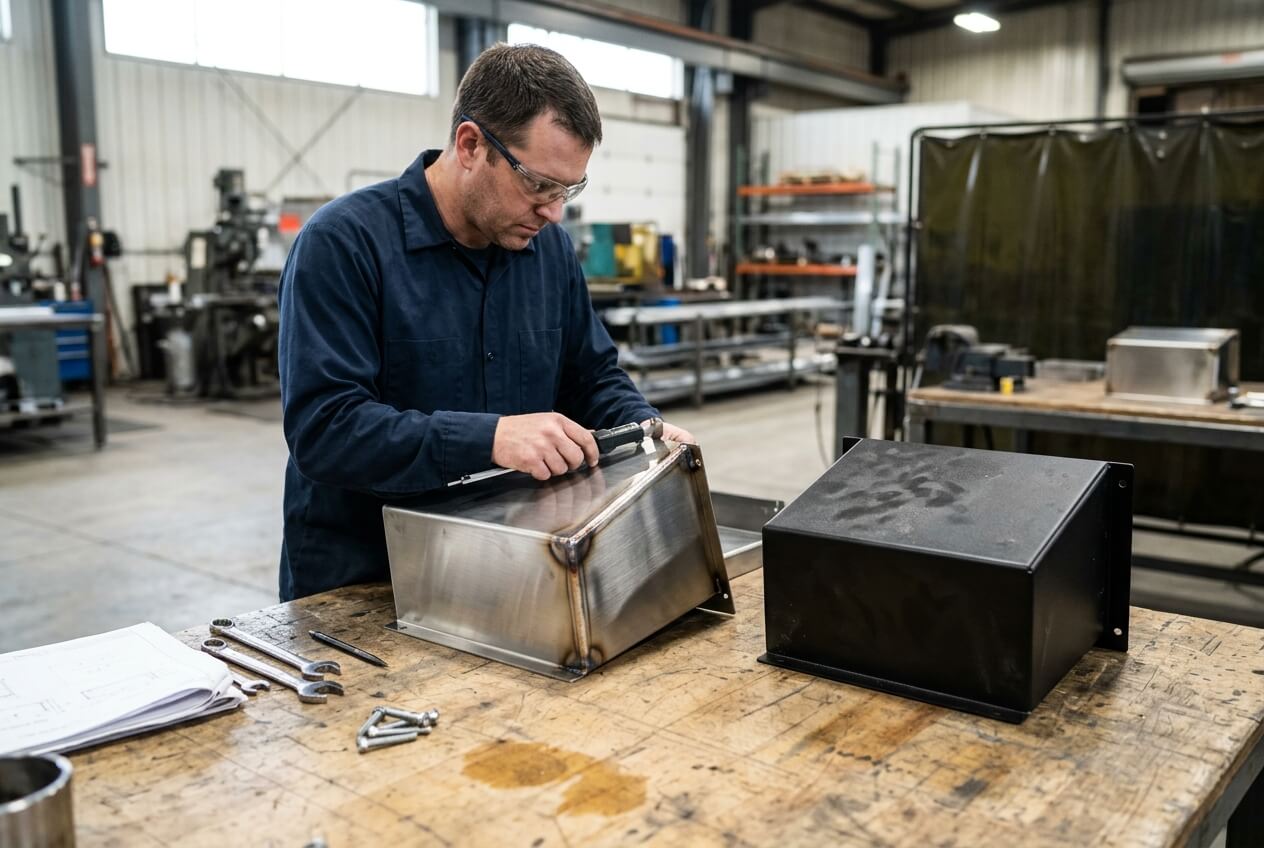
An OEM buyer may send one drawing for a powder-coated cabinet and receive two metal welding quotes that look impossible to compare. One supplier includes flush seam grinding, masking, finish repair, and careful packaging. Another prices only the structural welds. Both suppliers may believe they quoted correctly, yet only one quote covers the part the buyer expects to receive.
The dominant risk is RFQ finish ambiguity. It starts before production, when drawings show geometry but do not define visible faces, weld cleanup, coating limits, or inspection expectations. That gap then moves into quotation, process planning, prototype approval, and batch inspection. By the time the first lot arrives, the buyer may discover that the lowest price depended on assumptions no one approved.
Cosmetic welded assemblies create this problem often. Cabinets, enclosures, display frames, brackets, and machine covers must hold together, fit mating parts, and pass a visual review. A weld can meet strength requirements and still fail because a front seam shows through powder coating, a ground edge no longer fits, or a brushed surface carries handling marks. Buyers reduce that risk when they define finish expectations before comparing quotes.
RFQ Finish Ambiguity Turns One Welded Part Into Several Different Quotes
A fabrication drawing can look complete because it includes dimensions, hole patterns, bend lines, and material thickness. For cosmetic metal welding, that is not enough. The supplier still needs to know which surfaces users will see, which seams can remain as-welded, and which areas need controlled dressing before coating or assembly.
When the RFQ does not define those points, each supplier builds a different version of the part in its quote. One may assume visible seams need light grinding only. Another may include full blending on the front face. A third may leave coating masking out of the base price. The buyer then compares unit prices that do not contain the same labor, inspection, or yield risk.
Where the assumption usually starts
The problem often starts with a simple note such as powder coat black or weld all around. Those notes do not say whether a bead may remain visible. They also do not explain whether powder build can cover the seam, whether grinding marks must disappear, or whether a mating component will sit across that welded edge.
Visible-face marking removes much of the guesswork. Buyers should identify front faces, customer-facing sides, internal surfaces, and hidden welds. Photos, color callouts, and marked PDFs help when the drawing cannot carry every detail. A quick image of an existing accepted part can also prevent a supplier from quoting a finish level that is too rough or too expensive.
Project example: a control cabinet RFQ calls for welded corners and textured powder coating. The buyer expects smooth front vertical seams. Supplier A includes seam grinding and touch-up inspection. Supplier B prices structural welding and coating only. Supplier B looks cheaper, but the first article shows a faint weld line under shop lighting. The quote gap did not come from welding skill. It came from an undefined cosmetic surface.
Unpriced Weld Cleanup Becomes Rework, Not Savings
Weld cleanup changes cost because it changes labor time, process sequence, and scrap risk. Light spatter removal takes far less time than flush seam blending. Grinding a front seam can also add heat, thin an edge, or create a waviness that coating will not hide. A supplier must price those steps if the buyer expects them.
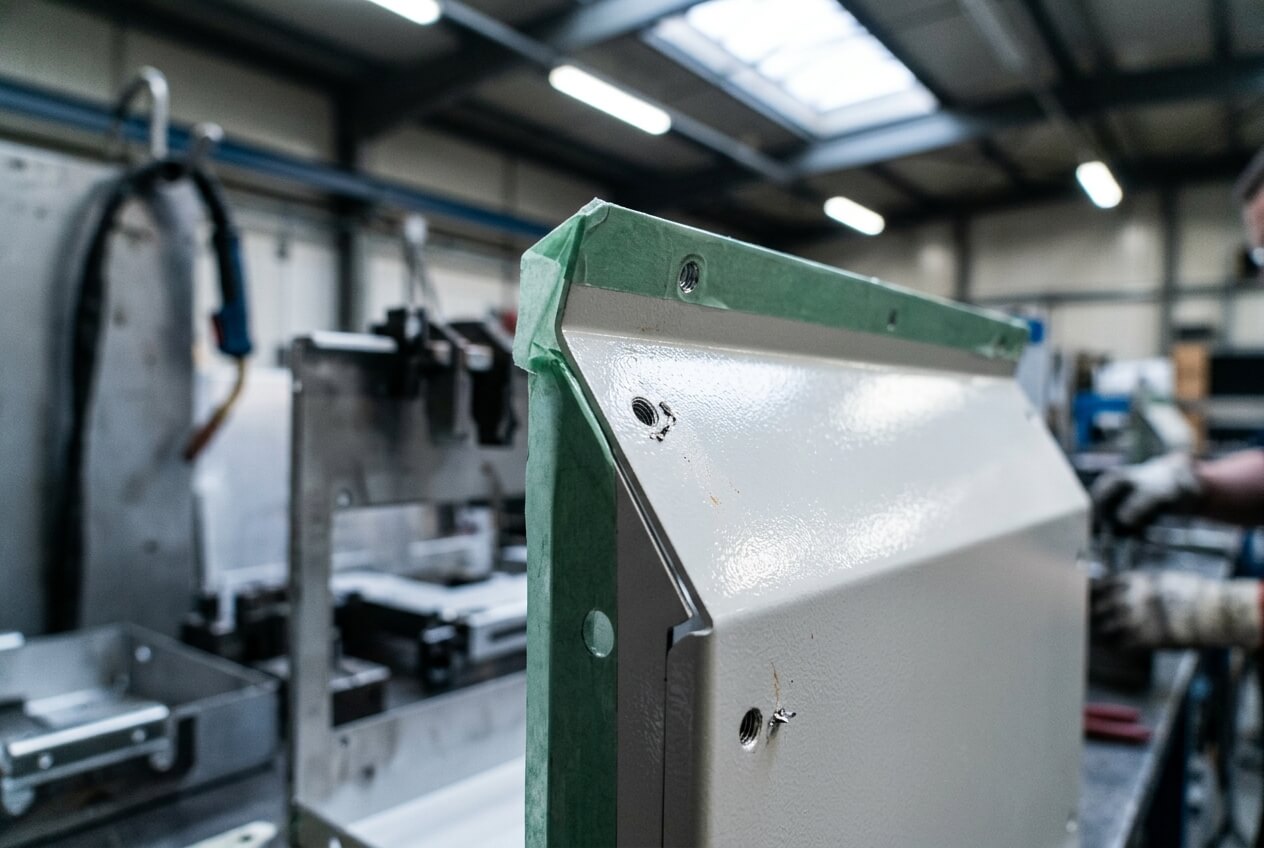
Masking creates the same quotation problem. Threads, grounding pads, hinge lands, gasket surfaces, locating tabs, and tight mating edges may need protection before powder coating or painting. If the RFQ only says powder coat, the supplier may not include that masking. The finished part can look acceptable but fail during assembly because coating builds up where clearance was tight.
Finish notes affect both appearance and fit
Buyers sometimes treat finish as a visual item only. In welded sheet metal parts, finish decisions can change fit. A 70 to 90 micron powder layer may work on an outside panel, but it can interfere with a hinge slot, latch bracket, or nesting frame. Grinding can also reduce material at a corner or change how a cover sits against a gasket.
This is why tolerances and finish expectations must connect. If a welded enclosure has a narrow door gap, the RFQ should state whether dimensions apply before or after coating. If a bracket slides into a frame, the drawing should show the surfaces that must remain free of heavy coating. Otherwise, the supplier may make a part that passes fabrication inspection and fails assembly inspection.
Project example: a welded electronics enclosure includes a threaded grounding stud near a corner seam. The drawing calls for powder coating but does not list masking points. The coating covers the grounding area, and the assembly team removes paint by hand. That repair creates exposed metal, uneven appearance, and extra lead time. The earlier RFQ should have named the grounding pad as a masked functional surface.
Metal welding quotes become clearer when buyers separate three finish levels. Hidden structural welds may stay as-produced after spatter removal. Semi-visible welds may need consistent bead profile and light dressing. Cosmetic front seams may need flush blending, controlled sanding direction, and coating review. That distinction keeps suppliers from hiding major finish labor inside vague assumptions.
Prototype Approval Can Hide the Same RFQ Gap Until Batch Production
A prototype can pass even when the RFQ remains weak. One experienced welder may build the sample slowly, grind the seam carefully, and adjust the door gap by hand. The buyer approves the part because it looks right. Production then starts with a larger quantity, more operators, faster handling, and a different tolerance stack.
This creates a dangerous consequence chain. The drawing does not define the cosmetic standard. The prototype becomes the only reference. Production staff then try to copy a hand-finished sample without a locked process. Small changes in weld sequence, fixture pressure, grinding time, or coating prep create visible differences across the batch.
Batch consistency needs a repeatable finish standard
Buyers should not rely on the sample alone. They should ask which details from the prototype will become controlled production steps. Important items include weld sequence, fixture method, bead location, grinding level, acceptable repair, coating thickness range, and inspection lighting. The goal is not to over-document every move. The goal is to stop a one-off prototype from becoming an unstable production reference.
Frames and long welded assemblies show this risk clearly. Repeated heat input can pull a frame out of square. Extra grinding on one side can make a visible rail look uneven. Coating may also reveal dents, weld repair marks, or corner distortion that looked minor before finishing. If the RFQ never defined the acceptance standard, the production lot invites argument.
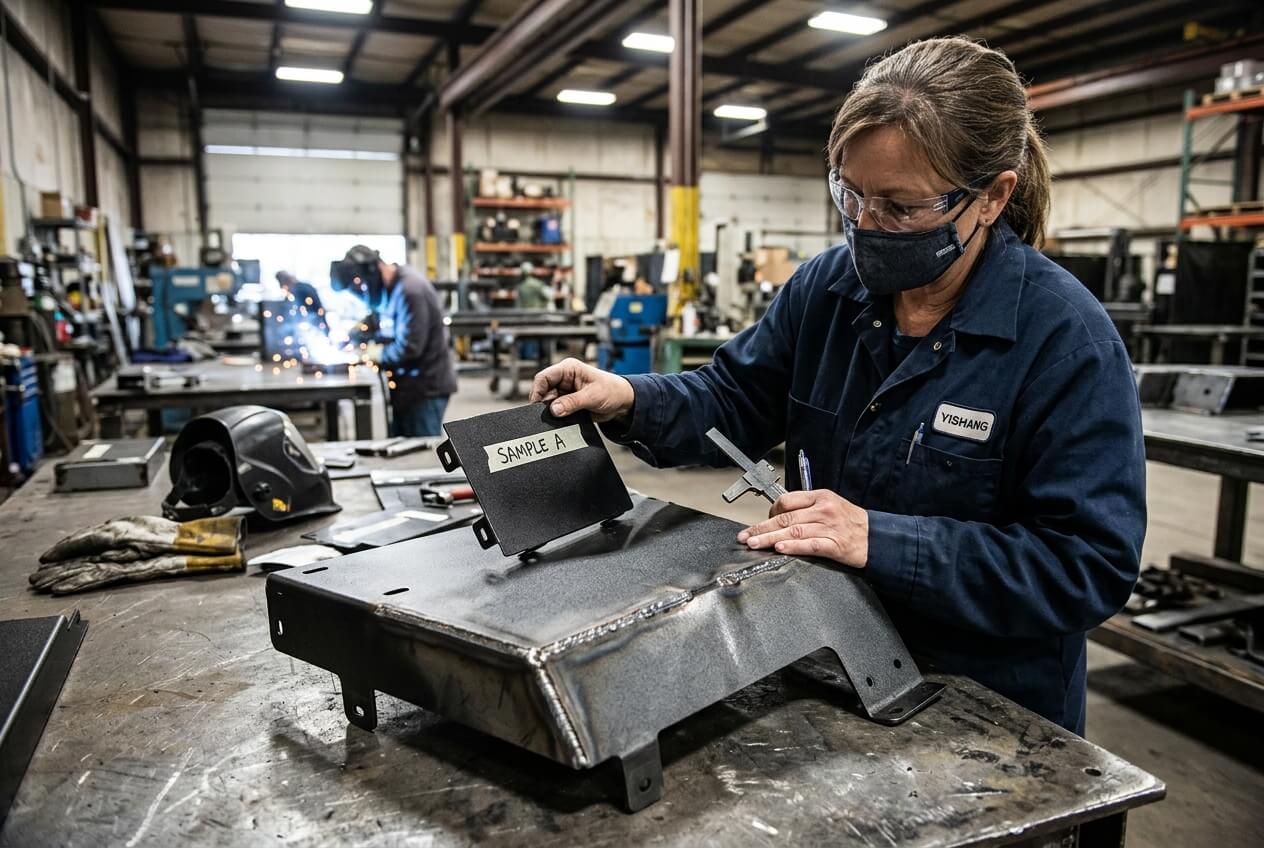
A buyer can reduce that risk by tying prototype approval to measurable and visual criteria. For example, the approval note can state that front seams must show no raised bead after coating, internal frame welds may remain visible, and latch areas must meet final coated clearance. Those details help suppliers quote and produce the same product, not just a sample that passed once.
Yishang can review drawings, marked photos, and prototype notes for welded cabinets, sheet metal enclosures, brackets, and frames before batch production. That review works best when the buyer shares the intended inspection surfaces and assembly interfaces early, not after the first lot raises questions.
Assembly Fit Problems Often Trace Back to Undefined Finish Surfaces
Many rejected welded parts do not fail because of broken welds. They fail because the part no longer fits after the finish process. A welded bracket may meet flat pattern dimensions before coating, then bind inside a painted frame. A cabinet door may close during prototype fitting, then rub after seam repair and powder build. These issues look like production defects, but they often begin as RFQ omissions.
Assembly risk increases when drawings separate fabrication from finishing too cleanly. The metal part may need one set of tolerances before coating and another requirement after coating. Holes, slots, tabs, latch cutouts, and gasket lands should tell the supplier whether final fit matters more than cosmetic coverage. Without that information, the supplier may optimize the wrong target.
Functional surfaces deserve special notes
Buyers should mark any surface that contacts another component. Common examples include hinge mounts, sliding rails, screw bosses, threaded inserts, grounding pads, locating tabs, cover lips, and gasket grooves. Some areas need masking. Others need controlled coating thickness. A few may need post-finish tapping, chasing, or inspection with mating hardware.
Material details also affect this decision. Thin sheet can distort during welding and grinding. Stainless steel may show heat tint or brushing direction changes. Aluminum can require different weld cleanup and handling expectations. The RFQ does not need to teach the supplier how to fabricate the part, but it should reveal which material and finish requirements create rejection risk.
Cost drivers become easier to discuss when the buyer links them to function. Grinding a hidden seam may waste budget. Masking a gasket land may prevent a field leak. Holding a tight post-coat fit on a sliding bracket may require fixture control and inspection time. Clear priorities help the supplier price the job honestly and suggest manufacturability changes before the buyer locks the design.
Lead time also becomes more predictable. Undefined cosmetic work leads to late questions, sample revisions, coating rework, and repackaging. A clear RFQ lets the supplier plan welding, finishing, inspection, and assembly checks in the right order. That communication protects the schedule better than asking for a faster ship date after ambiguity creates rework.
What Buyers Should Freeze Before Comparing Metal Welding Quotes
The safest time to control finish ambiguity is before quote comparison. At that stage, changes cost little. After award, each clarification can change the price, the lead time, or the production method. After the first article, the same clarification may trigger rework, remake, or a difficult commercial dispute.
A strong RFQ package should include the drawing, 3D file if available, material requirements, quantities, tolerances, coating or surface finish expectations, visible-face notes, and assembly context. It should also name any areas where appearance matters less than fit. This prevents a supplier from spending money on hidden cosmetics while missing a functional surface that needs control.
Clarifications that make quote comparison fair
- Mark cosmetic, semi-visible, hidden, and functional surfaces on drawings or photos.
- State whether welds need as-welded, light dressed, or flush blended finish.
- List masked areas, including threads, grounding pads, gasket lands, and mating edges.
- Define whether key tolerances apply before coating, after coating, or during assembly.
- Attach prototype photos or accepted samples when appearance must match a reference.
- Ask suppliers to identify finish assumptions, repair allowances, and inspection methods in the quote.
These points do not turn the RFQ into a textbook. They target the single risk that causes many quote disputes: the supplier and buyer are pricing different finish outcomes. Once both sides share the same visible-face and fit expectations, price differences become more meaningful.
For custom sheet metal fabrication projects, Yishang can support drawing review, manufacturability discussion, prototyping, welding, finishing, and assembly checks when buyers provide enough detail to price the real requirement. Send drawings, material requirements, quantities, tolerances, finish expectations, visible-face notes, and sample photos through zsyishang.com before approving a metal welding quote. That gives the manufacturing team a clearer basis for cost, process planning, and production consistency.
Frequently Asked Questions
Why do metal welding quotes vary so much for the same cosmetic enclosure?
Quotes often vary because suppliers assume different finish levels. One supplier may include seam grinding, masking, coating review, and careful handling. Another may price only structural welding. Marked visible faces, finish notes, and assembly requirements help buyers compare equivalent quotes.
What should an RFQ say about visible welds on powder-coated cabinets?
The RFQ should show which seams are cosmetic, semi-visible, or hidden. It should also state whether welds may remain visible, need light dressing, or require flush blending before coating. Photos or accepted samples help reduce interpretation.
How can finish expectations affect assembly fit after metal welding?
Grinding, weld repair, and coating thickness can change how doors, brackets, hinges, tabs, and gasket surfaces fit. Buyers should mark functional surfaces and state whether dimensions apply before or after coating. Masking notes also prevent coating buildup in tight areas.
Why can a welded prototype pass while the batch lot fails inspection?
A prototype often receives slower welding, more hand finishing, and extra adjustment. Batch production needs repeatable weld sequence, fixture control, repair limits, and finish inspection. If the RFQ does not define those standards, production may drift from the approved sample.
What details should buyers clarify before comparing welded bracket or frame quotes?
Buyers should clarify material, quantity, tolerances, visible surfaces, weld dressing level, coating requirements, masking points, assembly interfaces, and prototype references. They should also ask suppliers to list quote assumptions so hidden finish costs do not appear later.
Can Yishang review drawings and finish notes before a metal welding RFQ is finalized?
Yes. Yishang can review drawings, material requirements, quantities, tolerances, finish expectations, visible-face notes, and sample photos for custom sheet metal parts, enclosures, brackets, frames, and welded assemblies before quotation.