
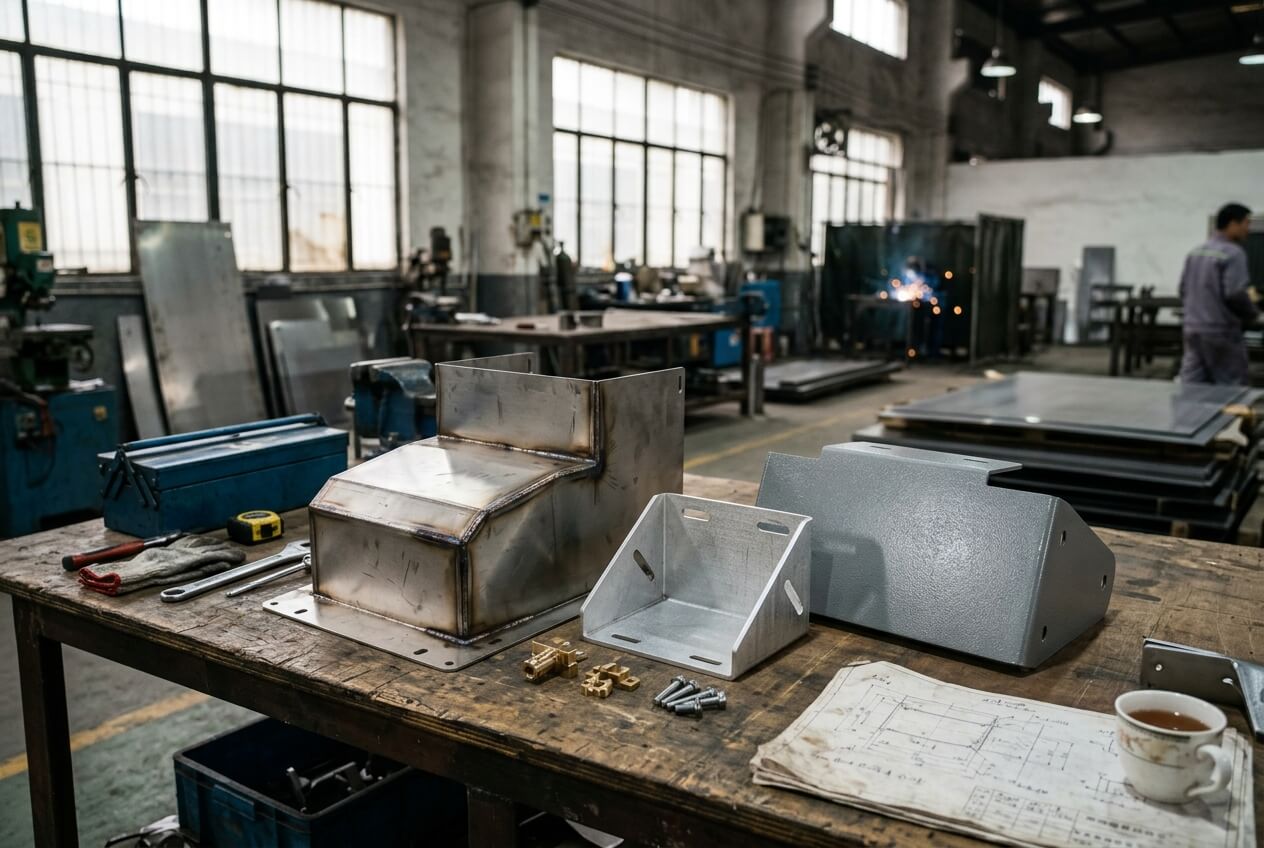
An OEM buyer may search what are the characteristics of metalloids after a drawing review raises a material question. The project might be a compact control enclosure, a sensor bracket, a cabinet panel, or a welded frame near electronic components. The drawing note says the part needs metalloid characteristics because the assembly must manage heat, electrical behavior, or corrosion exposure.
That wording creates a procurement risk. It sounds technical, but it does not tell a sheet metal supplier what to quote. One supplier may price aluminum for conductivity and easy forming. Another may choose stainless steel for strength and corrosion resistance. A third may treat the note as a special material request and add cost, lead time, and handling risk.
Metalloids such as silicon, boron, germanium, arsenic, antimony, and tellurium often look metallic, remain solid at room temperature, and show intermediate electrical behavior. Many also behave more brittle than common fabrication metals. Those characteristics matter in material science. They do not, by themselves, define a manufacturable sheet metal part.
The dominant buyer risk is RFQ ambiguity. When a material label replaces a measurable function, suppliers build quotes on assumptions. Those assumptions later affect material choice, bend radii, hole positions, finish masking, grounding, prototype approval, batch consistency, cost, and lead time. Buyers avoid that risk by translating the phrase into what the fabricated part must do after cutting, bending, welding, finishing, shipping, and assembly.
Where Metalloid Language Starts to Distort RFQ Comparisons
Most sheet metal suppliers do not quote pure metalloids for bent enclosures, welded assemblies, brackets, or frames. They usually work with carbon steel, stainless steel, aluminum, galvanized steel, and selected coated materials. These materials have predictable behavior during laser cutting, CNC punching, bending, welding, riveting, hardware insertion, and powder coating.
A vague phrase such as metalloid characteristics breaks that predictability. It does not say whether the buyer wants conductivity, insulation, heat resistance, corrosion performance, non-magnetic behavior, shielding, surface hardness, or compatibility with an electronic component. The supplier must decide what the buyer meant before it can price the job.
The quote may no longer describe the same part
Consider a small electronics enclosure with ventilation slots, PEM nuts, and a powder coated cover. The buyer adds a note about semiconductor-like behavior because the enclosure sits near a PCB. Supplier A quotes aluminum because it conducts well and forms easily. Supplier B quotes stainless steel because the product works in humid conditions. Supplier C asks for clarification and delays the quote.
The purchasing team may see three prices and treat them as competitive options. In reality, each quote describes a different technical assumption. The lowest price may exclude grounding masks. The highest price may include special material sourcing. The middle price may assume standard powder coating that blocks electrical contact.
This is where procurement risk starts. The RFQ did not fail because the buyer lacked technical knowledge. It failed because the drawing used a material concept instead of a controlled requirement. Before comparing supplier prices, buyers should ask each supplier to list material grade, thickness, finish, joining method, inspection assumptions, and any excluded function.
Why a Material Property Cannot Replace a Fabrication Route
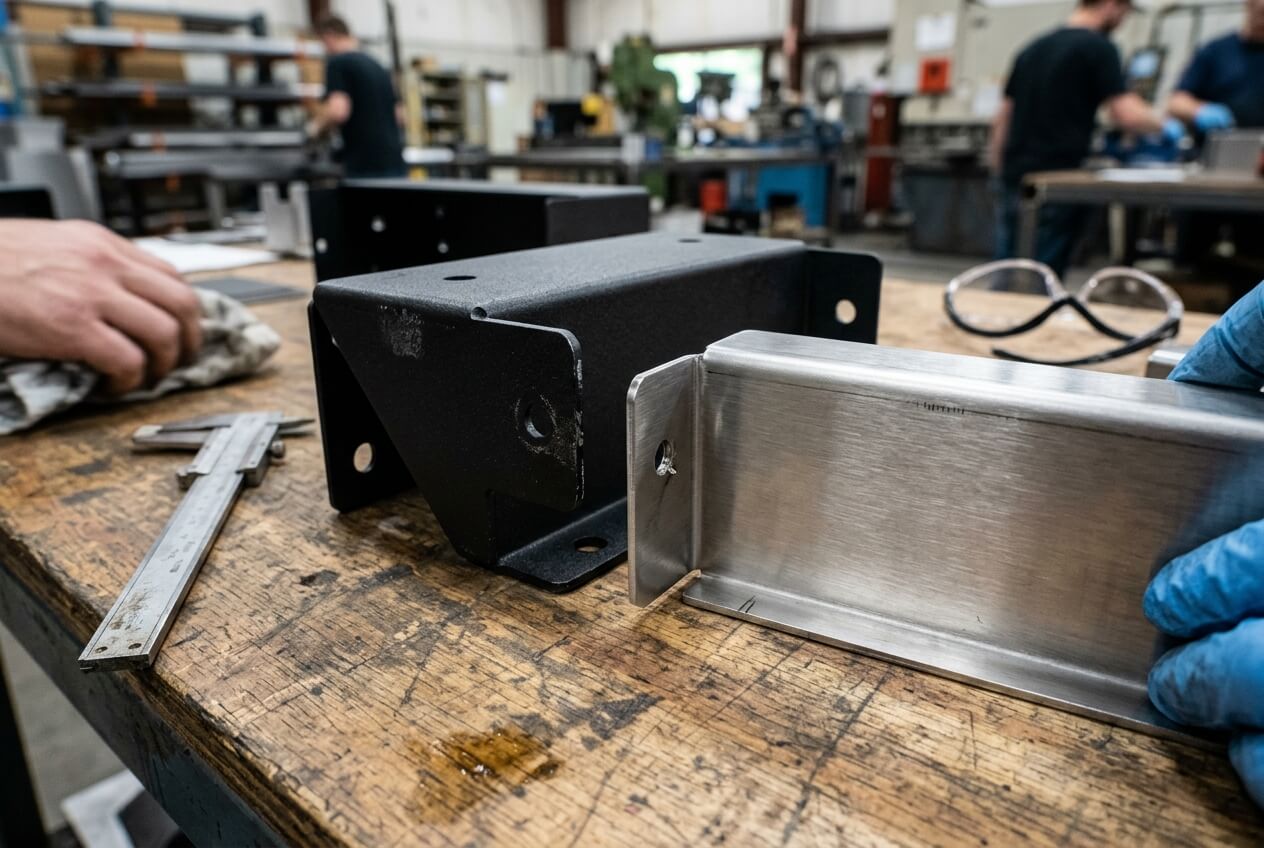
Metalloids can be shiny, brittle, solid, and electrically intermediate. Those properties do not answer a fabrication question. A supplier still needs to know whether the part must bend without cracking, accept threaded inserts, hold a flat mounting face, survive welding heat, maintain coating adhesion, or align with mating components.
Brittleness creates the clearest conflict. Sheet metal parts usually need ductility. A flange must bend. A narrow tab must resist cracking. A hole near a bend must stay stable after forming. A welded frame must tolerate heat and fixture pressure. If the RFQ points toward brittle behavior but the drawing shows normal sheet metal geometry, the supplier faces a conflict before production even starts.
Small geometry choices can change the quote
A bracket for a sensor module may look simple on the drawing. It includes two 90-degree bends, four mounting holes, and a conductive contact area. If the buyer only writes metalloid-like behavior, the supplier cannot know which feature matters most. The contact area may need bare metal. The bend legs may need a larger radius. The holes may need more distance from the formed edge. The finish may need masking.
Each clarification changes cost and lead time. Larger bend radii may require drawing approval. Masked areas add finishing steps. Tight hole-to-bend tolerances may require special inspection. A different material grade may affect MOQ or availability. None of those changes come from the word metalloid. They come from the hidden function behind the word.
A practical RFQ should connect the requirement to the process route. If the part needs shielding, state the shielding target and the contact surfaces. If it needs grounding, show bare metal zones, studs, serrated washer locations, or continuity tests. If it needs heat resistance, define the temperature range and exposure time. If the material concern comes from a separate electronic component, separate that component from the sheet metal body.
Yishang can review drawings more effectively when buyers share the function behind the material note. That review can separate the enclosure body, contact surfaces, finish controls, and assembly constraints before the quote becomes a price comparison problem.
How Ambiguous Notes Push Cost, Lead Time, and Fit Problems Downstream
RFQ ambiguity often looks harmless during sourcing. It becomes expensive after a supplier starts engineering review, sampling, tooling, finishing, or batch production. The problem rarely appears as one single failure. It usually follows a chain.
First, the supplier assumes a material. Then it selects a forming route and finish. Next, the prototype shows a fit, coating, or grounding issue. The buyer requests corrections. Finally, the batch quote changes because the correction adds a process that nobody priced at the beginning.
Finish can cancel the intended material function
Powder coating gives many enclosures and cabinets a durable cosmetic surface. It also insulates metal surfaces. If the buyer wanted conductivity, grounding, or shielding, a fully coated part may fail even though the material itself conducts electricity. This issue starts with an unclear requirement, not with the coating line.
A cabinet panel may need a clean exterior finish and bare internal contact points. A bracket may need black powder coating except around threaded studs. A frame may need welded strength but also controlled electrical bonding between modules. These details belong in the RFQ, not in a late corrective email after the prototype fails continuity testing.
Ambiguous finish expectations also affect assembly fit. Coating thickness can tighten slots, bind sliding covers, and change fastener seating. Polishing and edge rounding can alter small mating features. Deburring direction may matter on panels that slide into plastic housings. Buyers should mark critical dimensions after finishing when the final fit depends on coated or deburred surfaces.
Cost drivers hide inside missing assumptions
A supplier may quote a low price by assuming standard material, open tolerances, normal powder coating, and visual inspection only. Another supplier may include masking, continuity testing, tighter flatness, protective packaging, and first article inspection. Both quotes may look valid if the RFQ does not define the target.
That gap can distort sourcing decisions. A buyer may award the lower quote, then pay for added masking, rework, special inspection, or expedited replacement parts later. Lead time can also stretch when a supplier discovers that the selected material does not bend cleanly, the finish conflicts with grounding, or the assembly needs fixture changes.
The safer approach is not to over-specify every feature. Buyers should identify the functions that carry risk. For metalloid-related notes, those functions usually involve electrical behavior, brittleness, heat, surface contact, or component compatibility. Once the RFQ names the function, suppliers can quote the same part instead of quoting their own interpretation.
Why Prototype Approval Does Not Remove RFQ Ambiguity
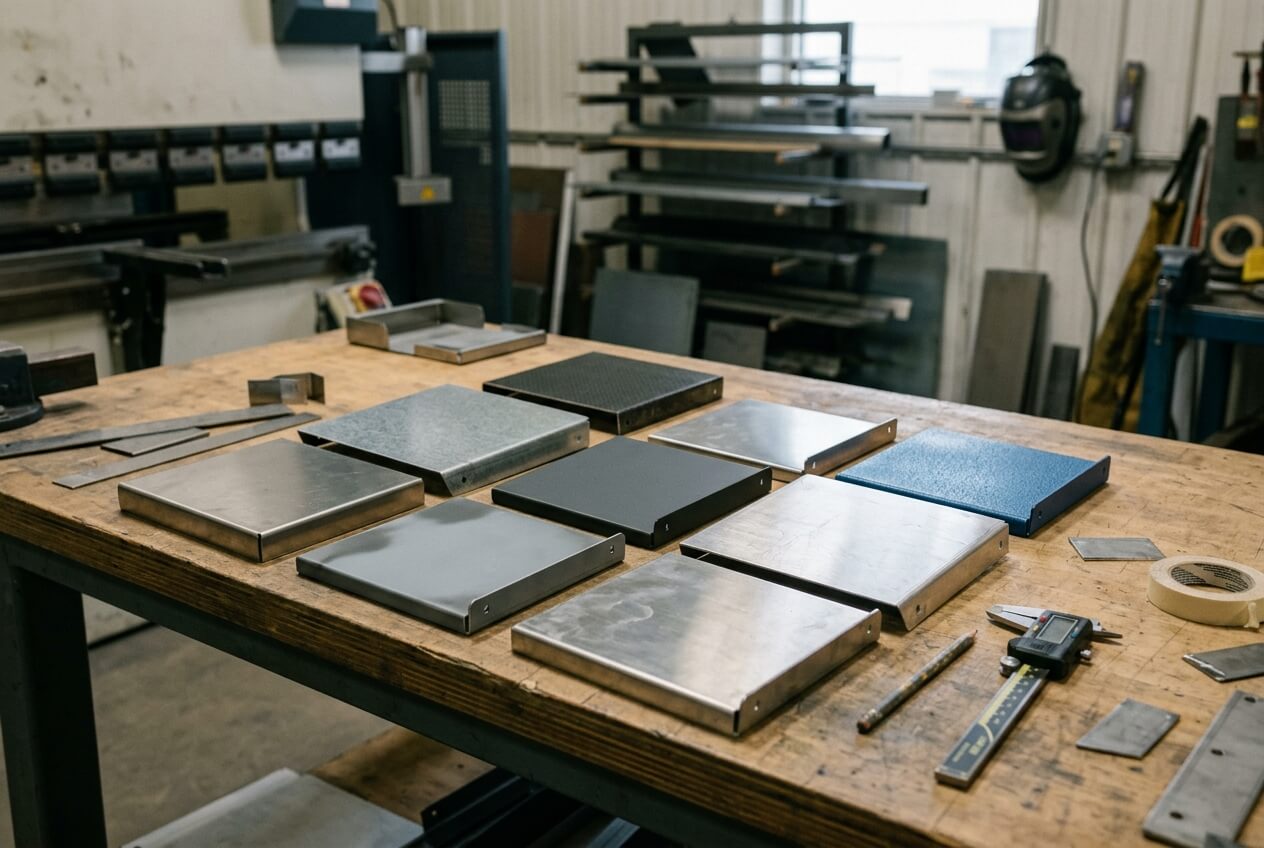
A prototype can prove that one sample worked once. It does not prove that the drawing controls every production variable. This matters when the original RFQ used broad material language. The sample may pass because a technician adjusted the bend, hand-deburred a slot, cleaned a contact point, or masked a surface without adding the step to the drawing.
Batch production exposes those hidden fixes. A 200-piece order may show flange angle variation, coating build-up, poor grounding contact, cabinet door misalignment, or inconsistent bracket spacing. The supplier may say it built to the drawing. The buyer may say the batch does not match the approved sample. Both may be partly right.
The sample must become a controlled production method
For a welded equipment frame, the prototype may fit because the supplier clamped and corrected the assembly by hand. Batch parts need a stable welding sequence, fixture references, flatness checks, and inspection points. If the frame also needs conductive bonding or heat-related performance, the drawing should show which faces require contact and which welds control structure.
For a metal enclosure, buyers should inspect more than the outside finish. Door gaps, hinge alignment, lock function, PCB bracket spacing, grounding points, and mounting-hole positions all matter after coating and final assembly. If a masked grounding area or larger bend radius made the prototype acceptable, the production drawing must capture it.
This step protects both sides. The buyer avoids surprise variation. The supplier avoids building a batch to unclear expectations. Procurement also gains a cleaner price basis because the quoted process matches the approved sample conditions.
Before releasing batch production, ask a direct question: which material, bend, weld, finish, contact, tolerance, and inspection controls must stay unchanged for the next lot to match the approved prototype? That question turns a successful sample into a repeatable manufacturing instruction.
What Buyers Should Clarify Before Comparing Sheet Metal Quotes
The question what are the characteristics of metalloids can help buyers understand why a drawing note may be risky. Metalloids may show metallic appearance, brittleness, solid form, and intermediate electrical behavior. In fabrication procurement, however, the useful question changes. What function does the sheet metal part need to perform, and which feature proves it?
Buyers should clarify the required function before they ask suppliers to compete on price. State whether the part needs grounding, shielding, insulation, heat resistance, corrosion resistance, cosmetic consistency, strength, flatness, or controlled assembly fit. Then connect that function to specific surfaces, holes, bends, welds, fasteners, finishes, and inspection checks.
A strong RFQ does not need long theoretical explanations. It needs clear decisions. Name the preferred material if known. If substitution is allowed, define the performance that any substitute must meet. Mark cosmetic surfaces and hidden surfaces separately. Show masked areas, conductive contact zones, critical tolerances, coating thickness concerns, and mating-part interfaces.
Supplier communication should also stay specific. Ask each supplier to confirm material grade, thickness, finish system, tolerance assumptions, inspection method, prototype conditions, batch controls, and exclusions. This keeps sourcing teams from comparing prices that include different risks.
If your sheet metal project includes metalloid-related wording, semiconductor-related behavior, conductivity concerns, brittle-material worries, tight fit, or coating conflicts, send Yishang your drawings and application context before final quote comparison. Include material requirements, quantities, tolerances, finish expectations, mating-part information, prototype comments, and target function. A focused review can help turn a vague material note into a manufacturable custom sheet metal fabrication requirement.
Frequently Asked Questions
What are the characteristics of metalloids that matter in sheet metal RFQs?
Metalloids often have metallic appearance, brittleness, solid form, and intermediate electrical behavior. In RFQs, brittleness and electrical behavior create the most risk because they can affect bending, holes, finish masking, grounding, shielding, and assembly fit.
Does a metalloid-related note mean the full enclosure needs a metalloid material?
Usually not. The requirement may apply to a contact point, insert, coating, electronic interface, or shielding path. Buyers should state whether the function applies to the full part or only to selected surfaces and features.
Why can vague material language make supplier quotes hard to compare?
Each supplier may interpret the same note differently. One may quote aluminum, another may quote stainless steel, and another may add special handling or inspection. The prices then reflect different assumptions instead of the same fabricated part.
What should buyers define if they need conductivity or grounding?
Buyers should mark bare metal zones, masked areas, threaded studs, bonding points, fastener contact surfaces, and continuity testing requirements. They should also confirm whether powder coating or other finishes may block electrical contact.
Why does prototype approval not guarantee batch consistency?
A prototype may include hand adjustments, manual deburring, temporary masking, or slower forming. Batch production needs fixed controls for material, bend radius, weld sequence, coating thickness, critical dimensions, inspection points, and packaging.
What should buyers send for a clearer sheet metal fabrication quote?
Send drawings, material requirements, quantities, tolerances, finish expectations, target function, mating-part details, prototype comments, and any conductivity, shielding, heat, or corrosion requirements. This helps suppliers quote the real manufacturing risk.