
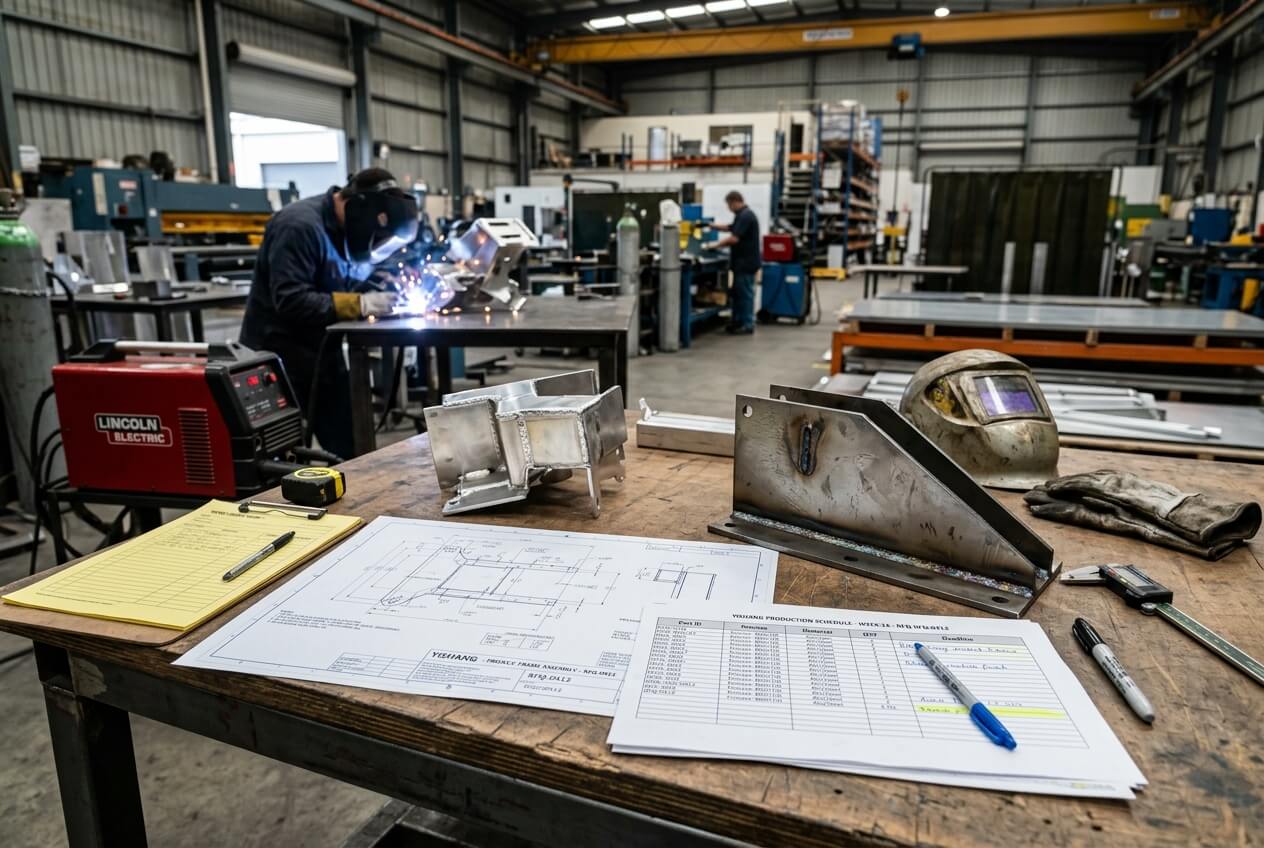
An OEM buyer sends drawings for a powder coated control cabinet. The design includes welded corner seams, hinge plates, internal brackets, and a removable access panel. Three suppliers return quotes that look close enough to compare. One assumes MIG welding for most joints. One assumes TIG on exposed seams. One plans a mixed route but does not explain where each process applies.
The buyer sees three prices and three delivery dates. In reality, the quotes describe three different parts, three different finishing routes, and three different inspection workloads. That gap is where mig versus tig becomes a procurement risk.
The dominant risk is not choosing MIG when TIG would be better, or choosing TIG when MIG would be faster. The larger risk starts earlier. RFQ ambiguity lets each supplier build its own welding assumptions into the quote. Those assumptions later affect grinding, coating, assembly fit, prototype approval, and batch consistency. A low quote may hide work that will reappear as rework, schedule pressure, or sample rejection.
Buyers can reduce that risk by treating the welding route as part of the RFQ scope, not as a shop-floor detail. The RFQ should show which joints need strength, which faces need cosmetic control, and which dimensions need inspection after welding.
Where RFQ Ambiguity Makes MIG Versus TIG Quotes Impossible to Compare
Most welding-related delays begin before production starts. A drawing may show weld symbols, material thickness, and general finish notes. It may not show cosmetic faces, acceptable weld witness marks, post-weld flatness, or the assembly dimensions most likely to move under heat. Under quotation pressure, each supplier fills those gaps with its own process assumptions.
MIG often suits hidden structural joints, steel frames, base brackets, and heavier welded assemblies. It can support fast deposition and efficient batch production. TIG gives better control on thin sheet metal, stainless visible seams, small cosmetic joints, and heat-sensitive details. Both processes can serve the same product when the RFQ separates joint functions clearly.
The quote may look complete while the weld scope stays undefined
A phrase such as “weld all seams and powder coat black” does not define the production route. One supplier may quote MIG plus basic dressing. Another may quote TIG on all visible seams. A third may plan MIG on everything and expect normal coating to hide the weld area. The unit prices then reflect different labor, fixtures, finishing, and inspection time.
Consider a wall-mounted enclosure with a visible front frame and hidden internal reinforcement plates. MIG may work well on the internal plates. TIG or controlled grinding may make more sense on the front corners. If the RFQ does not separate those areas, the buyer may select the lowest quote and discover during sample review that the visible seams need extra work.
That consequence chain is common. The issue starts with vague drawing notes. The supplier quotes a route that protects its price or schedule. The sample then exposes a difference between the buyer’s visual expectation and the supplier’s quoted scope. The project loses time while both sides renegotiate weld dressing, polishing, or coating acceptance.
Joint intent matters more than process preference
A stronger RFQ does not need to dictate every welding parameter. It should define intent by zone. Hidden strength joints need repeatable penetration and adequate access. Visible customer-facing joints need appearance control after finishing. Assembly-critical joints need distortion control and post-weld measurement.
When buyers send this information early, suppliers can quote the same work scope. They can decide whether MIG, TIG, or a mixed route best supports the part. They can also price fixtures, grinding, coating preparation, and inspection with fewer assumptions.
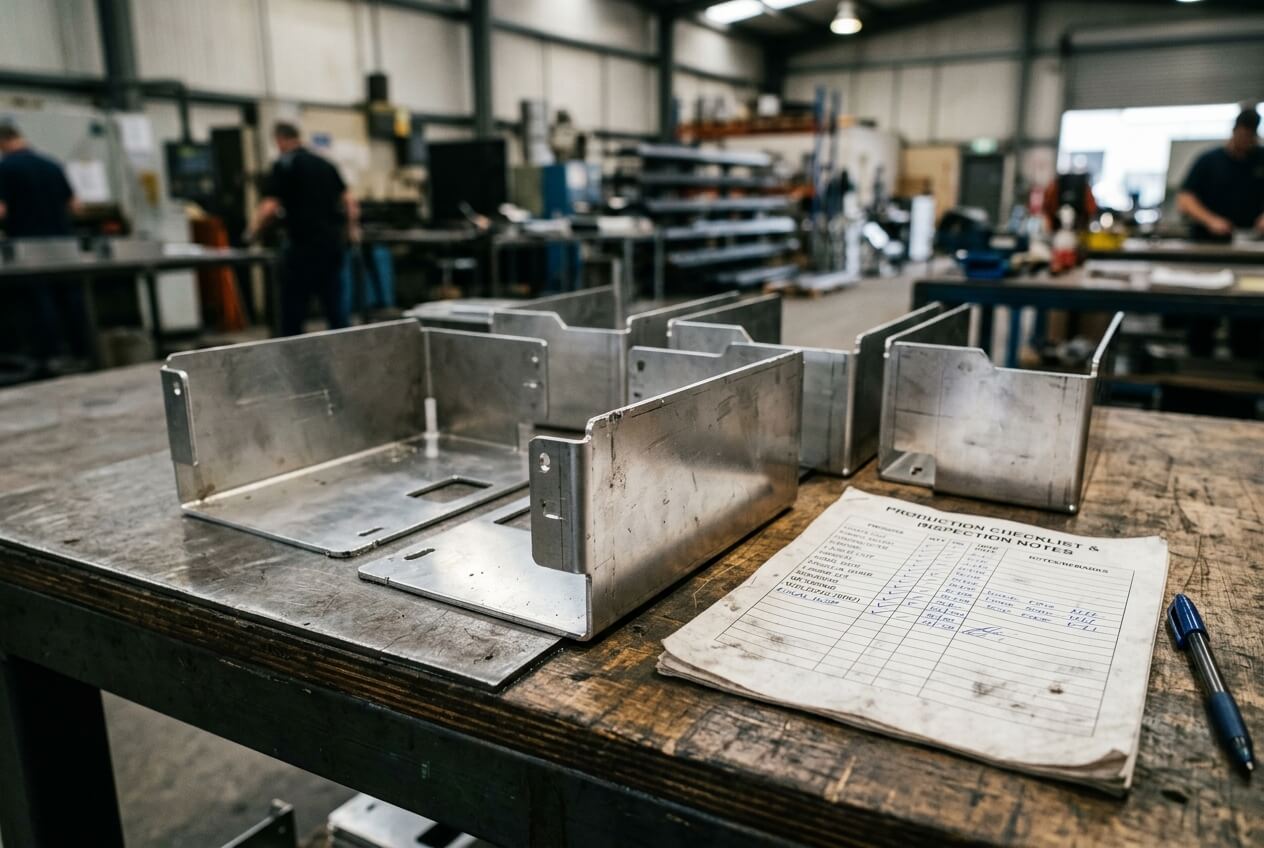
How Hidden Welding Assumptions Move Cost Into Finishing, Inspection, and Assembly
A MIG route can reduce weld time and still increase total production time. A TIG route can cost more at the welding bench and still prevent later cosmetic repair. The RFQ must make the full route visible. Otherwise, buyers compare weld speed instead of finished-part risk.
Welding affects more than the joint. Heat can pull panels out of flatness, shift hole alignment, open door gaps, or change bracket positions. Weld bead profile can affect powder coating coverage. Spatter and grinding marks can create extra cleaning or rework. These problems rarely appear as a line item in a vague quote.
Finishing time often hides inside the welding decision
Take a retail display frame made from bent sheet metal profiles. MIG may provide an efficient route for internal load-bearing joints. The front face, however, may need smooth corners under powder coating. If the supplier quotes only fast MIG welding, the project may later need grinding, sanding, and coating repair to meet the buyer’s appearance standard.
The buyer may think the supplier missed a quality requirement. The supplier may think the buyer changed the finish expectation. Both views can be true because the RFQ never defined the visible weld zones. A clearer RFQ would state which faces need smooth coated surfaces, which joints can show normal weld profile, and whether weld marks may remain after coating.
Assembly fit can fail after a correct-looking weld
Assembly risk often appears later than cosmetic risk. A bracket assembly can pass visual inspection and still fail during installation because heat moved the hole pattern. A cabinet door can close during prototype fitting but bind after powder coating adds thickness and the welded hinge plate shifts slightly.
These issues create expensive consequences. Production may stop while workers file holes, adjust hinges, sort panels, or rework welded subassemblies. The root cause often sits in the RFQ. The drawing showed nominal dimensions, but it did not identify the dimensions that must be verified after welding.
Buyers should flag hole-to-hole, bend-to-hole, hinge, latch, bracket, and frame datum dimensions that matter after welding. They should also ask whether the quote includes fixture checks, post-weld inspection, and any straightening or correction allowance. Without those details, two suppliers can quote very different risk levels while using similar language.
Why Prototype Approval Can Still Leave Batch Welding Risk Uncontrolled
A clean prototype does not always prove the batch route. Prototype work often receives more manual attention, slower welding, extra polishing, or senior-operator handling. The approved sample may satisfy management review while hiding the process that will run at 200 or 2,000 units.
This creates a dangerous approval gap. The buyer approves the appearance of one part. The supplier later builds a batch using a more efficient route. If the RFQ did not require the prototype to match the batch welding method and finishing standard, the first production lot may look different from the approved sample.
A prototype can be too good to control production
Imagine a stainless equipment enclosure. The prototype uses TIG on all exterior seams, careful polishing, and extra hand blending. The sample looks excellent. Later, the batch plan uses TIG only on the visible front corners and MIG on hidden internal joints. That mixed route may be technically sound. It may also surprise the buyer if nobody approved it before production.
The risk does not come from using mixed welding. It comes from approving one route and producing another. Buyers should ask suppliers to record the welding method by joint type during prototype review. The notes should also cover grinding level, polish direction, coating texture, masking, and inspection points.
Batch consistency depends on fixtures and inspection timing
Batch welding introduces variation that one sample cannot expose. Operators load fixtures repeatedly. Heat builds through repeated weld cycles. Parts move through coating queues. Inspection teams sample dimensions rather than checking every feature. If the RFQ does not define critical post-weld checks, batch drift may reach the buyer before anyone notices.
A welded cabinet frame shows the problem clearly. The prototype may align after manual adjustment. In batch production, small bending variation, weld distortion, and coating thickness can stack together. Door gaps widen. Hinge plates need correction. Latch holes no longer sit where assembly expects them.
Before approving production, buyers should confirm that the sample used the planned batch method. If the supplier changes from all TIG to mixed MIG/TIG, or changes the grinding standard, that change needs written approval. Yishang can review drawings, prototype notes, and batch requirements together so the approved sample reflects the intended production route.
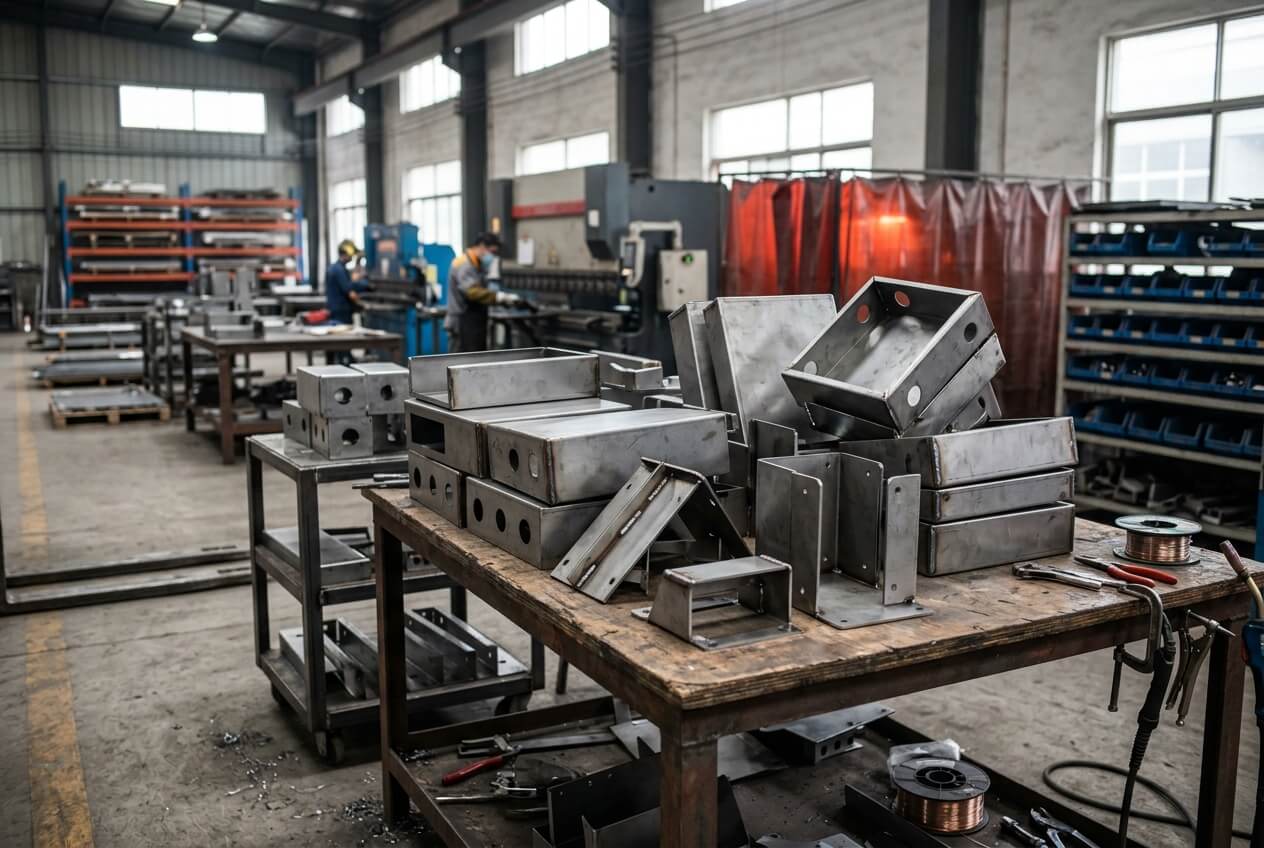
What Buyers Should Clarify Before Comparing Sheet Metal Welding Quotes
Buyers do not need to become welding engineers. They do need to remove the assumptions that distort quotations. The RFQ should tell suppliers what matters to the finished part, not only where welds appear.
Start with the product function. Metal enclosures usually need attention around visible corners, lid fit, mounting holes, and coating over welded seams. Cabinets often need control around doors, hinge plates, internal supports, and latch alignment. Frames and brackets may need less cosmetic control but more distortion management. Welded assemblies may combine all of these risks.
Clarify zones, not just weld symbols
Useful RFQ notes divide the part into zones. Visible zones may require TIG, grinding flush, polishing, or a defined cosmetic limit after powder coating. Hidden structural zones may allow MIG and normal weld profile if strength and fit remain stable. Assembly-critical zones may require fixture control and post-weld measurement.
Photos help when words feel unclear. A buyer can mark red areas as customer-facing, yellow areas as assembly-critical, and unmarked areas as hidden. That simple markup helps suppliers quote the same intent. It also reduces later debate about whether a weld mark counts as a defect.
Connect tolerances to the welding route
Tolerance notes should not sit separate from welding notes. Tight dimensions near welds need special attention. A drawing tolerance may look achievable after laser cutting and bending, yet fail after welding pulls the part. The quote should state whether inspection occurs before welding, after welding, after coating, or at final assembly.
Material and thickness also affect the route. Thin stainless panels may favor TIG or controlled heat input on exposed seams. Mild steel frames may accept MIG on hidden joints. Aluminum covers can need more careful heat control and fit-up planning. The RFQ does not need to prescribe the process in every case, but it should give enough context for the supplier to explain its choice.
Cost drivers become clearer when buyers ask for the route behind the price. A higher quote may include a fixture, post-weld inspection, cosmetic grinding, and coating preparation. A lower quote may exclude those steps. The buyer should not treat those quotes as equal until the assumptions match.
How to Turn MIG Versus TIG From a Late Dispute Into an RFQ Control Point
The safest time to resolve the welding route is before quote comparison. Once the buyer selects a supplier and reserves a production slot, every new weld requirement competes with cutting, bending, coating, assembly, and shipping schedules. Late changes also create commercial tension because suppliers price based on the original assumptions.
A practical RFQ should ask suppliers to state their welding plan by joint type. It should also ask them to identify any areas where the requested finish, tolerance, or assembly fit may change cost or lead time. This turns supplier communication into risk control, not a general request for feedback.
For a sheet metal enclosure, the RFQ might state that exterior corner seams must look smooth after powder coating, internal brackets may use visible welds, and hinge plate locations require post-weld inspection. For a welded frame, the RFQ might allow MIG on most joints but require fixture confirmation and hole-position checks after welding. These notes help suppliers quote production reality.
Buyers should also align drawings, samples, and written standards. A photo of a polished prototype can create a higher standard than the drawing states. A drawing note can require tighter flatness than the sample demonstrates. Written acceptance criteria prevent those conflicts from appearing during sample approval or first-article inspection.
Yishang supports custom sheet metal fabrication projects where welding, finishing, and assembly fit need early review. The most useful discussion starts with drawings, material requirements, quantities, tolerances, finish expectations, prototype goals, and any assembly constraints. With that context, the quote can show the assumed MIG/TIG route, visible weld treatment, inspection points, and the steps that affect cost and lead time.
Practical next step: Send Yishang your drawings, material requirements, quantities, tolerances, finish expectations, photos, samples, and assembly notes. Ask the RFQ response to identify the planned MIG versus TIG route by joint type, the visible weld treatment, the post-weld inspection points, and any assumptions that could affect prototype approval or batch consistency.
Frequently Asked Questions
Why does mig versus tig matter in a sheet metal RFQ?
It matters because each process changes welding time, heat input, finish preparation, and inspection risk. If the RFQ does not define visible zones, assembly-critical dimensions, and finish expectations, suppliers may quote different production routes for the same drawing.
Should buyers always specify MIG or TIG on the drawing?
Not always. Buyers should first define joint intent, cosmetic zones, tolerances, materials, and finish expectations. The supplier can then recommend MIG, TIG, or a mixed route. If a process is mandatory for appearance or assembly reasons, the drawing should state it clearly.
How can welding assumptions cause prototype approval delays?
Delays occur when the prototype meets the supplier’s assumed scope but not the buyer’s expected finish or fit. Common triggers include visible weld marks, uneven grinding, shifted holes, cabinet door gaps, and coating defects over welded seams.
What RFQ details help suppliers quote welded enclosures accurately?
Buyers should provide drawings, material grades, sheet thickness, quantities, cosmetic surface marks, tolerances, finish requirements, assembly notes, and prototype expectations. They should also ask suppliers to state the welding route and inspection points by joint type.
Can one approved prototype still create batch consistency risk?
Yes. A prototype may use extra manual welding, grinding, or polishing that does not represent batch production. Buyers should confirm that the approved sample uses the same welding method, fixture plan, finish standard, and inspection timing planned for production.
When is a mixed MIG and TIG route useful?
A mixed route works well when one assembly has hidden structural joints and visible cosmetic seams. MIG can support efficient hidden welds, while TIG or controlled finishing can protect exposed areas. The RFQ should define those zones before quote comparison.