
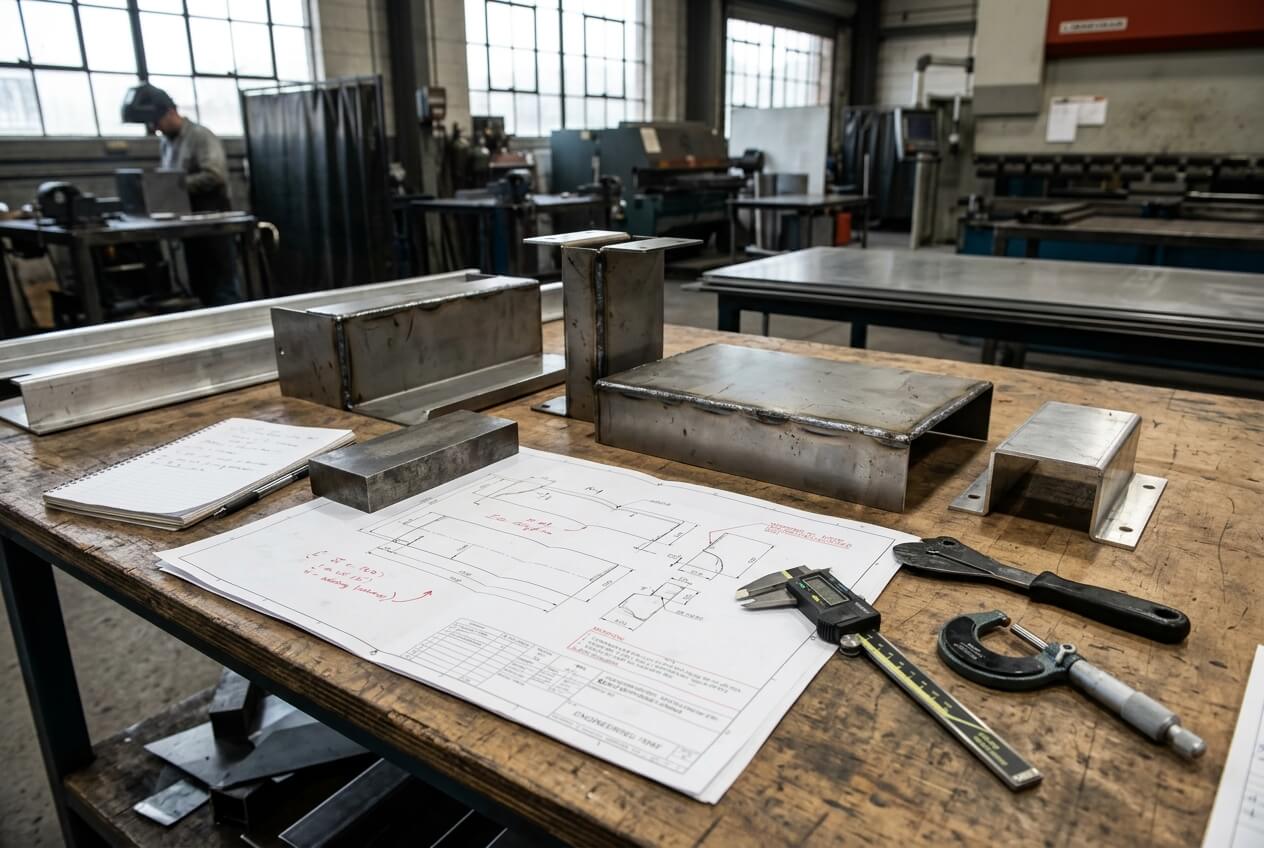
An OEM buyer compares three quotes for welded brackets, a powder-coated enclosure, and a small frame. One supplier prices basic joining only. Another adds fixture setup and edge cleanup. A third assumes cosmetic weld control because the parts will sit near a visible face. The numbers look close, but the scope is not. That is the real risk behind a vague mig welder description: the RFQ invites each shop to price a different job.
For custom sheet metal fabrication, the problem is not just wording. It changes how the supplier plans the weld sequence, predicts distortion, and decides how much cleanup the part needs before coating or assembly. A one-line description can look harmless, yet it can create rework, coating damage, late clarification cycles, and batch variation. A shop like Yishang can only price the same work as the buyer when the drawing package makes the weld scope clear.
How a One-Line MIG Welder Description Creates Three Different Quotes
A short mig welder description usually tells the shop that welding is required, but not how the weld should be priced. On sheet metal parts, that gap matters because welding is not one task. It can mean tack work, continuous seam welding, visible-cosmetic seams, post-weld grinding, distortion control, or fixture time. If the RFQ does not name those expectations, the quote may still look competitive while quietly excluding part of the real labor.
That is why buyers often see a wide spread on welded assemblies that seem similar. One supplier may assume hidden internal joints and price fast arc time. Another may include slower travel speed, more clamping, and more cleanup because the assembly still has to fit a door, a hinge line, or a mating bracket. The quote difference often starts before the first weld is struck.
Visible and hidden seams do not carry the same labor
Hidden seams usually tolerate a faster process because the buyer does not inspect the bead face after coating. Visible seams need more control because spatter, crown height, and heat tint can show through or affect nearby surfaces. If a powder-coated cabinet has an exposed front edge, the shop may need extra smoothing and a tighter weld sequence. If that detail is missing, one quote may include cosmetic work while another leaves it out entirely.
Project example: a simple welded bracket set for an equipment base may only need functional joints and a quick clean-up. A welded front frame for a control enclosure can need much more care because the seam sits near the customer-facing surface. Those are not the same jobs, even if the part count looks similar.
Fixture time often hides inside the unit price
Fixture setup is easy to miss because it does not show up on the finished part. Still, it changes cost and lead time. A frame that must stay square needs more than a welder and a table. It needs locating points, clamp pressure, and a weld order that controls pull. If the RFQ does not mention fixture expectations, the shop may quote manual fitting where the buyer expected repeatable production support.
That is where procurement risk begins. The buyer thinks the quotes are competing on the same scope. In reality, one supplier priced a production-ready method and another priced a lighter process that only works if the operator hand-corrects the part later.
Which Drawing Details Decide Whether the Quote Matches Production
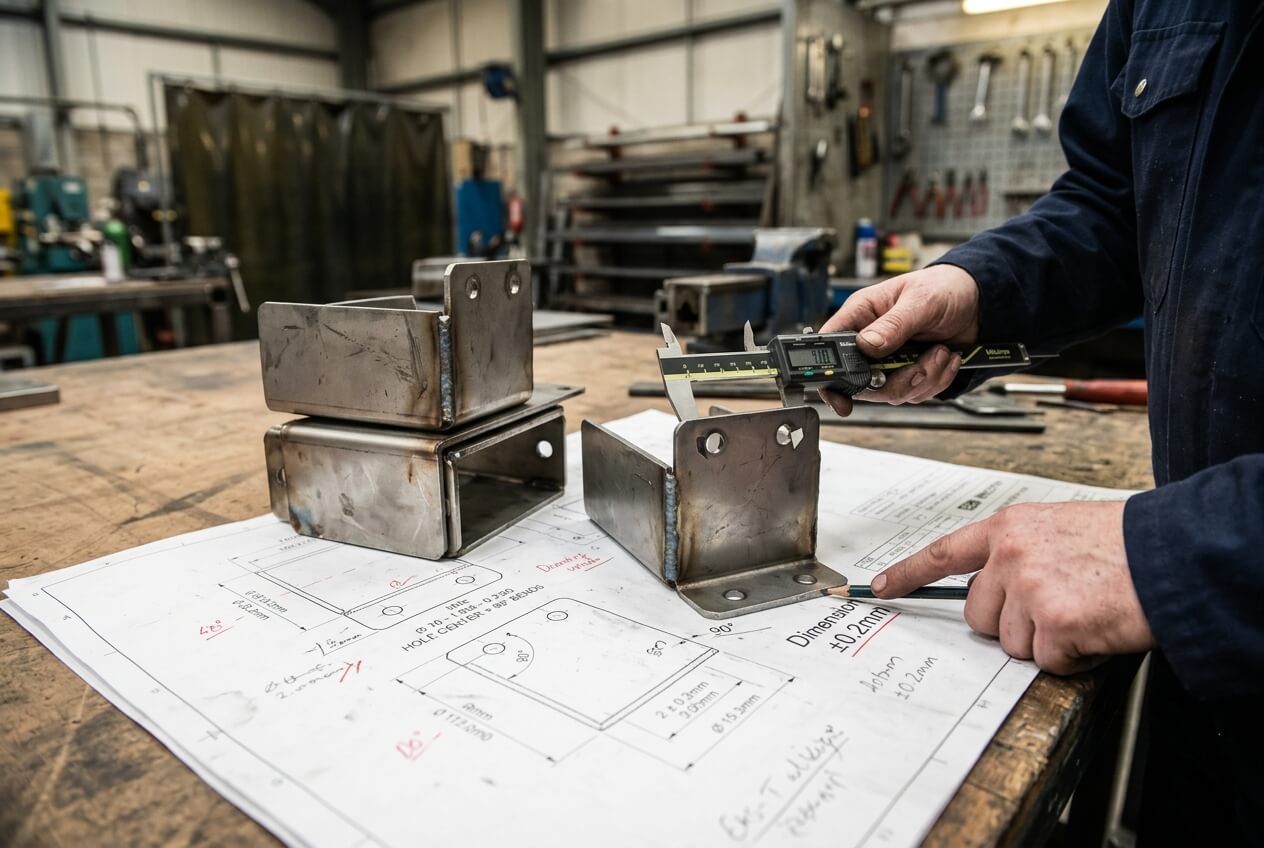
Drawings carry more than shape. They tell the supplier which dimensions matter after welding, which surfaces locate the assembly, and which revision controls the order. When those details are vague, the shop has to assume. That assumption may be reasonable for a prototype, but it becomes expensive when the buyer wants a repeatable batch. In sheet metal fabrication, missing drawing detail is one of the fastest ways to turn an accurate quote into a change order.
The most common problem is that buyers focus on overall size and overlook the small features that control fit. Hole centers, bend locations, edge distance, and datum surfaces can shift during welding. Even when the laser-cut blank is correct, the final assembly may not land where the customer expects if the supplier does not know which points are critical. That is especially true for welded enclosures, brackets, and frames that must connect to purchased hardware or neighboring parts.
Revision control keeps the quote tied to the right geometry
A quote based on the wrong revision is not really a quote for the intended part. It is a quote for an earlier version. That mistake can happen when a buyer sends one drawing by email and another through a portal, or when a marked-up sample photo is not linked to the latest file. The price may still look fine, but the fabrication team may build to an outdated hole pattern or a prior flange location.
For a sheet metal cabinet, that can mean the hinge line lands too close to the edge after welding. For a welded bracket, it can mean the mounting holes no longer match the purchased subassembly. The consequence is not just a bad part. It is a delay while the shop clarifies which drawing revision controls the order, then re-quotes the correct scope.
Datum surfaces matter more than nominal dimensions
Nominal size tells the shop what the part should resemble. Datum surfaces tell the shop what must remain accurate after the weld pulls the material. Buyers often assume the assembler will figure this out, but the quote is built before anyone touches the part. If the drawing does not identify the interface face, the mounting edge, or the hole pattern that drives assembly, the supplier can only guess where the inspection effort should go.
Project example: a welded machine base may look correct on the bench, yet the installed motor plate can sit out of line because the wrong face controlled the build. A small error at the datum surface becomes a larger alignment problem once the rest of the assembly is bolted together. That is why the RFQ has to define more than size. It has to define function.
Where Assembly Fit Breaks After Welding, Grinding, and Coating
Assembly fit is where many procurement mistakes become visible. A welded part can pass initial inspection and still fail when it meets a door, hinge, latch, or mating frame. The issue usually starts with a small assumption. The RFQ assumes the weld will not move the part. The shop assumes the next assembly step can absorb slight drift. Both sides may be wrong.
This risk grows when the job includes grinding or coating. Grinding changes edge shape, hole proximity, and local flatness. Coating adds thickness and can tighten a clearance that looked safe on the bare metal part. A powder-coated enclosure that looked fine after welding may rub at the door edge after finish. A bracket that fit the fixture may no longer align with the mating plate once the coating lands on both sides of the interface.
Coating thickness can turn a passing part into a binding assembly
Finish is not only a cosmetic issue here. It affects fit. A buyer who does not state finish expectations may receive a part that looks clean but no longer clears its mating component. That can force post-coat rework, which is expensive and risky. Once a coated edge needs correction, the shop may damage the finish or create a visible repair line.
A practical example is a welded electrical enclosure with a door and internal support brackets. If the frame shifts during welding and the coating adds thickness on the hinge side, the door gap can disappear. The buyer then has a coated panel that needs rework just to close properly. The first quote may have looked lower because it skipped that risk.
Grinding decisions change both appearance and fit
Grinding can improve appearance, but it also changes geometry. Removing weld crown near a locating face may help a part sit flat. Removing too much material can move the interface enough to affect a latch or fastener. Because of that, buyers should tell the supplier whether the finish is meant for hidden structure or customer-facing hardware. The same weld bead can be acceptable in one location and a problem in another.
When buyers compare quotes without this detail, they often compare two different assumptions: one shop prices a functional weld, while another prices a welded and dressed assembly ready for interface-critical use. The difference may not appear until the first fit check, and by then the schedule is already under pressure.
Why Prototype Approval Does Not Guarantee Batch Consistency
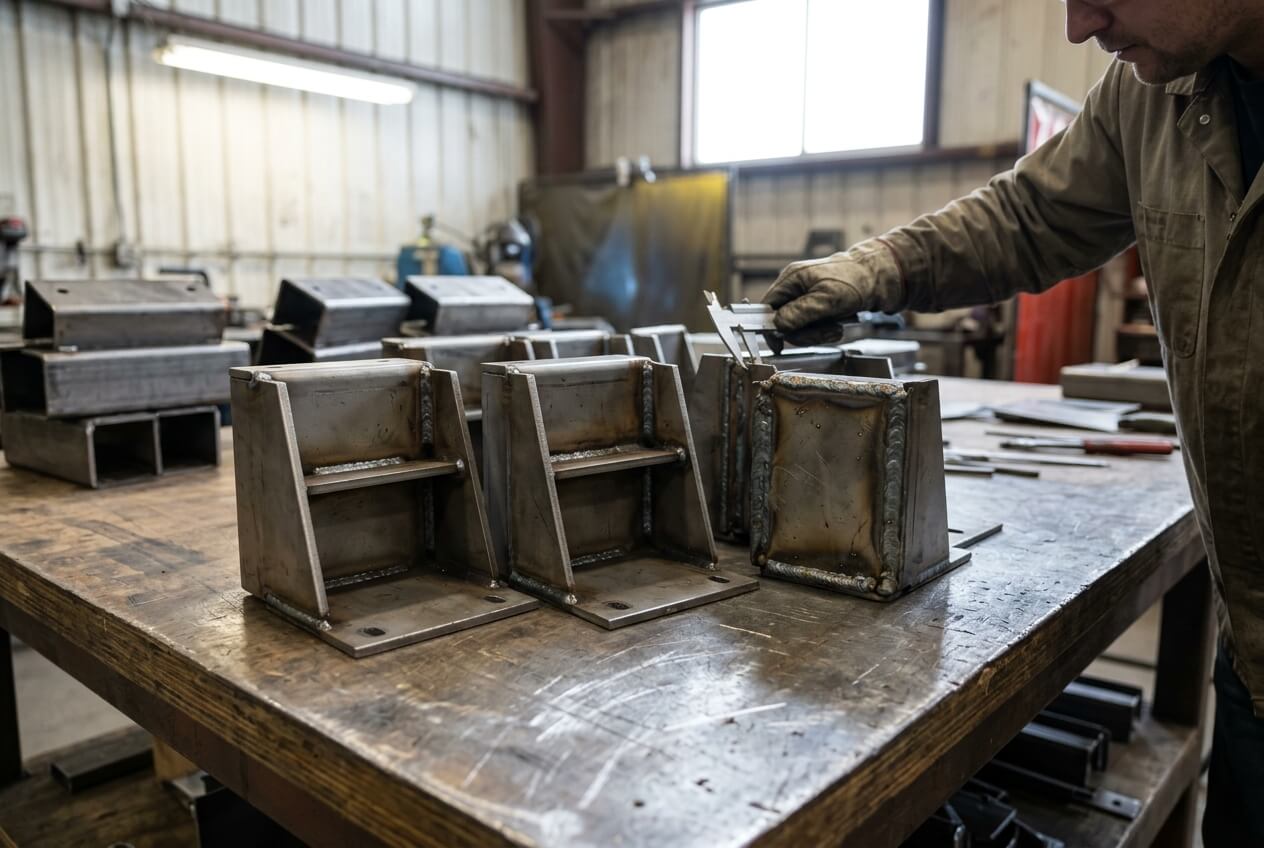
A prototype can look right for reasons that do not carry into production. A skilled welder may hand-fit the sample, make small adjustments on the fly, and correct minor distortion before the part leaves the bench. That is useful for proving the concept, but it does not prove the batch will behave the same way. Once the order moves into volume, the shop depends on fixture condition, repeatable sequence, and stable inspection habits.
That is why prototype approval can become a false sense of security. The sample may pass because one operator spent extra time aligning it. The batch may drift because the next run uses a different clamp condition or a slightly different weld order. If the buyer did not define the control points early, the production order can slowly move away from the approved sample.
The sample may hide manual correction
Manual correction is common in early-stage work. It can save a prototype, but it should not be confused with a stable process. If a frame had to be bent back into square or a bracket needed hand filing to fit, the quote should reflect that effort. Otherwise, the buyer may approve a sample that cannot be reproduced at the same cost.
When you review a prototype with Yishang or any fabrication partner, ask which adjustments were manual and which came from the fixture. That question reveals whether the sample is truly repeatable or only acceptable because someone compensated for variation by hand.
Batch quotes need a repeatability plan
Repeatability is not an abstract quality goal. It is a production control question. The supplier needs to know whether the weld sequence is locked, whether the fixture is dedicated, and how first article dimensions will be checked against the drawing. If the answer is unclear, the batch may come from a slightly different process than the prototype.
For welded assemblies, that difference can show up as drifting hole position, changing flatness, or uneven gap control across the run. The buyer then faces a familiar problem: the first unit passed, but the rest need sorting, touch-up, or rework. That is a procurement risk, not just a quality issue.
What Buyers Should Send Before Comparing Quotes
The fastest way to reduce quote distortion is to send a package that lets every supplier price the same weld scope. That package should include the latest drawing revision, material requirements, quantities by version, tolerances that matter to assembly, and finish expectations. It should also include photos, sample parts, and notes about which seams are visible, which are hidden, and which surfaces control fit after welding or coating.
Lead time becomes more realistic when the supplier can see fixture needs, cleanup expectations, and inspection points early. A complete RFQ does not remove every risk, but it makes hidden work visible before the order is placed. That is especially important on custom sheet metal fabrication jobs where brackets, frames, and enclosures share one assembly line but do not share the same risk profile.
If you want Yishang to quote the same job as your internal team expects, send the drawings, material requirements, quantities, tolerances, finish expectations, photos, and assembly notes together. That gives the shop a chance to review manufacturability, price the weld scope correctly, and flag any fit risk before production starts. The result is a better RFQ comparison and fewer surprises after award.
Frequently Asked Questions
What does mig welder description mean in a sheet metal RFQ?
It should describe the actual weld scope, not just the process name. Buyers should state whether the seams are visible or hidden, whether cleanup is required, and whether the parts need fixture control or post-weld fit checks. If the RFQ only says MIG weld, each supplier can price a different level of effort.
Why do visible seams change the quote on welded enclosures and brackets?
Visible seams usually need more control than hidden joints. The shop may need slower travel, more cleanup, and tighter clamping to keep the surface acceptable after coating. That extra work affects both labor time and risk. A visible seam on a front face is rarely priced the same way as an internal structural weld.
Which drawing details matter most for welded assembly fit?
Datum surfaces, hole location, bend positions, and the latest revision matter most. Those details tell the supplier what must stay accurate after welding pulls the part. Without them, the quote may be based on nominal size only, which can leave enough drift to cause door rub, bracket misalignment, or missed fastener holes.
Why can a prototype pass while the batch still fails?
A prototype often gets hand correction that does not repeat in production. A skilled welder may adjust fit, flatten a part, or tune the sequence until the sample works. Batch production depends on fixtures and stable methods, so the same part can drift if the repeatable process was never defined.
What should buyers send Yishang to get a usable quote?
Send the latest drawings, material requirements, quantities, tolerances, finish expectations, photos, and assembly notes in one package. Include any marked-up reference parts and call out which seams are visible. That lets Yishang review manufacturability and price the same scope instead of filling gaps with assumptions.