
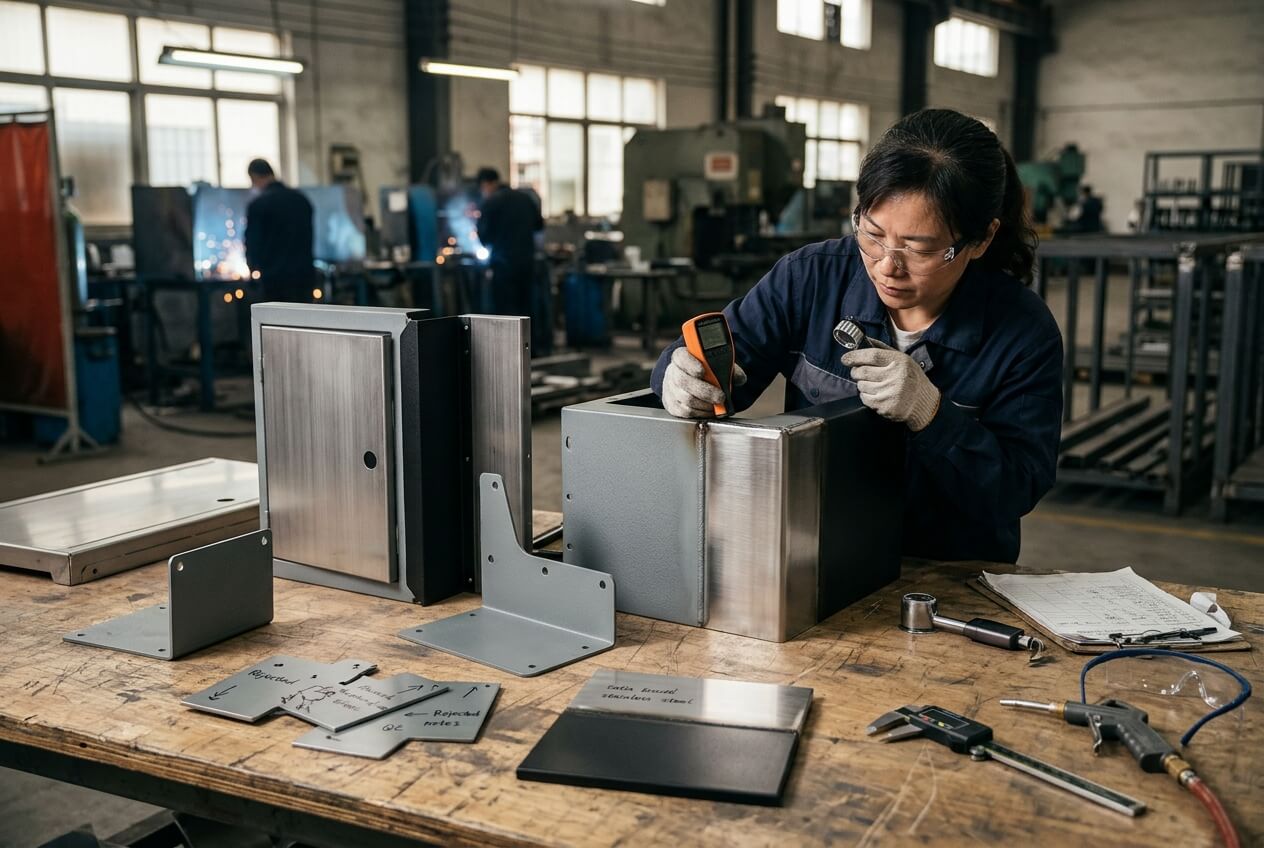
An OEM buyer sends an RFQ for a black powder-coated metal enclosure frame. The drawing says “MIG welded” and “visible surfaces must look good.” Three suppliers quote the same part at very different prices. One supplier includes weld grinding, spatter removal, masking, and post-coating inspection. Another leaves raised weld beads under the coating. A third quotes low, then asks for extra cost after the prototype fails cosmetic review.
This is where the practical mig welding meaning matters. In procurement, it does not stop at the welding process definition. MIG welding affects bead height, spatter, heat input, grinding labor, coating coverage, distortion, and the final appearance of a welded sheet metal assembly.
This article focuses on one dominant buyer risk: powder-coated finish rejection caused by unclear MIG welding and weld-dressing assumptions in the RFQ. The issue usually starts before production. Drawings identify the weld process but fail to define cosmetic faces, visible weld limits, coating expectations, masking areas, and inspection conditions. The result can be quote confusion, prototype disputes, batch inconsistency, and avoidable rework.
“MIG Welded” Does Not Define the Surface the Buyer Will Accept
MIG welding, also called gas metal arc welding or GMAW, joins metal by feeding a continuous wire into the joint while shielding gas protects the weld pool. That process definition helps the fabricator choose equipment, wire, gas, and weld parameters. It does not tell the supplier how the finished part should look after grinding and powder coating.
Many RFQs treat “MIG welded” as if it also defines finish quality. That assumption creates risk. A structural frame hidden inside equipment may accept visible beads and minor spatter. A retail display rack, cabinet door, or front-facing enclosure panel may not. The same weld can pass strength requirements and still fail cosmetic inspection.
Cosmetic surfaces need a different instruction than hidden welds
A drawing note such as “weld all around and powder coat black” leaves too much room for interpretation. The supplier must guess whether outside corner welds can remain visible, whether spatter must disappear, and whether grinding marks may show under the coating. Each guess changes cost and production method.
Consider a 1.5 mm mild steel control enclosure. The buyer expects clean exterior corners with no obvious weld witness after powder coating. The supplier sees only a MIG weld symbol and a black powder coat note. If the supplier quotes standard welding with basic spatter removal, the first sample may look rough at the corners. The dispute did not start at inspection. It started when the RFQ failed to separate structural welding from cosmetic acceptance.
A second example involves a welded equipment frame with sheet metal mounting plates. The rear welds sit inside the machine and never face the user. The front welds sit around a visible access opening. If the RFQ treats both areas the same, one supplier may grind every weld and quote high. Another may leave all welds as-welded and quote low. The buyer cannot compare those prices fairly because the quotes include different finish assumptions.
To reduce this risk, buyers should mark A-surfaces, customer-facing edges, outside corners, and visible weld zones on the drawing. Hidden welds can follow a practical structural standard. Visible welds need clear instructions for bead profile, spatter removal, grinding, sanding, and acceptable witness marks after coating.
Quote Gaps Often Come From Weld Dressing, Not From MIG Welding Itself
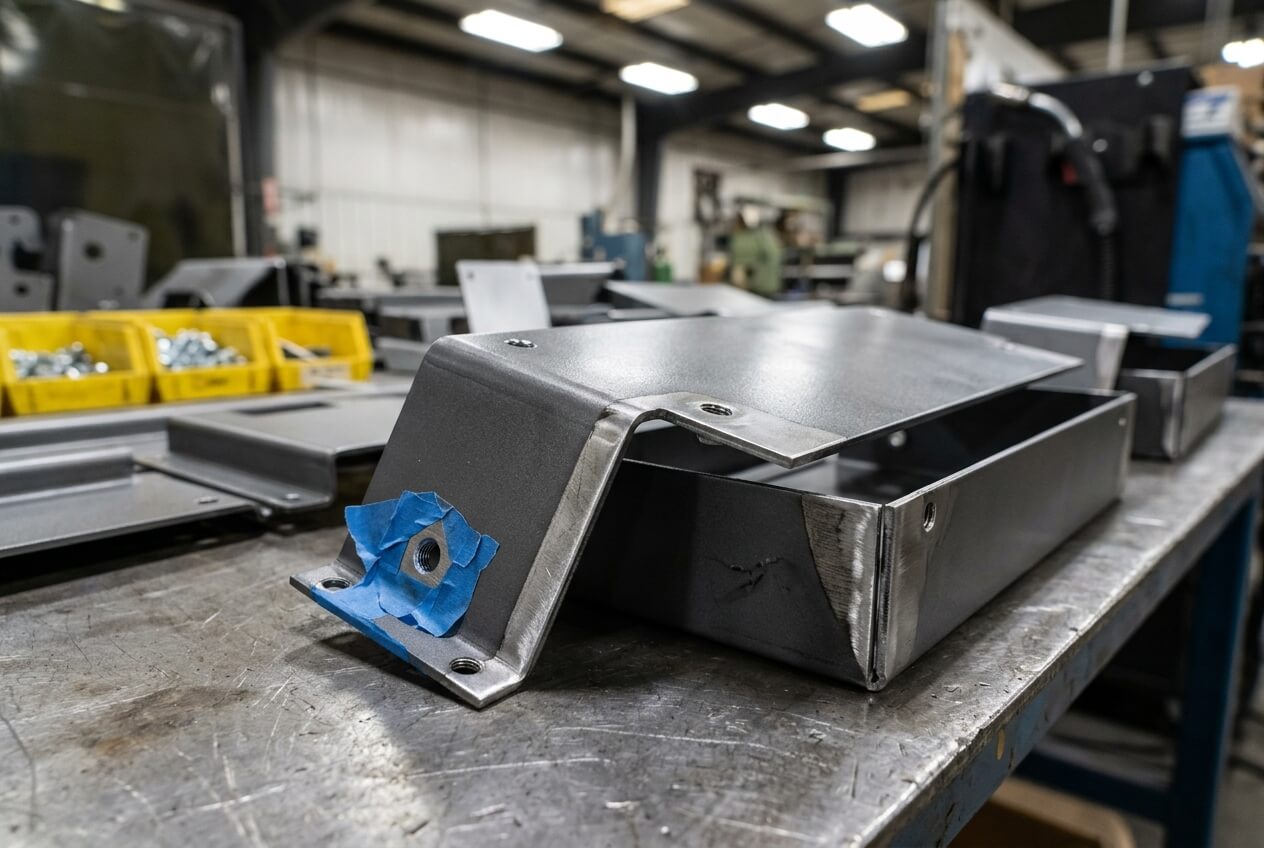
When suppliers return different prices, buyers often assume that one shop charges more for welding. In MIG welded sheet metal work, the larger cost gap often appears after welding. Weld dressing, surface preparation, masking, and coating inspection can add more labor than the weld pass itself.
A low quote may not mean poor capability. It may mean the supplier assumed a lower finish standard. One supplier may include flush grinding on outside corners. Another may only remove sharp spatter. A third may quote normal powder coating without masking tight holes or hinge seats. Each quote can look reasonable on its own. The problem appears when the buyer expects every supplier to include the same invisible work.
Powder coating makes small weld assumptions visible
Powder coating does not hide every welding mark. It can make some problems easier to see. Small spatter becomes raised bumps. Over-grinding creates flat areas that catch light. Poor cleaning near welds can cause coating defects. Heat distortion can become more noticeable on smooth doors, side panels, and wide covers.
Gloss level also changes the risk. A textured matte coating may hide minor surface variation. A smooth semi-gloss black finish may reveal bead transitions and sanding scratches. If the RFQ says only “black powder coat,” suppliers may choose different assumptions about coating texture, thickness, pretreatment, and inspection.
Finishing scope should follow visibility and function
Buyers do not need to over-specify every weld. They need to direct finishing effort where rejection risk exists. A welded display rack may need smooth front corners but only safe deburring on rear support welds. A machine enclosure may need clean outer panels but accept visible internal welds. A bracket assembly may need no cosmetic grinding but require coating-free threaded holes.
Useful RFQ language avoids vague words such as “nice,” “clean,” or “good finish.” Better notes state whether visible welds may remain as-welded, need spatter removal only, require smooth blending, or must be flush ground before coating. Buyers should also define the powder coating color, texture, gloss expectation if important, and coating thickness range where fit matters.
Masking deserves early attention. Powder coating can reduce clearance at threaded holes, grounding points, hinge seats, slots, sliding faces, and tight assembly holes. If a supplier includes masking and post-coating hole checks, its quote will increase. If another supplier excludes that work, its quote may look better until assembly fails.
During RFQ review, Yishang can help buyers identify which welds need cosmetic dressing, which features need masking, and which coating expectations could change the quotation. That review helps prevent a low-price comparison based on missing finish work.
Prototype Approval Can Hide the Finish Standard That Batch Production Must Repeat
A prototype can pass cosmetic approval and still create batch risk. This happens when the sample receives extra manual attention that the drawing never records. The buyer approves the appearance. Production later follows the drawing, not the memory of the sample review.
MIG welded assemblies rely on fixtures, weld sequence, heat control, grinding methods, and coating process control. A skilled technician can rescue one prototype with extra hand grinding and adjustment. A batch of 200 enclosures needs a repeatable standard. If the RFQ and inspection plan still say only “MIG weld and powder coat,” the batch may not match the approved sample.
Sample approval should record what happened before coating
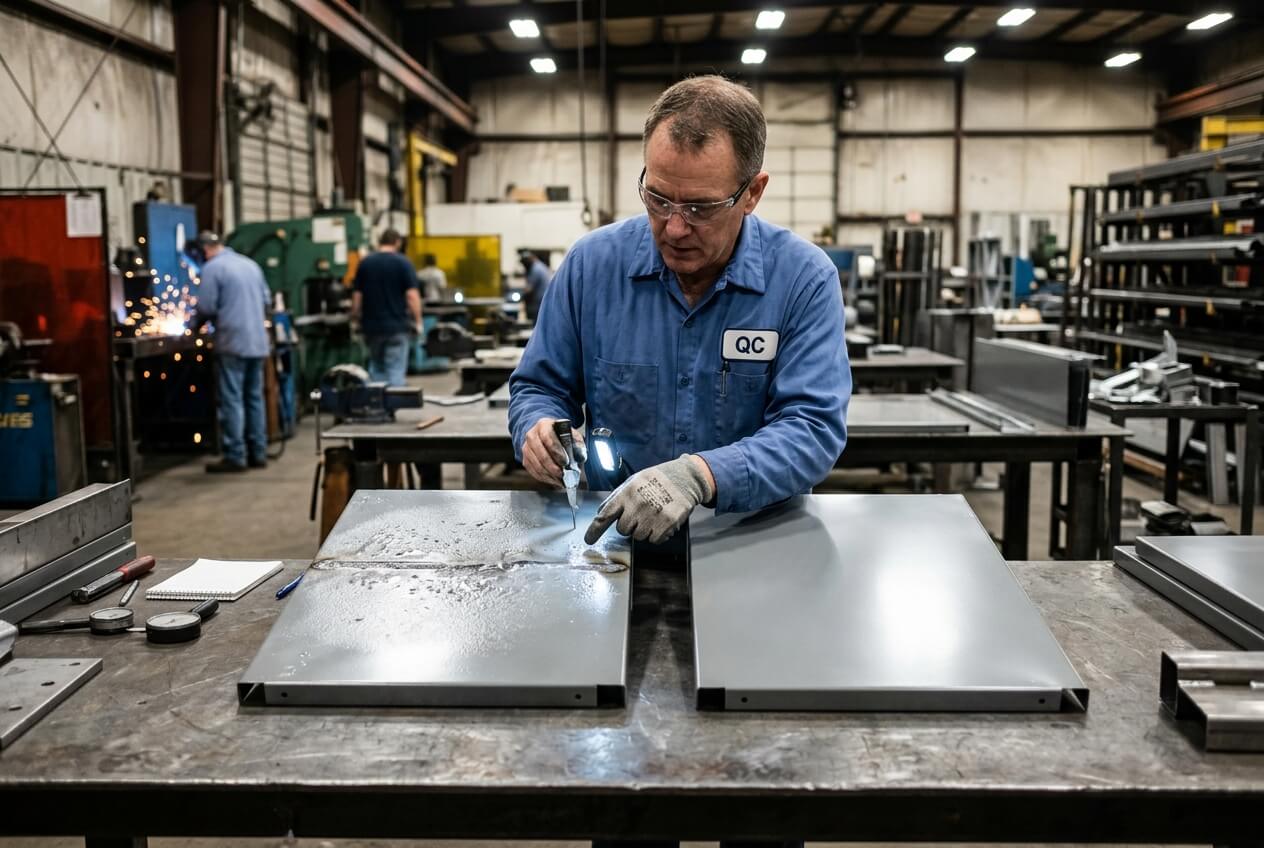
Buyers often inspect only the final coated prototype. That final view matters, but it hides important process information. Bare welded photos can reveal spatter, bead height, undercut, pits, sanding marks, panel distortion, and grinding depth before powder coating changes the appearance.
For example, an OEM approves two powder-coated cabinet samples. The corners look smooth, and the doors close correctly. During the first batch, 35 units show small coating bumps near corner welds. Several doors rub near the hinge side. The supplier explains that the prototype team ground the sample corners more aggressively and adjusted the hinge brackets by hand. The buyer expected the same appearance, but the production documents did not require it.
The consequence chain is simple. The drawing lacked cosmetic zones. The prototype team compensated manually. The buyer approved the result without recording the weld dressing level. Batch production then followed a lower documented standard. Rework delayed shipment and increased cost because coated parts needed stripping, rework, or replacement.
Batch consistency needs measurable finish and fit criteria
Buyers should freeze the sample standard before batch release. This does not require a complex manual. A practical record can include photos of acceptable bare welds, photos of acceptable coated surfaces, notes on which welds were ground, and a clear definition of inspection distance and lighting. It should also state whether small weld witness marks under coating are acceptable on each visible face.
Assembly fit belongs in the same discussion because coating and weld dressing can affect function. If a welded bracket supports a hinged cover, the buyer should confirm whether the hinge position must pass inspection after coating. If powder coating adds thickness around slots or holes, the buyer should define whether the supplier must mask, chase, ream, or check those features after coating.
Lead time can also change when the finish standard becomes repeatable. Full flush grinding on visible welds takes time. Masking many threaded holes slows coating preparation. Extra inspection before and after coating adds handling. These steps may protect the project, but they should appear in the quote and schedule before the purchase order.
Finish Rejections Often Look Cosmetic, but the Root Cause Can Be Fit and Tolerance Ambiguity
Some powder-coated MIG welded parts fail because they look poor. Others fail because they do not assemble after coating. Buyers may describe both problems as finish defects, but the root cause often combines weld heat, coating thickness, and unclear tolerance timing.
MIG welding adds heat and filler metal. On thin sheet metal, heat can pull edges, move holes, twist corners, or reduce gap consistency. Powder coating then adds thickness on edges, inside holes, around weld transitions, and across mating surfaces. If the design already uses tight clearances, a part can pass bare-metal inspection and fail after coating.
Pre-coating dimensions may not protect final assembly
A metal enclosure door shows the risk clearly. The welded hinge bracket measures within tolerance before powder coating. After coating, the hinge area becomes too tight, and the door rubs when opened. The supplier points to the pre-coating inspection record. The buyer points to the final cabinet that does not function. Both sides can defend their position because the RFQ never stated whether the critical dimension applied before or after coating.
A welded mounting bracket creates a similar problem. Laser-cut holes sit close to a MIG welded reinforcement rib. Heat shifts the hole position slightly, and powder coating reduces the hole diameter. Screws no longer pass easily during assembly. If the drawing does not call out post-coating hole control, the supplier may quote normal coating coverage. The buyer may later expect reaming or masking that the quote never included.
Do not solve every finish issue with tighter tolerances
Tighter tolerances can increase cost without solving the real problem. A better change may move a weld away from a visible edge, enlarge a non-critical mounting hole, add a fixture point, mask a hinge seat, or change an intermittent weld pattern where strength allows. Sometimes the most effective finish improvement comes from joint design, not extra polishing.
Buyers should connect finish expectations to assembly requirements. Which surfaces must look good after coating? Which holes must remain clear? Which mating faces must avoid powder build-up? Which dimensions should suppliers inspect after welding, after coating, or after final assembly? These questions help suppliers quote the process that protects the finished product, not only the bare metal part.
For custom sheet metal fabrication, Yishang can review welded assembly drawings and flag areas where MIG welding, coating thickness, and assembly fit may conflict. This type of review works best before prototype release, when design changes still cost less than batch rework.
Compare MIG Welding Quotes by Assumptions, Not Unit Price Alone
The safest quote is not always the highest. The riskiest quote is not always the lowest. The real problem appears when buyers compare prices without comparing assumptions. For MIG welded and powder-coated sheet metal parts, those assumptions often decide whether the finished batch passes inspection.
Before selecting a supplier, buyers should ask each quote to state the included finish scope. Does the price include grinding on visible welds? Does it include spatter removal on all A-surfaces? Does it include masking of threaded holes, grounding points, hinge seats, and close-fit holes? Does inspection occur before coating, after coating, or both?
Cost drivers should appear clearly. Flush grinding every outside corner costs more than removing sharp spatter. Smooth high-gloss powder coating demands more surface control than textured coating. Post-coating hole checks require labor. Tight assembly fit may require fixtures, masking, and final inspection. If these items stay hidden, the buyer may save money on the purchase order and lose it during rework.
Communication also needs a record. Verbal comments such as “make it smooth” or “same as sample” rarely protect batch production. Add finish notes to the drawing, quote, purchase order, or approved sample report. Include approved and rejected photos when possible. Photos help align expectations faster than broad adjectives.
A strong RFQ for a MIG welded, powder-coated enclosure, bracket, cabinet, frame, or welded assembly should include drawings, material grade and thickness, quantity, required tolerances, marked cosmetic surfaces, weld dressing expectations, powder coating details, masking areas, assembly notes, and inspection criteria. That package helps suppliers quote the same work and reduces the chance of late finish disputes.
Quoting a MIG welded sheet metal part? Send Yishang your drawings, material requirements, quantities, tolerances, finish expectations, cosmetic surface markings, powder coating details, masking needs, and assembly notes. Include prototype photos or rejection photos if you have them. Yishang can review the RFQ for weld dressing, coating build-up, visible-surface risk, and post-coating fit before you compare supplier quotes. Visit Yishang to share your project details.
Frequently Asked Questions
What does mig welding meaning include in a sheet metal RFQ?
For procurement, mig welding meaning includes the joining process and its downstream effects. It influences weld bead size, spatter, heat distortion, grinding needs, powder coating appearance, and inspection acceptance. Buyers should not assume the weld process defines the final cosmetic standard.
Why do powder-coated MIG welded parts get rejected after passing welding inspection?
Welding inspection may check strength, weld placement, and basic defects. Powder coating can reveal spatter, grinding marks, bead transitions, surface waviness, and coating build-up. If the RFQ does not define visible surfaces and coating acceptance, a part can pass welding inspection and still fail final review.
How should buyers specify visible MIG welds on enclosures or frames?
Buyers should mark A-surfaces and state the required weld treatment. Options include as-welded, spatter removed, smooth blended, or flush ground before coating. The RFQ should also define coating color, texture, gloss expectations, and acceptable weld witness marks.
Can an approved prototype still fail in batch production?
Yes. A prototype may receive extra hand grinding, adjustment, or coating attention that production documents do not require. Buyers should record the approved weld dressing level, use photos before and after coating, and confirm the same standard applies to batch production.
Which features should be masked on MIG welded powder-coated assemblies?
Common masking areas include threaded holes, grounding points, hinge seats, sliding faces, tight mounting holes, inserts, and mating surfaces. Buyers should also state which dimensions and holes must pass inspection after coating.
Why can two suppliers quote very different prices for the same MIG welded drawing?
The drawing may define the weld but not the finish work. One supplier may include grinding, spatter removal, masking, and post-coating checks. Another may quote basic welding and powder coating only. Asking suppliers to list assumptions makes the comparison more accurate.