
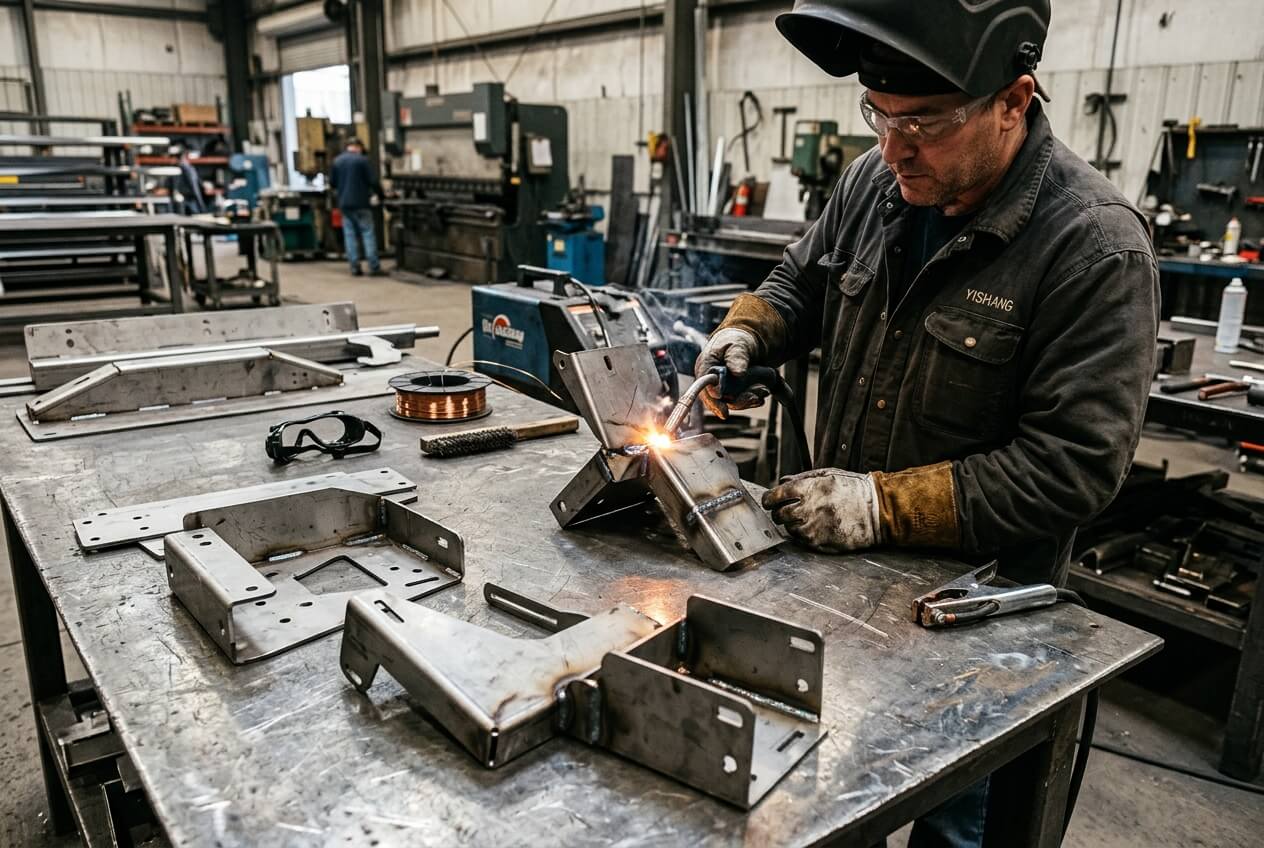
An OEM buyer sends an RFQ for a powder-coated electrical cabinet. The drawings show welded corner seams, internal brackets, and mounting plates. Three suppliers return prices that do not align. One supplier prices continuous welds on every joint. Another assumes short intermittent welds. A third adds heavy grinding because the drawing says "smooth welds" without marking visible areas.
This is why the question how does mig welding work matters in procurement. MIG welding can join the parts, but the welding process also adds heat, distortion risk, finishing labor, fixturing needs, and inspection points. If the RFQ does not separate critical welds from flexible welds, suppliers quote different manufacturing scopes.
The dominant buyer risk is not simply a higher unit price. The real risk is RFQ ambiguity that turns one welded sheet metal design into several different quote assumptions. That ambiguity can lead to budget gaps, prototype disputes, powder coating rework, assembly misfit, and batch inconsistency.
Buyers do not need to design every weld like a welding engineer. They do need to define which welds control strength, appearance, sealing, alignment, and post-weld fit. That clarity helps fabricators quote the same work and suggest safer manufacturability options before production starts.
Where Vague MIG Weld Notes Turn One Drawing Into Three Different Quotes
MIG welding uses a continuously fed wire electrode and shielding gas. The arc melts the wire and the base metal, then forms a weld bead as the joint cools. Fabricators use it for sheet metal enclosures, brackets, frames, cabinets, display racks, and welded assemblies because it supports efficient production on mild steel and many fabricated structures.
That process description matters because every weld note creates cost assumptions. Longer beads need more arc time. More arc time adds heat. Heat can pull thin panels, shift holes, and increase straightening time. If the drawing also requires cosmetic cleanup, the supplier must add grinding, spatter removal, and inspection.
The model shows contact, not weld intent
Many RFQs include a 3D model and a few general notes. The model shows where parts touch, but it does not show whether a joint carries load, only locates a bracket, or remains hidden after assembly. Under quote pressure, each supplier fills that missing intent differently.
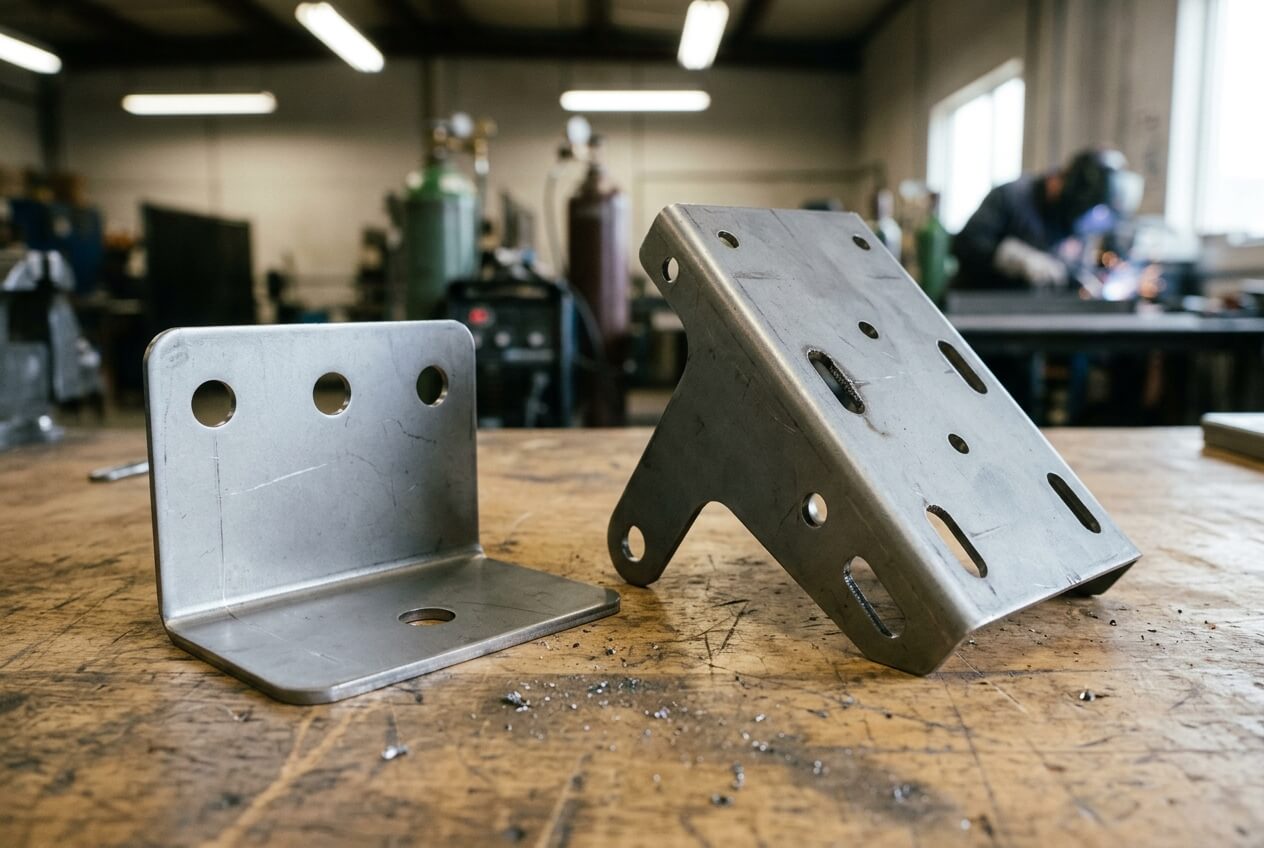
For example, a bent bracket assembly may show two plates joined at a right angle. One supplier may quote a full 3 mm fillet weld along the entire edge. Another may quote two 25 mm stitch welds. A third may assume the outside bead needs grinding because the bracket sits near a visible cabinet face. All three interpretations can look reasonable, yet the buyer cannot compare those prices fairly.
A clear RFQ should state the weld purpose. Mark structural welds separately from positioning welds. Identify hidden reinforcement welds. Note where weld length can follow supplier recommendation. This approach does not over-control the process. It stops each supplier from pricing a different job.
How Weld Length, Heat, and Finish Assumptions Create Hidden Cost
A note such as "MIG weld all around" may feel safe. In sheet metal fabrication, it can create the opposite result. Continuous welding increases heat input, fixture demand, and finishing labor. On thin panels, it can also create distortion that later affects coating and assembly.
Consider a 1.5 mm steel enclosure cover with an internal stiffener. The stiffener may only need short weld segments to prevent vibration. If the drawing demands continuous welds on both sides, the cover can bow. The supplier may need extra clamping, alternate weld sequencing, straightening, and inspection. The quote rises, and the part may still need rework before powder coating.
Continuous welds are not always lower risk
Continuous welds make sense when the joint needs sealing, high strength, or a controlled visual seam. They may not make sense for hidden support ribs, internal tabs, or non-load-bearing brackets. A supplier who assumes continuous welds may quote high. A supplier who assumes stitch welds may quote low. The buyer sees a price difference but misses the scope difference.
Weld length also affects lead time. More welding increases operator time, cooling time, and cleanup time. If the part needs powder coating, the supplier must remove spatter and sharp edges before finishing. Poor weld cleanup can create coating defects, while excessive grinding can leave waves or thin areas on customer-facing panels.
Cosmetic notes need a surface map
Finish wording often causes quote gaps. A note like "smooth welds before powder coating" does not tell the supplier which surfaces customers will see. Some fabricators will grind every visible and hidden bead. Others will clean only obvious exterior seams. Both approaches can trigger conflict if the buyer rejects parts after coating.
A retail display frame shows this risk clearly. Front corners may need smooth cosmetic blending because shoppers see them. Rear support welds may only need strength, spatter removal, and safe edges. If the RFQ demands flush grinding everywhere, the buyer pays for unnecessary labor. If it says nothing, the batch may arrive with acceptable rear welds but disputed front seams.
The better RFQ separates surfaces by function. Mark customer-facing welds, hidden welds, and structural welds. State whether each area needs flush grinding, light cleanup, spatter removal, or no cosmetic finishing. This lets suppliers price finish work accurately instead of adding a broad risk allowance.
Post-Weld Dimensions: The Missing RFQ Detail Behind Assembly Failures
MIG welding does not only affect the bead. It affects the final geometry of the assembly. Heat shrinkage can move holes, pull flanges, twist frames, and change the location of tabs. When the RFQ lists only individual part tolerances, suppliers may not control the dimensions that matter after welding.
This creates a common procurement trap. The laser-cut and bent components meet their drawings before welding. The weld bead looks acceptable. The powder coat looks clean. Then the assembly fails when the buyer installs it on a machine, cabinet, or mating frame.
Inspection should follow the functional risk
For a welded cabinet base, four mounting plates may include slotted holes. The important dimension is not just the hole position before welding. The important dimension is the mounting pattern after welding and coating. If the RFQ does not call out that post-weld check, the supplier may inspect the flat plates and miss the final assembly risk.
A metal enclosure with welded internal brackets creates a similar issue. The bracket may hold a PCB, power supply, fan, or cable route. If welding pulls the bracket by a few millimeters, the final product may still pass a visual inspection but fail during electrical assembly. Buyers should define bracket location, mating clearance, or an assembly gauge where fit matters.
Tolerance decisions belong in the welding RFQ, not only on the component drawings. Mark the dimensions that control assembly after welding. Identify datums, hole spacing, hinge alignment, frame squareness, and flatness at mating surfaces. If the part will receive powder coating, confirm whether final inspection occurs before or after finish.
This detail also helps suppliers plan the right fixture. Tight post-weld tolerances may require a locating jig, controlled weld sequence, or first-article inspection. Flexible areas can use simpler methods. Without that distinction, one supplier may include fixture cost while another excludes it, and the lowest quote may not cover the real requirement.
Why Prototype Approval Can Still Leave Batch Welds Open to Interpretation
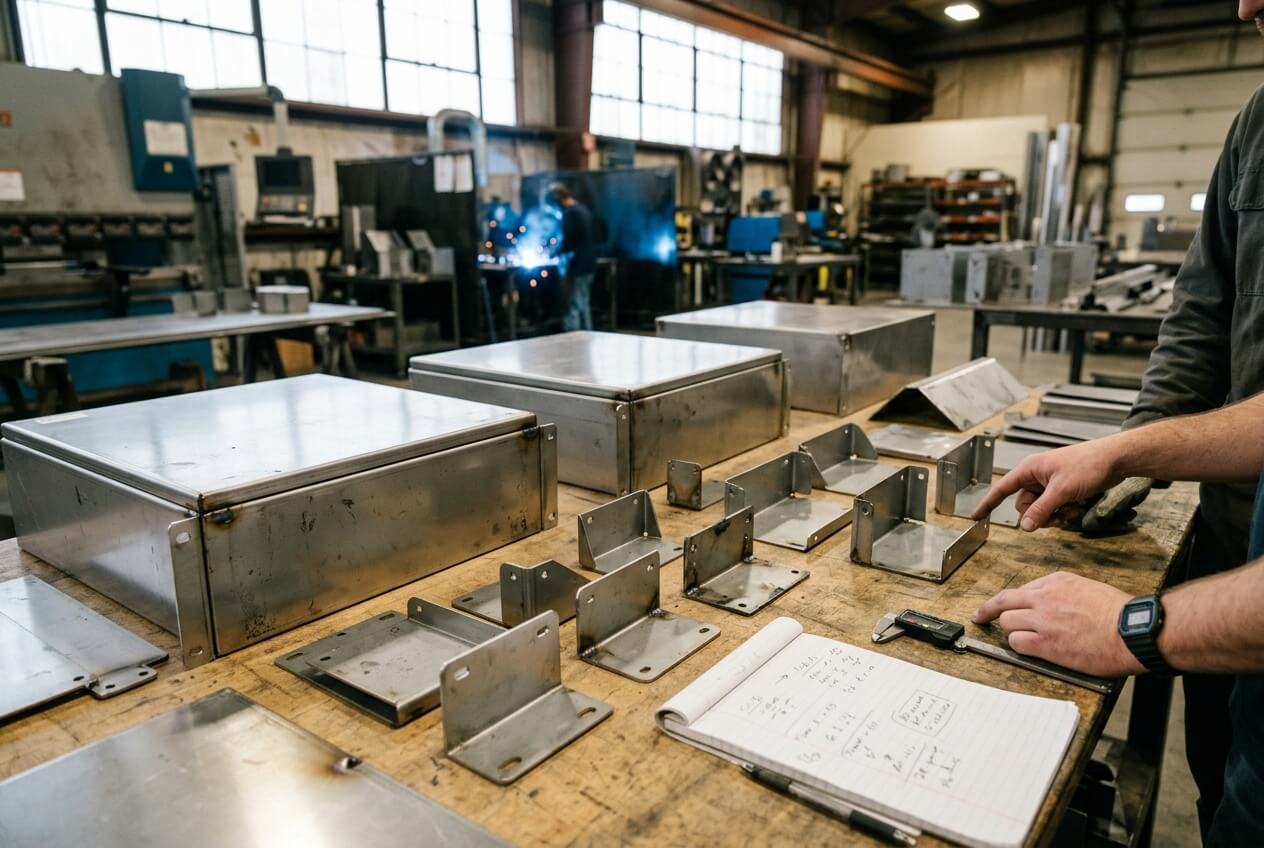
A buyer may approve one MIG-welded prototype and still receive inconsistent batch parts. The sample may look fine because a skilled welder adjusted fit-up by hand. Batch production needs repeatable controls, not only a good first piece.
Prototype welding often allows extra manual correction. The operator may clamp harder, adjust torch angle, change weld order, or straighten a frame after cooling. Those actions can produce a good sample, but they may not fit the batch quote unless both sides define the production method and acceptance points.
One good sample may hide manual correction
Suppose a prototype machine guard frame fits the buyer’s test fixture. During sample fabrication, the welder corrected a slight twist before final welding. The buyer approves the sample, then orders 300 pieces. If the RFQ does not specify frame squareness, mounting hole location, weld sequence, or fixture use, production may not repeat the same manual correction.
Another example involves a powder-coated control cabinet. The prototype has clean exterior seams because the supplier spends extra time grinding visible corners. The batch quote, however, only included basic spatter removal. When the first production run arrives, the buyer sees more bead visibility under the coating. The root cause started with an unclear prototype approval standard.
Batch quotes need repeatable acceptance points
Before moving from prototype to batch, buyers should convert sample feedback into measurable requirements. Note which welds matched the approved sample because of strength, appearance, or fit. Clarify which surfaces set the cosmetic standard. Define the post-weld dimensions that production must hold.
Production quantity also changes the cost logic. A fixture may not make sense for one prototype, but it may reduce variation and labor for 500 welded assemblies. If the buyer expects batch consistency, the quote should reflect fixture design, setup, inspection, and any required sample approval before full production.
Yishang often reviews welded sheet metal RFQs by asking how the part installs, which surfaces remain visible, and which dimensions matter after welding. That discussion helps turn prototype observations into production notes instead of leaving them as informal expectations.
What Buyers Should Clarify Before Comparing MIG Welding Quotes
The lowest MIG welding quote can be risky when the RFQ leaves weld scope open. A low price may exclude grinding, special fixturing, post-weld inspection, or cosmetic standards. A high price may include continuous welds and finishing that the part does not need. The buyer must first make the scope comparable.
Start with the drawing package. Include 2D drawings when possible, not only 3D files. Add weld symbols, weld length notes, material thickness, critical tolerances, finish expectations, and cosmetic surface markings. If a tolerance applies after welding, state that clearly. If coating thickness affects fit, include that in the assembly requirement.
Next, give suppliers procurement context. Share prototype quantity, batch quantity, annual volume, expected inspection level, mating part drawings, assembly photos, and known problems from earlier builds. A note about previous distortion, burn-through, coating defects, or hole misalignment can prevent a repeated failure.
Ask each supplier to state assumptions in the quote. The response should explain continuous versus intermittent welds, visible weld finishing, hidden weld cleanup, fixture needs, and post-weld dimensional checks. If the supplier recommends a change, ask whether it affects strength, appearance, assembly fit, cost, or lead time.
A practical weld scope map can include the following points:
- Structural welds that carry load or protect safety.
- Alignment welds that control bracket, hinge, or mounting location.
- Hidden reinforcement welds where appearance has low value.
- Visible seams that need defined grinding or blending.
- Post-weld dimensions that control assembly after coating.
- Prototype features that must become batch acceptance standards.
This does not make the RFQ complicated. It makes it testable. Suppliers can price the same requirements, and buyers can challenge assumptions before issuing a purchase order.
Need a comparable quote for a MIG-welded sheet metal part? Send Yishang your drawings, 3D files, material requirements, quantities, tolerances, finish expectations, cosmetic surface notes, assembly details, and prototype feedback. The team can review weld scope, manufacturability, coating risks, and post-weld fit before quote assumptions turn into rework. Visit Yishang to discuss custom enclosures, cabinets, brackets, frames, or welded assemblies.
Frequently Asked Questions
How does MIG welding work in a sheet metal RFQ?
MIG welding feeds wire through a welding gun while shielding gas protects the weld area. The arc melts the wire and base metal to form a bead. In an RFQ, this affects arc time, heat input, distortion risk, fixture needs, cleanup, and inspection. Buyers should define weld length, weld purpose, and visible surfaces so suppliers quote the same scope.
Why do continuous weld notes often increase sheet metal fabrication cost?
Continuous welds add more heat and labor than intermittent welds. They can also require stronger fixturing, cooling control, straightening, grinding, and extra inspection. They are useful for strength, sealing, or visible seams, but they may be unnecessary for hidden stiffeners or light reinforcement brackets.
What weld details should buyers add to drawings for metal enclosures?
Buyers should mark structural welds, cosmetic welds, hidden welds, weld length, weld size where needed, post-weld dimensions, and finish expectations. For enclosures, they should also identify hinge locations, mounting holes, PCB bracket positions, and surfaces that customers will see after powder coating.
How can prototype approval fail to control batch welded assemblies?
A prototype may pass because the welder manually corrected fit or spent extra time finishing visible welds. Batch production needs repeatable fixtures, agreed weld sequences, measurable post-weld dimensions, and clear cosmetic standards. Without those details, later parts may vary even when the approved sample looked acceptable.
Which dimensions matter most after MIG welding?
The most important dimensions usually relate to assembly fit. Common examples include mounting hole spacing, frame squareness, hinge alignment, bracket location, mating surface flatness, and clearance for installed components. Buyers should specify whether these dimensions apply after welding or after final coating.
What should buyers send when requesting a quote for MIG-welded parts?
Send 2D drawings, 3D files, material requirements, quantities, tolerances, finish expectations, weld appearance notes, cosmetic surface maps, assembly photos, mating part drawings, and prototype feedback. This information helps the supplier price the real welding scope instead of relying on assumptions.