
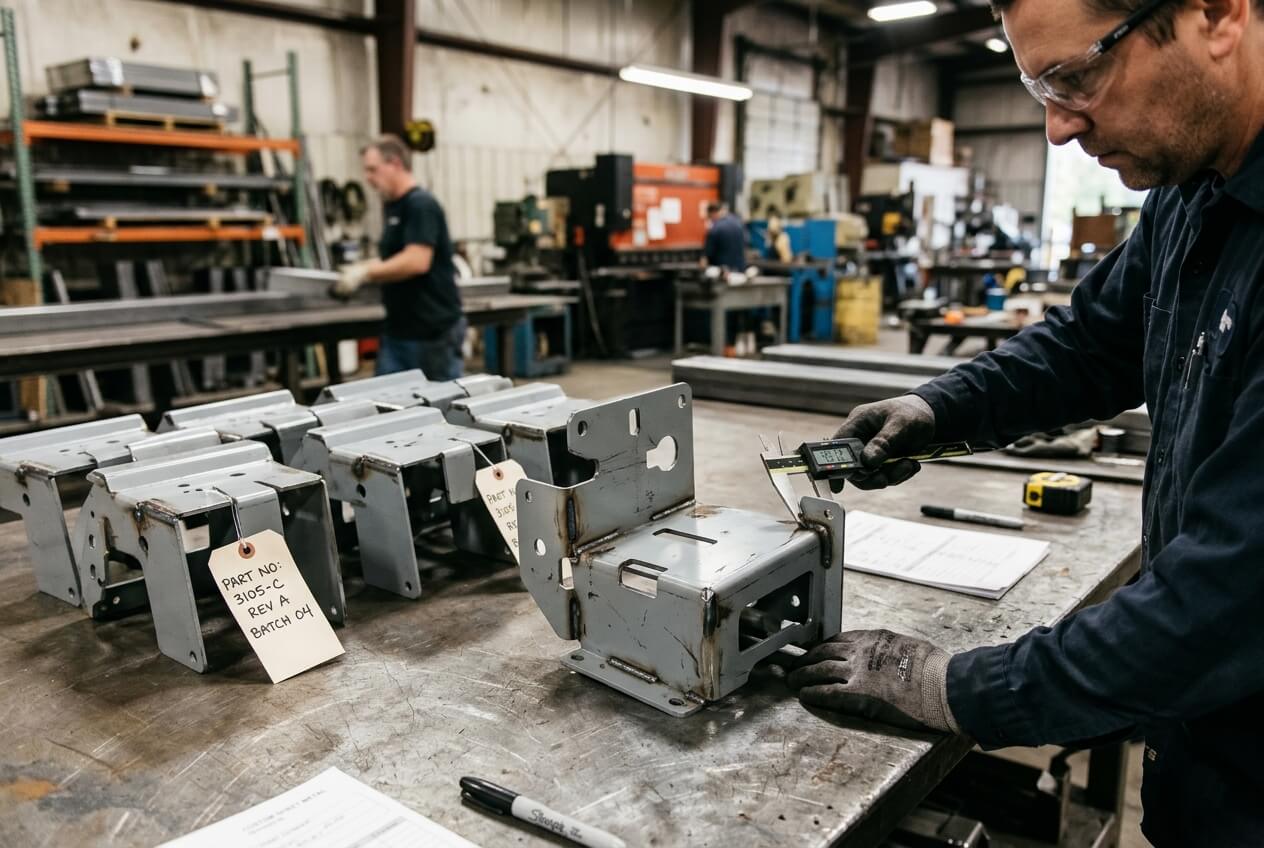
An OEM buyer sends the same compact latch housing drawing to three suppliers. One supplier quotes mim metal injection molding. Another quotes CNC machining. A sheet metal fabricator quotes a formed bracket with welded hardware inside a powder coated enclosure door.
The buyer now sees three prices, but those prices do not describe the same risk. Each supplier filled in missing information from the RFQ. One assumed the 3D shape could not change. Another assumed tight machining control. The sheet metal supplier assumed the latch only needed to locate the door catch after bending, welding, and coating.
This is the procurement risk that creates expensive mistakes. The sourcing team thinks it is comparing manufacturing processes. In reality, it is comparing supplier assumptions. Missing notes about functional holes, cosmetic faces, coating build-up, bend radius, fixture control, and assembly fit can make a low quote look attractive before production exposes the gap.
For custom sheet metal fabrication, sheet metal parts, metal enclosures, brackets, frames, cabinets, and welded assemblies, this risk often starts before the first sample. A drawing can look complete and still fail to explain what must stay fixed. When that happens, suppliers quote different versions of the part, and the buyer loses a clean basis for cost, lead time, and quality decisions.
RFQ Ambiguity Makes MIM, CNC, and Sheet Metal Quotes Look Comparable When They Are Not
Many sourcing problems begin with a part that sits between process categories. A latch housing, hinge support, sensor mount, display clip, or internal bracket may look small and complex enough for mim metal injection molding. The same function may also work as a laser cut and bent sheet metal part.
MIM can suit small, complex, high-volume metal components when tooling, debinding, sintering, and shrinkage control make sense. CNC machining can suit low-volume precision shapes when material removal and cycle time remain acceptable. Sheet metal fabrication usually suits panels, brackets, frames, cabinets, racks, enclosures, covers, and welded assemblies that depend on cutting, bending, welding, finishing, and assembly.
The trouble starts when the RFQ does not explain the function behind the shape. A supplier who sees a fixed 3D model may quote the exact geometry. Another supplier may redesign the same function around bend tooling and standard hardware. Both quotes may look valid, yet they price different assumptions.
Unit Price Hides Different Cost Models
A MIM quote may carry tooling cost, validation time, and volume sensitivity. A CNC quote may carry machine time and material waste. A sheet metal quote may carry bend setup, weld access, cosmetic grinding, powder coating control, and final assembly inspection.
Those cost models cannot be compared through unit price alone. Buyers need to know which features control product function and which features only reflect the first design concept. If the raised boss on a latch plate only gives screw clearance, a formed offset or welded nut may replace it. If that boss controls an exact latch position against a molded cover, the RFQ must show the mating part and final clearance.
A low quote often appears when the supplier does not price the hidden risk. The supplier may assume open tolerances, non-cosmetic surfaces, standard coating thickness, no fixture control, or no final assembly check. Production then reveals the missing requirement through rework, delayed approval, or rejected batches.
Yishang often sees this pattern when buyers send enclosure, bracket, cabinet, and welded assembly drawings that were first designed around a machined or molded component. A manufacturability review helps separate fixed functional needs from geometry that can change for sheet metal fabrication.
Missing Functional Detail Pushes Cost Risk Into the Supplier Quote
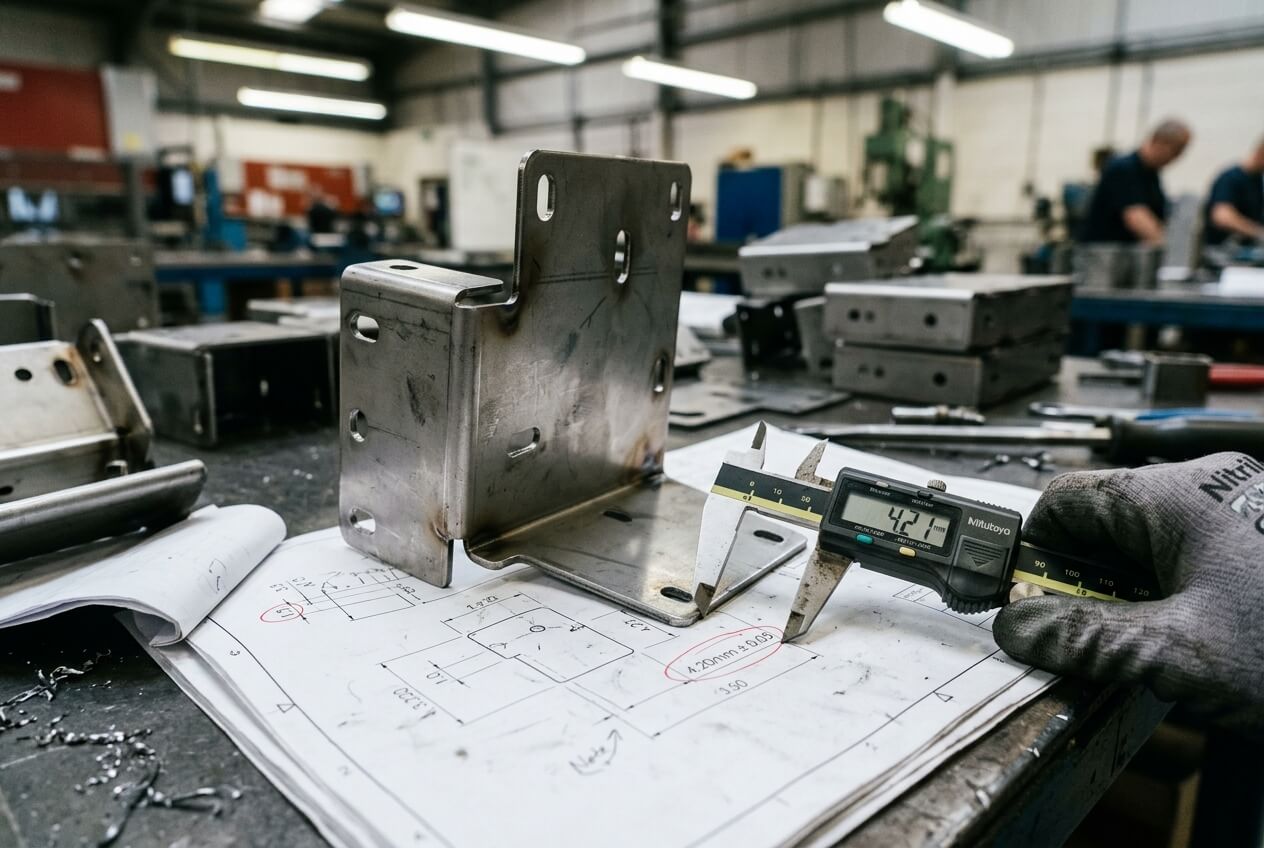
A drawing may include dimensions, hole sizes, and a 3D model, yet still leave the quote exposed. The missing detail usually concerns use, not shape. Suppliers need to know which holes align after bending, which faces remain visible, which edges contact a gasket, and which surfaces must remain uncoated for grounding or thread engagement.
When the RFQ skips those details, each supplier decides how much risk to include. One may price simple laser cutting and bending. Another may add inspection after forming. A third may include a fixture for welding or assembly. The buyer may read the higher price as less competitive, when it may simply include the real production requirement.
Project Example: Powder Coated Control Enclosure Door
Consider a steel control enclosure door with a latch bracket, hinge holes, and a powder coated finish. The latch bracket looks like a candidate for mim metal injection molding because it has a compact shape and a raised locating feature. The buyer sends only the part drawing and annual quantity.
The first quote assumes the bracket must keep its molded geometry. The sheet metal quote assumes a formed bracket with a welded nut will work. Neither quote can settle the question because the RFQ does not show the latch, gasket compression, door flange, coating thickness, or hinge relationship.
The issue starts with an incomplete assembly context. It affects quotation because suppliers price different levels of control. Later, it affects production when the latch binds after coating or the door fails to close evenly. The buyer should clarify the final latch position, allowed bracket redesign, cosmetic face, masked areas, and inspection point before comparing prices.
Project Example: Stainless Sensor Bracket Inside a Machine Frame
A stainless sensor bracket may look simple in CAD. It has two mounting holes, one bent flange, and a slotted face for adjustment. If the RFQ does not show the sensor, cable clearance, or mounting frame, the supplier may treat all dimensions as normal fabrication dimensions.
The prototype may still work because a technician adjusts the slot during assembly. Batch production may fail when bend variation shifts the sensor face. A tighter tolerance on the wrong edge will not solve the problem. The buyer must identify the hole-to-sensor relationship and decide whether the bracket needs a fixture, a larger slot, or a changed bend layout.
These examples show why RFQ clarity matters more than process preference. The question is not whether MIM, CNC, or sheet metal looks better on paper. The question is which process can control the functional requirement with the least hidden assumption.
Assembly Fit Turns Small Drawing Gaps Into Rework, Delays, and Disputed Quality
Custom sheet metal parts rarely work alone. They connect to hinges, PCBs, motors, displays, plastic covers, gaskets, locks, sensors, fasteners, and other fabricated parts. That connection turns ordinary drawing gaps into assembly risk.
Laser cutting defines the flat blank. Bending moves holes and edges into final position. Welding can pull a frame out of square. Grinding changes surface condition. Powder coating adds thickness around slots, hooks, hinge leaves, latch areas, threaded features, and contact points. Each operation can change the final fit.
If the drawing controls only the individual part before those operations, the finished assembly may still fail. The supplier may meet the drawing and still ship parts that slow the buyer’s line. That situation creates a difficult dispute because both sides can point to a different definition of quality.
Fit Requirements Must Survive Fabrication Steps
A welded display frame may show outside dimensions and hole sizes. If the RFQ does not define flatness after welding or hole alignment across the finished frame, one supplier may quote visual inspection. Another may include a welding fixture and post-weld measurement.
The second quote costs more because it controls the risk. The first quote may win the order and lose the project during installation. Shelves may not sit level. Panels may need hand fitting. Site workers may enlarge holes. None of that appears in the original unit price.
A cabinet with a small latch insert has a similar risk. Buyers may focus on whether the insert should use mim metal injection molding or sheet metal fabrication. Yet the final latch position depends on the door bend, hinge location, weld sequence, coating thickness, and installed gasket. A precise insert cannot correct an uncontrolled door flange.
Buyers should include assembly drawings, mating part photos, sample hardware, installation notes, and final inspection expectations in the RFQ. They should mark the dimensions that matter after fabrication and finishing, not only before them. This reduces quote distortion and gives suppliers a fair way to price fixture control, inspection, masking, or design changes.
Yishang can review these relationships during RFQ support when buyers send 2D drawings, 3D files, mating components, finish expectations, and quantity targets. The review should focus on the fit that must survive production, not on adding tight tolerances everywhere.
Prototype Approval Can Hide the Same RFQ Assumptions That Will Fail in Batch Production
A good prototype can mislead a sourcing team. The sample fits the enclosure, the finish looks acceptable, and the latch closes. Everyone feels ready to release the order. The hidden question remains: did the sample work because the process was stable, or because someone adjusted it by hand?
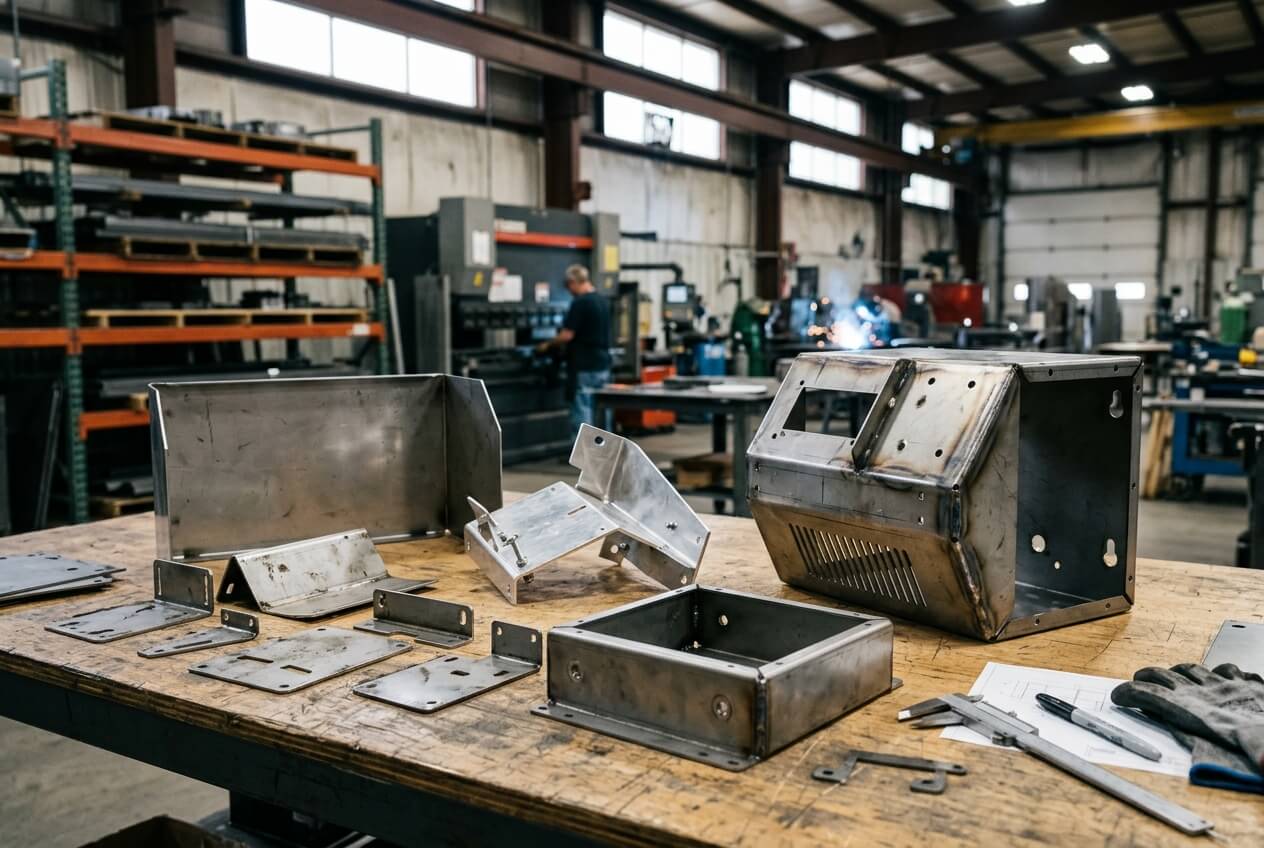
Prototype sheet metal fabrication often uses flexible handling. A technician may tune a bend angle, file a slot, polish a weld longer than planned, chase threads after coating, or position a bracket carefully during assembly. Those actions may be reasonable during development. They become a cost and consistency risk when the purchase order calls for hundreds or thousands of parts.
MIM takes a different route. It usually requires upfront tooling, process validation, shrinkage control, and production approval before volume output. Sheet metal can move faster at prototype stage, but batch consistency depends on bend programs, fixtures, weld sequence, coating control, inspection points, and accepted finishing standards.
Approval Needs to Capture Why the Sample Worked
A powder coated aluminum electronics box may pass sample review because the supplier cleared several mounting holes after coating. If the buyer does not record that step, the batch may arrive with tight holes and slow assembly. The supplier may believe the coating meets the drawing because the RFQ never required masking or post-coating clearance.
A welded frame may also pass as a single sample because the fabricator straightened it after welding. In production, that manual correction may add labor, extend lead time, and create variation. If the RFQ did not specify flatness after welding or the use of a fixture, the quote may not include the work needed to repeat the sample.
Buyers should ask suppliers to document prototype conditions before batch release. Did the prototype use production tooling? Did it need manual filing, extra polishing, hand straightening, re-tapping, coating repair, or special assembly positioning? Which dimensions were checked after final finishing?
This does not mean every prototype adjustment is bad. Some adjustments teach the team how to improve the design. The risk comes when the buyer approves a sample without turning those lessons into drawings, inspection plans, or revised RFQ notes. Then batch production inherits uncertainty instead of control.
Clarify the Drawing Before You Use Price to Choose the Process
Buyers can reduce the risk by changing the order of decisions. Do not ask suppliers to compete on price before the RFQ explains function. First, decide what the part must do inside the assembly. Then let suppliers quote the process route that controls that function.
Start with features that affect fit, safety, appearance, grounding, fastening, movement, or installation. Mark holes that connect to PCBs, hinges, motors, sensors, covers, locks, and imported hardware. Identify cosmetic faces and hidden faces. State whether coating applies before or after assembly. Define masked threads, grounding points, gasket contact areas, and clearance after finish.
Next, identify which geometry can change. A compact housing may not need molded walls if a formed bracket can hold the same latch. A machined spacer may become a folded tab. A small cover may become a laser cut part with PEM hardware. These changes can lower tooling cost, reduce lead time, and simplify batch control when the function allows them.
Finally, ask suppliers to quote the same inspection basis. A price for parts before coating does not match a price for final assembly fit. A quote with visual weld inspection does not match a quote with fixture control and post-weld measurement. A prototype-only price does not match a production price that includes repeatable finishing and packaging standards.
Supplier communication should support this clarity. Buyers should ask direct questions: Which dimensions drive the price? Which assumptions did you make about tolerance, material, finish, welding, and assembly? Which features would you change for fabrication without changing function? Which prototype steps will not repeat in batch production unless we approve them?
For sheet metal parts, enclosures, brackets, frames, cabinets, and welded assemblies, Yishang can review drawings for fabrication assumptions before buyers compare MIM, CNC, casting, and sheet metal routes. That review works best when the RFQ includes the full assembly context, not only the isolated part file.
If your team is comparing mim metal injection molding with sheet metal fabrication, send Yishang your 2D drawings, 3D files, material requirements, quantities, critical tolerances, finish expectations, assembly drawings, mating part details, and prototype notes. We can review where unclear RFQ assumptions may affect quotation, fit-up, finishing, batch consistency, and production cost before you commit to tooling or volume orders.
Frequently Asked Questions
Why do MIM and sheet metal quotes differ so much for the same small part?
They often price different assumptions. MIM may include tooling, validation, and shrinkage control. Sheet metal may include laser cutting, bending, welding, hardware insertion, finishing, and assembly checks. If the RFQ does not explain the part function, each supplier may quote a different route.
When should a buyer challenge mim metal injection molding for a latch or bracket?
Challenge it when the part mainly locates, supports, or fastens another component inside a larger sheet metal assembly. A formed bracket, welded tab, PEM fastener, or laser cut feature may meet the same function with less tooling risk if the geometry can change.
What drawing details matter most when comparing fabrication quotes?
Mark functional holes, cosmetic surfaces, mating parts, coating requirements, masked threads, grounding points, bend-critical dimensions, and final assembly inspection points. These details show suppliers what must stay fixed after bending, welding, finishing, and assembly.
Why can a prototype pass but the production batch still fail?
The prototype may include manual filing, bend adjustment, extra polishing, thread chasing, or careful hand positioning. If the buyer does not document those steps, the production quote may not include the labor, fixture control, or inspection needed to repeat the result.
How should buyers handle tolerances in a MIM-to-sheet-metal redesign?
Apply tight tolerances only to features that control function, fit, movement, or assembly. Loose control on a latch hole can cause failures, while tight control on a hidden non-contact edge only adds cost. The redesign should follow the functional relationship, not the old geometry.
What should buyers send with an RFQ for sheet metal parts or enclosures?
Send 2D drawings, 3D files, material requirements, order quantities, finish expectations, critical tolerances, assembly drawings, mating samples or photos, and prototype notes. This helps suppliers quote the same production risk instead of filling gaps with assumptions.