
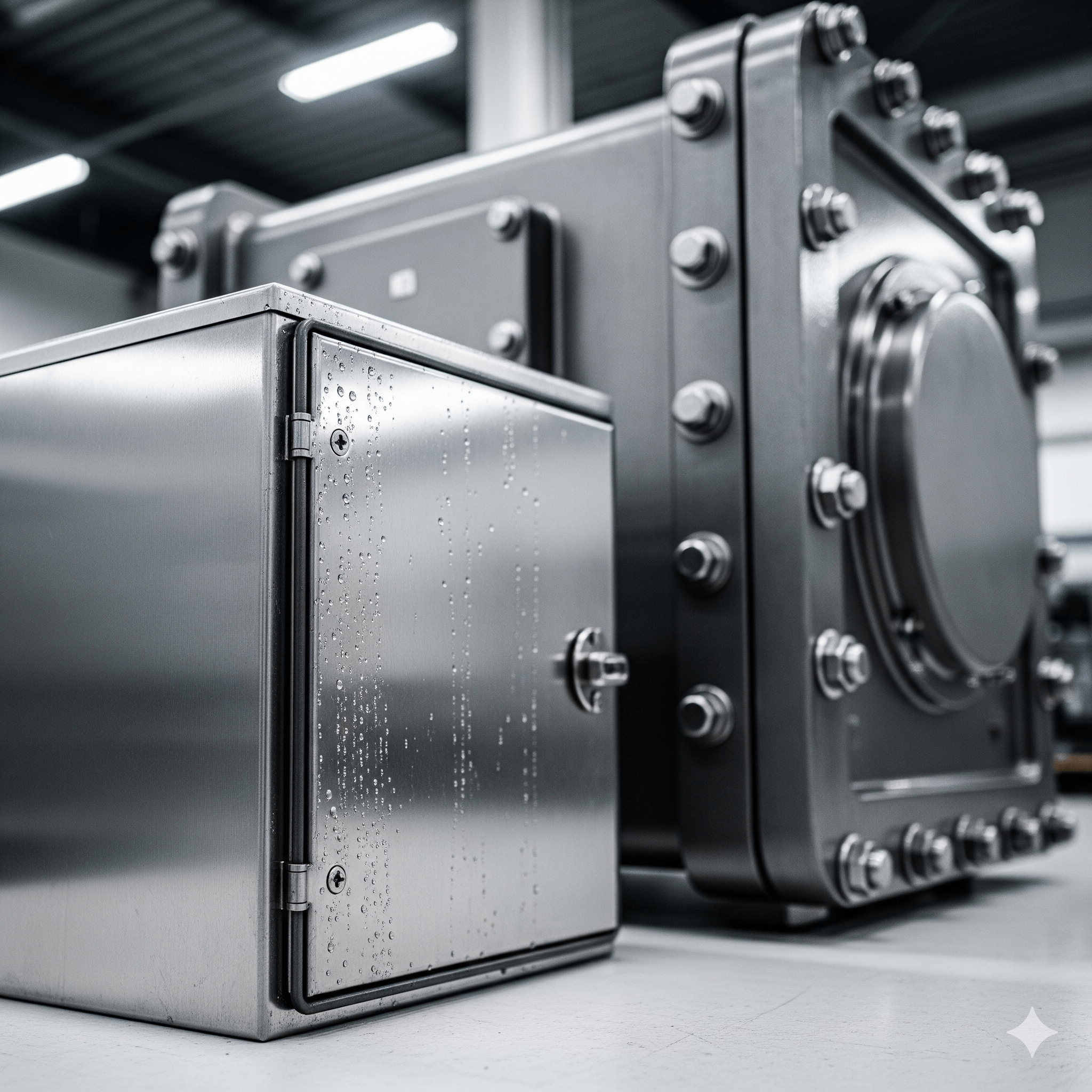
In the global industrial supply chain, specifying an electrical enclosure is a decision rooted in rigorous risk management. It is also essential for long-term asset protection. For wholesale buyers, distributors, and project managers, choosing the wrong rating is not merely a technical oversight. Instead, it is a significant liability that impacts facility safety and regulatory compliance. Consequently, it can also drive up total operational overhead.
At YISHANG, we have 26 years of precision manufacturing experience. This expertise serves clients in over 50 countries. Our history has demonstrated that the NEMA 7 vs. NEMA 4X debate is frequently misunderstood by general contractors. However, a higher NEMA number does not signify a superior all-around level of protection. Instead, it indicates a fundamentally different engineering mission. This guide moves beyond basic definitions. We explore the material science, mechanical integrity, and procurement logic required to secure high-value industrial infrastructure. Furthermore, we help you navigate the technicalities of NEMA ratings which can often feel overwhelming.
1. NEMA 4X: Engineering Against External Chemical and Environmental Ingress
When a project involves exposure to corrosive salt spray or high humidity, NEMA 4X enclosures are the definitive industry standard. They are also ideal for aggressive chemical wash-down protocols. The X suffix is far more than a cosmetic label. Rather, it is a certification of mandatory corrosion resistance under the UL 50E standard. This certification is essential for preventing structural failure. In harsh environments, standard materials would typically degrade within months.
From a procurement standpoint, the focus remains primarily on the material stainless steel grade. Carbon steel enclosure options with specialized epoxy coatings are available for budget-sensitive projects. However, they often fail under the intense thermal cycling of outdoor use. For sustainable B2B solutions, YISHANG recommends the use of 316L stainless steel. This alloy contains 2-3 percent Molybdenum. This element is critical for resisting pitting corrosion. It is especially effective in chloride-rich coastal zones and chemical processing facilities.
Furthermore, the mechanical integrity of a NEMA 4X rating depends heavily on its sealing strategy. Unlike standard electrical boxes, these units must survive high-pressure hosing tests. The water rate is typically 65 gallons per minute. This performance requires strong rubber or silicone gaskets. Such gaskets must maintain their elasticity over a ten-year service life. If a gasket degrades, moisture ingress will occur. This will cause internal short-circuiting. Consequently, this is the primary cause of downtime in solar battery enclosure applications.
As a specialized manufacturer, we emphasize that watertight integrity is achieved through more than just a gasket. It involves precision steel enclosure galvanized treatments and high-grade welding techniques. Our CNC-bent stainless steel enclosure designs minimize weld seams. These seams are traditionally the weakest points where oxidation begins. Therefore, wholesale distributors should prioritize stocking units with NEMA 4X features. These units offer modular mounting capabilities to provide maximum versatility for end-users.
2. NEMA 7: Containing Internal Explosions in Hazardous Locations (HazLoc)
The Engineering Logic of Flame Paths
When the environmental threat originates from within the enclosure, the engineering logic must flip entirely. This usually happens via explosive vapors or gases. NEMA 7 enclosures are specifically designed for Hazardous Locations. These are classified under the National Electrical Code as Class I Division 1 environments. The counter-intuitive truth for many buyers is that a NEMA 7 unit is not necessarily sealed against water. Instead, it is a pressure-vessel-grade containment system designed to save lives during an internal fault.
The core technology of NEMA 7 is the Flame Path. A NEMA 4X enclosure uses a soft gasket to block water. In contrast, a NEMA 7 enclosure utilizes precisely machined joints. These metal-to-metal gaps are engineered with tolerances often less than 0.0015 inches. This precision allows internal explosion gases to escape. Simultaneously, it cools them below their auto-ignition temperature. This quenching effect prevents a localized spark from causing a site-wide disaster.
Structural Mass and Safety Standards
This mission requires massive structural integrity and mass. Therefore, these units are significantly heavier than an enclosure aluminum enclosure or a standard carbon steel enclosure. They are built to withstand hydrostatic pressure tests. These tests often reach four times the maximum explosion pressure. This safety margin prevents the enclosure itself from becoming shrapnel. As a result, it ensures safety during an internal combustion event.
For procurement managers, the weight of a NEMA 7 unit is a critical logistical factor. The associated mounting requirements also play a major role. A heavy-duty enclosure galvanized steel NEMA 7 box may require reinforced framing. It might also need specialized lifting equipment. Consequently, this increases the overall project budget. When you mount electrical enclosure units of this magnitude, the structural capacity must be verified. A structural engineer should check the wall or frame to ensure long-term stability.
Moreover, we frequently encounter field errors where contractors attempt to add gaskets to a NEMA 7 box. They usually do this to improve weather resistance. However, this is a dangerous violation of enclosure integrity and hazardous safety codes. Unauthorized gaskets can block the safe venting of explosion pressure. This potentially turns a safety device into a pressurized hazard. Therefore, procurement teams must specify a dual-rated unit from the outset if they require both explosion containment and rain protection.
3. The B2B Decision Matrix: Procurement Logic for Wholesale Buyers
Selecting between NEMA 7 and NEMA 4X requires a Total Cost of Ownership (TCO) mindset. Buyers must evaluate the breakdown of key differences carefully. They should not look just at the initial purchase price. Instead, they must consider installation complexity, specialized hardware, and maintenance cycles.
| Procurement Factor | NEMA 4X (Ingress Protection) | NEMA 7 (Explosion Containment) |
|---|---|---|
| Primary Material | Stainless steel enclosure (304/316L) | Heavy-gauge Steel / Cast Aluminum |
| Sealing Method | Flexible Gaskets (Silicone/Rubber) | Machined Metal Flame Paths |
| NEC Compliance | Non-Hazardous (Outdoor/Industrial) | Class I Division 1 (Hazardous) |
| Common Application | Solar battery enclosure / Food Processing | Oil & Gas / Chemical Refineries |
| Installation Weight | Low to Moderate (Easy to mount) | High (Requires Heavy Support) |
For complex B2B projects, YISHANG provides hybrid engineering designs. A dual-rated enclosure combines the structural containment logic of NEMA 7 with the corrosion resistance of a stainless steel enclosure. This is the premium choice for offshore rigs. In such places, salt spray and explosive gases coexist. If you are sourcing for control station enclosures, the frequency of access is also a major factor.
NEMA 7 bolts must be torqued to exact technical specifications. This is necessary to maintain the flame path integrity. In contrast, a NEMA 2 enclosure or a NEMA 4X enclosure push button unit allows for faster access. These often feature tool-less latches or quarter-turn fasteners. Additionally, wholesale inventory managers should note that NEMA 3R or NEMA 1 units are cheaper for residential use. However, they rarely meet the class rating NEMA requirements for professional industrial bids.
4. Installation and Maintenance: Protecting the Lifecycle Investment
A professional procurement strategy must extend beyond the delivery date. It should include installation and maintenance protocols. When you mount electrical enclosure units in harsh environments, the choice of mounting hardware is vital. For a stainless steel enclosure, YISHANG always recommends using stainless steel bolts and washers. This prevents galvanic corrosion. Otherwise, such corrosion can weaken the enclosure integrity and lead to structural failure over time.
Furthermore, regular maintenance is mandatory for NEMA 7 enclosures. We recommend a semi-annual inspection of the machined flame paths. Any accumulation of dirt or grease on these surfaces can compromise the quenching effect. This renders the safety feature useless. For NEMA 4X enclosures, the primary focus is on the gasket. Maintenance teams should check for brittleness or cracking. This is especially important in solar battery enclosure setups exposed to intense solar radiation.
As a dedicated manufacturing partner, YISHANG provides detailed maintenance manuals. These are available for all our custom enclosure carbon steel and aluminum products. We ensure that your enclosure remains compliant with the IP rating system. We also adhere to global safety standards throughout its operational life. This commitment to documentation helps wholesale buyers. Consequently, they can provide added value to their end-use clients.
5. Why Strategic Partnership Drives Global Procurement Success
Assessing Long-Term Value
Choosing a generic supplier can lead to significant compliance headaches. It can also cause project delays. At YISHANG, we position ourselves as a strategic manufacturing partner. Our 26-year tenure in enclosure aluminum enclosure and steel enclosure carbon fabrication allows us to solve technical issues early. We understand that your inquiry today is about more than a price quote. It is also about verifying material traceability and engineering reliability.
Moreover, our fabrication process is ISO 9001 certified. This applies whether you need a push button enclosure for a factory floor or multiple solar battery enclosures for a remote energy farm. Precision is our hallmark. This ranges from enclosure galvanized steel finishing to the micro-millimeter tolerances required for NEMA 7 joints. We ensure every unit is built to withstand extreme mechanical stress.
Reliability Through Manufacturing Precision
We help you choose the best material for your specific budget and project lifespan. A carbon steel enclosure is cost-effective for short-term indoor use. However, a stainless steel enclosure often offers a much lower TCO over a twenty-year period. Our engineering experts provide the technical data you need. We also offer material certifications to justify these procurement decisions to your stakeholders.
Additionally, our streamlined production ensures consistent quality. We recognize that industrial projects have tight deadlines. Therefore, we prioritize clear communication and timely delivery. By partnering with YISHANG, you gain access to a wealth of manufacturing knowledge. This helps in optimizing your enclosure designs for both performance and cost-effectiveness.
6. Final Insights: Securing Your Industrial Infrastructure
In summary, NEMA 4X enclosures serve as your primary defense against the environment. Meanwhile, NEMA 7 enclosures serve as the world’s defense against a potential internal electrical failure. Mixing these up is a risk that no procurement manager should take. Whether you are comparing NEMA 7 vs. NEMA 4X or looking for a specialized NEMA 3S enclosure, YISHANG has the manufacturing capacity to deliver precision at scale.
We invite you to send your inquiry today. Our engineering team is ready to provide a quick response. This includes technical drawings and material certifications. Ensure your facility is designed to withstand the toughest industrial challenges. Work with a partner who understands the physics of protection and the demands of global logistics.
Contact the YISHANG team today to explore bulk pricing. We are ready to discuss custom fabrication lead times for your next industrial project.
Procurement FAQ
Is NEMA 4X equivalent to IP66? Mostly, but they are not identical. NEMA 4X includes a mandatory corrosion resistance test. For example, it requires the 200-hour salt spray test. The standard IP66 rating does not always require this. For B2B contracts in coastal areas, NEMA 4X is typically the more rigorous requirement.
Can NEMA 7 be modified in the field? Hardly ever. Drilling a hole in a NEMA 7 enclosure voids the safety rating immediately. This is especially true without a certified sealing fitting and proper factory alignment. To maintain compliance, always request custom factory-drilled entries during the procurement phase.
Which is better for solar battery enclosures? NEMA 4X is the industry standard for solar battery enclosure projects. It can dissipate heat through relatively thin stainless steel walls. Simultaneously, it maintains a watertight seal against rain and snow. Therefore, it is ideal for renewable energy infrastructure.