
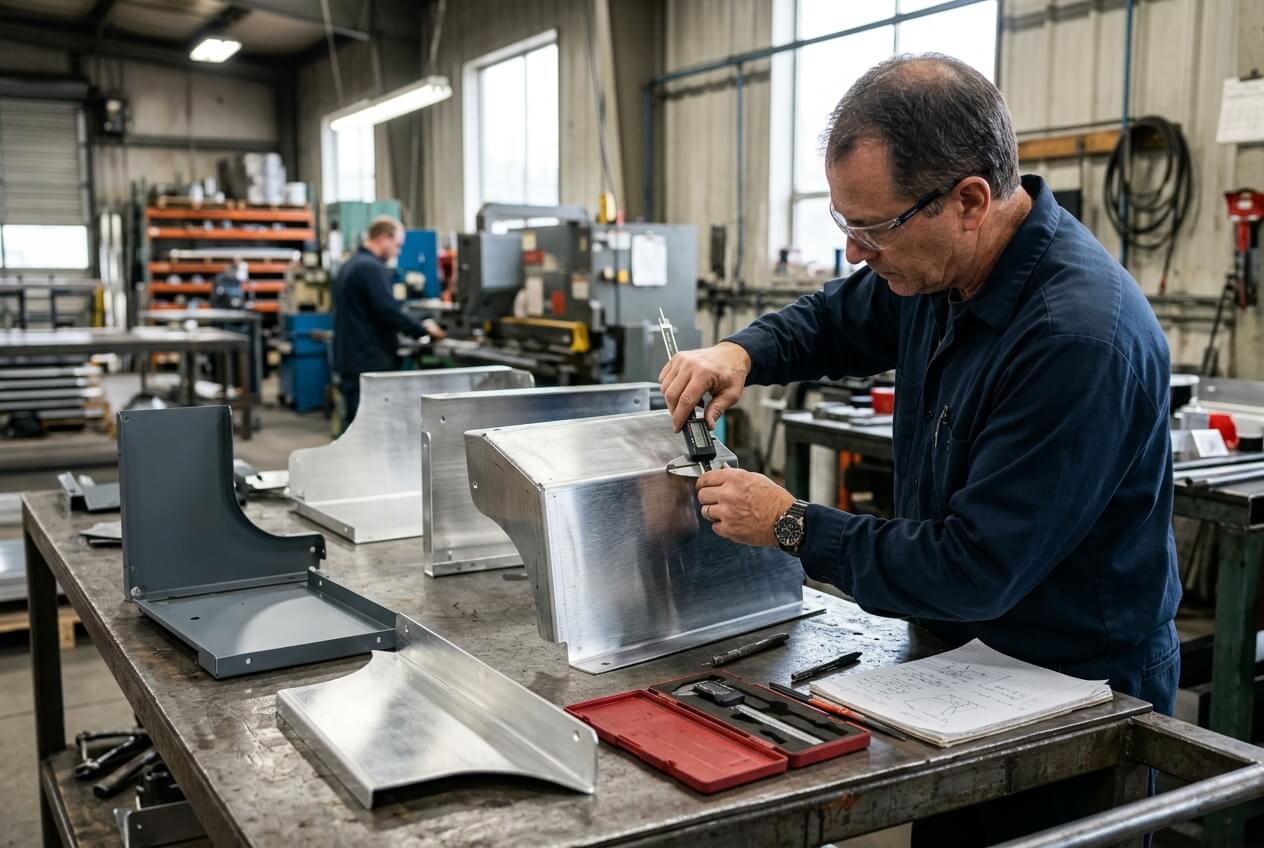
Two buyers can send the same drawing for a non ferrous material enclosure and still receive two very different prices. One supplier assumes a standard industrial finish and normal handling. Another assumes protected cosmetic faces, masking, extra inspection, and a slower route through coating or assembly. The part may look identical on paper. The risk appears later as a scratch complaint, a coating dispute, or a batch delay.
That is why the main procurement risk is not the alloy itself. It is the missing definition of the visible face and the acceptance standard that follows it. Once that face stays vague, quote comparison becomes unreliable. One factory prices a simple bent part. Another prices a cosmetic-critical component. Buyers think they are comparing suppliers. In reality, they are comparing assumptions.
This matters across aluminum, copper, brass, titanium, and zinc-based sheet metal parts. These materials can bend, weld, and finish well, but they also show handling marks quickly. A small mark that a buyer would ignore on a hidden bracket can become a reject on an exposed door or trim panel. When the visible surface is undefined, the whole project starts drifting before the first bend.
Where the Quote Starts to Drift: The Visible Face Is Undefined
The first problem is rarely the price itself. It is the drawing language behind the price. Many RFQs name the material, size, and finish color, then stop. That looks complete, but it leaves the supplier to guess which side matters most. A control cabinet door may need a near-perfect front face. The back side may tolerate tool marks. A display rack may hide one flange, but the front edge stays in view every day.
When the buyer does not mark the cosmetic face, the supplier has to set the assumption alone. Some shops will quote to a conservative finish standard. Others will quote a faster route and expect the buyer to accept minor marks. The result is a spread in price that looks like market variation. In fact, it is scope variation. The quote only becomes meaningful after the visible surface is defined.
Why the same drawing produces different quotes
A laser-cut aluminum panel can leave the shop with clean edges and still fail if the visible side shows clamp marks. A brushed brass trim piece can meet size and hole location requirements, yet still lose approval because the grain direction changed after rework. A welded frame can fit perfectly and still trigger a complaint if the seam faces the customer. These failures start with ambiguity, not poor fabrication.
Buyers should mark the cosmetic face directly on the drawing and add a short note for any hidden surfaces. If a front face must stay free of clamp marks, say so. If an inner flange can show light tooling marks, say that too. A photo with arrows often removes more confusion than a long sentence. That small step protects the RFQ from quiet assumption changes that later turn into disputes.
One practical example is a brushed aluminum enclosure door for an industrial control cabinet. The buyer asks for an identical appearance across a 200-piece batch, but the drawing never identifies the visible face. The supplier quotes standard handling. During production, the door gets oriented differently on the rack, and the front face picks up marks near the bend line. The door still fits. The buyer still rejects it.
Why Surface Treatment Decisions Change Cost and Reject Risk
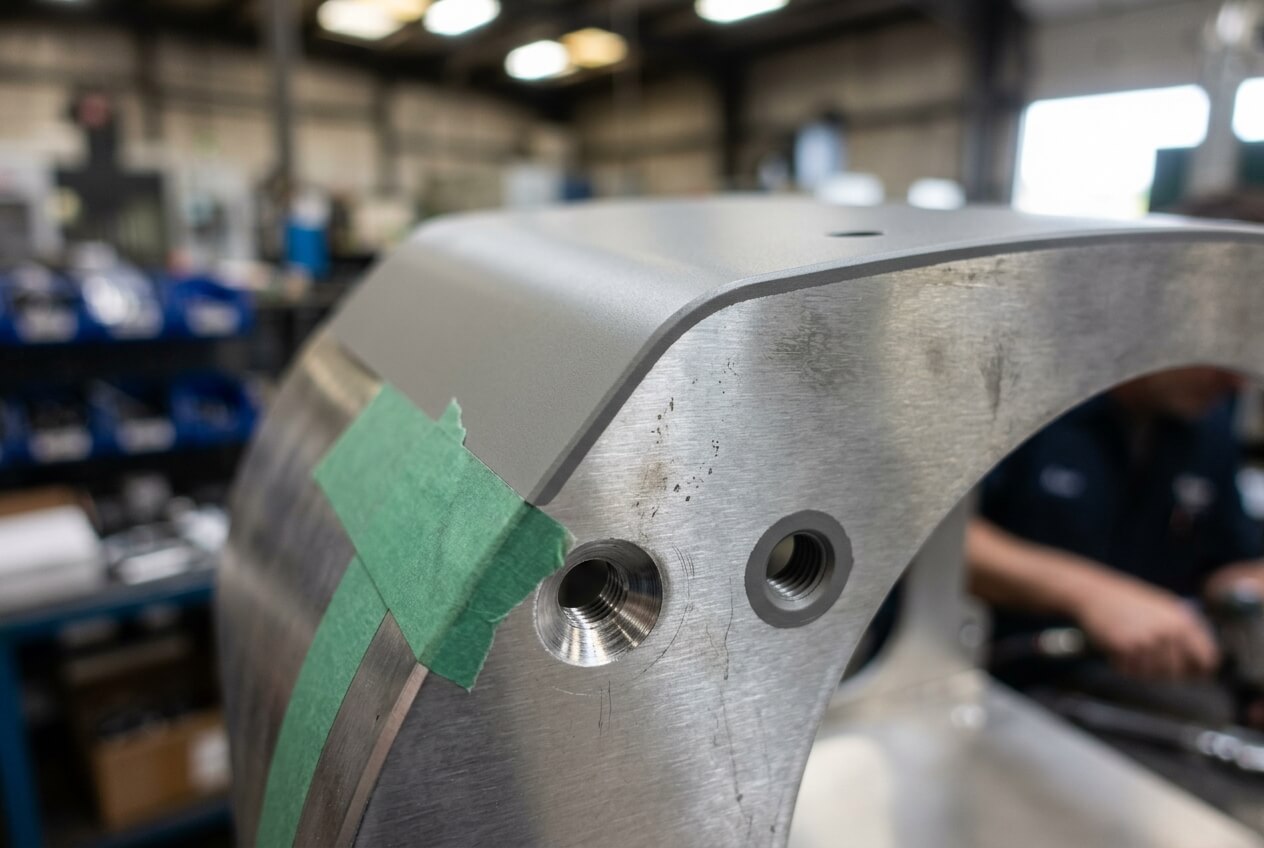
Once the visible face is clear, surface treatment becomes the next source of hidden risk. On non ferrous material parts, finish is not a separate decoration step. It affects the entire route. Masking, pretreatment, polishing, brushing, grinding, and coating all interact with the base material and the geometry. A soft aluminum panel needs different protection than a rigid bracket. Copper and brass can also react differently to fingerprints, oxidation, and post-process handling.
That is why a low quote can hide real risk. One supplier may assume a simple powder coat over a flat part. Another may include full pretreatment, rack planning, masking around threads, post-weld cleanup, and inspection of the cosmetic face. The second quote may look higher, but it may be the only one that actually covers the finish burden. Buyers often call this a price gap. It is usually a scope gap.
Finish rules should follow the part, not the supplier’s default route
Buyers should define which surfaces get coated, which must stay bare, and which need polishing before coating. The RFQ should also show whether edges, corners, holes, grounding points, or threaded locations need masking. If those details stay vague, the supplier may choose a route that fits production efficiency but not buyer acceptance. That mismatch creates expensive rework later.
This issue appears often on sheet metal parts with mixed visibility. A rear bracket may live inside a frame, but one tab remains exposed after assembly. A powder-coated frame may look acceptable in the booth, then show edge buildup where two parts meet during assembly. A clear-coated copper cover may meet color expectations at shipment, then arrive with fingerprints or oxidation because the packaging plan did not protect the finish. The failure starts in the RFQ, but the cost shows up after packing or installation.
For buyers, this means finish language should stay specific. Do not write only “black powder coat.” Add gloss, texture, edge coverage, masking zones, and any acceptable surface blemishes. If a cosmetic finish matters, ask the supplier to quote that standard explicitly. If the part is a prototype for a larger run, say whether the same finish route must hold in batch production. If not, the sample may overstate what the line can really repeat.
Another example is a copper display trim for a retail fixture. The prototype looked excellent because the shop handled it one piece at a time. The batch failed because the parts nested too tightly in packaging and rubbed during transit. The finish problem was not only a coating issue. It was also a handling issue. A clear RFQ would have forced the buyer and supplier to agree on protection earlier.
Why Prototype Approval Can Hide Batch-Scale Finish Problems
Many buyers approve a prototype and assume the batch will match it. That assumption is dangerous on cosmetic non ferrous material parts. A sample often receives more manual attention than production parts. Operators may spend extra time on edge blending, hand polishing, or careful rack placement. The first article can therefore look better than the later run, even when the process sheet appears unchanged.
Prototype approval confirms intent. It does not always prove repeatability. That gap becomes serious when the project moves from one sample to fifty, or from fifty to five hundred. The larger batch may use different loading density, different rack contact, different oven exposure, or different assembly timing. Small changes can alter gloss, grain, edge coverage, or scratch visibility. The buyer then discovers that the approved sample was not a true production reference.
How to freeze the standard before batch production
Buyers should ask a direct question: is the sample a geometry reference, a visual reference, or a locked production standard? If the answer is not clear, the batch can drift. The RFQ should also say whether the same sheet lot, masking method, coating line, or polishing sequence must carry through production. Without that language, the supplier may treat the sample as a one-off approval.
This matters even more on welded assemblies. Heat changes the surface near the seam. It can soften edges, create color variation, or leave visible transitions after grinding. A welded aluminum frame may pass dimensional checks but still fail visually when the batch uses a different weld sequence. A brushed brass panel may look uniform in a small sample and then show mismatch in quantity because the grain direction changes after rework. The buyer needs batch rules, not only sample approval.
In one project, a buyer approved a powder-coated enclosure prototype with a smooth corner blend. The batch then arrived with more visible transition lines because the operator did not replicate the same hand-finishing time. The part still functioned. The customer still complained. That is the cost of assuming prototype approval covers production reality.

How Assembly and Packaging Turn a Good Part Into a Rejection
Even when fabrication and finish look correct, the part can fail after assembly or during packing. This is common on enclosures, brackets, frames, and welded assemblies. A door may scrape a hinge during installation. A frame may touch another part in a shipping carton. A panel may get marked when protective film comes off too early. The supplier shipped a good part, but the buyer received a damaged one.
Non ferrous material parts often face stricter cosmetic expectations because they are chosen for visible applications, lighter weight, or a cleaner appearance. That makes handling risk more expensive. A bent aluminum panel can meet all dimensions and still be rejected for a dent near the bend radius. A welded frame can assemble correctly and still trigger a complaint because the customer can see a grind mark after final installation. Assembly fit and surface quality are linked more closely than many RFQs admit.
What should be clarified before the first build
Buyers should state who handles protective film, when the film comes off, and whether final inspection happens before or after assembly. If hinges, inserts, studs, or fasteners can mark the surface, the RFQ should say so. If the supplier must ship parts nested for freight savings, that packaging method needs approval because nesting can create rub marks. This is not a minor logistics point. It directly affects rejection risk and replacement cost.
A useful project example is a welded rack frame for retail display. The frame fit the store layout perfectly, but the lower shelf became visible after installation. The buyer had only approved the loose frame, not the installed view. The hidden face had suddenly become the customer-facing face. The mistake was not in the weld. It was in the acceptance plan. If the assembly sequence changes visibility, the RFQ must say so before pricing.
Another example is a sheet metal bracket set for an equipment enclosure. The brackets were coated correctly, but the final assembly process left contact marks at the mating points. The marks were small, yet the customer treated them as defects. A clearer handoff between fabrication and assembly would have reduced that risk. Buyers should therefore ask the supplier how the part will be handled after coating, not only during fabrication.
The RFQ Pack That Keeps Quotes Comparable
The best way to control this risk is to freeze the acceptance basis before comparing quotes. A strong RFQ pack does more than name the material and quantity. It shows the visible face, the finish target, the masking zones, the assembly context, and the sample rule. That lets each supplier price the same scope. Without it, the buyer gets a false choice between cheap and expensive.
A practical RFQ for non ferrous material sheet metal parts should include the drawing, material specification, quantities, tolerances, finish expectations, and any photos or sample panels that define acceptable appearance. It should also say whether the part will be powder coated, brushed, polished, clear coated, or left natural. If welds are visible, say whether they must be ground smooth or only cleaned. If the part will assemble into a cabinet, frame, or enclosure, show the installed orientation so the supplier knows which surfaces will remain visible.
For projects that need manufacturing review, a partner such as Yishang can check whether the drawing matches the intended finish route and assembly sequence before quoting. That review is most useful when the buyer wants the production scope fixed early, not when a quote has already turned into a dispute. The goal is simple: make the drawing describe the acceptance standard clearly enough that the quote can be compared on real scope, not on guesswork.
If you are sourcing a non ferrous material enclosure, bracket, frame, or welded assembly, send the drawings, material requirements, quantities, tolerances, and finish expectations together. Add photos of the visible face, masking notes, and any prototype comments before you compare prices. That one RFQ discipline often prevents the lowest quote from becoming the most expensive part of the project.
Frequently Asked Questions
Why do non ferrous material quotes vary so much for the same part?
Because suppliers often price different assumptions. One quote may include cosmetic protection, masking, and extra inspection, while another may assume standard handling. The drawing can look the same, but the scope is not.
What should buyers mark to avoid visible-face disputes?
Mark the cosmetic face, exposed edges, weld visibility, and any area that the customer will see after assembly. A photo with arrows can reduce confusion faster than a written note alone.
How do finish details change lead time and cost?
Masking, polishing, rack planning, and extra inspection all add steps. If the part needs controlled appearance on aluminum, brass, or copper, the supplier may need a slower route and more handling, which affects both price and schedule.
Why can a prototype pass and a batch fail?
A prototype often gets more manual attention than production parts. The batch may use different rack positions, different assembly timing, or different handling. Those changes can alter gloss, grain, scratches, or coating coverage.
What RFQ details should accompany sheet metal parts with assembly fit requirements?
Send the drawing, quantities, tolerances, material grade, finish expectations, masking zones, and the installed orientation. If the part will join an enclosure or frame, show the parts in assembly so the supplier can see which faces stay visible.