
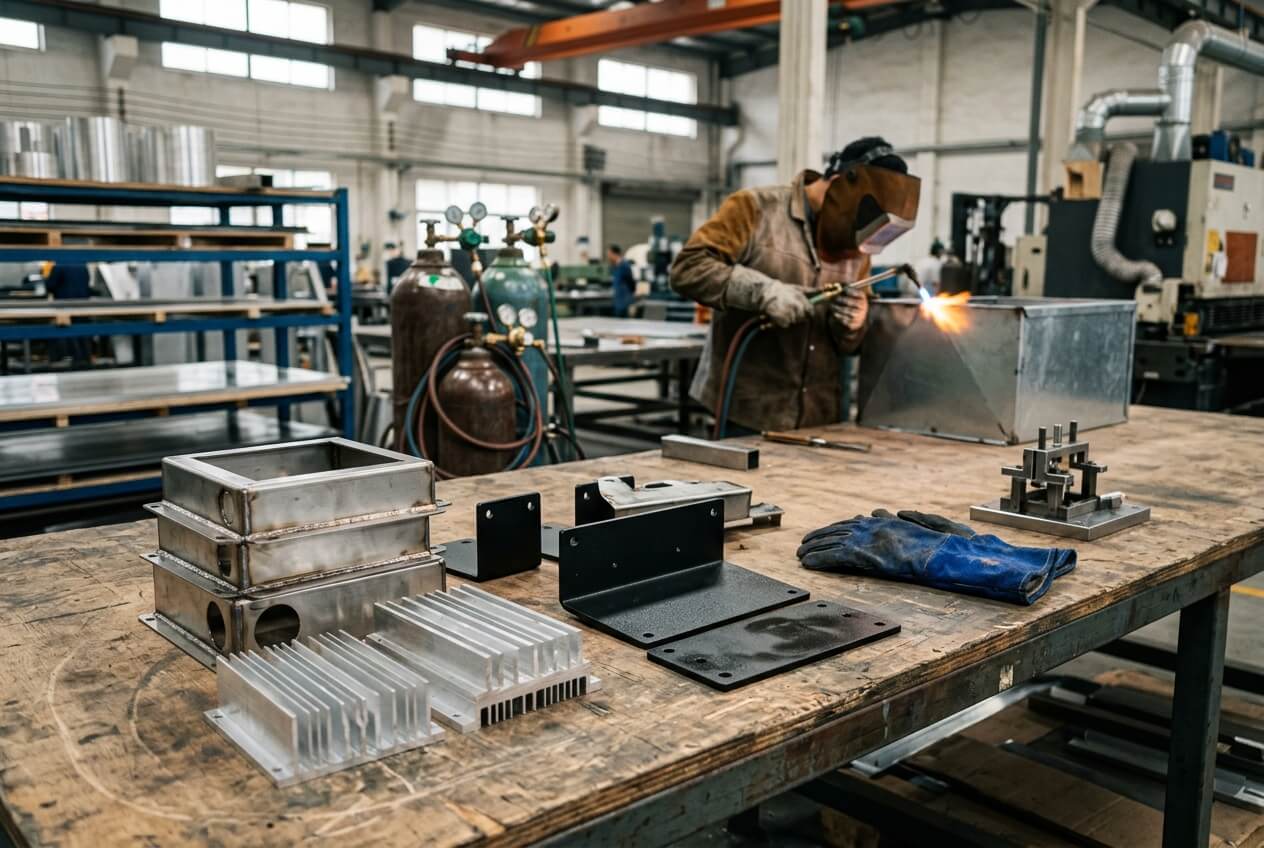
A buyer may send the same drawings for a powder coated enclosure, welded brackets, and a small support frame to three suppliers. One supplier prices the work around welding with an oxy acetylene torch for simple joints and touch-up work. Another assumes MIG welding with fixtures. A third recommends TIG for visible stainless corners and quotes extra weld dressing before finishing.
The buyer sees three prices. In reality, the RFQ has created three different manufacturing plans. The lowest quote may not include the controls needed for flat panels, aligned holes, cosmetic faces, or repeatable batch production.
This article focuses on one procurement risk: unclear RFQ assumptions about welding method. That single gap can distort price comparison, hide rework cost, and create disputes after parts reach assembly. Oxy acetylene welding can suit repair work, simple steel fabrication, and some low-volume joints. It does not automatically suit precision sheet metal parts, metal enclosures, brackets, frames, or welded assemblies that must fit and finish consistently.
Buyers do not need to specify every production step. They do need to make critical expectations visible before suppliers quote. That means linking the welding process to material thickness, tolerance after welding, finish expectations, prototype approval, batch consistency, and final assembly fit.
RFQ Ambiguity Makes Welding Quotes Look Comparable When They Are Not
The risk often starts with a drawing that shows a welded joint but does not state the welding method, visible surfaces, inspection points, or fit-up requirements. A supplier may read the drawing as a basic fabrication job. Another may treat it as a precision sheet metal assembly with cosmetic and dimensional controls.
Both suppliers may quote honestly. They still quote different scopes.
Welding with an oxy acetylene torch uses a flame as the heat source. That matters for sheet metal procurement because heat input affects distortion, weld cleanup, operator dependency, and preparation before coating or polishing. On thicker simple steel sections, these risks may stay manageable. On thin panels, narrow flanges, doors, and visible cabinet faces, they can quickly move from a workshop issue to a purchasing problem.
The quote gap usually hides missing controls
A low quote may exclude fixtures, interim inspection, straightening, post-weld grinding, or finish preparation. The supplier may assume normal fabrication variation. The buyer may assume the parts will match the visual and fit expectations of a previous sample.
That mismatch creates a consequence chain. The RFQ leaves the welding route open. The supplier selects a lower-control process. Production creates distortion or inconsistent hole alignment. Finishing makes the defect more visible. Final assembly then absorbs the cost through rework, sorting, or delayed installation.
Consider a laser cut and bent control enclosure with welded internal tabs. If the RFQ does not mark the outside panel as cosmetic, a supplier may weld tabs with too much heat. The outer face then shows slight waves after powder coating. The coating did not cause the problem. The RFQ failed to separate hidden weld strength from visible surface risk.
Buyers should ask each supplier to state the planned welding process and included controls. The answer may mention oxy acetylene, MIG, TIG, spot welding, stud welding, or a mixed route. The specific process matters less than the supplier’s explanation of how it protects the buyer’s critical dimensions and finish expectations.
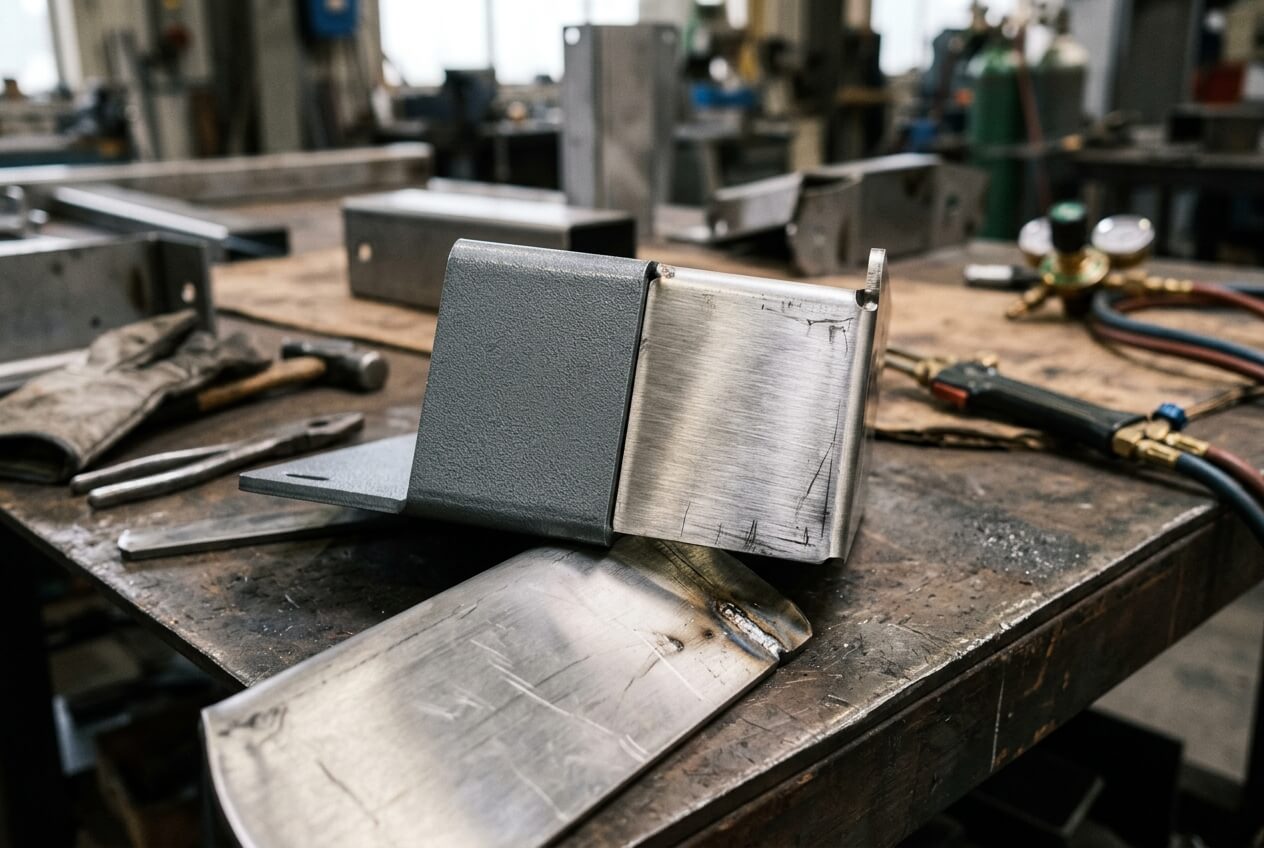
Thin Panels and Welded Brackets Turn Process Assumptions Into Fit Risk
Sheet metal parts rarely fail procurement review because one dimension looks difficult. They fail because several small assumptions interact. Material thickness, bend sequence, weld location, hole position, and finish buildup all affect final fit. The welding method can pull these variables in the wrong direction.
A formed bracket may look simple on a drawing. It may include two bends, four mounting holes, and a welded reinforcement rib. If the supplier welds without controlling sequence and heat, the bracket can twist. The individual hole diameters may remain correct, but the hole pattern may no longer match the mating part.
The buyer then faces a familiar dispute. The supplier says the bracket meets general tolerance. The assembly team says the part does not install without force. Both statements may contain some truth if the RFQ never defined post-weld hole position or mating fit.
Assembly dimensions need post-weld meaning
Buyers often dimension parts before welding because the CAD model looks clean. Production does not stop there. Welds can move plates, bend flanges, and change squareness. Inspection should therefore focus on dimensions that matter after welding and finishing.
For a machine guard frame, outside dimensions alone may not protect installation. The mounting plate hole centers, diagonal tolerance, and base flatness may matter more. If heat pulls the plates inward, installers may enlarge holes or clamp the frame into position. That rework consumes labor and can damage coating.
For a cabinet door with welded hinge brackets, a small shift can change door gaps. The buyer may suspect hinge quality or powder thickness. The real cause may be weld distortion combined with missing fixture requirements.
Strong RFQs identify the dimensions that cannot drift after welding. Mark hole centers, slot positions, door gaps, mating faces, frame squareness, and flatness where they affect assembly. If a dimension matters only before welding, say so. If it matters after coating, say that too.
Yishang can review drawings at this stage to check whether the proposed joining route matches the part’s thickness, bend geometry, and fit-up points. That review helps buyers compare quotes by production risk, not only by unit price.
Finish Expectations Expose Welding Assumptions Too Late
Finish disputes often look like coating or polishing problems. Many begin earlier, at the weld. Powder coating, brushed stainless finishing, and visible painted surfaces reveal distortion, grind marks, pinholes, spatter, and uneven transitions. A vague RFQ can push those costs outside the quote.
A buyer may write “black powder coated steel enclosure” and expect a clean surface. The supplier may quote welding and coating without allowing for cosmetic weld dressing on visible corners. Once the enclosure reaches finishing, every wave and heavy grind mark becomes easier to see under light.
Large flat panels create the highest risk. A small heat mark near an internal tab can become a visible ripple after coating. Textured powder may hide minor scratches, but it does not hide panel movement. Gloss finishes usually make the issue worse.
Cosmetic zones should guide welding decisions
RFQs should separate cosmetic, hidden, and functional weld zones. A hidden structural tab inside a housing may allow a different weld appearance than an exposed stainless corner. A bottom frame weld may accept heavier dressing. A front-facing cover may need tighter control and a different process.
Visible stainless parts add another layer. Buyers should clarify discoloration limits, polishing direction, grain consistency, and acceptable blending around corners. Welding with an oxy acetylene torch may not suit a visible stainless housing when cleanup and color control drive acceptance.
Finish also affects dimensions. Powder coating can build up around slots, threaded holes, hinge areas, and mating faces. If weld distortion has already moved a bracket close to its tolerance limit, coating buildup can push the assembly over the edge.
Practical RFQs do not stop at color codes. They mark cosmetic faces, masking areas, threaded holes, weld dressing expectations, and inspection timing. They also ask whether the supplier includes cleaning and preparation needed for the specified finish.
A quote that includes weld cleanup, masking, thread protection, and post-finish inspection may look higher. It may actually describe the work required to deliver acceptable sheet metal parts. A cheaper quote may only shift that cost into rework, returns, or field correction.
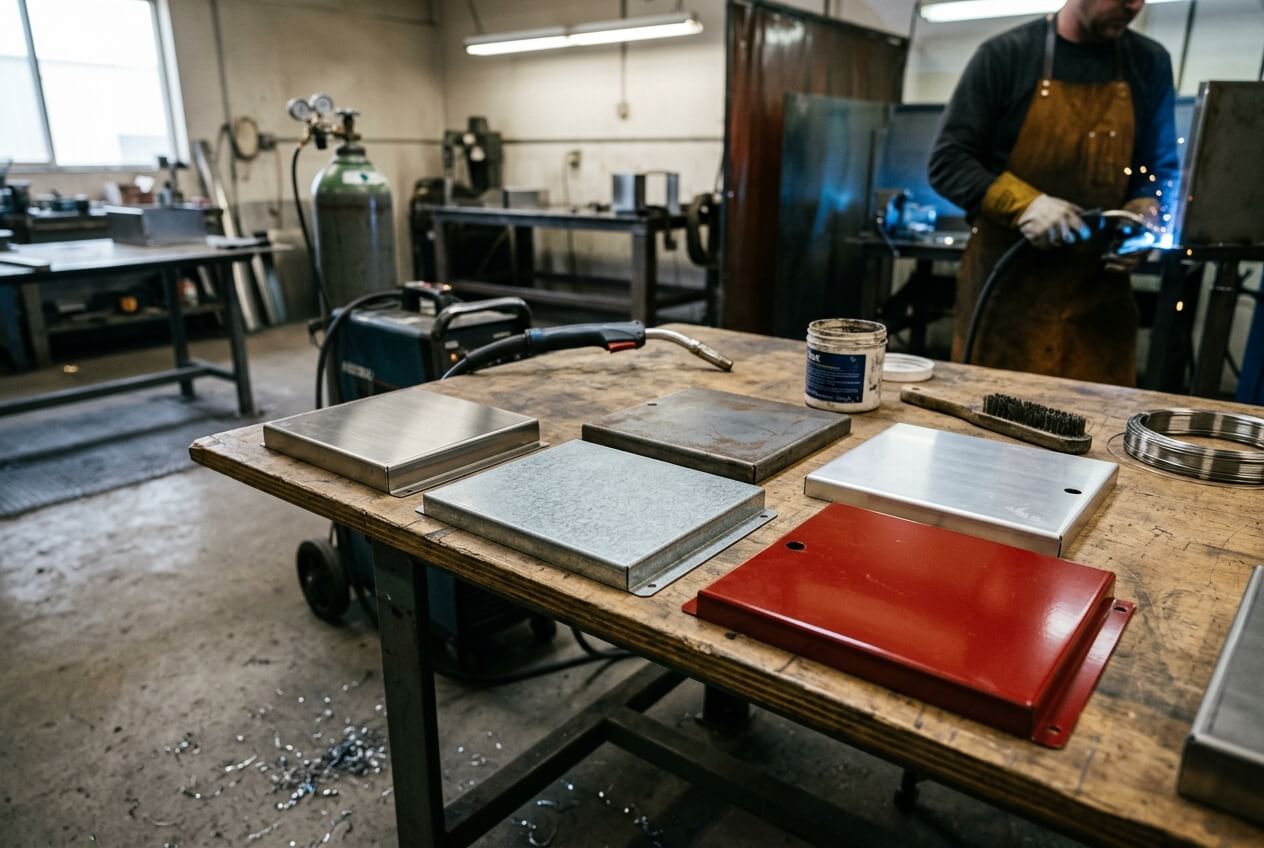
Prototype Approval Can Hide a Welding Route That Will Not Repeat
Prototype approval gives buyers confidence, but it can also hide process weakness. A single sample can be straightened, refitted, ground, or polished by hand. Batch production needs a stable method that repeats without excessive correction.
This risk becomes serious when the prototype uses one welding method and production quietly changes to another. It also appears when the prototype uses welding with an oxy acetylene torch for convenience, while the batch needs fixtures, defined sequence, and controlled inspection.
The approved sample then becomes a weak reference. It proves that one part can look right. It does not prove that 200 parts will hold the same squareness, hole alignment, surface quality, or door gap.
Sample approval should record what must repeat
Buyers should document more than visual acceptance. Ask the supplier to record the welding method, weld locations, fixture approach, inspection points, and finish preparation used for the sample. If manual correction played a major role, clarify whether that correction remains included in batch pricing.
Take a retail display rack as an example. The prototype may arrive level because the supplier hand-adjusted the frame before coating. In batch production, the weld sequence changes to save time. Some racks then rock on the floor, and shelves no longer sit evenly. The drawing may show general dimensions, but it may not define diagonal tolerance or base flatness.
A second example involves a powder coated electronics cabinet. The prototype door looks acceptable after one technician adjusts the hinge brackets. During batch production, the same adjustment takes too long. The batch ships with inconsistent gaps, and the buyer discovers that the approved sample never defined acceptable variation.
Before scaling, buyers should confirm whether the production batch will use the same welding process, fixture method, and inspection plan as the prototype. If the supplier proposes a change, evaluate its effect on cost, lead time, appearance, and assembly fit before approving the batch.
Yishang can support prototype-to-batch review by checking whether sample corrections need to become formal production controls. That step helps buyers avoid approving a one-off result that manufacturing cannot repeat economically.
What Buyers Should Clarify Before Comparing Welding-Based Quotes
A quote that says “welded and powder coated” does not provide enough information for precision custom sheet metal fabrication. It may work for a rough utility item. It does not work for enclosures, brackets, frames, cabinets, or welded assemblies that must fit into another product.
Buyers should make the welding assumption visible before they compare prices. Ask whether oxy acetylene welding is allowed, limited to hidden joints, or unsuitable for the part. Ask when the supplier would use MIG, TIG, spot welding, stud welding, fasteners, or redesigned tabs instead.
The goal is not to ban one process. The goal is to prevent hidden scope differences. A supplier should explain how the chosen route controls heat, distortion, weld appearance, critical dimensions, and finish preparation.
Useful RFQ details include drawings, material grade, sheet thickness, quantity breaks, tolerance notes, finish expectations, visible surfaces, mating part information, packaging needs, and any previous sample history. Photos of the assembly can help suppliers understand where fit matters. Clear quantity breaks also help them decide whether simple manual welding or fixture-based production makes more sense.
Cost and lead time depend on these choices. Fixtures, weld dressing, inspection, masking, and prototype validation add time and cost. They may still reduce total project risk. Rework after coating usually costs more than prevention before welding.
Supplier communication should focus on assumptions, not promises. Ask each supplier to list excluded work, process substitutions, inspection stages, and dimensions checked after welding and finishing. If one quote is much lower, ask what controls it does not include.
If you are preparing an RFQ for custom sheet metal parts, send Yishang your drawings, material requirements, quantities, tolerances, finish expectations, visible surface notes, assembly context, and prototype history through https://zsyishang.com/. A clear review can show whether the proposed welding route supports the part’s fit, finish, and batch consistency before you approve the quote.
Frequently Asked Questions
Is welding with an oxy acetylene torch suitable for precision sheet metal parts?
It depends on material thickness, joint location, appearance requirements, and tolerance after welding. It may suit simple hidden joints or repair work, but it can create distortion and cleanup risk on thin panels, visible enclosures, and tight welded assemblies.
Why can two suppliers quote very different prices for the same welded part?
They may assume different welding methods, fixture controls, inspection points, and finish preparation. One quote may include MIG or TIG welding, post-weld dressing, and post-coating checks, while another may price a simpler route with fewer controls.
What should an RFQ say about welded brackets that must align with mating parts?
The RFQ should mark hole centers, mating faces, flatness, squareness, and dimensions required after welding and finishing. Include mating drawings or assembly photos when fit matters more than single-part dimensions.
How does welding affect powder coated enclosures?
Welding can create heat distortion, grind marks, spatter, or uneven transitions that powder coating makes more visible. Buyers should mark cosmetic surfaces, hidden weld zones, masking areas, and inspection stages before accepting a quote.
Why does prototype approval not guarantee batch consistency?
A prototype may receive manual straightening, grinding, fitting, or polishing that batch production cannot repeat at the same cost. Buyers should document the welding method, fixture plan, weld sequence, inspection points, and accepted variation before scaling.
What should buyers send for a clearer sheet metal fabrication quote?
Send drawings, material grade and thickness, quantities, tolerances, finish requirements, visible surface notes, critical assembly dimensions, prototype history, and photos of mating parts. These details help suppliers quote the real manufacturing route.