
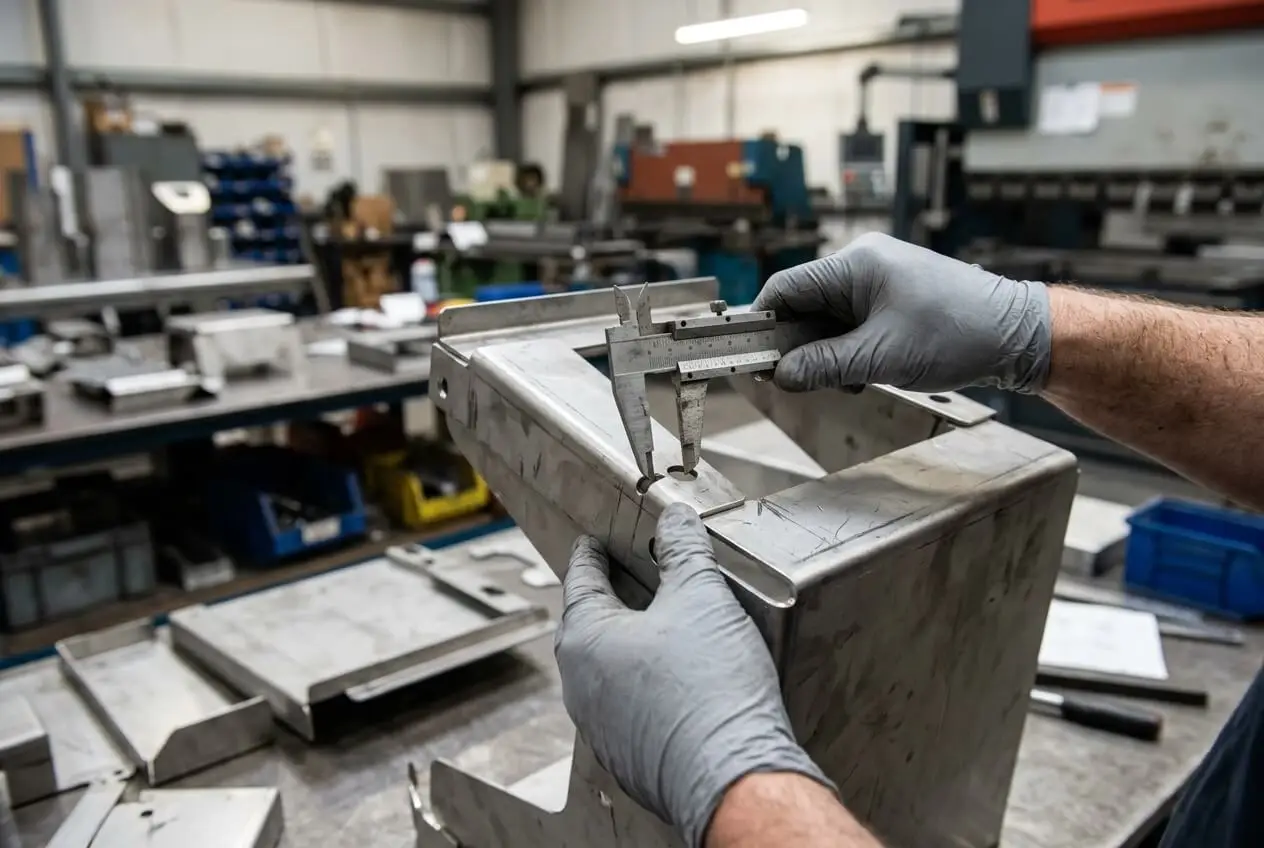
An OEM buyer asks three suppliers to quote a stainless steel enclosure with a black finish. Each supplier sees the same drawing, material grade, quantity, and target delivery date. The unit prices look close enough for procurement to focus on cost.
The risk appears later. The prototype looks acceptable, but the first batch creates assembly problems. Mounting holes feel tight. A hinge line binds after coating. A welded corner shows small pinholes. Several doors close with uneven gaps. The purchase order said powder coat stainless steel, yet nobody defined which dimensions and surfaces had to pass inspection after coating.
This article focuses on one procurement risk: RFQ ambiguity around the final coated condition. Powder coating stainless steel can work well for enclosures, brackets, cabinets, frames, and welded assemblies. Problems start when the RFQ treats coating as a color request instead of a process that changes fit, appearance, inspection scope, cost, and lead time.
Buyers do not need a longer generic specification for every project. They need clearer decision points before suppliers quote. The drawing should show which features must stay functional after coating, which surfaces carry cosmetic risk, and which coating assumptions the supplier must include in price and schedule.
RFQ ambiguity makes suppliers quote different coated parts, not the same part
A short finish note often creates a false price comparison. One quotation may include degreasing, surface roughening, masking, powder coating, curing, film thickness checks, and coated-part assembly inspection. Another may include basic cleaning, coating, and visual review only. Both quotations may say powder coated stainless steel, but they price different risk levels.
Stainless steel adds another layer of assumption. Its passive surface can reduce coating adhesion if cleaning and surface preparation do not match the application. An indoor display rack may only need a controlled cosmetic coating. An outdoor electrical cabinet may need stronger edge coverage, better pretreatment, UV-resistant powder, and clearer corrosion expectations.
If the RFQ only states black powder coat, suppliers must guess the service environment. That guess changes cost. It also changes lead time because masking, testing, primer, or special handling may require extra routing before finishing.
Where the quote gap usually starts
The gap often starts in the drawing note. A buyer may specify 304 stainless steel, 1.5 mm sheet, RAL 9005 black, and a quantity of 500 pieces. That information helps, but it does not tell the supplier whether coating thickness matters near screw holes, whether threads must stay clean, or whether the front face must match an approved sample.
Supplier communication should remove these assumptions before price comparison. Ask each supplier to confirm the coating process included in the quote, the inspection stage, and any exclusions. A low unit price loses value if it excludes masking, coated assembly checks, or surface preparation required for the part to pass final use.
Yishang can review drawings and RFQ notes at this stage to identify features that need coated-condition control. The aim is not to add unnecessary steps. The aim is to stop procurement from comparing a basic finish quote with a quotation that includes the real acceptance risks.
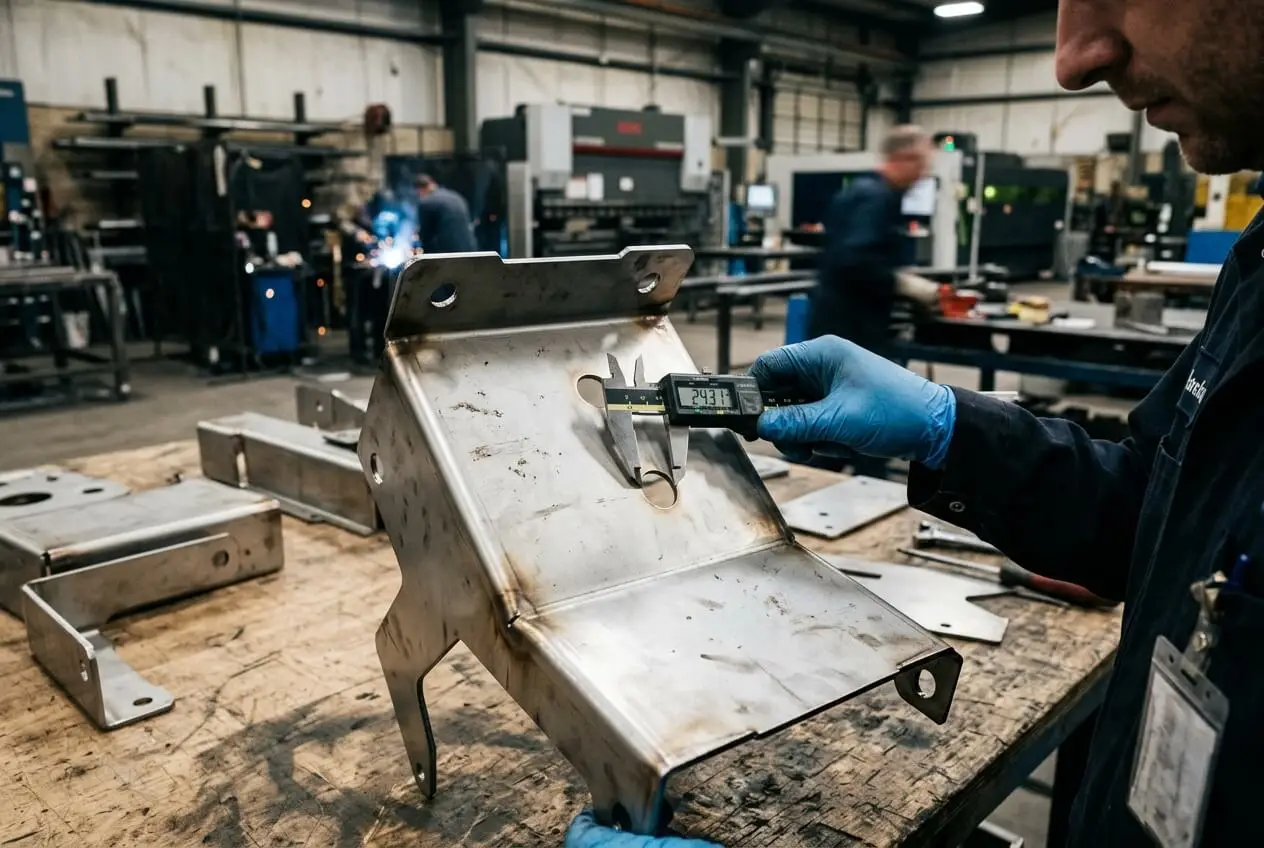
Coating thickness turns raw-part tolerances into final assembly risk
Many powder coat stainless steel failures do not look like coating failures at first. The color may match. The gloss may look consistent. The problem appears when the buyer tries to assemble the part.
Powder coating adds film thickness to exposed surfaces. Build-up varies by part geometry, hanging method, powder behavior, electrostatic attraction, edge effects, and recoat conditions. A flat panel may tolerate the added film. A latch slot, hinge pocket, PEM fastener area, or sliding tab may not.
The RFQ must state whether critical dimensions apply before coating, after coating, or both. Without that instruction, a supplier may inspect the raw fabricated part and send it to finishing. The coated part then fails at the buyer’s assembly line, even though the raw sheet metal met the drawing.
Project example: stainless wall enclosure with door gap drift
Consider a wall-mounted stainless enclosure for control equipment. The body uses laser cut panels, formed flanges, welded corners, and a hinged door. The drawing controls the outer dimensions and raw door opening. It does not state the required final gap after coating.
The prototype closes after minor hand adjustment. During batch production, coating builds near the hinge side and latch cutout. Some doors rub the frame. Others need extra force to close. The buyer now faces sorting, rework, delayed shipment, and an argument about whether the supplier fabricated the part incorrectly.
The chain started earlier. The RFQ did not identify door gap, hinge movement, latch engagement, and gasket compression as coated-condition inspection points. Procurement compared unit prices before the supplier knew those features needed protection or extra clearance.
Clarify fit before the supplier prices the job
Buyers should mark functional features directly on the drawing. Common examples include mounting holes, slots, hinge lines, latch areas, welded studs, threaded inserts, grounding points, cabinet doors, gasket faces, rails, and tabs. If a feature must remain uncoated, show a masking zone. If it can receive coating, define the final accepted clearance.
These choices affect cost and lead time. Masking threads, reaming holes after coating, protecting grounding points, or checking door movement adds labor. Suppliers can plan that work during quotation. They cannot price it fairly after the batch fails inspection.
Finish approval fails when cosmetic surfaces and hidden surfaces use the same rule
RFQ ambiguity also creates cosmetic disputes. Buyers often approve one powder coated stainless steel sample, then expect every production surface to match that sample. Suppliers may interpret the requirement differently unless the drawing ranks visible faces and hidden faces.
A front panel on a retail kiosk, medical device cabinet, or customer-facing enclosure carries higher cosmetic risk than an internal mounting flange. It may need tighter control for color, gloss, texture, orange peel, scratches, pinholes, and contamination. A rear bracket may only need coverage, adhesion, and no loose coating.
When every surface receives the same undefined expectation, two problems follow. First, the supplier may underquote because it assumes normal industrial finish acceptance. Second, the buyer may reject acceptable hidden-surface marks because no acceptance standard separated functional coverage from visible appearance.
Project example: display frame with one visible face
A buyer orders a stainless display frame made from welded tube and laser cut mounting plates. The front face sits in a showroom. The rear mounting plates sit against a wall and remain hidden after installation. The RFQ says matte black powder coat, but it does not identify A-surfaces.
The batch arrives with clean front faces on most parts. A few rear plates show light texture variation and small rack marks. The buyer’s quality team rejects the shipment because the finish does not match the golden sample on every surface. The supplier argues that hidden rack-contact marks meet normal coating practice.
This conflict did not start at packing. It started when the RFQ failed to rank cosmetic surfaces. A simple A, B, and C surface note would have protected the showroom face while allowing realistic acceptance on hidden areas.
Finish expectations should also mention the reference method. State the color code, gloss range, texture, inspection distance, lighting condition, and approved sample status. If the buyer needs batch parts compared to a golden sample, say how many parts should be checked and which faces matter most.
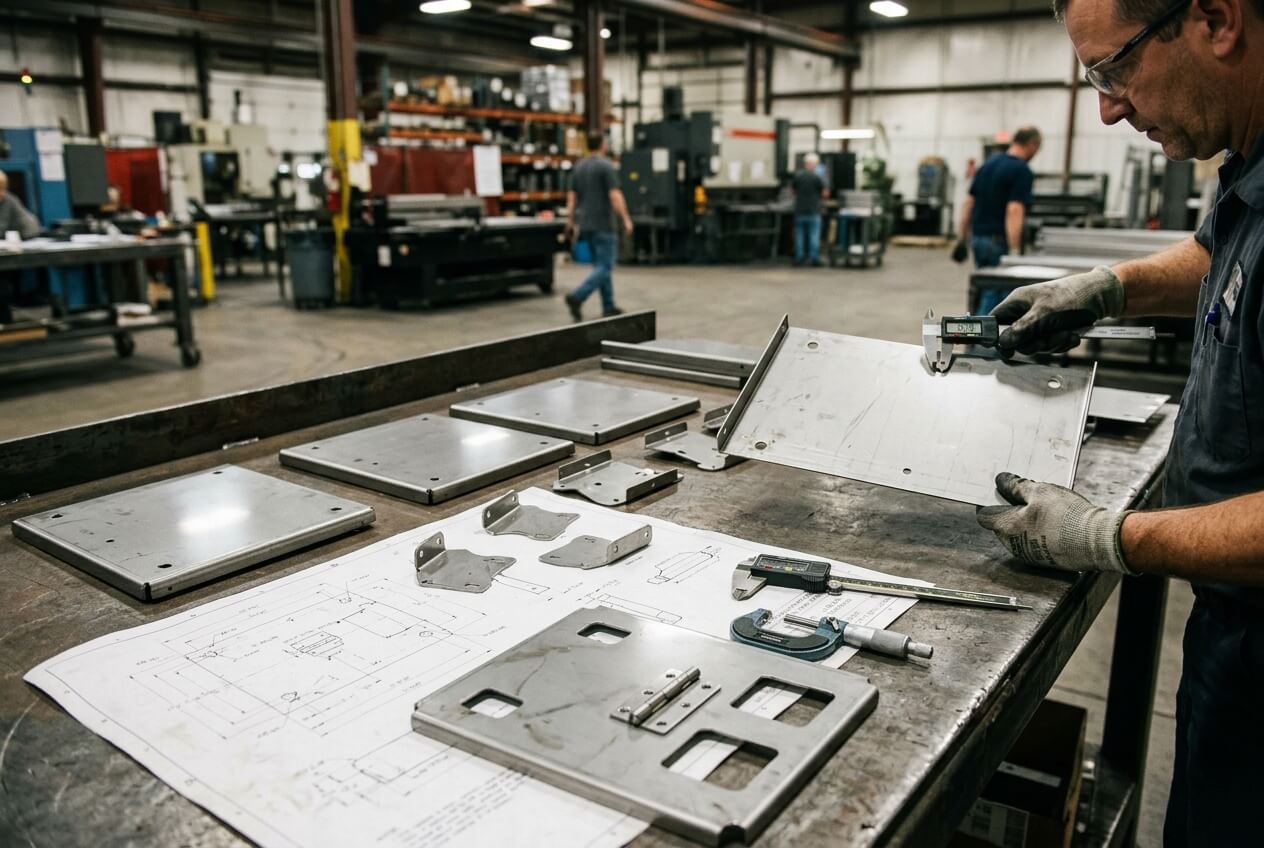
Prototype approval does not protect batch consistency without a repeated inspection path
A prototype can hide process risk. A sample part may receive extra sanding, generous rack spacing, slower handling, and more manual attention than production pieces. Procurement may approve the sample, but production later follows a different rhythm.
Batch consistency depends on a repeatable path. The RFQ should define which checks continue after sample approval. Otherwise, a supplier may treat the prototype as a visual reference only. The buyer may expect it to control coating thickness, assembly fit, weld appearance, and color consistency across the order.
Fabrication variation can also become more visible after powder coating. Slight bend-angle differences may change door gaps. Weld discoloration can show through if grinding and surface preparation remain unclear. Long panels may reveal waviness when a glossy finish increases reflection.
Use first article inspection after coating, not only before coating
For enclosures, cabinets, and welded assemblies, first article inspection should include the coated condition. The supplier should check critical hole sizes, hinge movement, door closure, mounting alignment, film thickness at useful locations, and cosmetic faces against the agreed sample or standard.
This step catches drift before full packing. It also gives both sides a practical way to discuss cost drivers. If coated holes fail, the team can decide whether to mask, open the raw hole size, ream after coating, or change the assembly tolerance. Each choice affects production time and price.
Buyers should send prototype comments with the next RFQ revision. Notes such as front panel face is critical, inside rear surface is non-cosmetic, and shelf tabs must slide after coating help the supplier repeat the approved result. Yishang can use these comments during manufacturability review, finishing planning, and assembly inspection.
Before comparing prices, define the coated condition that must pass
The safest RFQ does not ask suppliers to guess the buyer’s final inspection logic. It states the part condition that must pass. That statement ties drawings, tolerances, material requirements, finish expectations, prototypes, and batch inspection into one practical package.
Start with the drawing. Mark critical-to-function features and cosmetic surfaces. Separate raw fabrication tolerances from coated-part requirements. Add masking notes for threads, grounding points, hinge pins, label areas, bearing faces, electrical contacts, and sliding surfaces.
Next, define the finish acceptance level. A useful coating note may include powder type or color code, gloss range, texture, film thickness target, visible face priority, adhesion test, and environmental requirement. For outdoor cabinets, clarify whether salt spray expectations apply to the coating system, the stainless grade, or a buyer-specific standard.
Then align prototype and batch control. State whether the supplier must submit a coated first article before mass production or before shipment. Include assembly checks if the part must fit a door, gasket, PCB tray, mounting frame, lock, rail, or mating bracket.
This clarity improves cost comparison. Suppliers can quote the same scope instead of pricing different assumptions. It also reduces lead time surprises because masking, testing, fixture work, and inspection steps appear in the schedule early.
Send the coated-part risk with your RFQ: If your project involves powder coat stainless steel enclosures, cabinets, brackets, frames, or welded assemblies, send Yishang the drawings, material requirements, quantities, tolerances, finish expectations, photos, approved samples, assembly notes, and target inspection standard. A review before quotation can identify coated dimensions, masking zones, cosmetic faces, and batch checks before they become rejection issues.
Frequently Asked Questions
Can stainless steel be powder coated for sheet metal enclosures?
Yes. Stainless steel can be powder coated for enclosures, covers, brackets, frames, and cabinets. The RFQ should define surface preparation, coating thickness, cosmetic faces, masking zones, and adhesion expectations. For outdoor or humid use, also confirm the stainless grade and the required coating performance.
Why do powder coated stainless steel parts pass visual inspection but fail assembly?
They often fail because the coating adds thickness around holes, slots, hinges, tabs, and mating faces. If the drawing controls only raw-part dimensions, the coated part may bind or lose clearance. Mark critical features that need after-coating inspection.
What should buyers clarify before requesting powder coat stainless steel quotes?
Clarify the final coated condition. Include material grade, quantities, tolerances, color, gloss, film thickness, surface preparation, masking zones, cosmetic surface ranking, prototype status, and assembly checks. Ask suppliers to state what their quotation includes and excludes.
When should holes or threads be masked before powder coating?
Mask holes, threads, grounding points, bearing faces, hinge areas, and electrical contact points when coating would block assembly or function. Define these zones before quotation because masking changes labor, lead time, and inspection planning.
Does a golden sample guarantee batch coating consistency?
No. A golden sample helps define appearance, but it does not control the full production process by itself. Buyers should add measurable checks for color, gloss, thickness, adhesion, cosmetic surfaces, and assembly fit on representative coated batch parts.
What information should Yishang review for a coated sheet metal RFQ?
Yishang should review drawings, material requirements, quantities, tolerances, finish expectations, masking needs, photos, approved samples, assembly notes, and inspection criteria. This helps separate raw fabrication checks from coated-part acceptance before production starts.