
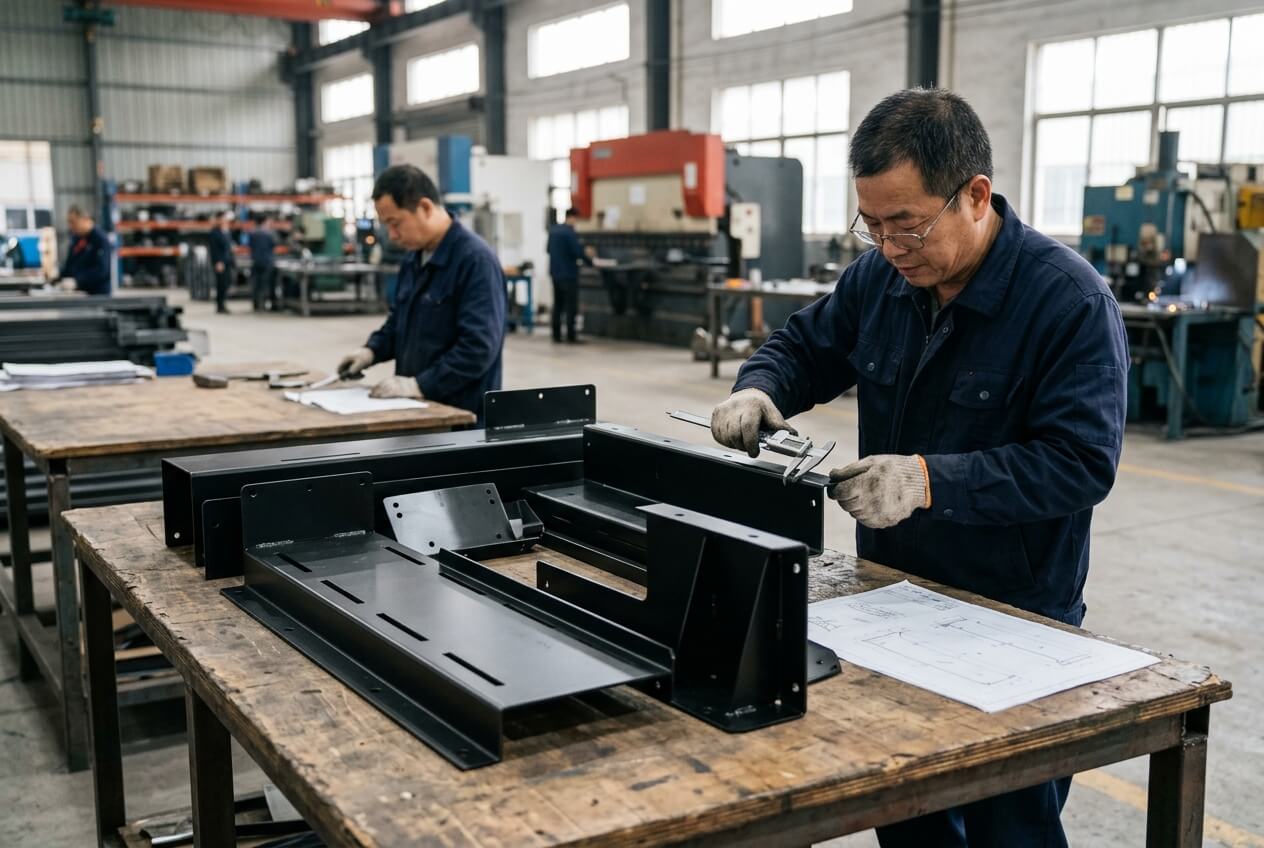
An OEM buyer asks three suppliers to quote a black powder coated fence for an outdoor equipment area. The drawing shows panel sizes, post base plates, welded brackets, hinge locations, and anchor holes. The finish note says only: powder coat black.
The prices return far apart. One quote assumes mild steel, light deburring, and standard polyester powder. Another includes galvanized material, masked bearing faces, and post-coating hole checks. A third adds edge rounding, zinc-rich primer, controlled gloss, and extra packaging for visible panels.
Procurement may see a price gap. Manufacturing sees a scope gap. The lowest price may not be wrong, but it may answer a different question. That difference often appears later as tight holes, rocking posts, mismatched gates, rust on cut edges, or rejected cosmetic surfaces.
This article focuses on one procurement risk: RFQ ambiguity that lets suppliers price different versions of the same powder coated fence. For custom sheet metal parts, frames, brackets, metal enclosures, and welded assemblies, missing notes can change the quote before production starts and create installation problems after shipment.
Where a Short Finish Note Starts to Distort the Quote
The phrase “powder coat black” describes an appearance, not a manufacturing requirement. It does not tell the supplier where the fence will operate, which surfaces users will see, or which holes must still accept fasteners after coating. As a result, each supplier fills the gaps with its own assumptions.
Those assumptions affect more than coating cost. They influence raw material choice, laser cutting parameters, deburring time, welding cleanup, masking, inspection, packaging, and production scheduling. A quote with full outdoor preparation cannot compare fairly with a quote that treats the fence like an indoor guard rail.
Appearance and exposure are not the same requirement
A fence around an indoor machine cell may need a neat, durable finish. A fence beside a compressor yard faces rain, UV, puddled water, and possible chemical cleaning. A fence near a coastal loading dock carries a different corrosion risk again.
If the drawing does not state the exposure, the supplier must choose a finish system without knowing the consequence of failure. One supplier may price standard polyester powder on cleaned mild steel. Another may include pretreatment, primer, or a galvanized substrate. Both may meet the words on the drawing, but they will not deliver the same service life.
The same problem appears with visible surfaces. A rear bracket under a platform can accept rack marks or minor texture variation. A front-facing gate panel beside an equipment cabinet may not. When the RFQ does not mark cosmetic faces, suppliers either add inspection cost or exclude it. Both choices affect unit price.
Small omissions create large price differences
Buyers often ask for quick pricing before finalizing every drawing note. That can work for rough budgeting. It becomes risky when procurement treats preliminary prices as production-ready quotes.
For example, a sheet metal enclosure line may need matching powder coated fence panels around service access doors. If the enclosure doors use a defined black texture and the fence RFQ says only black, the supplier may choose a near match. The first batch may look acceptable in isolation. Once installers place the fence beside the cabinets, the gloss difference becomes obvious.
Clarify the required powder code, texture, gloss range, and approved sample before quote comparison. Otherwise, one supplier may include color matching and one may not. The buyer then compares different scopes under one item number.
Yishang often sees this issue during drawing review for custom sheet metal fabrication. The useful conversation starts before price comparison: which assumptions belong in the RFQ, and which can remain supplier-controlled because they do not affect fit, corrosion, or site acceptance?
How Undefined Holes, Edges, and Welds Become Installation Defects
A powder coated fence usually fails at details, not broad surfaces. Holes close up. Slots lose clearance. Sharp cut edges expose weak coating coverage. Weld spatter telegraphs through the finish. Base plates rock because coating or weld pull affects the bearing face.
These defects often start as missing drawing instructions. The fabricator may cut accurate blanks, bend them correctly, and weld them within normal shop practice. The coating line may apply powder within its usual thickness range. Yet the finished assembly may still fail during installation because the RFQ never defined the functional surfaces.
Coating thickness changes functional dimensions
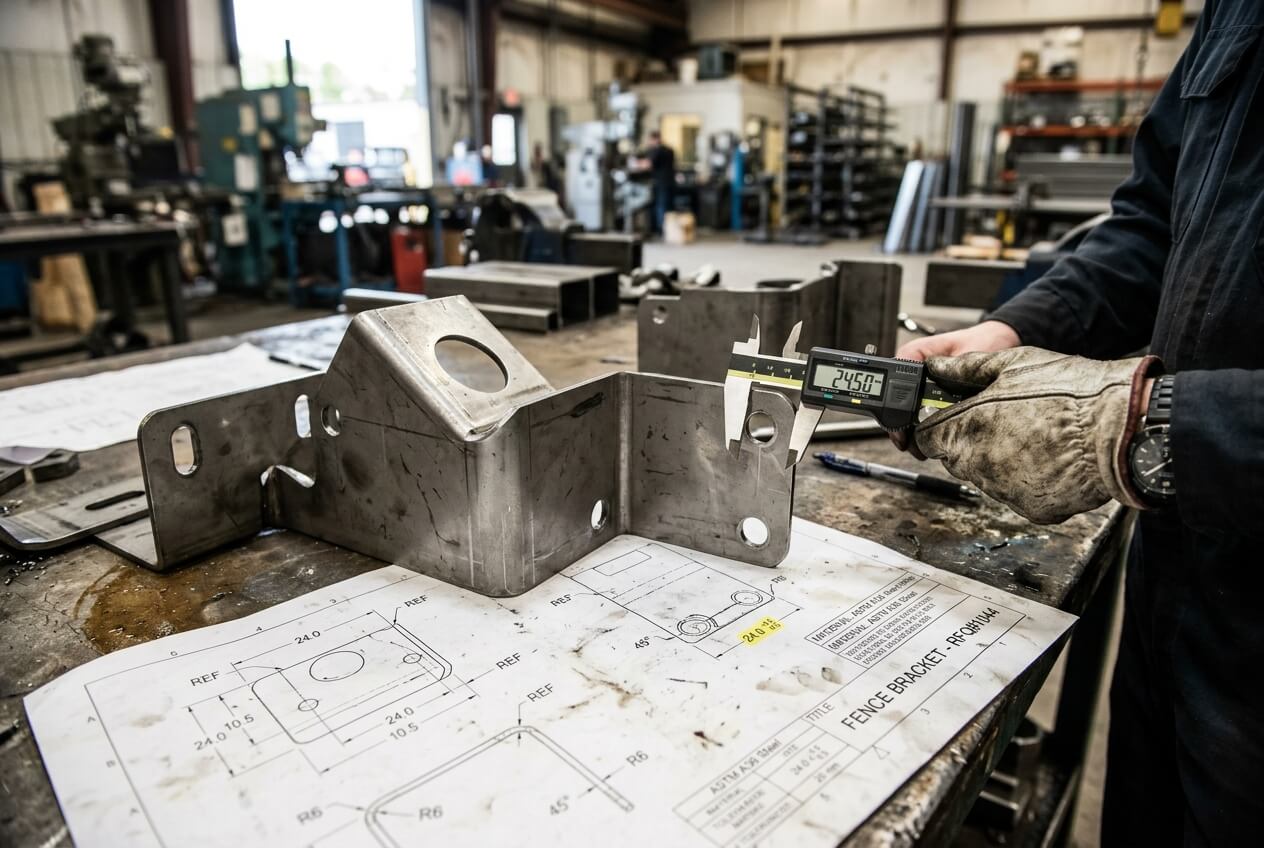
Powder adds thickness to each coated surface. That sounds minor until a bolt, hinge pin, latch tab, or sliding bracket must pass through a coated opening. A slot that measured correctly before coating may bind after coating.
A buyer may dimension a 10 mm slot for a 10 mm fastener with nominal clearance. In CAD, the fit appears safe. In production, powder build-up reduces the opening on both sides. If the supplier inspects only the bare metal part, the coated panel can pass inspection and still fail in the field.
The RFQ should state whether critical holes and slots apply before coating or after coating. If the final coated condition controls assembly, the supplier can enlarge the bare opening, mask the feature, or check it after finishing. Each option carries a different cost and lead-time impact.
Edges and welds decide corrosion performance
Powder coating does not hide poor edge preparation. Sharp laser-cut edges, burrs, and weld spatter can reduce coating coverage. Water then finds those weak points first, especially around drain areas, base plates, and lower horizontal tubes.
Consider a welded frame used as a removable safety barrier around a pump skid. The RFQ shows mitered corners and a black finish. It does not define whether welds should remain as-welded, ground flush, or cleaned to a cosmetic level. One supplier prices quick welding and basic cleanup. Another prices grinding, corner blending, and careful coating inspection. The second price looks higher, but it may reflect the appearance and corrosion risk the buyer actually expects.
Buyers should mark visible welds, drainage-sensitive locations, and edges that need rounding or special attention. They do not need to over-specify every hidden bracket. They should control the details that create rework, field complaints, or early rust.
Why CAD Fit Does Not Protect the Buyer Unless the RFQ Defines the Real Assembly
CAD models show nominal geometry. Installed fences face tolerance stack-up. Laser cutting, bending, welding, powder coating, purchased fasteners, concrete anchors, and mating equipment all add variation. A supplier cannot protect the right fit if the RFQ only provides individual part dimensions.
This matters because procurement may compare quotes on part price while the real risk sits in the assembly. A fence panel may meet its drawing. A post may meet its drawing. A hinge bracket may meet its drawing. The gate can still sag, bind, or miss the latch when installers bolt everything together.
Not every tight tolerance deserves the same attention
Tight tolerances increase cost when they require special fixtures, slower welding, extra measurement, or post-weld correction. They also create inspection disputes if they control features that do not affect function. The better approach is to identify the dimensions that protect assembly.
Critical features often include post-to-panel hole patterns, hinge alignment, latch engagement, gate gaps, base plate flatness, and interfaces with existing equipment. Less critical flange widths or hidden bracket dimensions may follow standard sheet metal tolerances.
A useful RFQ tells the supplier which dimensions matter after coating and assembly. For example, if a gate must keep a 5 mm visual gap between two powder coated posts, the supplier needs more than the gate width. It needs hinge details, latch clearance, coating thickness assumptions, and the mounting method.
Flatness and bearing faces can decide site acceptance
Outdoor fence posts often use welded base plates. Welding can pull the plate. Powder can add thickness to the bearing face. Concrete anchors may need extra clearance for site variation. If the drawing does not define the bearing surface or anchor tolerance, the installed post may lean even when the fabricated part looks acceptable.
A small clarification can prevent a large dispute. The RFQ can require a masked bearing face, a flatness tolerance on the base plate, or oversized anchor holes. It can also allow normal coating on non-critical faces to save cost. The key is to define the installation condition before suppliers quote.
For a bracketed fence section mounted to a metal cabinet frame, the same logic applies. If powder thickness on the bracket face shifts the panel outward, the latch may miss its keeper. The issue starts with an interface note that never reached the drawing. It ends as field rework, drilling, shimming, or touch-up paint.
Why Prototype Approval Can Hide Batch Risk in Powder Coated Fence Projects
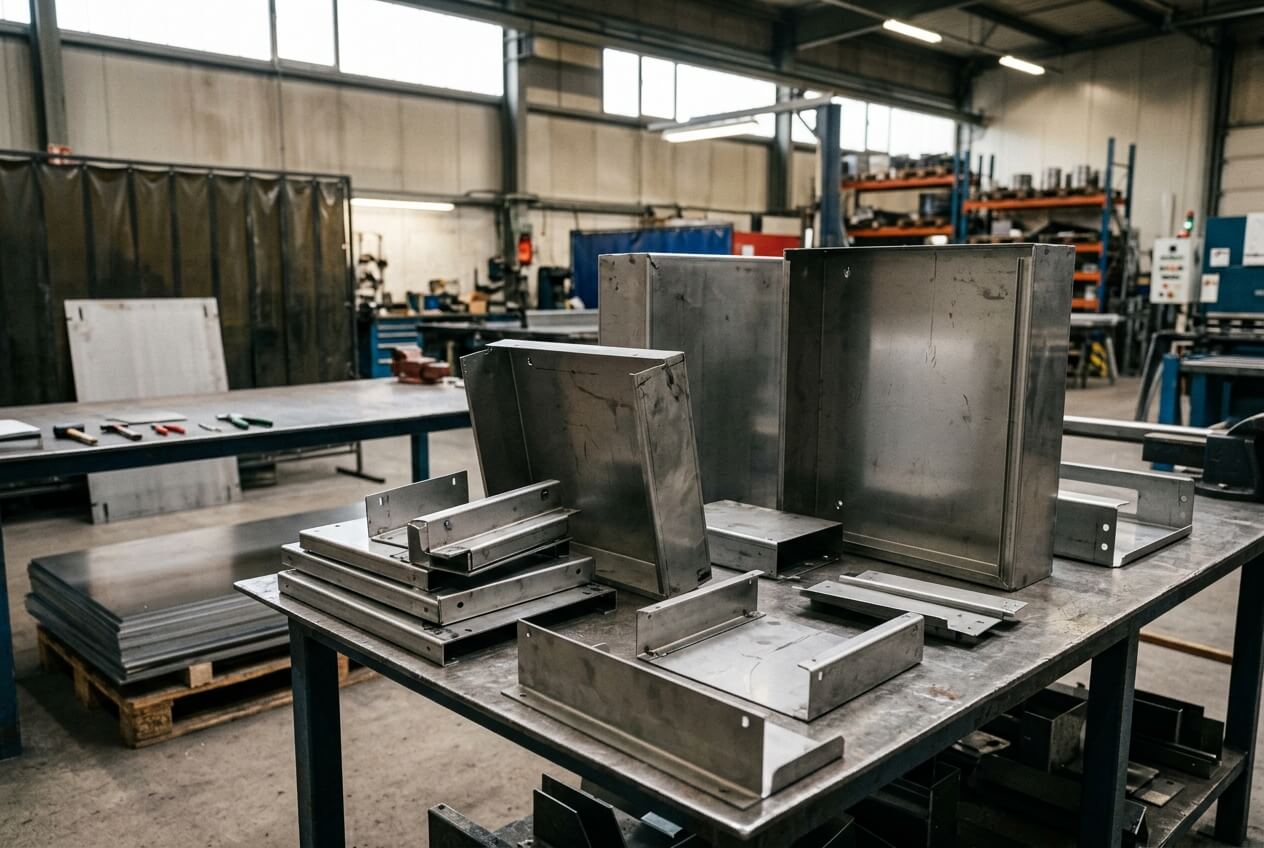
A prototype can create false confidence. Sample parts often receive extra attention because everyone knows the buyer will inspect them closely. Batch production uses repeated fixtures, coating racks, curing loads, powder lots, packaging methods, and sampling plans. If the prototype approval record stays vague, the batch may not repeat the approved condition.
Procurement should treat the prototype as a process record, not only a sample. The supplier should document the powder code, gloss, texture, masking locations, weld finish level, rack points, and functional checks. Without those details, a later batch can drift while still matching the original drawing.
Color and texture drift across batches
Fence projects often ship in phases. A buyer may order posts first, panels later, and replacement gates months after installation. If the RFQ does not define powder manufacturer, color code, texture, gloss range, and approved sample, each order can look slightly different.
This problem becomes visible when panels, gates, cabinets, and guards sit next to each other. A black powder coated fence can still appear mismatched if one batch has a smooth low-gloss finish and another has a textured semi-gloss finish. The buyer may call it a quality issue, but the purchase documents never gave the supplier a stable target.
Rack marks and packaging need approval before volume work
Rack marks rarely disappear completely. Suppliers can often control where they appear. The RFQ should mark acceptable hanging points or non-visible contact zones. This prevents a good prototype from turning into a batch with marks on front-facing panels.
Packaging also affects batch quality. Large panels rub during transport if packaging does not separate coated surfaces. Heavy welded assemblies can crush lighter brackets in the same crate. A low quote may exclude protective film, spacers, corner protection, or export packing. Those omissions reduce the quoted price but increase arrival damage risk.
Yishang can support prototype-to-batch control by linking approval samples to fabrication and finishing details. That does not replace the buyer’s specification. It helps turn the approved fence condition into repeatable production instructions.
What Buyers Should Lock Down Before Comparing Powder Coated Fence Quotes
Quote comparison should begin only after suppliers confirm the same scope. Otherwise, procurement may select the lowest price and inherit the missing work later. The buyer does not need an overbuilt specification. It needs a clear one.
Start with the use condition. State whether the fence will sit indoors, outdoors under rain, near salt air, near chemicals, or in a washdown area. Then define the surfaces that users will see. Mark acceptable rack points, hidden faces, and areas where cosmetic variation does not matter.
Next, identify functional interfaces. Call out holes, slots, hinge points, latch areas, sliding fits, base plate bearing faces, grounding areas, and mating parts. State whether dimensions apply before coating or after coating. Add the tolerance only where it protects assembly.
Finish details should support the real risk. Provide the powder code or color sample when parts must match existing cabinets, enclosures, or previous fence sections. Define gloss and texture if appearance matters. Ask suppliers to confirm pretreatment, masking, edge preparation, weld cleanup, and post-coating inspection assumptions.
Quantities also shape the quote. A prototype may use manual correction. A batch may need welding jigs, inspection gauges, coating racks, or grouped powder runs. Share expected annual quantities, release sizes, and required delivery windows. Suppliers can then price fixtures and lead time realistically.
Supplier communication should focus on assumptions, not vague promises. Ask each supplier to list exclusions and quote basis. Does the price include post-coating hole checks? Does it include color sample approval? Are fasteners, hinges, locks, or anchors included? Will the supplier trial-assemble the fence or inspect parts separately?
A short clarification meeting can remove hidden cost from the quote. It can also reveal when a lower-cost route makes sense. A temporary indoor guard may not need primer or strict cosmetic inspection. A public outdoor barrier may need both. The procurement risk lies in not knowing which version the supplier priced.
If your powder coated fence RFQ includes sheet metal panels, posts, brackets, frames, metal enclosures, or welded assemblies, send Yishang the drawing package before you approve production pricing. Include material requirements, quantities, tolerances, finish expectations, powder code or sample, masking needs, assembly photos, and mating part details. Yishang can review the fabrication and coating assumptions so the quote matches the fit, corrosion, and batch consistency your project requires. Visit Yishang to share drawings and RFQ details.
Frequently Asked Questions
Why can two powder coated fence quotes differ so much for the same drawing?
The drawing may leave key assumptions open. Suppliers may choose different materials, pretreatment, edge preparation, masking, inspection, packaging, and coating systems. Ask each supplier to confirm its quote basis before comparing unit price.
Should hole and slot dimensions apply before or after powder coating?
Use the condition that controls assembly. If bolts, pins, anchors, or tabs pass through coated features, define the required fit after coating. The supplier can then adjust bare metal sizes, mask the feature, or inspect after finishing.
What finish details should an RFQ include for an outdoor powder coated fence?
State the exposure environment, powder color or code, gloss, texture, visible faces, acceptable rack marks, masking needs, and any corrosion expectations. Also ask the supplier to confirm edge preparation and pretreatment assumptions.
How can prototype approval fail to protect batch consistency?
A prototype may receive extra manual finishing or different rack placement. Record the approved powder code, weld finish, masking, rack points, fit checks, and packaging method. Batch production should repeat those approved conditions.
Which tolerances matter most on powder coated fence assemblies?
Focus on tolerances that protect installation and function. These often include hinge alignment, latch engagement, post-to-panel holes, base plate flatness, gate gaps, and coated sliding fits. Avoid tight tolerances on hidden features that do not affect assembly.
What should buyers send with a powder coated fence RFQ?
Send drawings, 3D files if available, material requirements, quantities, tolerance notes, finish expectations, powder samples, assembly photos, mating part details, and prototype feedback. Clear inputs help suppliers price the same requirement.