
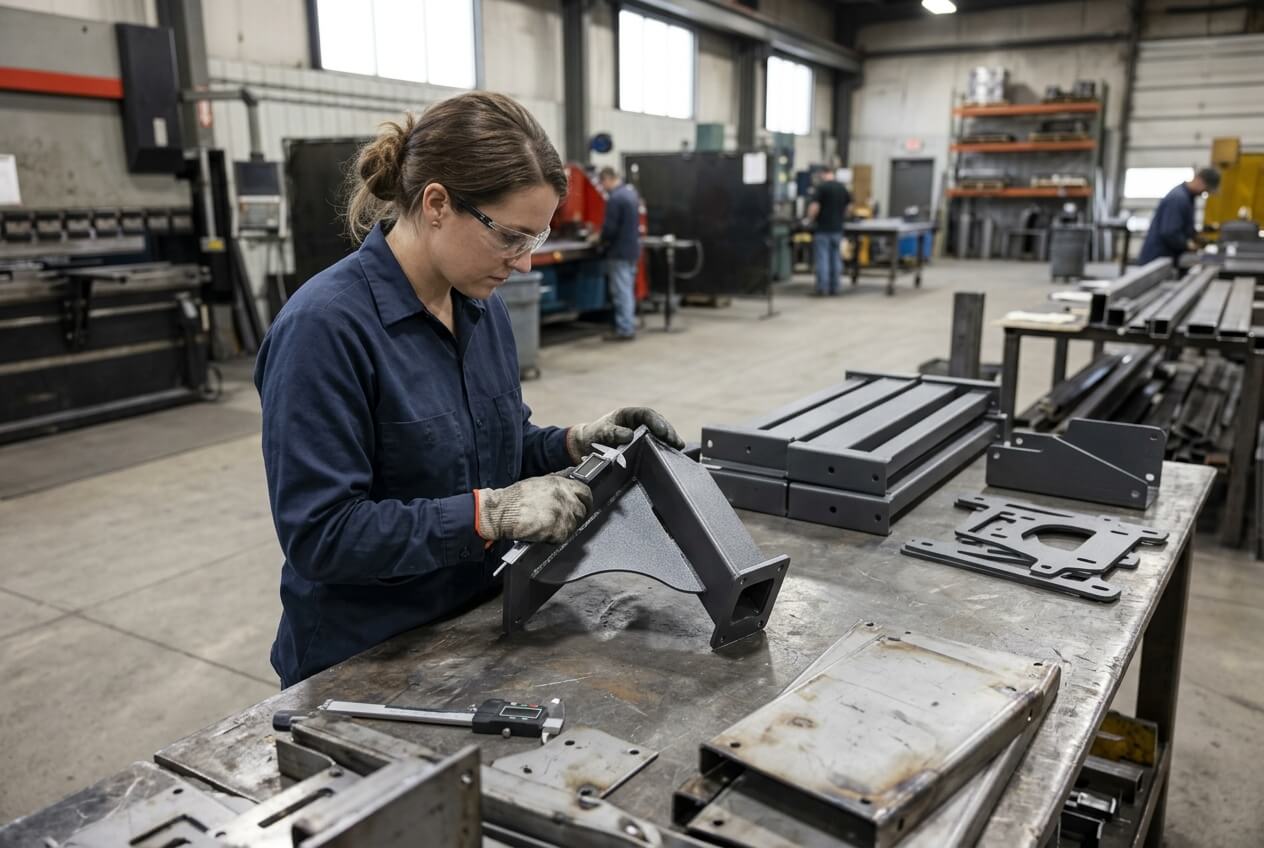
A powder coated fence RFQ often looks simple at first. The buyer sends drawings for panels, posts, base plates, hinge brackets, welded frames, and laser-cut decorative parts. The finish note says “RAL 9005 black powder coat.” The quantity, delivery address, and target date look clear enough for quotation.
Then the quotes arrive with large price gaps. One supplier includes masking, coated hole clearance checks, edge deburring, primer, controlled packing, and outdoor storage protection. Another prices bare mild steel fabrication with standard polyester powder coating and basic wrapping. Both quotes may look compliant because the RFQ never defined the finished assembly condition.
This is the dominant procurement risk: RFQ ambiguity lets each supplier quote a different version of the same powder coated fence. The problem rarely appears during the first price review. It appears later as tight anchor holes, scratched gate hinges, rust at cut edges, visible rack marks, delayed rework, and disputes over whether the supplier followed the drawing.
For OEM buyers, sourcing teams, and project managers, the safest question is not “Can you powder coat this fence?” A better question is “Which finished, assembled, inspected, and packed fence did the supplier price?”
Where Vague RFQs Make Suppliers Price Different Fence Assemblies
Ambiguity starts when drawings describe the raw fabricated shape but not the finished use condition. A drawing may show panel width, post height, mounting hole positions, and bracket thickness. It may not say whether the part must fit after coating, whether the coating must survive outdoor staging, or which face the customer will see.
That gap affects the quote. A supplier who expects an indoor equipment barrier may choose a lower-cost coating route. A supplier who expects a coastal outdoor perimeter may include stronger pretreatment, zinc-rich primer, or galvanized substrate. A supplier who sees decorative frontage panels may add grinding, hanging control, and better packing. If the RFQ only says “black powder coat,” the buyer cannot compare those prices fairly.
Price differences often hide process differences
A welded fence post with a base plate offers a common example. The low quote may include cutting, welding, drilling, and one-layer powder coating. A more complete quote may include weld spatter removal, drain holes, edge rounding, masking for anchor holes, coating thickness control, and carton separators between coated faces. The second supplier has not simply quoted higher. They have priced risks that the first supplier left outside the offer.
Procurement teams can miss this because the part name stays the same. “Fence post, powder coated black” looks identical in a comparison sheet. Yet production routing changes labor hours, coating yield, inspection time, scrap risk, packaging cost, and lead time.
RFQ clarity should bring those hidden assumptions into the open before price comparison. Buyers do not need to write a long coating manual for every project. They do need to state the operating environment, critical fit points, cosmetic faces, coating system expectations, and packing requirements that affect the finished fence.
Yishang often reviews sheet metal and welded assembly drawings for these assumptions before quotation. That review helps buyers see whether the drawing defines the finished product or only the raw fabricated geometry.
How Finish Ambiguity Turns Good Dimensions Into Installation Rework
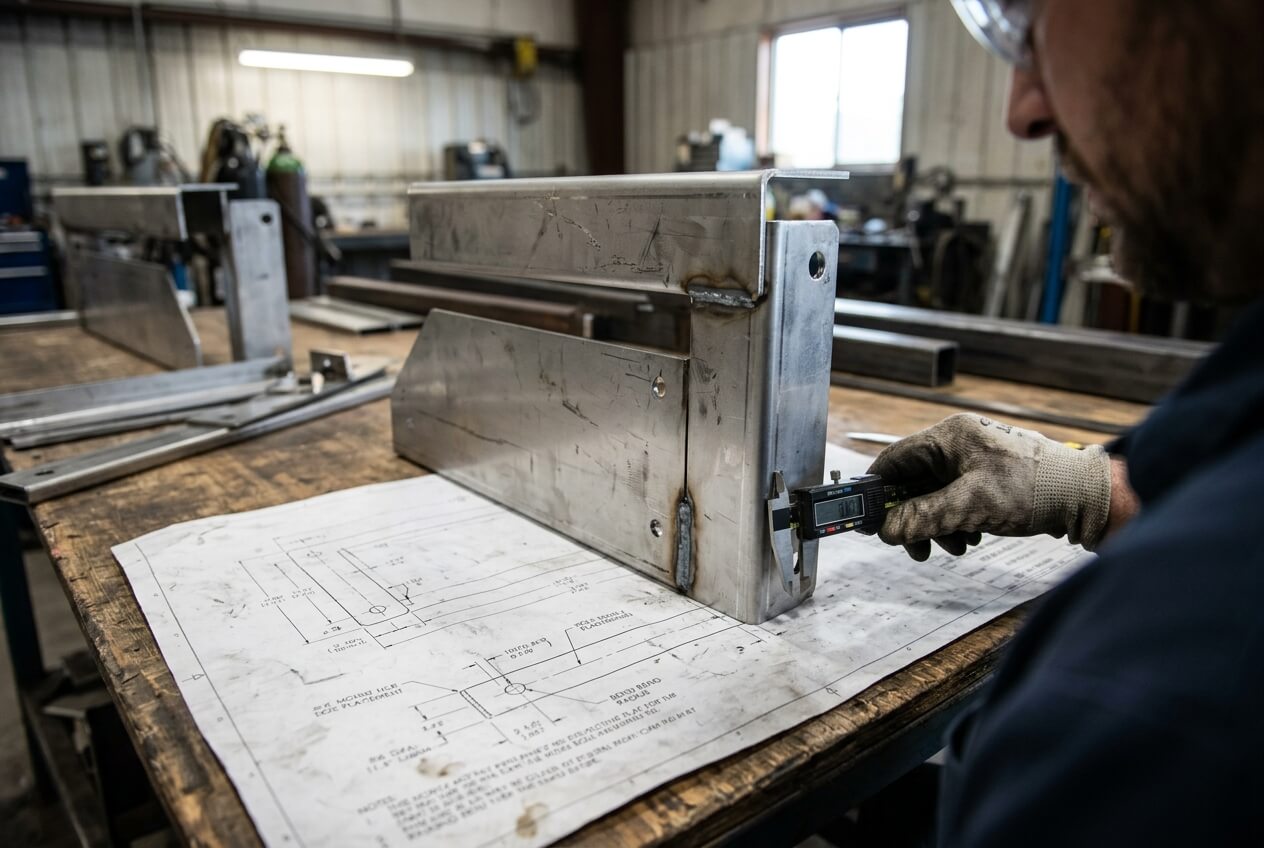
Many powder coated fence problems begin with one wrong assumption: the dimensions on the drawing will work the same after coating. Powder coating adds thickness. It also builds differently around holes, slots, hinge bores, welds, corners, and edges. A raw part can pass inspection and still create trouble after finishing.
Anchor holes show the risk clearly. A base plate may have 12 mm holes for site anchors. If the drawing does not define final coated hole size, one supplier may cut 12 mm and coat the part. Another may oversize the hole or mask the edge. Both can claim they followed the drawing. On site, the first part may need hand reaming. That rework breaks the coating at the hole edge and creates a corrosion point exactly where water and dirt collect.
Slots, hinges, and latch areas need finished-condition thinking
Slotted fence brackets create a similar chain. The design includes slots so installers can adjust alignment. Powder build-up reduces the usable slot width. Installers force bolts through the slot, scrape the coating, and lose adjustment range. The project then pays for slower installation, touch-up paint, or replacement parts.
Gate hinges add another risk. A hinge barrel may rotate smoothly in the sample stage. In batch production, coating inside the bore may reduce clearance. If workers clean the bore after coating without a defined method, they can chip the coating at the edge. If they leave the bore coated, the pin may bind. The RFQ should define whether the bore gets masked, machined after coating, or designed with more clearance.
A short project example shows the cost chain. A buyer sourced powder coated swing-gate frames for a utility enclosure. The drawing showed hinge brackets and latch plates, but it did not define coated clearance. The first batch shipped on time. During installation, several gates would not close without grinding the latch contact area. The supplier had met raw dimensions. The buyer had expected finished fit. A small note about coated mating clearance could have prevented the dispute.
The same logic applies to sheet metal brackets, equipment frames, and metal enclosures. If a coated bracket slides into a cabinet slot, the finished coating thickness matters. If a powder coated enclosure door must close against a gasket, the coating on flanges and hinge areas changes the feel and alignment. Finished-function dimensions deserve direct notes on the drawing.
Why Corrosion Claims Often Start Before Powder Coating
When a powder coated fence rusts early, buyers often blame the coating booth. Sometimes the booth caused the defect. More often, the RFQ failed to define fabrication and surface preparation details that control outdoor durability.
Outdoor fence components expose many weak points. Laser-cut edges can hold oxide. Sharp corners can receive thinner powder coverage. Weld seams may contain spatter, scale, undercut, or small gaps. Closed posts and welded caps can trap pretreatment liquid if the design lacks drain paths. Base plates collect water near anchors. These details may look minor in a 3D model, but they decide how well the coating protects the steel.
Substrate and pretreatment change the product, not only the finish
A note such as “powder coated black” does not define corrosion resistance. It does not say whether the fence uses bare mild steel, galvanized steel, or a primer system under the top coat. It does not define degreasing, blasting, phosphating, oxide removal, or salt spray expectations. Each choice changes cost and lead time. It also changes vent holes, drain holes, masking, surface appearance, and fit.
For inland outdoor use, properly pretreated steel with a polyester powder may meet the requirement. For coastal air, high humidity, industrial pollution, or long outdoor storage before installation, the buyer may need a different system. That could include galvanizing before powder coating, zinc-rich primer, or a two-coat system. The RFQ should state the exposure, not only the color.
A decorative fence panel for a retail entrance gives a useful example. The buyer approved the laser-cut pattern and black color. The RFQ did not identify customer-facing surfaces or acceptable hanging locations. Rack marks appeared on the front edge, and minor orange peel showed on the visible face. The parts matched the drawing, but they failed the visual expectation. Earlier marking of A-surfaces and hanging points would have changed the coating plan and the quote.
Another example involves welded posts for an equipment yard. The posts had welded caps and base plates. The RFQ did not mention drain holes or pretreatment drainage. Some parts developed small coating defects near the cap seam after curing. The supplier treated the fence like a standard welded frame. The buyer expected outdoor durability around standing water and closed sections. The missing detail created both a quality problem and a schedule problem.
Yishang can review powder coated fence drawings for edge treatment, weld access, drain paths, masking zones, and coating-sensitive geometry. That review matters because corrosion risk often sits in the fabricated design before anyone sprays powder.

Why One Approved Sample Does Not Remove Batch Fit Risk
Prototype approval can reduce risk, but it does not eliminate RFQ ambiguity. A sample may receive extra hand finishing. Workers may hang it more carefully. The coating line may run slower. The packing team may wrap it separately. Batch production brings fixtures, stacking pressure, welding variation, coating thickness variation, and mixed part types into the same order.
The risk grows when buyers approve samples with informal comments. “Looks good, holes slightly tight” does not tell production what to change. “Improve packing” does not define separators, wrapping, carton strength, or pallet orientation. “Color approved” does not define gloss range, texture, rack mark location, or coating thickness.
Batch assembly exposes tolerance stack-up
A modular fence line rarely depends on one part. Panels, posts, brackets, base plates, fasteners, hinge supports, and latch plates all stack together. Welding distortion can move tabs. Coating can reduce slots. Base plate holes can shift slightly. If the prototype uses a selected set of parts, the sample may assemble well while the batch creates field adjustment problems.
Consider a powder coated welded assembly used as a machine safety fence. The prototype frame fit the guarding panels. During batch production, normal weld distortion moved several mounting tabs by 2 mm. Coating then reduced the slot clearance. Installers pried the panels into place and scratched the finish around bolt heads. The real control point should have been an assembly gauge or fit-up check before coating and before shipment.
Another short example comes from a powder coated cabinet frame with bolt-on side panels. The first article sample passed because the supplier adjusted the hinges by hand. The batch used the same drawings, but operators had no clear final gap requirement after coating. Several doors rubbed at the coated flange. A measurable finished gap and hinge inspection point would have made the sample decision repeatable.
Buyers should treat sample approval as a chance to freeze production rules. Confirm final coated hole sizes, accepted surface defects, packing method, assembly checks, and any changes made after sample review. Otherwise, the supplier may repeat the drawing while failing to repeat the sample.
What Buyers Should Freeze Before Comparing Powder Coated Fence Quotes
Price comparison should happen after the RFQ defines the finished fence well enough for all suppliers to quote the same risk. The goal is not to over-engineer the project. The goal is to prevent missing assumptions from becoming field rework, corrosion claims, and late commercial arguments.
Start with the environment. State whether the fence will operate indoors, inland outdoors, near the coast, in high humidity, around industrial pollution, or under high UV exposure. Mention if finished parts will wait outside before installation. Storage and handling can damage coating before the fence ever enters service.
Next, identify finished fit points. Anchor holes, slots, hinge bores, latch contacts, mating brackets, removable panels, and sliding faces need coated-condition rules. Decide whether the supplier should mask, oversize, inspect after coating, or hold a specific finished clearance.
Cosmetic expectations also need direct drawing notes. Mark visible faces, hidden faces, allowed rack marks, texture expectations, and surfaces where scratches or orange peel will cause rejection. A fence around a service yard may allow more variation than panels beside a public entrance. The supplier cannot price that difference unless the RFQ states it.
Fabrication notes should support the finish. Define weld grinding level, spatter removal, deburring, edge radius, drain holes, vent holes, and areas that must stay free of coating. These details affect labor, coating yield, inspection, and lead time. They also prevent corrosion and assembly problems that later look like supplier negligence.
Finally, carry prototype findings into batch production. If the sample needed looser holes, better packing, different hanging points, or added masking, update the drawing or RFQ notes before release. Do not rely on email memory or verbal comments. Batch operators need measurable instructions.
For an RFQ review, send Yishang the 2D drawings, 3D models if available, material requirements, substrate expectations, quantities, tolerances, finish expectations, coating color and thickness range, use environment, mating hardware details, installation photos, and prototype feedback. These inputs help align the quote with the fence that must assemble, survive handling, and perform outdoors.
RFQ next step: If your powder coated fence includes coated holes, hinge movement, welded frames, visible faces, outdoor exposure, or batch assembly requirements, send your drawings, material requirements, quantities, tolerances, and finish expectations before final supplier comparison. Clear assumptions now cost less than rework after coating.
Frequently Asked Questions
What is the biggest RFQ risk in a powder coated fence project?
The biggest risk is letting suppliers quote different finished products from the same vague drawing. If the RFQ does not define coated fit, exposure, masking, surface preparation, cosmetic faces, and packing, each supplier may price different assumptions. The lowest quote may simply exclude risks that appear during installation or outdoor use.
Should hole tolerances apply before or after powder coating?
For functional holes, slots, hinge bores, and latch areas, the RFQ should state the finished coated requirement. Buyers can ask for masking, pre-coating oversize, or final inspection after coating. Without that note, a supplier may meet raw dimensions while the installed fence still needs drilling or grinding.
When does a galvanized substrate matter under powder coating?
Galvanizing can matter when the fence faces coastal air, high humidity, industrial pollution, or long outdoor storage. It affects corrosion protection, venting, drainage, surface preparation, appearance, lead time, cost, and fit. The RFQ should state the exposure condition and desired coating route instead of only naming the color.
How can buyers reduce visible rack marks on decorative fence panels?
Mark customer-facing surfaces and acceptable hanging points on the drawing. Also define whether small rack marks can appear on hidden edges. This lets the supplier plan coating orientation, inspection focus, and packing before production instead of deciding during the coating run.
Why can an approved prototype still fail during batch installation?
A prototype may receive extra handling, selected parts, slower coating, or informal adjustment. Batch production adds welding variation, fixture wear, coating build-up, packing pressure, and tolerance stack-up across panels and posts. Buyers should convert sample comments into drawing notes, assembly gauges, coated clearance checks, and packing rules.
What should buyers send for a more reliable powder coated fence quote?
Send 2D drawings, 3D models if available, material requirements, substrate expectations, quantities, tolerances, coating color, thickness range, use environment, cosmetic surface notes, mating hardware details, packing expectations, and sample feedback. These details help suppliers price the same finished product rather than different assumptions.