

A sourcing engineer can send the same enclosure drawing to three sheet metal fabrication suppliers and receive three prices that look close enough to compare. The drawing may show laser cut panels, bent flanges, welded brackets, PEM hardware, and one short finish note: powder coating, black.
That note creates the risk. Each supplier can build a different quote around the same two words. One may price basic cleaning and standard black powder. Another may include phosphate pretreatment, thread masking, controlled gloss, cosmetic inspection, and protective packing. A third may leave several items open until sample approval.
The buyer sees unit prices. In reality, the quotes may describe different finished parts. The cost gap only becomes visible after a prototype rubs at the hinge, a cabinet door shows gloss variation, or a batch arrives with coated threads and scratched panels.
This article focuses on one procurement risk: ambiguous powder coating requirements make sheet metal quotes non-comparable. For metal enclosures, brackets, cabinets, frames, and welded assemblies, finish ambiguity affects price, fit, inspection, corrosion performance, packaging, and lead time. Buyers reduce that risk when the RFQ defines the finished result before suppliers calculate cost.
Where a Short Powder Coating Note Starts to Distort the Quote
A vague finish note usually feels harmless during early sourcing. Buyers often need fast budget pricing, and powder coating can look like a standard production step. The problem starts when the finish note becomes the supplier’s permission to assume the lowest workable route.
Powder choice changes cost. A standard textured black may hide handling marks and ship faster. A smooth semi-gloss black may need better surface preparation and stricter handling. A specified RAL color can require powder purchase, minimum order quantity, or batch matching. These details affect cost before the first part enters production.
Pretreatment creates another hidden quote split. Indoor brackets in dry locations may only need cleaning and degreasing. Outdoor housings, electrical cabinets, or parts exposed to humidity may need a stronger pretreatment path. If the RFQ does not state the service environment or corrosion expectation, one supplier may quote an indoor process while another prices extra pretreatment and testing controls.
The same color name can hide different commercial assumptions
Consider a wall-mounted control enclosure. The buyer expects a smooth black exterior, usable mounting holes, clean grounding points, and no visible scratches after assembly. The drawing only says black powder coating. One supplier quotes standard black texture because it is available and forgiving. Another quotes smooth semi-gloss black, masks studs, and packs each door separately. A third chooses a low-cost black powder and plans normal bulk packing.
All three suppliers respond to the same drawing. Only one may match the product expectation. The lowest price may not be wrong. It may simply exclude decisions that the buyer assumed were included.
Lead time also changes at this stage. A stock powder may move quickly. A controlled powder code may require ordering, sample approval, or retained color panels. Masking and cosmetic inspection add routing time. When the RFQ stays vague, suppliers either add buffer or leave the risk for later negotiation.
How Finish Assumptions Move Into Assembly Fit and Tolerance Risk
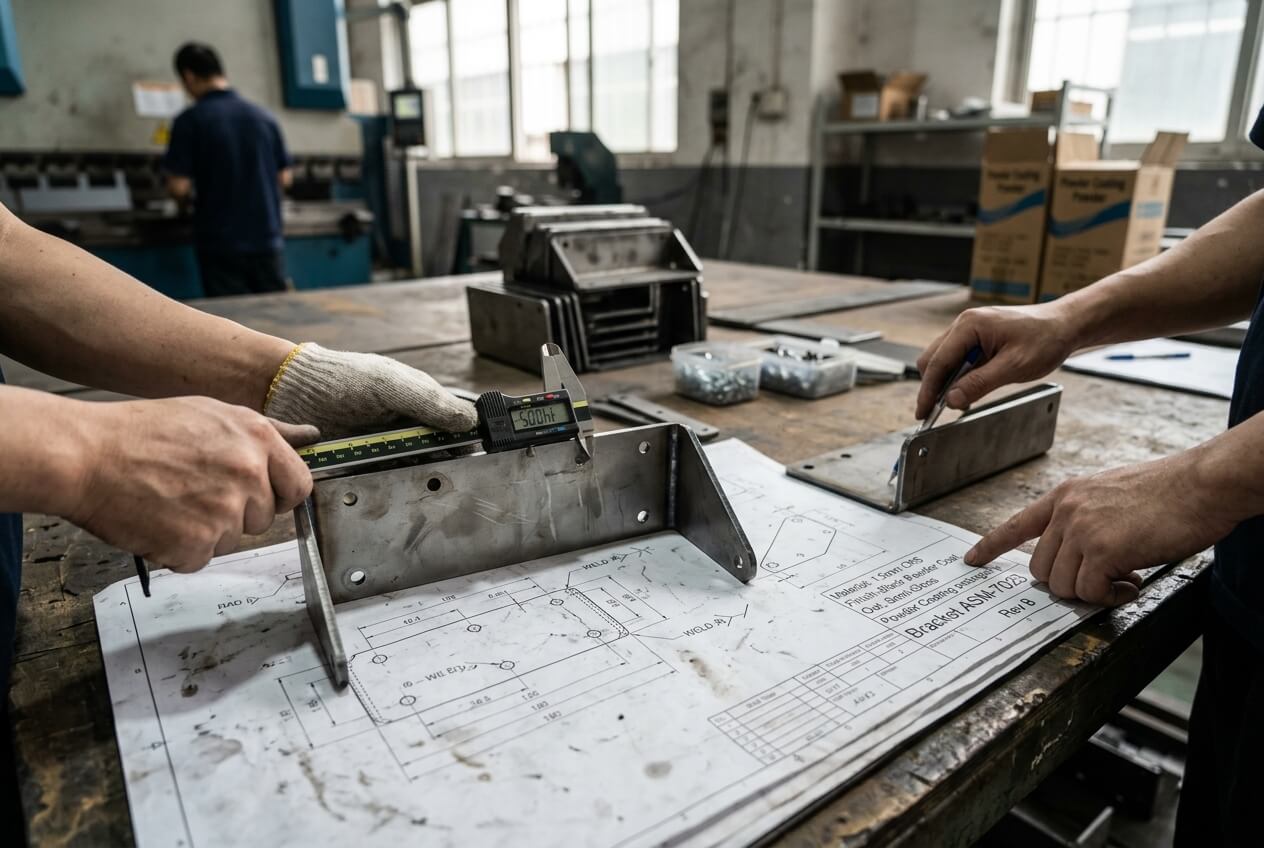
Powder coating does not only change appearance. It adds thickness, changes contact surfaces, and can reduce clearances. A fabricated part can pass dimensional inspection before coating and fail assembly afterward. This creates a difficult dispute because both sides may point to the same drawing.
The issue often starts with dimensions that do not state whether they apply before or after finish. A 6.5 mm clearance hole may accept an M6 screw before coating. After coating, the hole can tighten enough to slow assembly or damage the finish. A hinge gap may look acceptable in bare metal but rub after both mating surfaces receive coating build-up.
Suppliers can solve these issues in different ways. They may enlarge holes before coating, mask holes, chase threads after coating, or coat through the feature. Each method affects labor, appearance, consistency, and inspection time. If the RFQ does not identify critical interfaces, suppliers may choose different methods and quote different jobs.
Functional surfaces need different finish rules than visible surfaces
A bracket can need powder coating for corrosion resistance while still requiring bare metal at a grounding point. A cabinet door may need tight cosmetic control on the front face but more generous acceptance on hidden flanges. A welded frame may need coating on all exposed edges, yet it may also need uncoated bearing faces where another component slides.
Buyers do not need tight coating controls everywhere. They need targeted controls where coating changes function. Mark threaded holes, PEM nuts, grounding studs, bearing faces, hinge areas, latch contact points, sliding slots, label zones, and mating faces. Then state whether those areas need masking, reduced build-up, or after-coating dimensional checks.
A project-style example shows the chain clearly. A buyer orders powder coated shelves and welded uprights for a retail display frame. The prototype assembles well because the supplier lightly coats the slot areas. In batch production, operators apply heavier coating, and several shelves need force to install. The delay does not come from the weldment alone. It starts with an RFQ that never defined slot clearance after coating.
Material and fabrication choices also matter. Sharp laser cut edges, tight inside corners, deep channels, and heat-distorted weld zones can create uneven coverage. Thin sheet metal panels may flex during handling, which increases rub marks. If these risks affect fit or appearance, the RFQ should connect the material, tolerance, and finish requirements instead of treating powder coating as a separate note.
Why Cosmetic Expectations Become Price Disputes After Samples Arrive
A powder coated part can meet a basic finish note and still fail the buyer’s visual standard. This happens often with front panels, cabinet doors, medical equipment covers, retail fixtures, and customer-facing welded assemblies. Procurement may expect showroom appearance while the supplier prices normal industrial acceptance.
Powder coated sheet metal can show orange peel, small inclusions, pinholes, edge thinness, weld shadow, gloss variation, hook marks, or light handling scratches. Some marks may not matter on internal brackets. The same marks can trigger rejection on an enclosure front panel under strong lighting.
The RFQ should define cosmetic zones before quotation. Mark A-surfaces, B-surfaces, and hidden surfaces on the drawing or inspection document. Add inspection distance, lighting expectation, acceptable defect size, and any surfaces that must not show hanging marks. This gives suppliers a practical way to price grinding, handling, inspection, and packaging.
Cosmetic zones prevent overpricing and underpricing
Without zones, suppliers must guess. A cautious supplier may polish too much and quote high. A low-cost supplier may treat the entire assembly as an industrial part. Neither response helps the buyer compare real value.
For example, a welded display frame may have front-facing posts and hidden rear supports. If every weld receives cosmetic grinding before coating, cost rises. If no weld receives extra attention, the frame may look poor in a retail environment. A clear zone plan tells the supplier where appearance matters and where standard fabrication marks can remain under the coating.
Packaging belongs in the same discussion. Powder coated parts can leave the coating line in good condition and arrive scratched. Large flat panels, long cabinet doors, and welded frames need separators, foam, bags, or protected contact points. If the RFQ ignores packing, one supplier may include protection while another stacks parts in a lower-cost method. The price difference looks like margin, but it may be damage prevention.
Yishang often reviews drawings for custom sheet metal fabrication projects where cosmetic expectations sit outside the CAD file. A short drawing review can separate appearance-critical faces from hidden areas, so the supplier does not price the entire part at the strictest level.
Why Prototype Approval Does Not Make Batch Powder Coating Stable
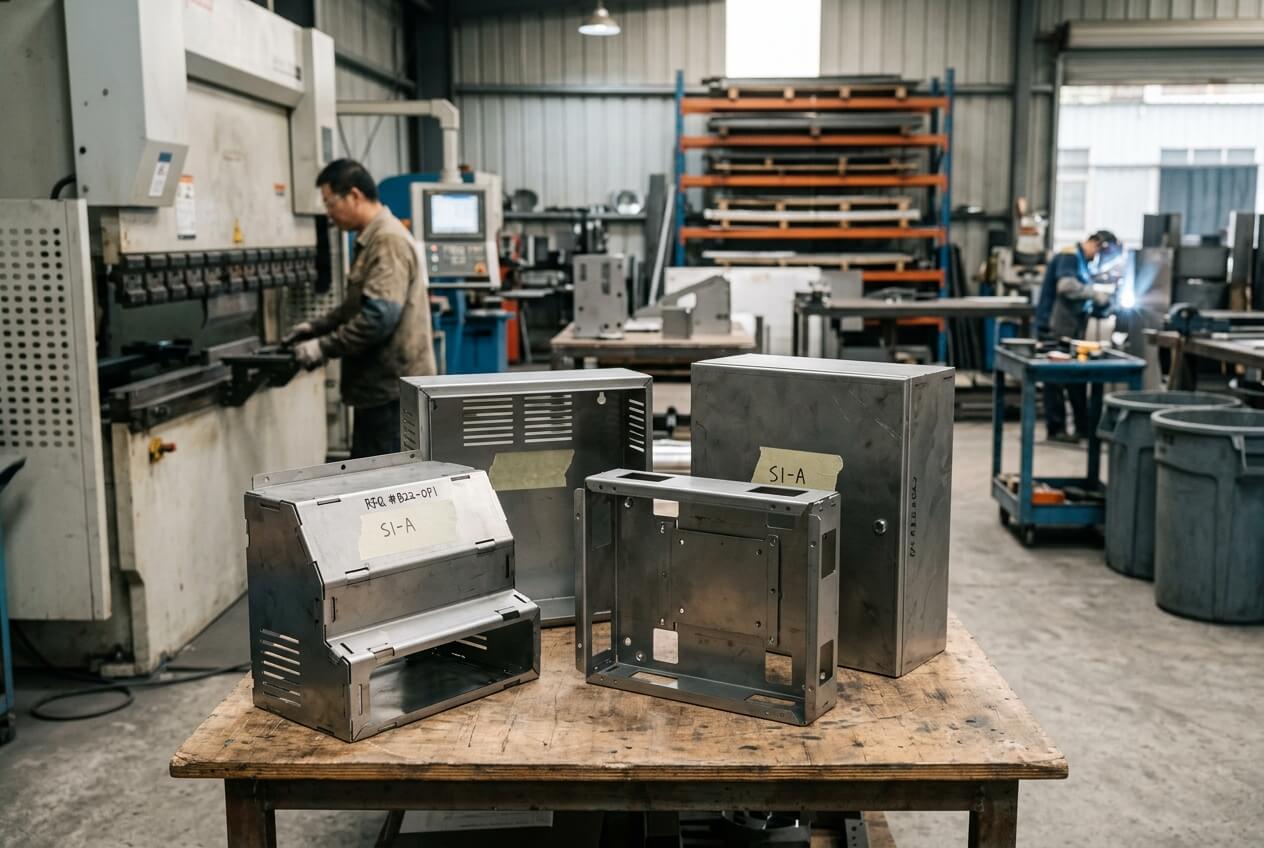
Prototype approval can create false confidence. A single approved enclosure or bracket proves that one part met expectations under one production condition. It does not prove that a batch will match the same color, gloss, thickness, masking, and handling results.
Batch consistency depends on powder code, powder lot, pretreatment control, hanging method, part orientation, cure parameters, operator handling, inspection method, and packaging. If the RFQ only says match sample, the supplier may not know which variables the buyer expects to freeze.
A cabinet project illustrates the risk. The buyer approves a powder coated prototype with matching doors and frames. Later, a 500-set batch runs across several coating days. Doors from one run show a slight gloss shift against frames from another run. The parts still meet a broad black finish note, but the assembled cabinet looks inconsistent.
The solution does not require controlling every factory detail. Buyers should define the result that must remain stable. State the powder code or approved reference sample. Clarify whether doors, covers, and frames must be coated together. Set the acceptable color or gloss variation if the end customer has a standard. Ask how the supplier will retain samples or compare production lots.
Sample records should protect the batch, not just approve the first part
A useful prototype review captures more than photos. It records the approved color reference, gloss or texture, coating thickness range, masked areas, cosmetic zones, hanging points if they affect appearance, and packaging method. These details help purchasing avoid a later argument over whether production changed or the RFQ was incomplete.
Cost and lead time become clearer when these points appear early. Controlled batch coating may require sample panels, extra inspection, separated packing, or matched runs for assembled parts. That price may exceed a basic coating quote. Yet it also reduces rework, sorting, and customer complaints after delivery.
Supplier communication should focus on these control points before purchase order release. Ask what the quote includes, what it excludes, and which finish assumptions affect price. If two suppliers answer differently, the buyer has found a comparability problem before it becomes a production problem.
What Buyers Should Clarify Before Comparing Powder Coated Sheet Metal Quotes
Buyers do not need a long specification for every sheet metal part. They need enough detail to make suppliers quote the same finished condition. The strongest RFQ connects the drawing, material, tolerances, assembly function, finish expectation, prototype approval, batch control, and packing requirement.
Start with the product environment. State whether the part works indoors, outdoors, near humidity, around chemicals, or in a customer-facing location. This helps suppliers choose a pretreatment and powder system that matches service risk instead of guessing from the part shape.
Next, define the visible and functional areas. Identify A-surfaces, hidden faces, threads, PEM hardware, grounding points, hinge locations, latch areas, tight holes, sliding slots, and mating surfaces. Clarify whether critical dimensions apply before or after coating. If the product uses multiple powder coated components in one assembly, state which parts must visually match.
Then connect finish to commercial terms. Ask suppliers to confirm color reference, gloss, texture, film thickness range, masking method, cosmetic acceptance, corrosion expectation if relevant, sample approval steps, batch consistency controls, and packaging. This does not make the RFQ complicated. It removes the assumptions that make unit prices misleading.
Yishang can support this stage by reviewing drawings, assemblies, and finish notes before prototype or batch production. The most useful review happens before quote comparison, because it helps buyers see whether suppliers priced the same powder coating result.
If your RFQ only lists a color, send Yishang your drawings, material requirements, order quantities, tolerances, assembly notes, and finish expectations. Include target RAL or powder code, gloss and texture preference, masking areas, prototype photos, cosmetic zones, and packaging needs. A clearer RFQ helps suppliers quote the same finished sheet metal part, not just the same finish name.
Frequently Asked Questions
Why can two powder coating quotes differ when both suppliers use the same color name?
The color name may hide different assumptions. Suppliers may choose different powders, gloss levels, textures, pretreatment methods, masking plans, inspection steps, and packing methods. Ask each supplier to confirm these details before comparing unit prices.
Should powder coating thickness appear on a sheet metal fabrication drawing?
Yes, especially near holes, hinges, slots, threads, grounding points, and mating faces. A general thickness range may work for many surfaces, but functional areas need clearer rules. State whether critical dimensions apply before or after coating.
What masking details should buyers include in an RFQ?
Show threaded holes, PEM nuts, electrical contact points, grounding studs, label zones, bearing faces, and any tight assembly interfaces. Masking changes labor and production routing, so it must appear before suppliers prepare the quote.
How do cosmetic zones reduce disputes on powder coated enclosures and frames?
Cosmetic zones tell the supplier which surfaces need strict visual control. Mark A-surfaces, B-surfaces, and hidden areas. Add inspection distance and acceptable defect limits for scratches, orange peel, weld shadow, inclusions, and hook marks.
Does prototype approval guarantee the same powder coating result in batch production?
No. Batch results can change with powder lot, hanging method, cure conditions, part orientation, handling, and packaging. Record the approved sample conditions and define which finish characteristics must remain stable during production.
When should corrosion or salt spray expectations be included?
Include them whenever parts face outdoor use, humidity, cleaning chemicals, or long-term corrosion risk. A basic indoor process may look acceptable at delivery but fail earlier in service. State the environment and test expectation during RFQ.