
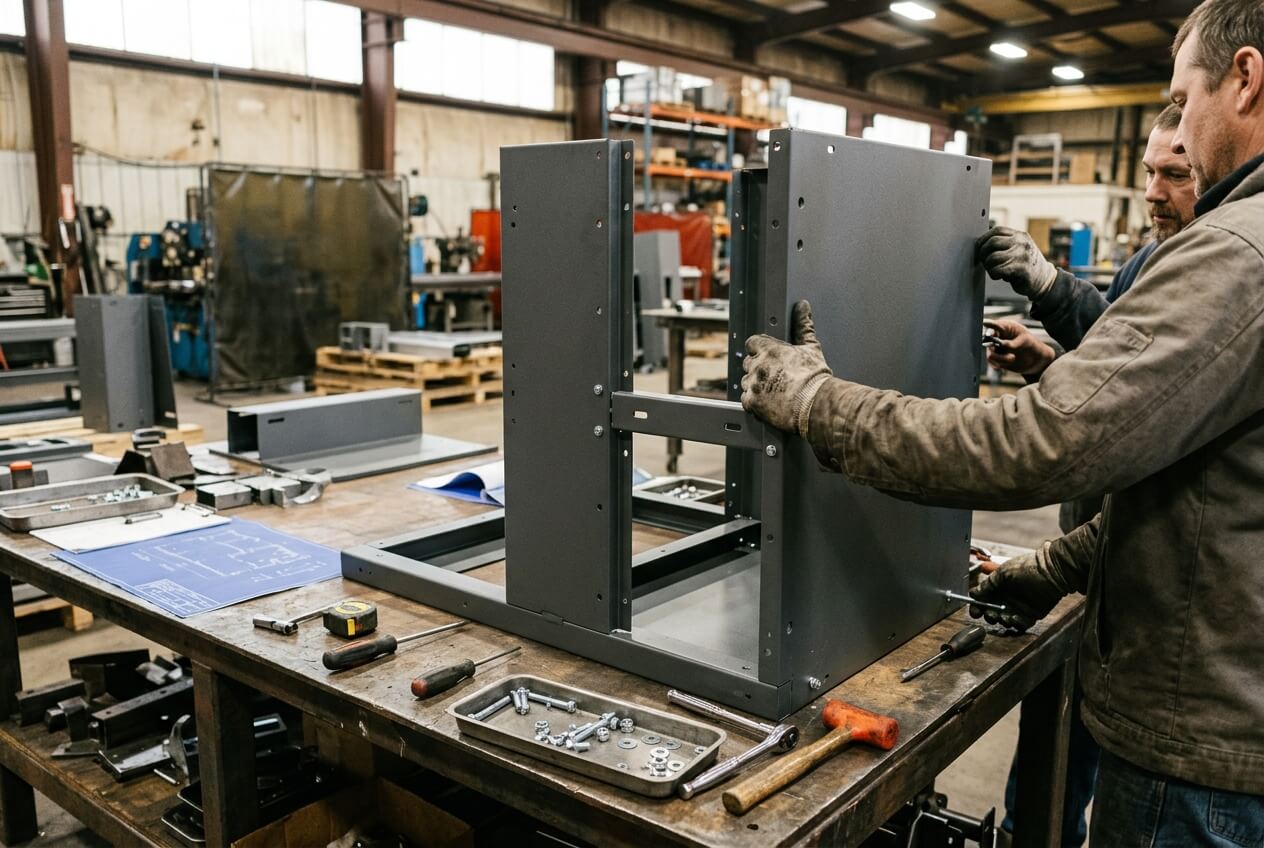
An OEM buyer approves a laser-cut and bent enclosure sample. The main dimensions look correct. The unit price fits the budget. Then the first production batch arrives with a problem that the drawing never predicted. Doors rub after coating, hinge screws start poorly, and a removable bracket no longer sits flat inside the cabinet.
The supplier may not have cut, bent, or welded the parts incorrectly. The deeper procurement risk often starts earlier, when powder finish paint appears in the RFQ as a short cosmetic note. A finish note such as "powder coat black" does not tell the supplier which surfaces must remain functional after coating.
This gap changes more than appearance. It affects quotation scope, masking labor, hole usability, assembly inspection, batch consistency, and lead time. Two suppliers can quote the same drawing and the same color, yet price completely different finishing controls. The cheaper quote may simply exclude the controls that protect assembly fit.
For custom sheet metal fabrication, the main question is not whether powder coating looks durable. Buyers need to know whether the finished enclosure, bracket, frame, or welded assembly will still align, fasten, close, ground, and install after the coating cures.
The Real RFQ Risk Is Treating Powder Finish Paint as a Cosmetic Line Item
Many RFQs separate fabrication and finish too cleanly. The drawing controls laser cutting, bending, welding, and hole locations. The finish note then appears in the title block with a color reference. That structure works for simple covers. It fails when the coating touches hinges, threads, slots, door gaps, grounding points, or mating faces.
Powder finish paint adds a cured film over the metal surface. Buyers often think about the visible face first. Production teams also need to think about edges, corners, hole walls, countersinks, tabs, and contact pads. These areas decide whether the coated part still functions.
A short finish note creates different quote assumptions
One supplier may include masking for threaded holes and electrical grounding areas. Another may coat every surface and assume the buyer will chase threads during assembly. A third may include visual inspection only, with no coated fit check. All three quotes may say powder coating, but the risk and cost differ.
The problem grows when buyers compare prices without comparing finishing scope. A low unit price can hide missing caps, plugs, tape, post-coating checks, sample approval, or packaging protection. Those missing items do not disappear. They return as blocked threads, scraped coating, assembly delays, or field complaints.
For example, a buyer requests 500 wall-mounted control enclosures in matte black. The RFQ includes material thickness, bend tolerances, and a general powder coating note. It does not identify the hinge seating face, earth stud, gasket channel, or latch cutout as functional features. The first batch looks acceptable from the outside. During assembly, doors need force to close and several ground points need scraping. The coating issue started as an RFQ scope gap, not as a late production accident.
Coating Build Can Consume the Clearance Your Drawing Depends On
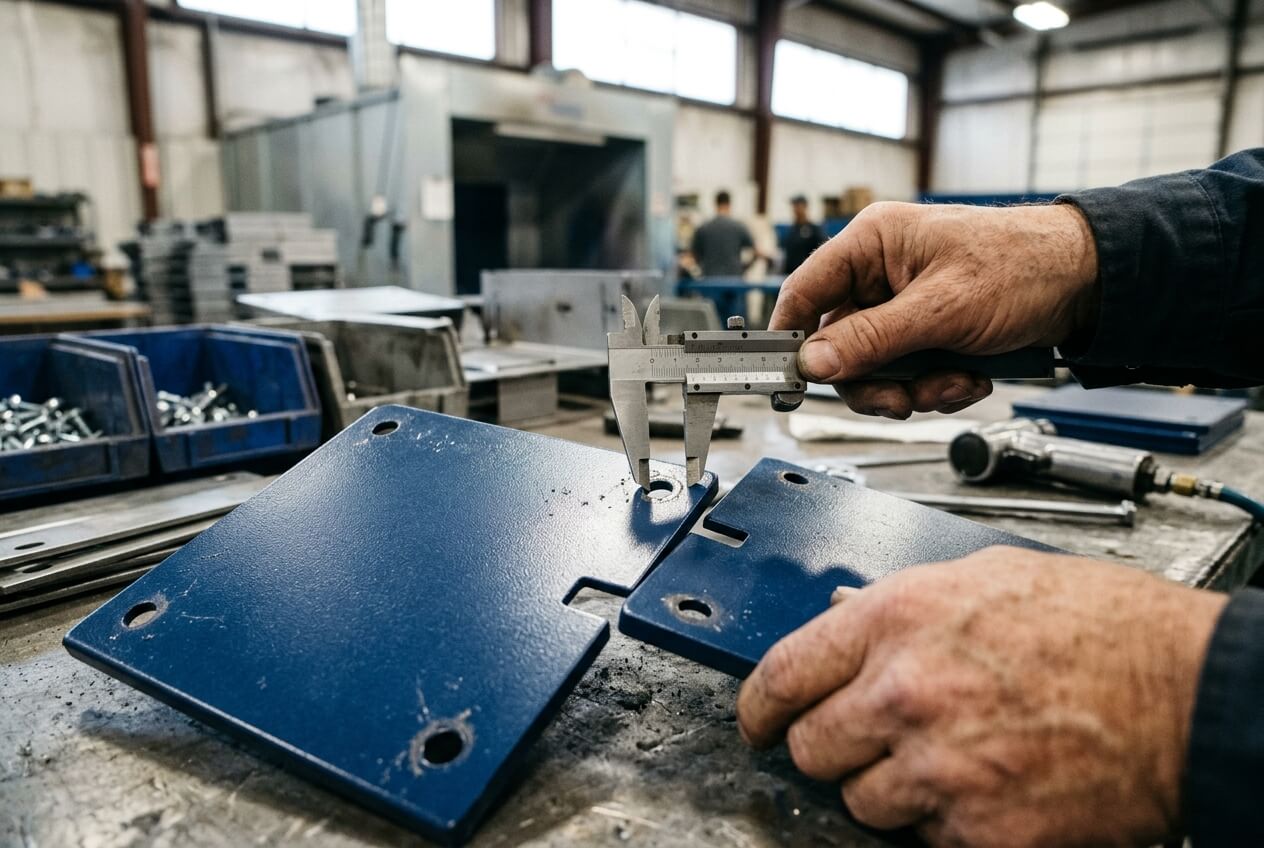
Sheet metal drawings often control the raw part. Assembly teams install the finished part. That difference matters. A panel can pass dimensional inspection before coating and still fail after powder finish paint reduces the working clearance.
Powder does not build evenly on every surface. Edges, corners, returns, and recessed zones can behave differently from flat faces. The coating may also enter holes, slots, and countersinks. When both sides of a close-fit joint receive coating, the lost clearance can double.
Door reveals, hinges, and latch areas need finished-part thinking
A cabinet door with a narrow reveal may swing freely after bending. After coating, the door edge and the frame edge both gain film thickness. A gap that looked safe in raw metal can become a scraping point. If a gasket also sits behind the door, latch engagement may change as well.
Hinge zones create a similar chain. Coating around hinge leaves, screw holes, and seating faces can shift alignment. The assembler may tighten the screws harder, which marks the finish or twists the door. A buyer then sees inconsistent door movement across the batch, even though the raw dimensions remain inside tolerance.
Holes and slots fail quietly until assembly starts
Threaded holes, PEM inserts, rivet nuts, and tapped bosses rarely tolerate uncontrolled coating. Powder can reduce thread engagement or create false torque readings. Countersunk holes can also cause trouble because coating on the cone surface keeps screw heads proud.
Slots and tabs create another common failure. A welded display rack may accept its shelves during raw trial fitting. After coating, shelf tabs no longer slide into the slots smoothly because both contact surfaces gained thickness. Operators may file slots by hand, but that rework exposes metal and damages appearance.
A bracket example shows the same risk on a smaller part. A formed steel mounting bracket has two close-fit locating holes and one slotted adjustment feature. The prototype installs cleanly because the shop clears powder from the slot. In the production batch, the slot coating remains. Installers loosen the mating hardware, force the bracket into place, and scratch the finish. The drawing did not say the slot had to remain clear after coating, so the quote did not include that control.
Quote Comparisons Break When Masking, Pretreatment, and Inspection Stay Undefined
Buyers often ask suppliers to quote quickly. Speed helps sourcing, but vague finish scope weakens the comparison. Powder finish paint includes several cost drivers that affect the final assembly risk. Masking, pretreatment, film thickness control, sample approval, inspection, and packaging all change the real price.
Masking costs money, but missing masking costs more
Masking protects areas that must not receive coating. Common examples include threaded holes, studs, PEM inserts, bearing faces, hinge seating areas, electrical contact points, sliding tracks, and tight locating holes. The supplier may use plugs, caps, tape, fixtures, or custom methods.
If the RFQ does not mark these zones, the supplier must guess. Guessing produces quote variation. One quote may include masking labor and longer handling time. Another may exclude it and look more competitive. The buyer may not notice the difference until production parts arrive with coated threads or blocked locating features.
Pretreatment and service conditions affect both cost and consequence
Pretreatment also belongs in the procurement discussion. Indoor retail frames, electrical cabinets, outdoor equipment housings, and humid-area assemblies do not carry the same corrosion risk. Material choice also matters. Mild steel, galvanized steel, stainless steel, and aluminum may require different preparation routes or supplier comments before coating.
When the RFQ does not state the use environment, suppliers may quote a basic route that satisfies appearance. Later corrosion questions can force a new sample, a price change, or a lead-time extension. That delay becomes more painful after the buyer has already compared quotes and selected a source.
Inspection must match the assembly function
A cosmetic panel may need checks for color, gloss, texture, scratches, and film thickness. A coated enclosure needs more. The inspection plan should confirm that the door opens, the latch engages, the hinge screws start, the grounding point remains clean, and mating parts still fit.
Film thickness alone does not prove usability. A part may meet the coating range on the outer face while powder buildup blocks a hole or tightens a return flange. Buyers should ask suppliers which features they inspect after coating, not only which coating standard they can name.
This is where early supplier communication saves money. A fabricator that reviews drawings before quoting can flag risky features and price the needed controls. Yishang, for example, can review drawings, finish notes, and assembly photos to identify masking zones and post-coating fit checks before the RFQ becomes a purchase order.
A Coated Prototype Does Not Prove the Batch Will Behave the Same Way
Prototype approval reduces risk, but it does not remove it. A prototype can pass because the supplier gives it special attention. Batch production introduces rack density, part orientation, operator variation, curing load, handling speed, and packaging pressure.
Buyers often approve one coated sample after checking color and basic dimensions. That sample may not represent the full production window. If the prototype required manual cleaning, thread chasing, hinge adjustment, or extra care during hanging, those actions must become controlled production steps. Otherwise, the batch may drift away from the approved condition.
Sample approval should freeze process details, not only appearance
After prototype approval, record more than the color. Note the approved powder finish paint reference, target film thickness, gloss or texture, masking method, critical no-build zones, packing method, and functional test result. If the product includes locks, hinges, seals, fasteners, labels, plastic inserts, or mating brackets, test the sample with those items installed.
Consider a 300-piece control box order. The prototype closes smoothly and passes the buyer’s appearance review. In the batch, several doors feel tight on the hinge side. The color still matches the approved sample, so a visual-only inspection misses the problem. Assembly then finds the real issue: coating buildup on the return flange and hinge seating face changed the door movement.
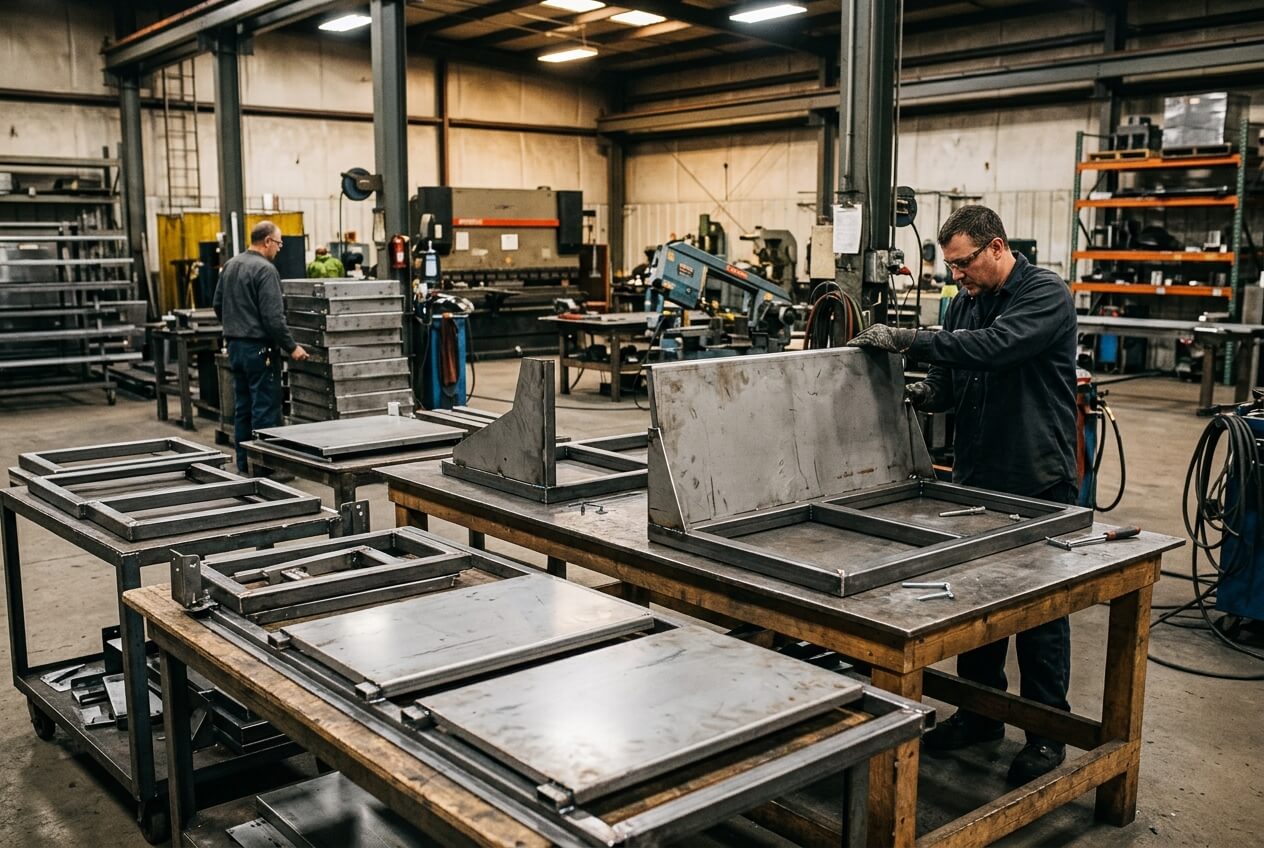
A welded frame example shows another chain. A raw frame sits flat within tolerance. After grinding and coating, several contact pads no longer seat cleanly against the customer’s machine base. The frame did not need a better color review. It needed a clear contact-surface requirement after finishing.
Batch consistency also affects lead time. Once parts receive coating, rework becomes expensive and risky. Scraping, filing, and thread chasing can expose bare metal or leave inconsistent texture. Recoating may change color, add thickness, or delay shipment. A small drawing note made before sampling often costs less than correcting hundreds of coated parts.
Freeze the Finish-Assembly Requirements Before You Compare Final Quotes
The best time to control coating-related assembly risk is before quote comparison. At that point, buyers can still align suppliers on the same scope. The goal is not to overload the drawing. The goal is to tell suppliers which surfaces are cosmetic, which surfaces are functional, and which finished conditions decide acceptance.
Make the drawing separate visible surfaces from working surfaces
Use the drawing or RFQ package to identify visible surfaces, internal surfaces, masked zones, and critical interfaces. Door edges, hinge seats, latch contact points, gasket channels, threaded holes, grounding points, sliding rails, slots, countersinks, and mounting pads need clear treatment. A note such as "powder coat RAL 9005 matte, 60 to 80 microns on visible surfaces; mask M5 threads, grounding points, and hinge seating faces; verify door opening after coating" gives the supplier a practical basis.
Tolerances should also reflect finished use. If a door gap, tab fit, or bracket location matters after coating, state the required condition after finishing and assembly. Tightening raw sheet metal tolerances may not solve a coating buildup problem. Sometimes the better choice is more clearance, masking, a changed hole size, or a fit test after coating.
Ask for the quote to show the finish controls
When suppliers return prices, review what they included. Look for masking, pretreatment, film thickness range, sample approval, inspection method, packaging protection, and any post-coating assembly check. If one supplier includes these items and another does not, their prices do not represent the same risk.
Clarify responsibilities before the purchase order. Decide who supplies color samples, who approves texture, who defines acceptable touch-up, and who checks mating hardware. For assemblies, confirm whether the supplier will test the coated part with hinges, locks, fasteners, or mating components. These details affect cost and lead time, but they also prevent later disputes.
Yishang supports custom sheet metal fabrication projects where finishing, fabrication, and assembly fit must work together. Buyers can reduce risk by sending complete drawings, material requirements, quantities, tolerance notes, powder finish paint expectations, color or sample references, photos of mating parts, and prototype feedback before final quotation.
Need to check coating-related assembly risk before ordering? Send Yishang your drawings, material grade, quantities, tolerances, finish expectations, masking concerns, and any known fit issues. A review before quoting helps define the powder finish paint scope, protect critical interfaces, and compare supplier prices on the same basis.
Frequently Asked Questions
Why can powder finish paint cause assembly problems when raw sheet metal dimensions pass inspection?
Raw inspection checks the metal before coating. Powder finish paint adds thickness to edges, holes, slots, countersinks, and mating faces. If the design has tight clearance, the finished part may rub, bind, or block fasteners even when the raw part meets the drawing.
What should buyers mark on drawings before requesting a powder coated sheet metal quote?
Mark functional interfaces, not only cosmetic surfaces. Identify threaded holes, PEM inserts, grounding points, hinge seating faces, latch zones, sliding features, close-fit slots, gasket areas, countersinks, and mounting pads. Then state whether each area needs coating, masking, clearance control, or post-coating inspection.
Why do two powder coating quotes for the same part differ so much?
The quotes may include different assumptions. One supplier may price masking, pretreatment, film thickness control, sample approval, fit checks, and protective packaging. Another may price only a basic cosmetic coat. Buyers should compare the finishing scope before comparing unit prices.
Does an approved coated prototype guarantee batch consistency?
No. A prototype may receive extra care during hanging, coating, cleaning, and inspection. Batch production introduces more variation. Buyers should freeze the approved film thickness, masking method, critical fit checks, packaging method, and any manual steps used to make the prototype pass.
Should buyers specify a film thickness range for powder finish paint?
Yes, especially when the part has door gaps, slots, threads, hinges, or mating faces. The range should state where it applies. Critical no-build areas may still need masking or extra clearance because a general film thickness range cannot protect every functional feature.
What information should I send for a coating-fit RFQ review?
Send drawings, material requirements, quantities, tolerances, powder finish paint expectations, RAL or sample references, photos of mating parts, assembly hardware details, and prototype feedback. This helps the supplier quote the real finishing controls instead of guessing from a short finish note.