
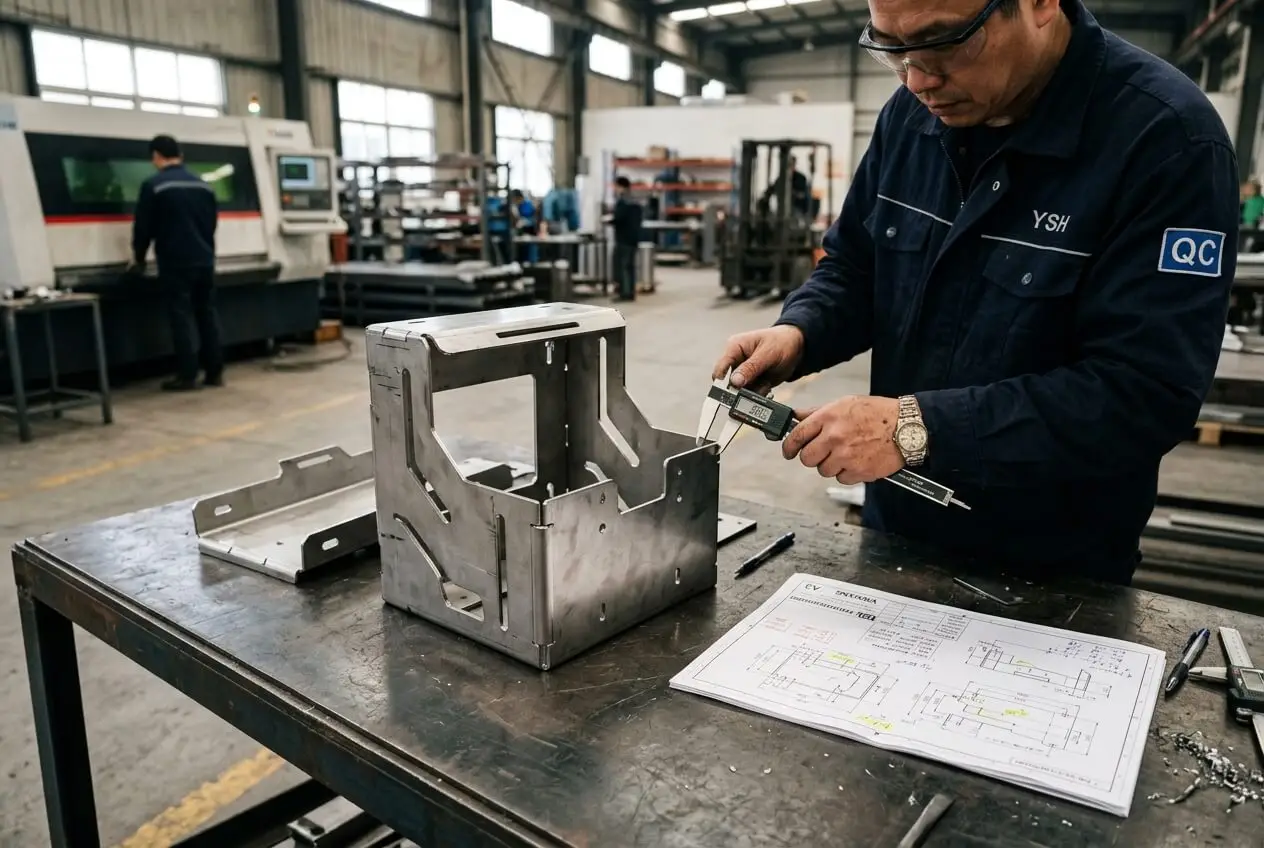
A sourcing engineer sends one enclosure panel drawing to three sheet metal suppliers. The geometry looks simple. The part needs a laser cut profile, mounting holes, two bends, powder coating, and packing for assembly. One quote comes back much lower than the others.
The buyer approves it because the drawing seems complete. During prototype review, the cable slots sit too close to a bend, coated screw holes feel tight, and the visible face shows small edge marks. The supplier did not ignore the file. The RFQ allowed each supplier to price a different version of the same part.
This is a common procurement risk in precision laser cutting. The cost difference rarely comes from laser capability alone. It starts when drawings define the shape but leave manufacturing intent open. Those gaps affect cutting orientation, burr direction, bend compensation, coating allowance, inspection method, packaging, and batch repeatability.
Price comparison only works when suppliers quote the same risk. If buyers compare unit prices before they compare assumptions, the cheapest offer can move cost into rework, line delays, sorting, oversized holes, revised tooling, or urgent second-source orders. The central risk is RFQ ambiguity: small drawing omissions let suppliers quote different responsibilities.
RFQ Ambiguity Turns One Drawing Into Three Different Quotes
A clean DXF file can look final to purchasing. Production teams see more open questions. Which side is cosmetic? Which holes locate mating parts? Which edges need touch-safe deburring? Should the supplier inspect the flat profile only, or the formed part after bending?
When the RFQ does not answer these questions, each supplier fills the gaps. One supplier may quote standard laser cutting, normal deburring, and visual inspection. Another may include tighter hole checks, extra handling protection, and post-bend measurement. A third may assume that normal process variation will pass because the drawing does not identify critical features.
The quotes now cover different scopes. The lower price may exclude work that the assembly team expects. That gap can appear later as slow screw insertion, visible edge marks, warped covers, or a rejected first article. The buyer sees a production problem, but the cause started before quotation.
Where the Cost Moves When Scope Is Vague
Ambiguous RFQs do not remove cost. They move it. If a drawing does not define burr limits, the buyer may pay later for hand cleanup. If coating thickness is ignored, workers may chase holes after finishing. If the assembly datum stays unclear, inspection teams may measure from different edges and dispute results.
Short RFQ notes often prevent long arguments. Mark functional holes, cosmetic faces, coated clearances, grounding areas, and required inspection points. Add mating-part photos when the drawing alone cannot show the real fit risk. A fabrication team such as Yishang can then review the drawing against the intended manufacturing route instead of quoting only the flat outline.
Flat Accuracy Can Still Fail After Bending, Coating, and Assembly
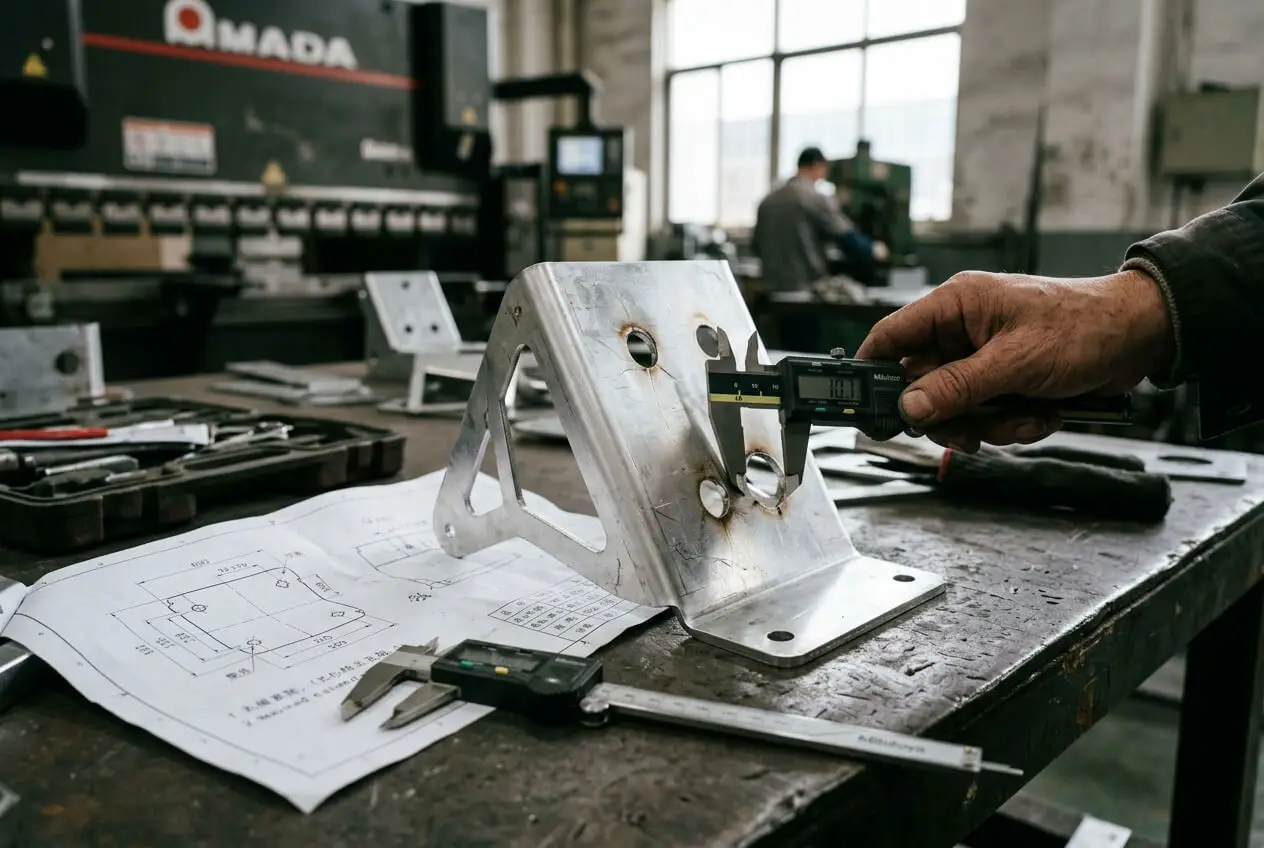
Many laser cut parts pass flat measurement and still fail in the finished product. The reason is simple. Cutting does not finish the risk chain. Holes, slots, tabs, bends, coating, welds, and mating parts interact after the sheet leaves the laser bed.
Consider a U-shaped metal enclosure cover. The flat drawing shows two side flanges and several M4 clearance holes. The holes align with tapped inserts in a base frame after bending. If the RFQ only controls flat hole positions, the finished holes may shift because bend radius, material thickness, bend allowance, and tooling differ from the buyer’s assumption.
The supplier can cut the flat pattern accurately and still deliver a cover that binds during assembly. The procurement issue was not poor cutting. The RFQ failed to state that finished hole alignment controlled the part. A better note would define the assembly datum and require verification after forming for those holes.
Feature Priority Matters More Than Blanket Tight Tolerances
Buyers often react by tightening every tolerance. That usually raises cost without solving the right problem. A ventilation slot may only need a clean visual appearance. A mounting hole beside it may control final assembly. Both features should not carry the same inspection burden.
Separate functional features from cosmetic or low-risk features. Tell the supplier which holes locate brackets, which slots accept tabs, which edges seal against another part, and which dimensions matter after bending. This lets the supplier price inspection where it reduces failure risk, not across the whole drawing.
A cabinet front panel shows the same chain. The display window, push-button holes, logo area, and screw holes sit on one face. If the cosmetic side is not marked, the supplier may orient burrs or handling marks toward the visible surface. Powder coating can then make small edge irregularities more visible and reduce hole clearance.
Coating Changes Fit, Not Just Appearance
Finish notes also affect assembly. A generic callout such as powder coat black does not tell the supplier whether screw holes must function after coating. Coating builds on hole walls, slots, tabs, and edges. A bare-metal hole that accepts a screw can become tight after finishing.
Clarify whether the supplier should oversize holes, mask grounding points, tap after coating, or inspect fit after finishing. A note such as M4 clearance required after powder coating gives a stronger target than a broad finish requirement. It also helps suppliers include the right cost before the purchase order, not after the first failed build.
Prototype Approval Does Not Lock Batch Assumptions
A prototype proves that one part can work. It does not automatically prove that the quoted process will repeat at batch volume. Technicians may cut a sample slowly, deburr it more carefully, hand-straighten a panel, or choose the best piece for shipment. If the RFQ does not capture those actions, batch production may follow a different standard.
Imagine a welded display rack frame with laser cut tabs and slots. The prototype assembles well after a worker adjusts two tabs and lightly straightens a side frame before welding. The buyer approves the sample. Later, 500 frames arrive with inconsistent tab fit near the welded corners. The batch followed the drawing, but it did not include the unrecorded prototype corrections.
The same problem appears on thin stainless steel covers with many ventilation holes. A sample may look clean because it came from a small sheet area and received extra polishing. During batch nesting, part spacing, heat input, sheet handling, and stacking can change flatness and burr consistency. If flatness limits and edge expectations remain informal, assembly teams inherit the variation.
Turn Sample Changes Into Controlled Requirements
Prototype feedback must update the production package. If the supplier enlarged a slot, revise the drawing. If bend compensation changed, approve the new flat pattern or 3D model. If coating made a tab too tight, choose added clearance, masking, or post-coating rework before batch release.
Record the approved condition with photos, inspection points, sample notes, and revision control. This matters for repeat orders, where purchasing may reorder months later from the same drawing. Without a controlled record, the next batch can return to the original risk.
Yishang can review prototype feedback before volume production for custom sheet metal parts, metal enclosures, brackets, frames, and welded assemblies. The useful question is not only whether the part can be cut. The better question is which prototype actions must become fixed production requirements.
Freeze the Quote Scope Before Price Becomes the Decision
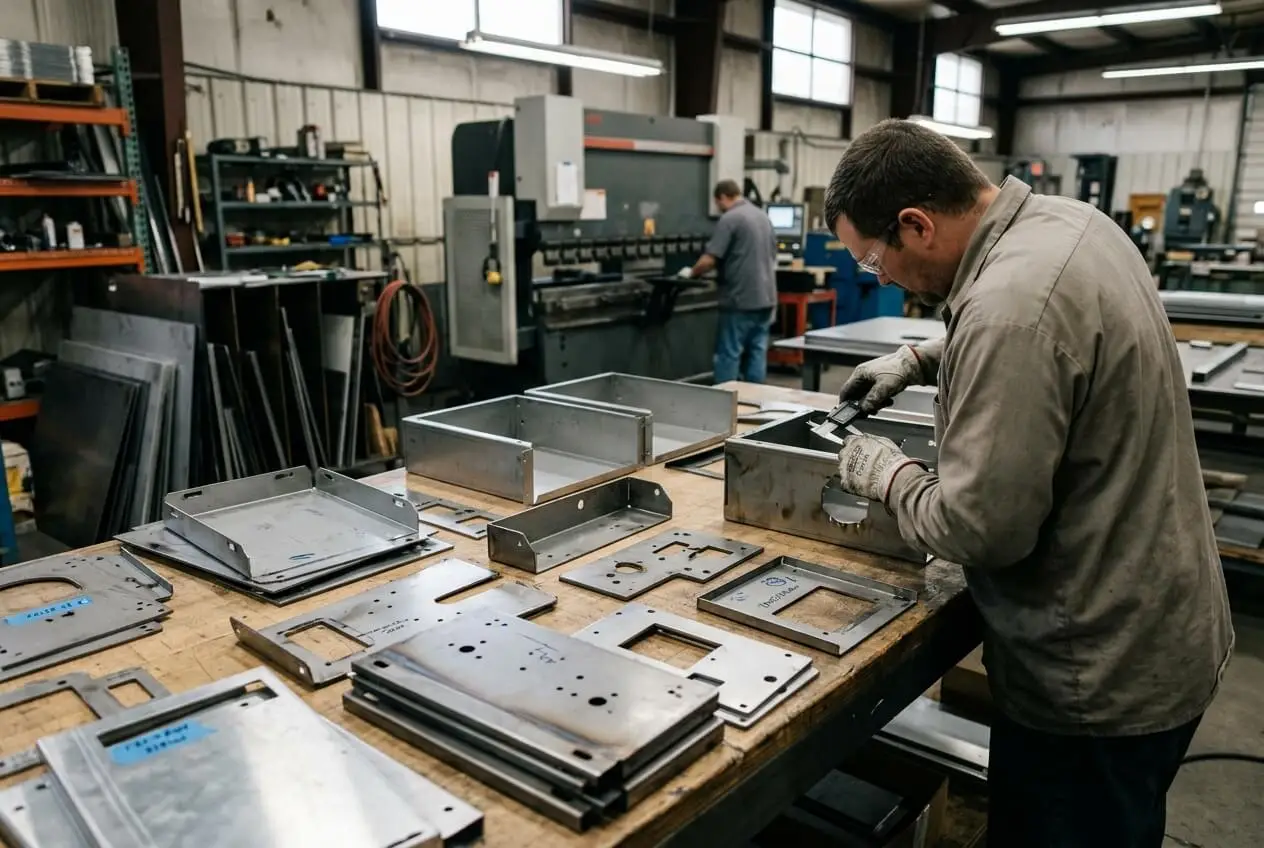
The best time to reduce quote distortion is before suppliers submit final pricing. Once purchasing chooses a low price, every missing assumption becomes harder to discuss. The supplier may have planned a basic route. The buyer may expect a controlled assembly-ready part. Both sides then argue from different versions of the job.
Before comparing precision laser cutting quotes, freeze the details that control rework risk. Confirm drawing revision, material grade and thickness, quantity breaks, grain or appearance direction if relevant, critical-to-function dimensions, bend radius expectations, finish requirements, coating clearance, cosmetic faces, and inspection method. Include 3D models, mating-part photos, and sample comments when they explain fit better than dimensions alone.
This does not mean every part needs premium inspection. A hidden bracket inside a cabinet may need safe edges and reliable hole position. A visible control panel may need stronger cosmetic handling and coated-hole checks. A welded frame may need post-weld dimensions instead of only pre-weld laser cut dimensions.
Clear scope also protects lead time. If the supplier discovers missing details after order release, engineering questions stop programming, bending, coating, or assembly. Late clarification can force re-nesting, remake parts, or wait for a revised drawing. Early clarification adds minutes to the RFQ and can save days in production.
Send a more quotable RFQ: If your project includes precision laser cutting, bends, coated holes, visible faces, welded joints, or mating components, send drawings, material requirements, quantities, tolerances, finish expectations, revision level, assembly photos, and prototype feedback to Yishang. The team can review which assumptions may affect cost, lead time, inspection, and batch consistency before you compare supplier quotes.
Frequently Asked Questions
Which drawing gaps distort precision laser cutting quotes most often?
Unmarked cosmetic faces, unclear functional holes, missing burr expectations, undefined coating clearance, and no post-bend inspection notes create the largest quote gaps. These gaps let suppliers price different levels of responsibility from the same drawing.
Why can a flat laser cut part pass inspection but fail assembly?
The flat part may meet the DXF, but bending, coating, welding, and mating parts can change the final relationship. Holes near bends and tabs that fit after coating need finished-part controls, not only flat-pattern dimensions.
Should buyers tighten all tolerances to avoid quote assumptions?
No. Blanket tight tolerances raise cost and can slow production. Buyers should identify critical-to-function features, such as mounting holes, locating tabs, sealing edges, and visible faces, then apply tighter controls only where variation affects fit or appearance.
How should powder coating be handled in a laser cutting RFQ?
State whether holes, slots, tabs, and grounding points must function after coating. The RFQ should mention oversizing, masking, tapping after coating, or post-finish inspection when those choices affect assembly fit.
Why does prototype approval fail to prevent batch problems?
Prototype parts may receive manual adjustment, extra deburring, selective inspection, or special handling. Buyers should convert every approved sample change into a drawing revision, inspection point, process note, or controlled production requirement.
What should buyers send to get a comparable sheet metal fabrication quote?
Send the latest drawings, 3D files if available, material grade and thickness, quantities, tolerance notes, finish expectations, cosmetic face markings, assembly photos, mating-part requirements, and prototype feedback. This helps suppliers quote the same manufacturing scope.