
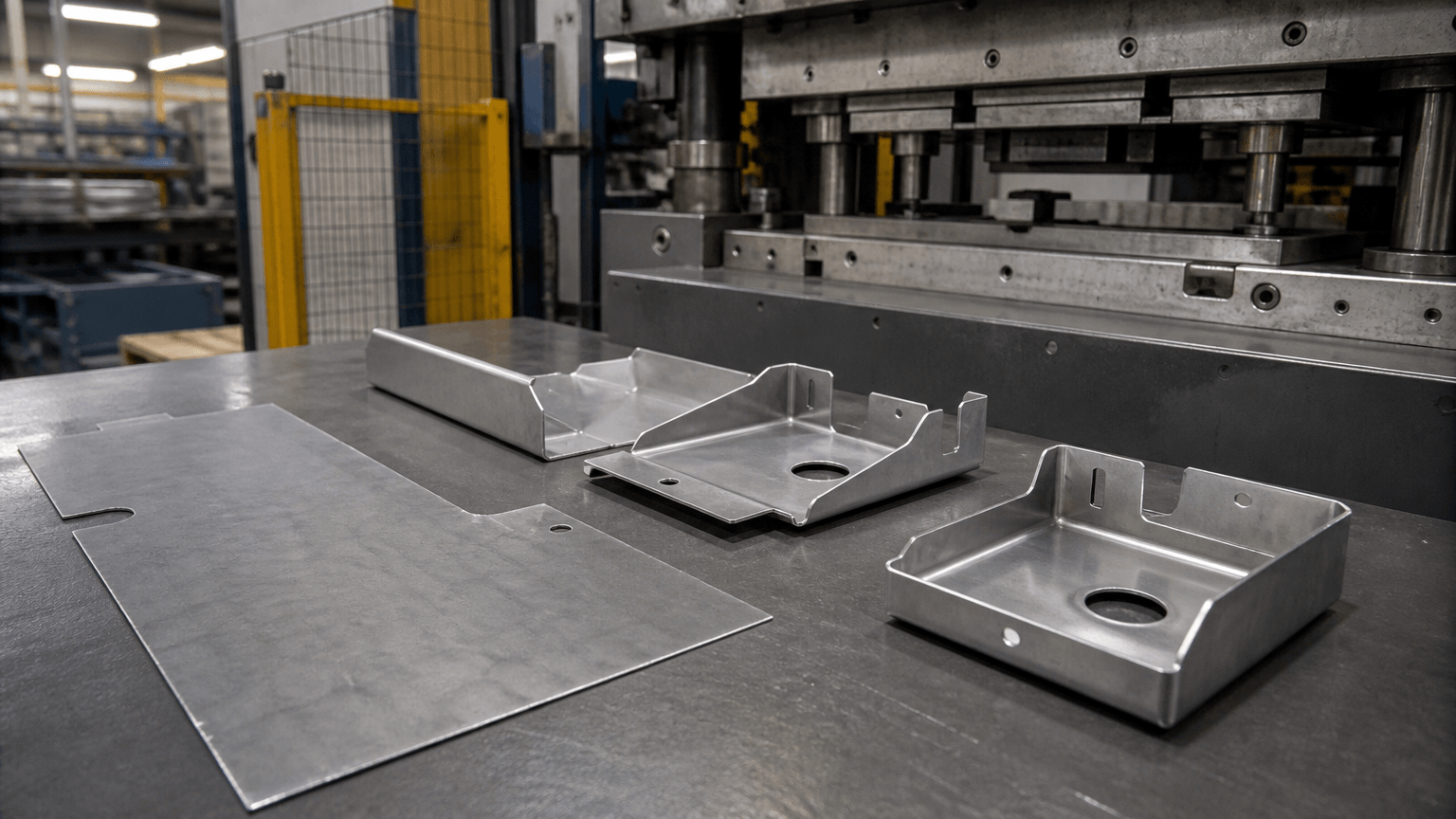
Pressed sheet steel usually identifies a formed steel sheet component or sheet shaped with a press—not a standalone steel grade. The steel substrate, coating, and thickness must be specified separately from the forming operation. Whether the part should be press formed, stamped, punched, laser cut, bent, or deep drawn depends on its geometry, quantity, surface, tolerances, and downstream assembly.
For a buyer comparing a bracket, enclosure panel, cover, channel, or shallow three-dimensional part, that distinction affects manufacturability and the prototype plan. Supplier terminology varies, so confirm what pressed means in the proposed route before approving material or selecting a production method.
Pressed Sheet Steel Is a Description, Not a Universal Grade
For a new custom sheet metal part, the phrase normally describes what happened to the sheet rather than what the sheet is made from. A flat blank may be shaped under pressure to create flanges, ribs, channels, offsets, bosses, or shallow contours. The press supplies the forming action; it does not identify the steel grade or prove that the material will suit the geometry.
The substrate could be hot-rolled steel, cold-rolled steel, mild steel, galvanized steel, or another specified sheet product. These materials can differ in surface quality, formability, strength, corrosion resistance, dimensional consistency, and finishing needs. Pressing, press forming, and stamping also overlap in supplier language, so the drawing should separate the approved material from the proposed manufacturing route.
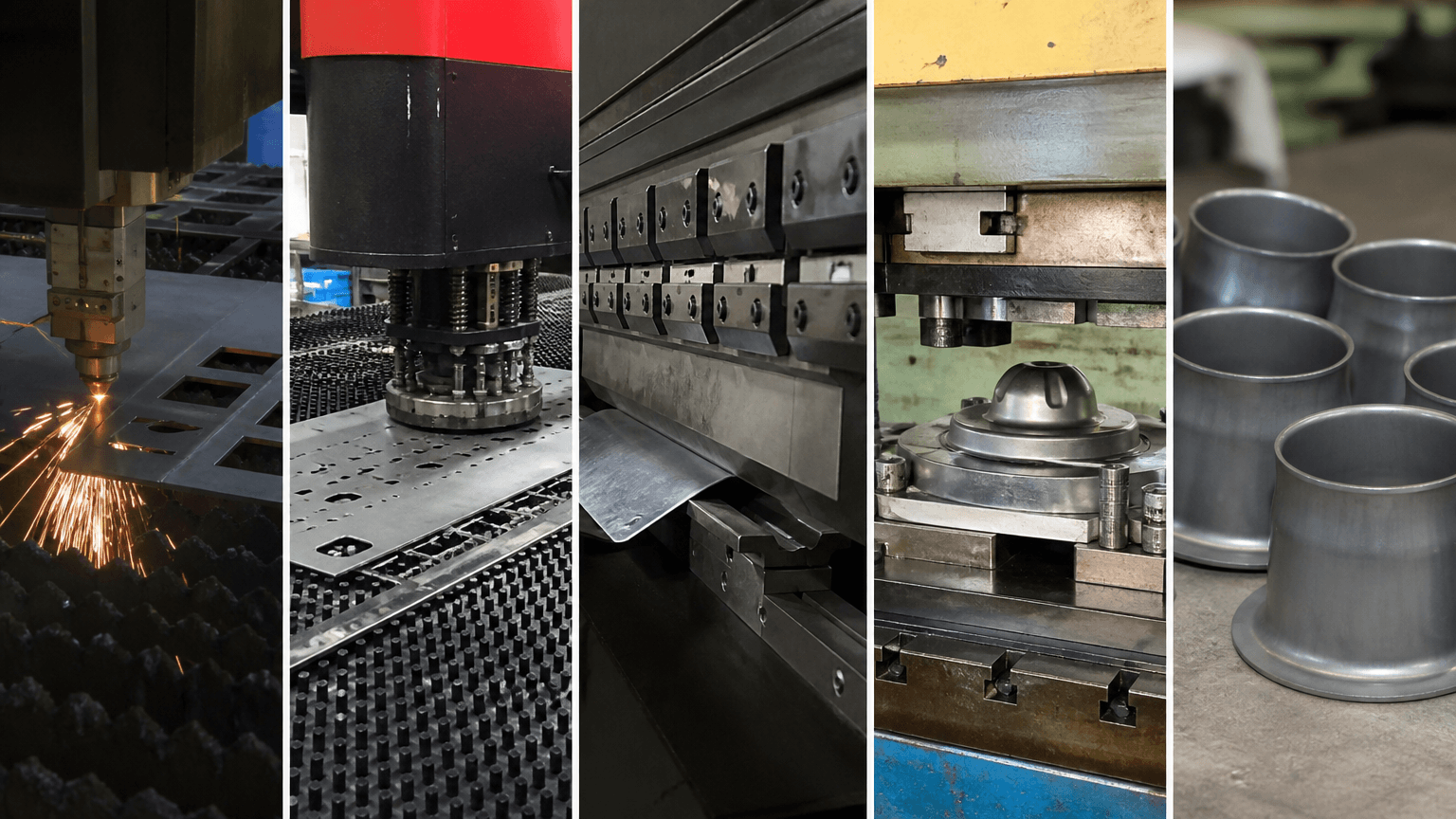
Process Boundaries: Forming, Cutting, Punching, and Drawing
When a part must move from a flat design to a functional assembly, process names have practical consequences. Each operation changes the sheet in a different way, although one component may use several operations in sequence.
| Process | Primary action | Where it may fit | Point to confirm |
|---|---|---|---|
| Press forming or stamping | Shapes sheet between forming tooling through applied pressure. | Repeatable ribs, flanges, offsets, contours, or other formed features. | Is the geometry stable, and is the tooling approach justified? |
| Laser cutting | Removes material along a programmed profile. | Blanks, openings, slots, and detailed external contours. | Are the edge condition, quantity, and later forming requirements suitable? |
| CNC punching | Creates holes, perforations, louvers, or selected cutouts with punches. | Repeated features and programmed sheet profiles. | Are feature shapes, spacing, burrs, and tool marks acceptable? |
| Press-brake bending | Creates linear bends along selected axes. | Brackets, channels, panels, cabinets, and metal enclosures. | Can the bend sequence, tool access, radii, and springback be controlled? |
| Deep drawing | Moves sheet substantially into a die to create a hollow form. | Cup-like, box-like, or enclosed shapes with greater draw depth. | Can the material flow through the required depth and radii? |
Press forming or stamping is not the same as laser cutting or CNC punching: cutting removes material, while forming changes its shape. Press-brake bending creates sequential linear folds rather than a complete contour between dedicated forming dies. Deep drawing is a more specific forming route for deeper hollow geometries; a cup-like design may need a separate Deep Drawing feasibility review.
A single assembly may combine these operations. A blank can be laser cut, holes can be punched or cut, and the sheet can then be bent and welded. A machined insert remains a separate CNC-machined component, while welding joins parts, surface finishing changes or protects surfaces, and assembly combines components. Confirm the supplier’s actual process route rather than treating the names as interchangeable.
Sheet Condition and Surface Requirements
On a visible bracket, panel, or formed cover, material choice affects both forming behavior and the finished appearance. The buyer may need adequate formability, dimensional consistency, corrosion protection, and a surface that can accept the planned finish. These requirements should be considered together rather than inferred from the label pressed sheet steel.
| Sheet type or description | Surface and forming relevance | Corrosion, finish, and cost questions |
|---|---|---|
| Hot-rolled steel sheet | Often has a less uniform surface and dimensional finish than cold-rolled sheet; may fit where visible appearance is secondary. Formability remains grade- and condition-dependent. | Confirm scale, roughness, flatness, cleaning, protective finishing, cost, and availability. |
| Cold-rolled steel sheet | Often offers a more uniform surface and dimensional consistency, which may matter for visible parts or controlled bends. The exact grade controls formability. | Confirm whether paint, plating, or another protective finish is needed and compare material cost and availability. |
| Mild steel | A broad material category that may provide a workable balance of formability and strength for some sheet components. | Identify the exact grade, thickness, service environment, coating or paint system, loads, and inspection basis. |
| Galvanized steel sheet | Has a zinc coating that can support corrosion protection when the coating system suits the environment. | Review coating continuity after forming, cut edges, scratches, masking, welding heat, repair, and later finishing. |
Galvanized steel can be pressed, bent, punched, or laser cut, but forming marks, exposed edges, and welding heat may require an agreed treatment. Review Galvanized Steel considerations when coating integrity affects the route.
The material designation, grade, temper or condition, thickness, surface designation, and approved substitutes should come from the drawing or purchasing specification. The Mild Steel reference can provide general context, but no material label alone establishes suitability for a particular load, geometry, environment, or inspection requirement.
Drawing Inputs That Determine Feasibility
A supplier cannot judge a pressed-part concept from its name or outline alone. The following information connects the material, geometry, acceptance criteria, and intended production route:
- Material and thickness: State the grade or approved options, nominal thickness, surface condition, coating, and required service environment.
- Blank and geometry: Provide the blank size or layout, finished dimensions, 2D drawing, 3D model, forming direction, draw depth if relevant, radii, flanges, ribs, and areas that must remain flat.
- Direction and forming behavior: Identify grain-direction constraints, minimum-radius assumptions, springback concerns, and possible thinning or distortion risks.
- Critical features: Mark datums, tolerances, flatness, hole positions, assembly interfaces, and holes near bends or formed features.
- Surface and edges: Define visible faces, cosmetic limits, scratches or dents, burrs, edge treatment, coating continuity, and masking areas.
- Downstream interfaces: Include welds, inserts, studs, fasteners, seals, gaskets, machined parts, and neighboring components.
- Production and quality: State prototype and production quantities, order pattern, packaging, inspection documents, sampling expectations, and nonconformance procedures.
Minimum radii, springback, and forming limits depend on the material condition, thickness, grain direction, tooling, geometry, and acceptance criteria—not on the term pressed sheet steel alone.
Choosing a Route for Prototypes and Production
For prototype-to-batch production planning, compare flexibility against repeatability and tooling economics. A changing enclosure panel may need a flexible sheet metal fabrication route, while a stable formed feature set may justify a dedicated press-forming review. Geometry, volume, dimensional requirements, setup assumptions, tooling investment, and downstream work all matter.
Pressed sheet steel, bending, punching, or laser cutting: which route fits the part?
| Part situation | Route to evaluate | Why it may fit | Review before approval |
|---|---|---|---|
| Changing prototype | Laser cutting followed by press-brake bending | Supports flexible custom sheet metal parts without immediately committing to dedicated forming tooling. | Fit, bend sequence, springback, weld distortion, and production-route differences. |
| Flat profile with openings | Laser cutting or CNC punching | Focuses on profile and hole creation rather than three-dimensional forming. | Burrs, heat effects, tool marks, feature spacing, and later forming. |
| Several linear folds | Cutting or punching followed by bending | May suit brackets, channels, panels, cabinets, and metal enclosures. | Tool access, flange sequence, bend clearance, angular variation, and flatness. |
| Stable three-dimensional features | Press-forming or stamping feasibility review | Dedicated tooling may improve repeatability when the design and production plan are stable. | Tooling commitment, material flow, springback, inspection, and change control. |
| Deep hollow or cup-like shape | Deep-drawing feasibility review | Addresses substantial material movement into a die rather than only linear bends. | Depth, radii, thinning, wrinkling, surface effects, and staged operations. |
Flexible fabrication may be appropriate for low-volume work or early iterations. Dedicated forming may become more appropriate as the geometry stabilizes and repeated production supports the tooling approach. There is no universal break-even quantity because complexity, setup, inspection, change frequency, and finishing all affect the decision.
A laser-cut and bent prototype can confirm fit without proving that a later forming tool will use the same radii, blank layout, hole timing, or datum strategy. Conversely, pressing may impose unnecessary restrictions on a one-off bracket. Cutting, punching, bending, welding, surface finishing, and assembly can be evaluated as one fabricated route where the part requires them.
Request a process-feasibility and drawing review. Send Yishang a 2D drawing or 3D model, material grade or approved options, sheet thickness, key dimensions, estimated prototype and production quantities, required finish, critical tolerances, inspection documents, and assembly interfaces. Yishang can clarify whether its verified laser cutting, CNC punching, bending, welding, finishing, assembly, prototyping, or batch-production services fit the project before quotation.
Validation Before Batch Approval
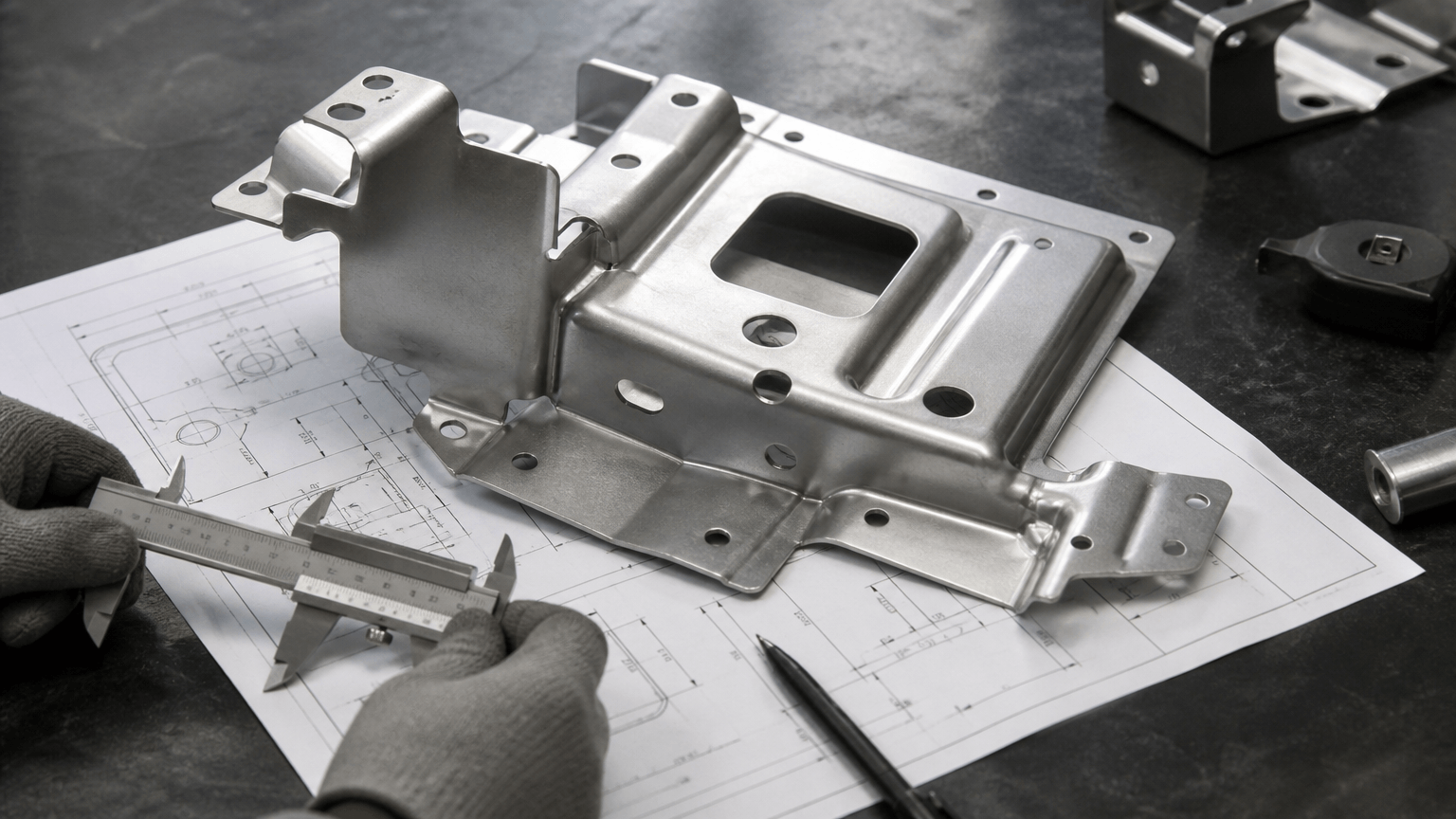
Before approving a batch, inspect the features that control fit and function, not only the overall outline. Compare the part with the drawing datums and critical assembly interfaces, including hole position, formed-feature height, bend angle, flange location, flatness, and relationships between multiple formed features.
Also review edge quality, burrs, cracks, wrinkles, dents, tool marks, scratches, and visible-face consistency. For galvanized parts, verify coating continuity and the agreed treatment of cut edges, scratches, and welding areas. Where welding is included, inspect the joint and heat-affected area against the project’s acceptance requirements.
Prototype fit and assembly verification should precede batch approval when the part mates with inserts, fasteners, seals, hinges, covers, machined components, or neighboring sheet metal structures. Agree on the inspection basis, sample frequency, reports, packaging protection, and nonconformance handling before production.
Where RFQ Assumptions Create Cost and Production Risk
Many sheet metal fabrication problems begin before production starts. If drawings, tolerances, finish expectations, material grades, or assembly requirements are unclear, suppliers may quote based on different assumptions. That can make prices difficult to compare and may lead to rework, cosmetic rejection, assembly misalignment, or production delays later.
For OEM buyers, the goal is not simply to request the lowest price. The goal is to make sure each supplier is quoting the same manufacturing reality. Before confirming an order, clarify which dimensions are fit-critical, which surfaces are cosmetic, whether prototypes must match batch-production conditions, and how finished parts will be inspected.
Frequently Asked Questions
What pressed sheet steel details should buyers define before requesting a quote?
Buyers should define the functional requirement, drawing notes, critical dimensions, material or process expectations, and any inspection points related to pressed sheet steel. This helps suppliers quote the same manufacturing scope instead of making different assumptions.
How can RFQ details affect cost, fit, or lead time?
RFQ details can change tooling, forming, welding, finishing, inspection, or rework requirements. If buyers do not clarify it early, two supplier quotes may look comparable while covering different production risks.
Why should drawing requirements be reviewed before prototype approval?
drawing requirements may look acceptable on a single sample but become harder to control during batch production. Buyers should confirm whether the prototype reflects the same process, finish, and inspection conditions expected for production.
What inspection points matter most for pressed sheet steel projects?
Important inspection points usually include fit-critical dimensions, holes or mating areas, cosmetic surfaces, finish build-up, welded or formed features, and any dimensions that affect downstream assembly. These points should appear in the RFQ or drawing notes.
How can buyers reduce prototype approval risk before batch production?
Buyers can reduce risk by clarifying drawings, locking key material and finish assumptions, defining inspection timing, approving a representative sample, and confirming which dimensions or surfaces require tighter process control.
How can Yishang help review pressed sheet steel requirements?
Yishang can review drawings, RFQ notes, material requirements, tolerance expectations, finish details, samples, and assembly needs to identify unclear assumptions before quoting or batch production.