Why Shear Stress Matters for Procurement Professionals
In modern metal fabrication, part failures—like cracked brackets, warped panels, and broken weld seams—rarely come from poor materials. They often trace back to unaccounted shear stress hidden in the design or fabrication process. For overseas wholesale buyers, especially those sourcing custom electrical enclosures, junction boxes, or welded assemblies, understanding how shear stress impacts durability is a direct way to control risk, warranty exposure, and total cost of ownership.
Unlike visible tension or compression, shear acts parallel to material surfaces. It silently accumulates at weld throats, joints, or cut edges. A cabinet that appears structurally sound in static testing might distort or crack after shipping vibration or field loading. That’s why YISHANG approaches shear stress not as a theoretical variable—but as a core sourcing and engineering checkpoint that directly determines product lifespan, shipment stability, and brand reliability.
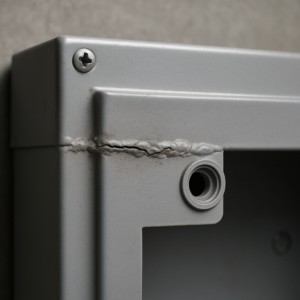
When Shear Stress Affects Welded Enclosure Design and Cost
Not every metal product requires simulation modeling, but recognizing when shear control is crucial can prevent performance issues, reduce rework, and protect buyer margins.
Complex Loading and Thin-Gauge Materials
When loads are multidirectional—twisting, vibrating, or applied off-center—shear forces become dominant. A wall-mounted junction box might carry mostly vertical load, yet when exposed to lateral vibration or torque from cable stress, fasteners and welds encounter torsional and transverse shear.
Lightweight materials (<2 mm thick), especially 304 stainless steel, offer lower cross-sectional resistance. Although cost-effective, these housings require strategic joint reinforcement or weld sequencing at early design stages. Buyers reviewing drawings should assess whether the enclosure’s structure can withstand transport and field vibration.
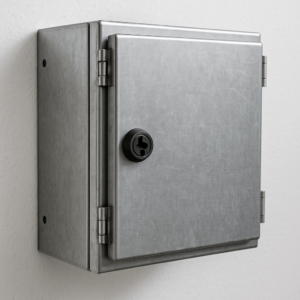
Joint Interfaces and Stress Hotspots
Every point where load transfers—from weld seam to bolt or adhesive interface—is a shear hotspot. Misalignment or insufficient contact area can amplify lateral stress, especially in modular enclosure systems. Procurement professionals should ensure drawings include reinforcement features and check for dynamic load testing protocols.
Thermal Expansion in Mixed-Material Assemblies
When galvanized steel is welded or fastened to aluminum or stainless steel, thermal mismatch during temperature fluctuations can induce hidden shear stress. For solar battery enclosures and outdoor telecom boxes, this effect accumulates over seasonal cycles. Confirming metal compatibility and surface coatings upfront is a smart procurement practice.
Hidden Risks That Undermine Lifecycle Reliability
Many failures trace back to decisions made in the design or quoting phase. Here are common engineering oversights that procurement teams can help identify early:
Welds Sized for Tension Only
Welded joints are often designed based on axial strength formulas. However, fillet welds in lap joints frequently fail through shear fatigue, not tension. A small change in weld orientation, throat thickness, or bead sequencing can double fatigue life. YISHANG includes lateral shear validation in all welded assembly reviews.
Off-Axis Mounting and Bracket Loading
When components are mounted off-center or on cantilevered brackets, load paths bend and generate shear. Designs that simplify force paths into vertical vectors often miss these realities. FEA simulations or low-volume prototypes with torsional testing can expose these risks early.
Edge Burrs and Micro-Notches
Shear stress often concentrates at sharp corners, laser cuts, or burrs. These imperfections evolve into fatigue cracks, especially under vibration or thermal cycling. Buyers should specify post-cut deburring, edge polishing, and burr height limits as part of their RFQ.
Shear Risk Assessment in Technical Procurement
Integrating shear stress awareness into RFQ review helps procurement managers source more durable products. Here are key checkpoints:
- Are dynamic, off-axis loads accounted for?
- Do welds and fasteners undergo lateral stress testing?
- Are materials thermally compatible? Especially in outdoor or climate-variable environments.
- Is edge finishing controlled? Request sample QC reports.
- Does the manufacturer integrate floor-level welding insights into design reviews?
Each factor influences lifecycle cost, field failure risk, and brand reputation.
The Hidden Cost of Ignoring Shear
Ignoring shear doesn’t always show up in the prototype—but it does show up later, when it matters most.
In-Field Failures
Shear cracks appear post-installation, triggered by wind, thermal expansion, or mechanical vibration. A cracked weld on a pole-mounted cabinet can cause failure in security, power, or telecom systems—bringing costly downtime and service calls.
Scrap, Rework, and Delay Penalties
Rejected batches due to panel distortion or joint misalignment affect not only production timelines but also logistics and inventory costs. Even a 5% rejection rate can erode margins in large-volume supply contracts.
Loss of Buyer Confidence
Frequent field issues due to undetected shear stress lead to tighter inspection protocols or lost accounts. For repeat B2B buyers, quality stability and trust weigh heavily in long-term partnerships.
Factory-Level Controls Against Shear Failures
A capable supplier will address shear from design to QC, ensuring the product is resilient in real-world use.
Controlled Cutting Processes
Laser and plasma cutting can create heat-affected zones (HAZ) that reduce fatigue resistance. YISHANG controls cooling rates and gas shielding parameters to preserve metal ductility near edges.
Punching and Burr Management
Uncontrolled die clearance leads to high burrs—a built-in crack risk. YISHANG uses tight-clearance punching dies and post-punch deburring to meet NEMA-grade enclosure standards.
Precision Assembly and Weld Fixtures
Weld distortion or misaligned bolt holes add cumulative shear. YISHANG’s weld fixtures and assembly jigs are calibrated to maintain flatness and tolerance even in thin-gauge stainless steel builds.
Engineering Best Practices for Shear Resistance
Without raising costs, many small decisions can drastically reduce shear-related risks.
Weld Design Principles
- Favor double-shear joints when possible
- Distribute welds evenly rather than over-sizing
- Avoid thermal distortion by staged weld sequencing
- Align welds with predicted force vectors
Material and Surface Optimization
- Choose metals with high shear ductility (e.g., 304 SS) for load-bearing joints
- Consider surface hardening or shot peening where dynamic loading exists
- Avoid coatings that increase brittleness under stress
Testing and Validation
- Request lap-shear, torsional, or cyclic fatigue tests
- Run FEA that includes shear vector visualization
- Include dye penetrant or ultrasonic NDT at critical joints
Procurement as a Driver of Long-Term Performance
Shear stress isn’t just an engineering detail—it’s a strategic sourcing variable. When buyers assess and discuss shear behavior with their suppliers, they raise the quality baseline and reduce lifecycle risks.
YISHANG integrates shear-related checks into everything from DFM reviews to final packaging inspections. By sourcing from manufacturers that control for lateral loading and thermal mismatch, buyers gain more than products—they gain reliability, lower return rates, and stronger client satisfaction.
Frequently Asked Questions (FAQ)
Q1: What is an acceptable shear stress level for 304 stainless steel enclosures?
A: This depends on joint geometry, weld type, and loading conditions, but typically ranges between 74–120 MPa for static applications. Ask your supplier to calculate based on your use case.
Q2: What design features help resist shear-induced fatigue?
A: Double-shear joints, staggered weld beads, reinforced corners, and polished edges all contribute to fatigue resistance.
Q3: What testing methods validate lateral stress durability?
A: Lap shear testing, FEA modeling, and dye penetrant inspections are commonly used.
Ready to strengthen your next enclosure project?