
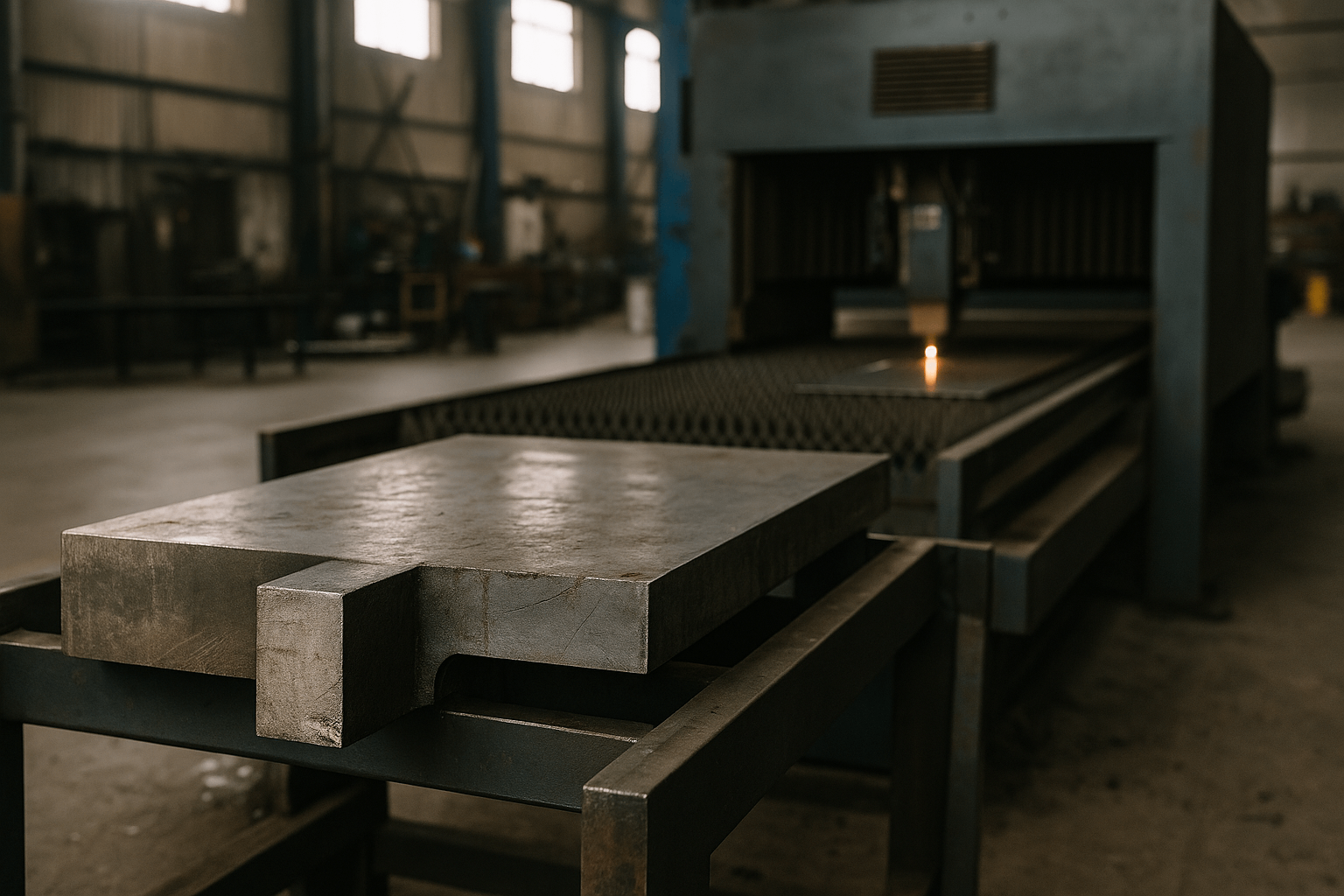
How Shear Strength Impacts Custom Metal Frames
In custom metal fabrication, a failed part does not always mean the material was poor or the supplier made a basic production mistake. Many failures start much earlier, when the design assumes one type of load but the finished part is exposed to another. A stainless steel hinge that cracks, a cabinet frame that twists, or a bracket that tears sideways may all point to the same issue: the part was designed around tensile strength, while the real load was controlled by shear.
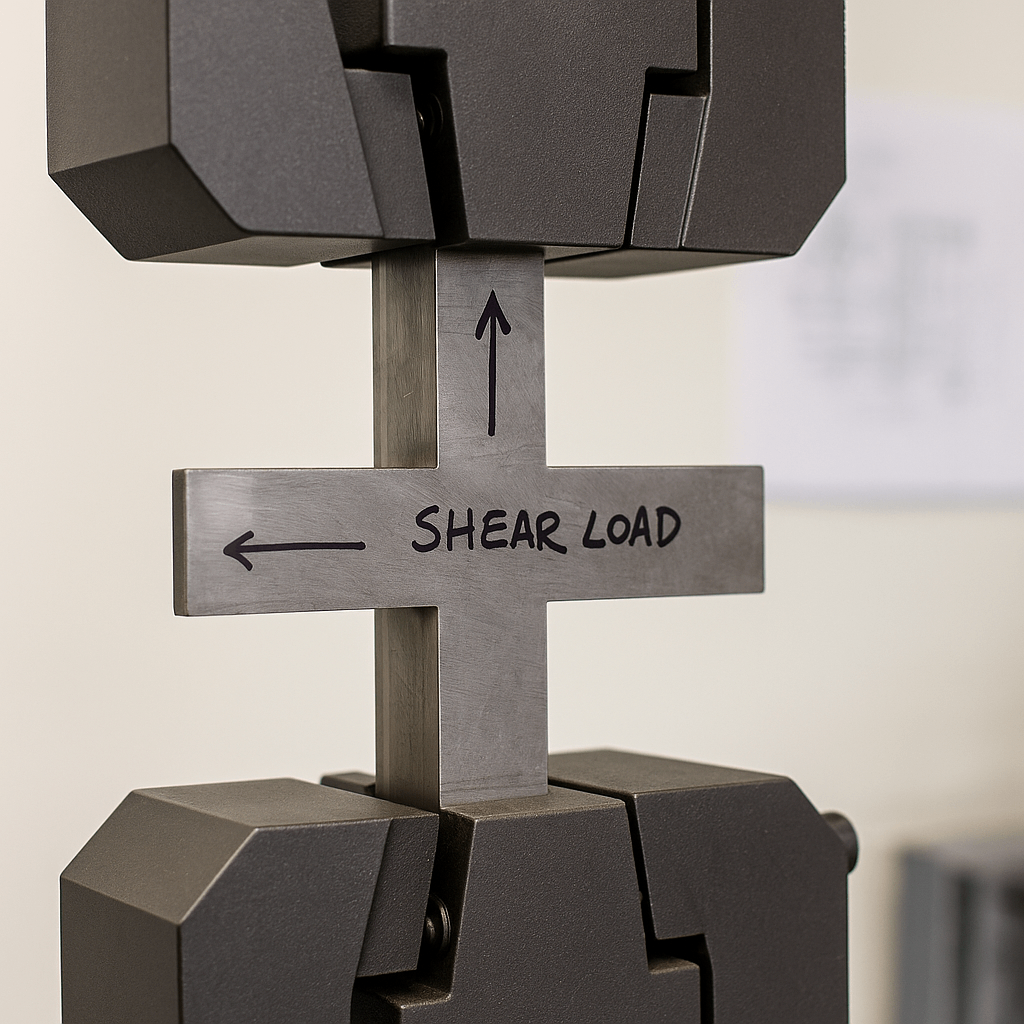
Tensile strength describes how well a metal resists being pulled apart. Shear strength describes how well it resists sliding or cutting forces across its internal structure. These two values are related, but they are not interchangeable. Even stainless steel, aluminum, or carbon steel parts with impressive tensile data can fail early when lateral loads are not considered.
For wholesale buyers, OEM sourcing teams, and engineers ordering custom metal frames, brackets, cabinets, and structural components, this difference matters at the RFQ stage. It affects material selection, thickness, joint design, welding method, reinforcement, and long-term service life.
Tensile vs. Shear in 304 & 316 Stainless Steel Applications
In real products, loads are rarely as clean as they appear on a drawing. A machine bracket may carry vertical weight while also resisting vibration. A kiosk frame may be pulled during assembly and pushed sideways during use. A stainless steel cabinet joint may experience tension, shear, torsion, and impact at the same time.
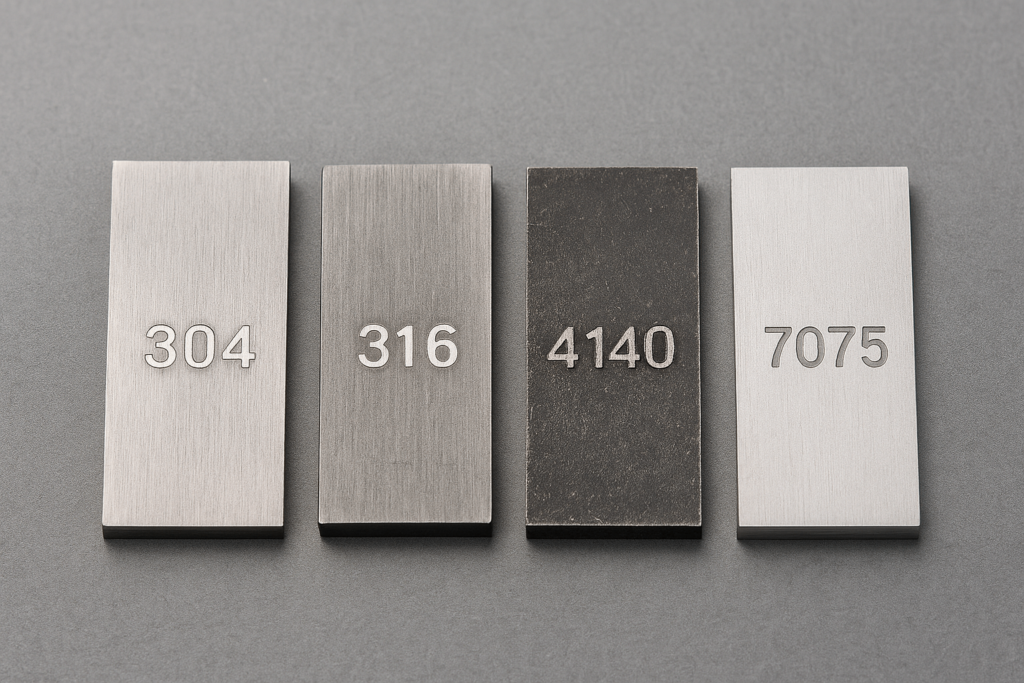
This is why 304 and 316 stainless steel should not be selected only by looking at tensile strength. 304 stainless steel is widely used in custom sheet metal parts because it offers good corrosion resistance, formability, and general mechanical performance. Its ultimate tensile strength is commonly around 505 MPa, while estimated shear strength is often much lower, around 303 MPa. That difference can matter in tabs, hinges, brackets, welded joints, and bolted connections.
316 stainless steel is often chosen where corrosion resistance is more important, especially in marine, medical, outdoor, or chemical-related environments. It may offer slightly better performance under certain mixed-load conditions, but it is not a simple “stronger replacement” for every application. The part geometry, thickness, bending radius, weld position, hole location, and load path still decide whether the component will survive in service.
At the specification stage, buyers should describe how the part will actually be used. A good RFQ for stainless steel fabrication should not only mention material grade and surface finish. It should also explain whether the part will carry static load, vibration, side force, repeated impact, or assembly stress.
Comparing Strengths: Data Doesn’t Tell the Whole Story
Material data sheets are useful, but they do not tell the whole story. Most buyers look first at tensile strength because it is easy to compare. The problem is that many fabricated metal parts do not fail in pure tension. They fail around holes, welds, bends, slots, tabs, pins, or unsupported edges where shear stress is concentrated.
| Material Type | UTS (MPa) | Estimated Shear Strength (MPa) |
|---|---|---|
| 304 Stainless Steel | ~505 | ~303 |
| 304 Stainless Steel Yield Strength | ~215 | — |
| 316 Stainless Steel | ~515 | ~309 |
| 7075 Aluminum | ~570 | ~330 |
| AISI 4130 Steel | ~670 | ~402 |
| Red Copper | ~210 | ~126 |
These values are helpful for early comparison, but they should not be treated as final design proof. Processing history can change performance. Cold drawing, heat treatment, welding, bending, punching, and machining may all affect how the metal behaves under real service loads.
For example, a steel grade may show stronger tensile values after cold working, yet become less forgiving around sharp corners or punched holes. Hardened alloy steel may look excellent in a strength table but become less suitable for parts that need ductility under shear or impact. In custom metal fabrication, material data should be combined with geometry review and manufacturing experience.
Misused Shortcut: "Shear = 0.6 × Tensile"
A common shortcut says shear strength is about 60% of tensile strength. This can be useful for rough screening, but it becomes risky when it is treated as a design rule for custom metal parts.
Some materials follow this estimate reasonably well. For example, 6061-T6 aluminum is often close to the 0.6 ratio, with tensile strength around 310 MPa and shear strength near 186 MPa. But other materials, tempers, and fabricated shapes can behave differently. Softer metals, copper-based materials, thin sheet parts, welded sections, and formed components may not match the shortcut in a reliable way.
The 0.6 rule also ignores geometry. A wide, flat plate and a narrow punched tab may use the same material but fail very differently. Hole spacing, edge distance, bend direction, grain direction, weld size, fastener preload, and surface treatment can all influence shear performance.
For OEM buyers, this means the supplier should not only confirm the material grade. They should also review the part structure, joining method, thickness, and expected load direction before confirming whether the design is safe for production.
What Procurement and Design Teams Often Miss
One common problem in OEM sourcing is that engineering and procurement evaluate the same part from different angles. Engineers may focus on drawings, tolerances, and installation space. Procurement teams may focus on unit price, lead time, and supplier capacity. Both are important, but shear-critical details can fall between them.
For example, an M8 bolt may have high tensile strength on paper, but it can still deform or loosen under shear if the joint is not properly designed or preloaded. A thin 304 stainless steel tab may pass a basic dimensional check but tear sideways after repeated use. A welded cabinet frame may look rigid at inspection but twist during shipping or installation if the load path was not considered.
Bringing an experienced custom metal fabrication supplier into the discussion earlier can prevent these issues. Depending on the application, Yishang Metal Products Co., Ltd. can support buyers by:
- Reviewing whether the selected metal grade suits the expected load direction
- Suggesting stronger materials such as 4140 steel for load-critical zones when appropriate
- Recommending ribs, gussets, thicker sections, or larger contact areas for brackets and frames
- Checking whether a proposed weld design is practical for production and service conditions
- Helping adjust the design before tooling, sampling, or bulk manufacturing begins
These small changes are often less expensive than redesigning a failed part after mass production.
Smarter Design Approaches for Shear Durability
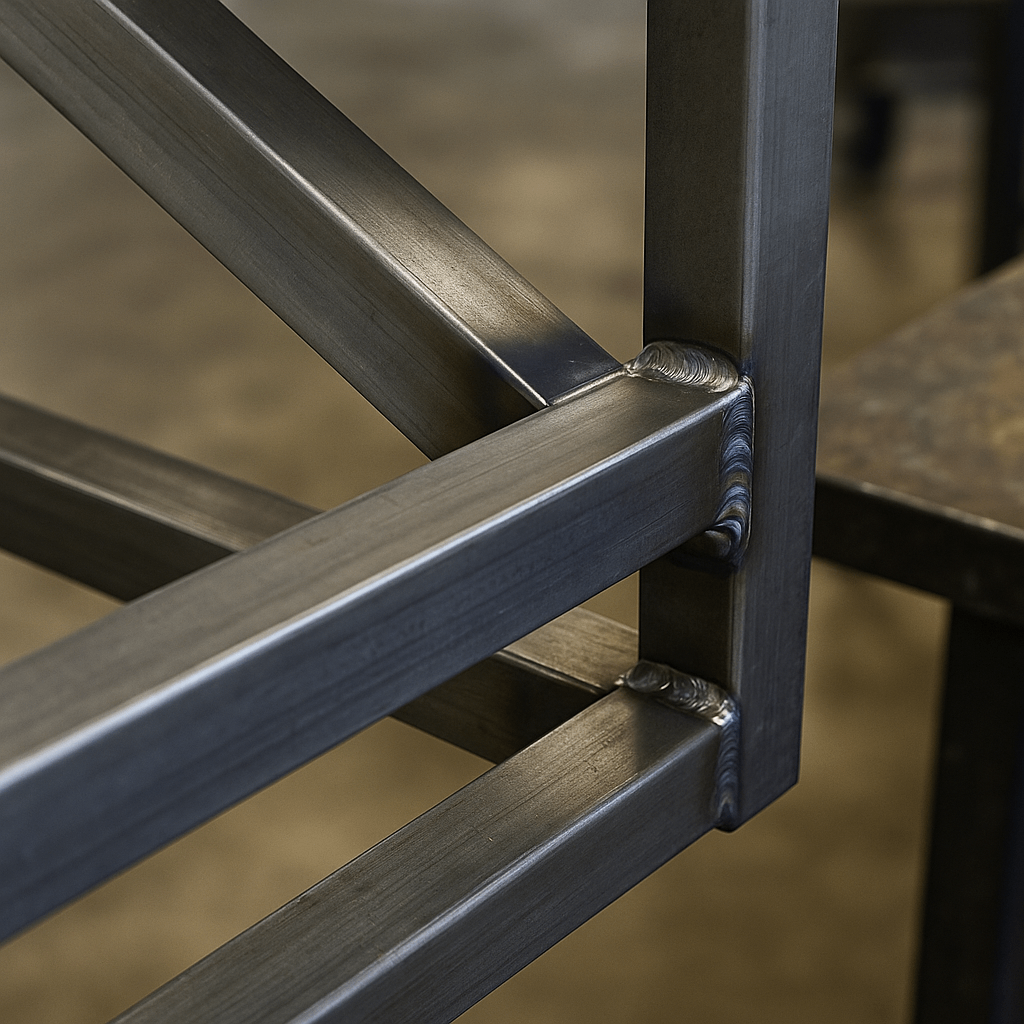
Designing for shear durability means looking beyond the material name. A stronger alloy may help, but it cannot compensate for weak geometry or poor joint layout.
Practical design approaches include:
- Using double-shear joints where possible to distribute load more evenly
- Adding ribs, gussets, flanges, or return bends to reduce lateral flex
- Keeping welds away from peak shear paths when the structure allows it
- Increasing edge distance around holes and slots
- Avoiding sharp internal corners in shear-loaded features
- Matching fastener size, preload, and hole tolerance to the working load
- Reviewing whether the forming direction affects critical tabs or bends
For lightweight applications, 7075 aluminum may be attractive because of its high strength-to-weight ratio. However, it is not always the easiest material for fabricated assemblies, especially where bending, impact, or repeated shear loads are involved. The temper grade, thickness, bend radius, and joining method should be reviewed before final approval.
Tolerance control is also part of shear design. Misaligned holes, uneven welds, loose fasteners, or overtightened bolts can introduce secondary shear forces. These issues are especially important for export metal assemblies that must survive packaging, shipping, installation, and long-term use.
When Shear Testing Is Worth the Cost
Tensile data is usually easier to obtain than shear data. Many standard material certificates focus on chemical composition, tensile strength, yield strength, elongation, or hardness. For ordinary sheet metal parts, that may be enough. But when a part depends on lateral load resistance, shear testing or simulation can be worth the cost.
Buyers should consider additional validation when the part includes:
- Safety-related brackets, hooks, frames, or support structures
- Thin sheet metal tabs that carry repeated side loads
- Bolted or pinned joints exposed to vibration
- Welded frames used in equipment, cabinets, vending machines, storage systems, or medical devices
- Aluminum parts where weight reduction cannot reduce reliability
- Large-volume OEM orders where one design mistake can affect thousands of units
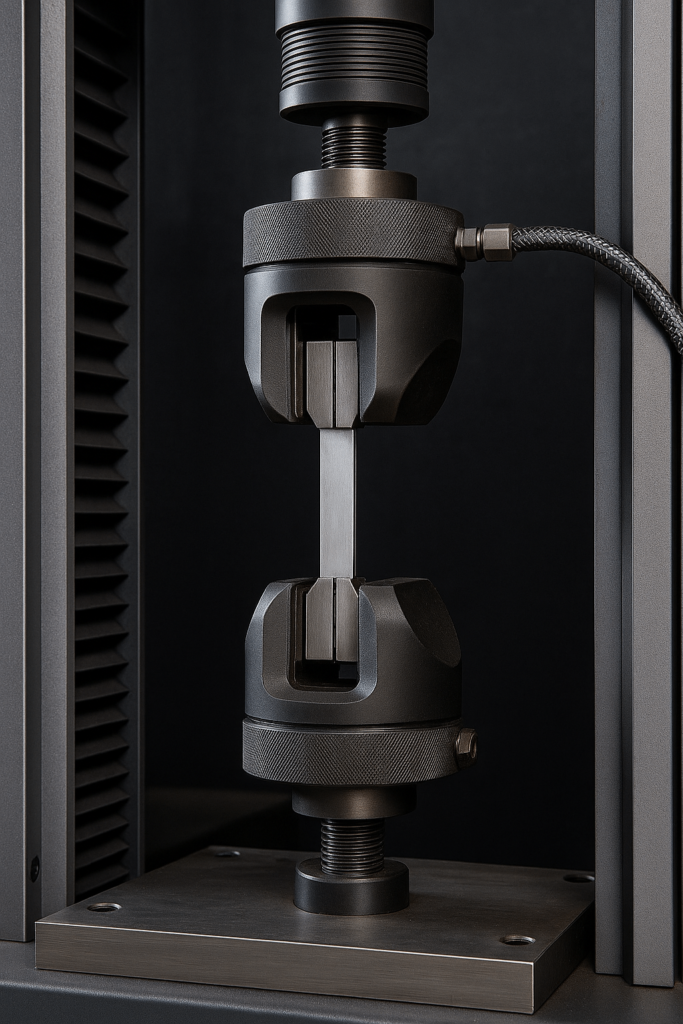
Depending on the material and structure, relevant checks may include punch shear testing for thin sheet, double-shear testing for bolts or pins, and lap-shear testing for welded or bonded joints. When physical testing is not practical during early development, FEA can help identify high-risk zones before samples are made.
For custom projects, Yishang can discuss manufacturability, material behavior, welding feasibility, and reinforcement options during the RFQ or prototyping stage. This helps buyers avoid relying only on catalog strength values.
Misconceptions That Undermine Design Integrity
Several misconceptions can lead to weak design decisions:
- “Higher tensile strength is always better.” Not necessarily. If the main failure mode is shear, impact, bending, or fatigue, tensile strength alone may not protect the part.
- “Bolts only fail in tension.” In many assemblies, bolts and pins are exposed to sideways force, vibration, and bearing stress around the hole.
- “Shear only matters in welds.” Shear can affect brackets, tabs, pins, hinges, punched holes, slots, flanges, and unsupported edges.
- “A thicker part always solves the problem.” Thickness helps in some cases, but poor load direction, small edge distance, or bad joint design can still cause failure.
- “Material certificates prove the part will work.” Certificates are useful, but they do not replace application review, sample testing, or assembly-level validation.
Brass, copper, and other copper-based alloys may look acceptable when buyers only compare tensile values. However, they may not perform well in parts exposed to repeated side loading, vibration, or local deformation. This is especially relevant for connectors, fittings, decorative metal parts, and small hardware components.
The better approach is to connect mechanical values with the real service condition. Yield strength, shear strength, elongation, hardness, forming method, and joint structure should be reviewed together.
Final Thoughts: Avoid Failure by Asking Better Questions
For custom metal parts, the cheapest quotation is not always the lowest-cost solution. If the part fails during assembly, shipping, installation, or field use, the real cost may include replacement, redesign, delayed delivery, and customer complaints.
Before confirming material and production, buyers should ask better technical questions:
- What is the main load path: tension, shear, bending, torsion, or a combination?
- Which areas of the part are most likely to deform first?
- Are holes, welds, bends, or tabs exposed to side loading?
- Does the selected material still perform well after cutting, bending, welding, machining, and surface treatment?
- Is sample testing or FEA needed before bulk production?
- Can the design be reinforced without making the part unnecessarily expensive?
These questions help custom frames, enclosures, brackets, cabinets, and support structures perform under real conditions, not just look acceptable on a tensile strength chart.
Frequently Asked Questions (FAQ)
Q1: What is the typical ratio between shear strength and tensile strength in metals?
A1: A common estimate is around 0.6:1, meaning shear strength is often about 60% of tensile strength. However, this is only a rough guideline. Material grade, temper, heat treatment, part geometry, welding, bending, and hole design can all change the real result.
Q2: Is 316 stainless steel better than 304 stainless steel for shear strength?
A2: 316 stainless steel may offer slightly different mechanical performance and better corrosion resistance, but it should not be selected only for shear strength. For many custom stainless steel parts, the design, thickness, joint layout, and working environment matter as much as the grade.
Q3: When should I ask a supplier for shear strength data?
A3: Ask for shear-related data or engineering review when the part will face side loading, vibration, repeated impact, bolted joints, welded joints, thin tabs, brackets, hinges, or load-bearing frames.
Q4: Can a metal part fail in shear even if the tensile strength is high?
A4: Yes. A part with high tensile strength can still tear, slide, deform, or crack under shear if the load path, hole spacing, weld position, or joint design is weak.
Q5: How can OEM buyers reduce shear failure risk in custom metal parts?
A5: Provide clear application details in the RFQ, including load direction, installation method, vibration, expected service life, and assembly conditions. Then work with the supplier to review material, thickness, reinforcement, tolerances, welding, and testing needs before mass production.