Sheet metal bending is one of the most common forming processes used in metal fabrication. It is widely applied in products such as electrical enclosures, equipment frames, machine covers and structural brackets.
Although bending may appear simple, the process requires precise control of angle, radius and material behavior. Small deviations can affect assembly fit, structural strength or visual quality.
Understanding the different bending methods used in fabrication helps engineers and sourcing teams evaluate manufacturing options and choose processes that match the requirements of the final product.
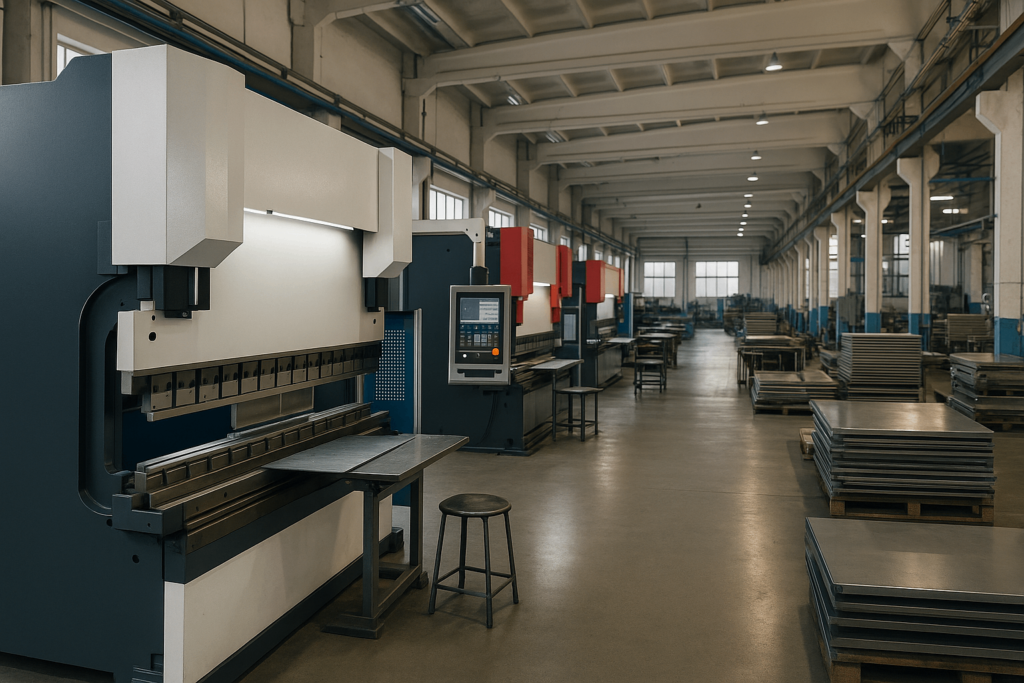
What Is Sheet Metal Bending?
Sheet metal bending is a forming process in which a metal sheet is permanently deformed along a straight axis to create an angle or shape. The process is typically performed using press brakes, panel benders or specialized forming tools.
During bending, the outer surface of the metal stretches while the inner surface compresses. Between these two regions lies the neutral axis, which shifts slightly depending on material thickness and bending radius.
Understanding this basic deformation behavior helps explain why different materials, thicknesses and bending methods require different tooling and process parameters.
Basic Principles of Sheet Metal Bending
Every bend changes metal structure. When pressure is applied on a press brake, the outer side stretches, the inner side compresses, and the neutral axis shifts slightly. If a supplier miscalculates this, flat patterns can be off by 1–2 mm, enough to affect IP-rated sealing or door fit.
Different materials react differently. Stainless 304 or 316 and aluminum 5052 have higher springback (15–20%) than mild steel (10–12%). Manufacturers often compensate for this behavior using CNC press brakes equipped with angle measurement systems. These machines monitor the bending angle during forming and automatically adjust pressure to maintain consistent results.
| Control Factor | What It Influences | Why It Matters to Buyers |
|---|---|---|
| Precision | Final angle and radius | Assembly fit, sealing, aesthetic quality |
| Consistency | Lot-to-lot repeatability | Reduces inspection and rework cost |
| Efficiency | Setup time and tooling | Affects unit cost and lead time |
In industrial fabrication, general tolerances and bending allowances are typically defined using international standards such as ISO 2768 and DIN bending guidelines.
Common Industrial Sheet Metal Bending Methods
Flexible Methods for Small or Mixed Orders
Air Bending
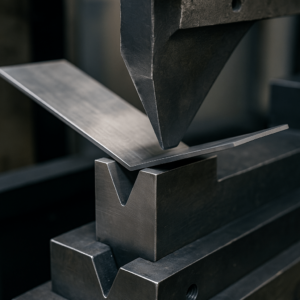
Air bending is the most flexible and cost-effective method. The punch presses the sheet toward the die without full contact, allowing multiple angles from one tool set. Ideal for small or mixed batches under 500 pcs and prototype runs.
Advantages: low tooling cost, fast setup. Limitations: higher springback, moderate precision.
Air bending is commonly used for aluminum brackets, control panels and similar parts where flexibility and low tooling cost are important.
Bottoming and Coining
Bottoming and coining are high-precision processes used for large-scale production. In bottoming, the sheet fully contacts the die; in coining, pressure exceeds yield strength, removing springback.
Advantages: exceptional repeatability, tight tolerance (±0.3°). Best for: telecom enclosures, electrical cabinets, and machine housings.
Coining processes typically require significantly higher forming pressure than standard bending. This increased pressure eliminates springback and produces highly consistent bend angles.
Shape-Focused Methods for Structural and Aesthetic Parts
Roll Bending
Used for creating smooth curves and cylinders, roll bending employs three rollers to gradually form a large radius. Common in display frames, battery housings, and architectural panels.
Buyer Tip: Not suitable for radii under 10 mm. A professional supplier will verify curvature using radius gauges every 50 pcs and provide inspection data.
Folding / Panel Bending
Panel bending keeps the visible surface untouched—perfect for powder-coated or brushed stainless components. The machine clamps and folds the sheet edge without friction.
Advantages: no surface scratches, high aesthetic quality. Best for: server racks, cabinets, telecom housings.
Panel bending may cost slightly more per unit but saves up to 30% in post-polishing and rework.
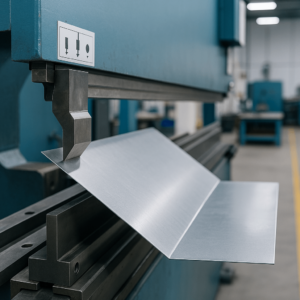
Industrial panel bending equipment can process large sheet metal panels used in cabinets, server racks and equipment housings.
U-Bending
U-bending produces deep channels and structural frames. Alignment and sequencing are critical for long parts. Many fabrication shops use simulation software to predict deformation and adjust bending sequences before production begins.
For production exceeding 1,000 pcs, U-bending ensures all channels stay parallel, improving assembly efficiency by 10–15%.
Finishing and Assembly-Friendly Techniques
Hemming / Flattening
Hemming folds sheet edges to improve strength and safety. It eliminates sharp edges and prepares flanges for gasket sealing.
Common Uses: vending machines, control cabinets, appliances. Materials: stainless 304, aluminum 5052.
Proper die design and flattening tools help prevent wrinkles during hemming operations, especially when working with thicker sheet materials.
Joggling / Offset Bending
This process creates an offset step allowing two panels to overlap. It simplifies assembly and eliminates the need for spacers.
Advantages: reduces weld length by 25%, simplifies fit-up, and saves time during on-site assembly. Best for: solar cabinets, multi-layer enclosures, and industrial frames.
High-Precision and Surface-Sensitive Techniques
Rotary Bending
Rotary bending uses a rotating die to form without surface contact—ideal for visible stainless or anodized aluminum parts. It avoids scratches and keeps mirror finishes intact.
Advantages: perfect for cosmetic parts, no secondary polishing required. Applications: EV chargers, kiosks, and decorative housings.
Three-Point Bending
Three-point bending adjusts punch and supports for variable angles. It suits prototypes and low-volume orders since it requires no dedicated tooling.
Buyer Value: quick design validation before mass production, lower NPI cost.
Wipe Bending
A quick, efficient process for forming narrow flanges. Used in brackets and support parts where precision is moderate but throughput matters.
Advantages: low cost, fast production. Limitations: limited control for thick materials.
How Buyers Should Select the Right Bending Method
When comparing quotes, base your decision on the part’s function, material, quantity, and finish rather than price alone.
- Function: Structural parts → bottoming/coining; aesthetic panels → rotary/folding; assembly parts → joggling or air bending.
- Material: Stainless and aluminum require radii ≥ 2–4× thickness. Mild steel can bend tighter without cracking.
- Quantity: <200 pcs → flexible methods; >1,000 pcs → stable methods with consistent tooling.
- Surface Finish: Pre-painted or brushed → non-contact forming (panel or rotary).
Pro Tip: Include in your RFQ: “Please specify bending process and expected angle tolerance.” This signals professionalism and allows supplier comparison on process capability, not only cost.
Manufacturing Practices That Improve Bending Quality
Consistent bending quality depends on process control rather than individual operator skill. Professional fabrication facilities typically follow structured workflows based on ISO quality standards and documented manufacturing procedures.
Key Practices:
- Tool Life Tracking: Punch and die pairs monitored by cycle count to prevent angle drift.
- Grain Direction Control: Always bend across rolling grain to avoid cracking on stainless/aluminum.
- Hole Distance Standards: Maintain ≥1.5× sheet thickness between hole and bend line.
- Long-Part Straightening: For U-channels >1 m, in-process flattening ensures straightness.
Automation in Modern Sheet Metal Bending
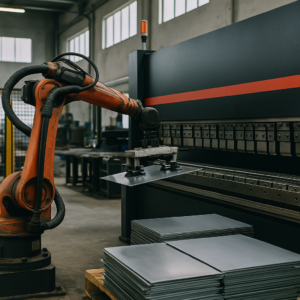
Automation ensures stability across batches and minimizes human variation. CNC press brakes with laser sensors adjust tonnage mid-cycle. Robotic handling prevents dents and misalignment.
Buyer Benefits:
- Predictable lead times with less manual setup.
- Stable visual quality for high-end enclosures.
- Traceable data via MES (Manufacturing Execution System) logs.
For repeat orders, automation guarantees the second container matches the first—critical for OEM programs with long product life cycles.
Conclusion: Process Knowledge Creates Purchasing Confidence
Understanding different sheet metal bending methods helps engineers and manufacturers choose the most appropriate forming process for each application. Factors such as material type, thickness, required accuracy and production volume all influence the choice of bending technique.
Selecting the correct bending method improves dimensional consistency, reduces production defects and ensures reliable assembly in the final product.
Frequently Asked Questions
Q1: What is the most cost-effective bending process for small orders?
Air bending allows multiple angles with one tool, minimizing setup for batches under 500 pcs.
Q2: How do I prevent scratches on stainless steel during bending?
Choose panel or rotary bending; both avoid direct die contact and maintain cosmetic surfaces.
Q3: What details should I include in my RFQ?
Material type, thickness, bend radius, quantity, and desired finish. Including this helps us propose the most accurate process and pricing.
Last updated: March 2026