
Procurement managers and OEM buyers face critical decisions when sourcing from sheet metal fabrication shops. From material selection to surface finishes, each choice impacts cost, product performance, and production timelines. This guide walks you through key considerations to ensure you secure a reliable supplier and mitigate common risks in custom sheet metal fabrication.
Material Selection: Balancing Cost, Performance, and Availability
Choosing the wrong material can lead to increased costs and reduced product lifespan. Common materials include aluminum, stainless steel, and carbon steel, each suited to specific applications:
- Aluminum: Lightweight and corrosion-resistant, ideal for aerospace and electrical enclosures. However, it has lower tensile strength compared to steel.
- Stainless Steel: Durable with excellent corrosion resistance, often used in food-grade and industrial environments. Higher cost makes it less ideal for low-budget projects.
- Carbon Steel: Cost-effective and strong but prone to rust without proper surface treatment. Suitable for structural brackets or welded assemblies.
For example, if you need custom enclosures for outdoor use, stainless steel or powder-coated aluminum ensures durability in harsh conditions. Submit detailed specifications, including environmental factors, to your supplier to avoid costly material mismatches.
Design for Manufacturability: Avoiding Delays and Errors
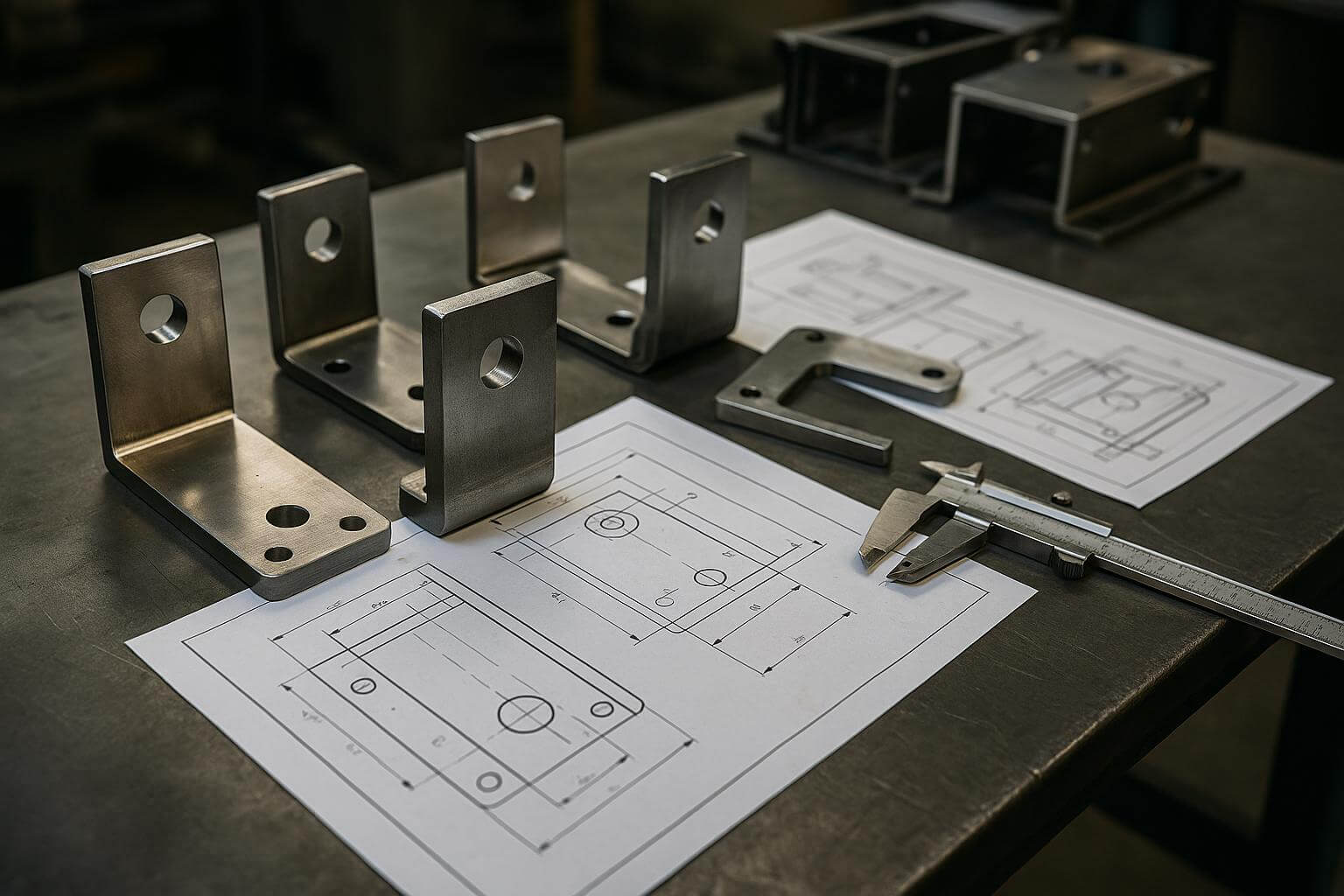
Complex designs with tight tolerances or non-standard features can become bottlenecks during production. Collaborate with your sheet metal fabrication shop early to review CAD drawings and identify manufacturability issues:
- Are the tolerances achievable within the shop’s capabilities?
- Do multi-step processes increase lead times?
- Will the design require specialized tooling?
For instance, a buyer submitting a prototype for a precision-machined bracket may face delays if tolerances are too tight for standard CNC equipment. Discuss these challenges upfront to avoid redesigning or scrapping the part mid-production.
Surface Finishes: Enhancing Durability and Aesthetics
Surface finishes protect parts from corrosion, wear, and environmental damage while improving visual appeal. Common finishing options include:
- Powder Coating: Suitable for industrial and consumer products, available in various colors and textures.
- Anodizing: Adds corrosion resistance and aesthetic enhancement, ideal for aluminum components.
- Galvanizing: Protects steel from rust, often used for outdoor structural parts.
Consider a project involving welded steel frames for outdoor equipment. Galvanizing ensures the frames withstand exposure to rain and humidity, reducing maintenance costs for the end user. Communicate your specific environmental requirements when requesting quotes.
Batch Consistency: Ensuring Quality in High-Volume Production
Scaling production introduces risks of inconsistent quality, especially in large-volume runs. Ask potential suppliers about their quality control processes and capacity to maintain precision:
- Do they use automated CNC machines for repeatability?
- How do they handle inspection during and after fabrication?
- Can they provide sample parts for approval before full production?
For example, producing 5,000 custom metal brackets requires consistent hole placement and dimensions. A supplier equipped with advanced CNC technology and robust inspection protocols can ensure uniformity across the batch, avoiding costly rework or delays.
RFQ Best Practices: Getting Accurate Quotes
A detailed RFQ minimizes misunderstandings and unexpected costs. Include the following details when requesting a quote:
- Material: Specify alloy type, gauge, and any certifications needed.
- Dimensions: Provide precise measurements and tolerances.
- Finish: Clarify coating, plating, or polishing requirements.
- Quantity: Indicate production volume, including prototypes or batch sizes.
- Assembly: If applicable, describe how parts fit together.
For instance, a buyer needing custom metal enclosures for electronics should submit 3D models and detail the internal mounting features, cable cutouts, and finish preferences, ensuring the supplier fully understands the scope of work.
Communication: Building Strong Supplier Relationships
Effective communication reduces risks and accelerates production. Ask suppliers about their responsiveness and willingness to provide technical support:
- Do they offer design consultations or manufacturability reviews?
- Can they suggest cost-saving alternatives for materials or finishes?
- Are lead times transparent, with updates during production?
For example, Yishang provides buyers with detailed feedback on drawings during the RFQ stage, helping to refine designs for optimal production efficiency. This proactive collaboration ensures smoother workflows and fewer surprises downstream.
Ready to streamline your sheet metal fabrication sourcing? Send your drawings, material requirements, tolerances, quantities, and finish preferences to get an accurate quote. Contact Yishang today.
Frequently Asked Questions
What should OEM buyers prepare before requesting a sheet metal fabrication quote?
Buyers should prepare drawings, material grade, sheet thickness, quantities, tolerance notes, finish expectations, and any assembly or inspection requirements. The clearer the RFQ, the fewer assumptions the supplier needs to make during quoting.
Why do sheet metal fabrication quotes vary between suppliers?
Quotes often vary because suppliers make different assumptions about tolerances, material yield, finishing steps, welding complexity, inspection needs, packaging, and lead time. A detailed RFQ helps buyers compare quotations on the same technical basis.
How can tolerance requirements affect fabrication cost?
Tight tolerances may require more controlled cutting, forming, fixturing, inspection, or secondary work. Buyers can control cost by separating fit-critical dimensions from non-critical dimensions instead of applying tight tolerances everywhere.
When is a prototype recommended before batch production?
A prototype is useful when the part has tight fit-up, visible surfaces, welded assemblies, complex bends, or mating components. It helps confirm manufacturability, assembly behavior, and finish expectations before larger quantities are produced.
What surface finish details should be included in an RFQ?
Buyers should specify finish type, color, coating thickness if required, cosmetic surfaces, corrosion expectations, masking areas, and any visual acceptance standard. This avoids finish-related rework or quote changes later.
How can Yishang support custom sheet metal fabrication projects?
Yishang can review drawings, clarify fabrication requirements, discuss materials and finishes, support prototypes, and prepare for batch production based on the buyer’s RFQ details.