
When sourcing from a sheet metal fabrication shop, many buyers assume that a well-documented RFQ will naturally lead to consistent and accurate quotes. However, the reality often proves otherwise. Even detailed RFQs can leave room for assumptions, misaligned priorities, and hidden risks. These gaps don’t just create price disparities; they often lead to downstream manufacturing challenges that are difficult—and expensive—to fix.
Where Cosmetic and Functional Priorities Collide
One of the most common sources of misalignment in sheet metal fabrication quotes stems from unclear distinctions between cosmetic and functional requirements. Buyers often focus heavily on appearance-related aspects, such as surface finish or paint quality, without explicitly distinguishing these from structural or fit-critical needs. This can lead to mismatched priorities in the supplier’s approach to fabrication.
Take, for example, a control cabinet intended for a manufacturing environment. If the RFQ specifies a powder-coated finish but doesn’t clarify whether minor surface imperfections are acceptable, suppliers might make different assumptions about the level of finishing required. One supplier might allocate additional resources to achieve a flawless cosmetic finish, inflating costs unnecessarily for a product that will spend its life on a factory floor. Another might prioritize speed and cost, delivering a finish that doesn’t meet the buyer’s expectations.
These misalignments often become apparent only when the first batch of parts is delivered, forcing buyers into costly rework or frustrating delays. To avoid this, RFQs should explicitly state the intended use and critical priorities—for example, specifying that a cabinet is for industrial use, where structural integrity takes precedence over minor cosmetic flaws.
Yishang helps mitigate these risks by conducting a pre-quote review of RFQs, ensuring that priorities are fully understood before work begins. This includes clarifying which surfaces are cosmetic, which features are functional, and where compromises can be made to balance cost and performance.
When Tolerances Are Assumed, Not Verified
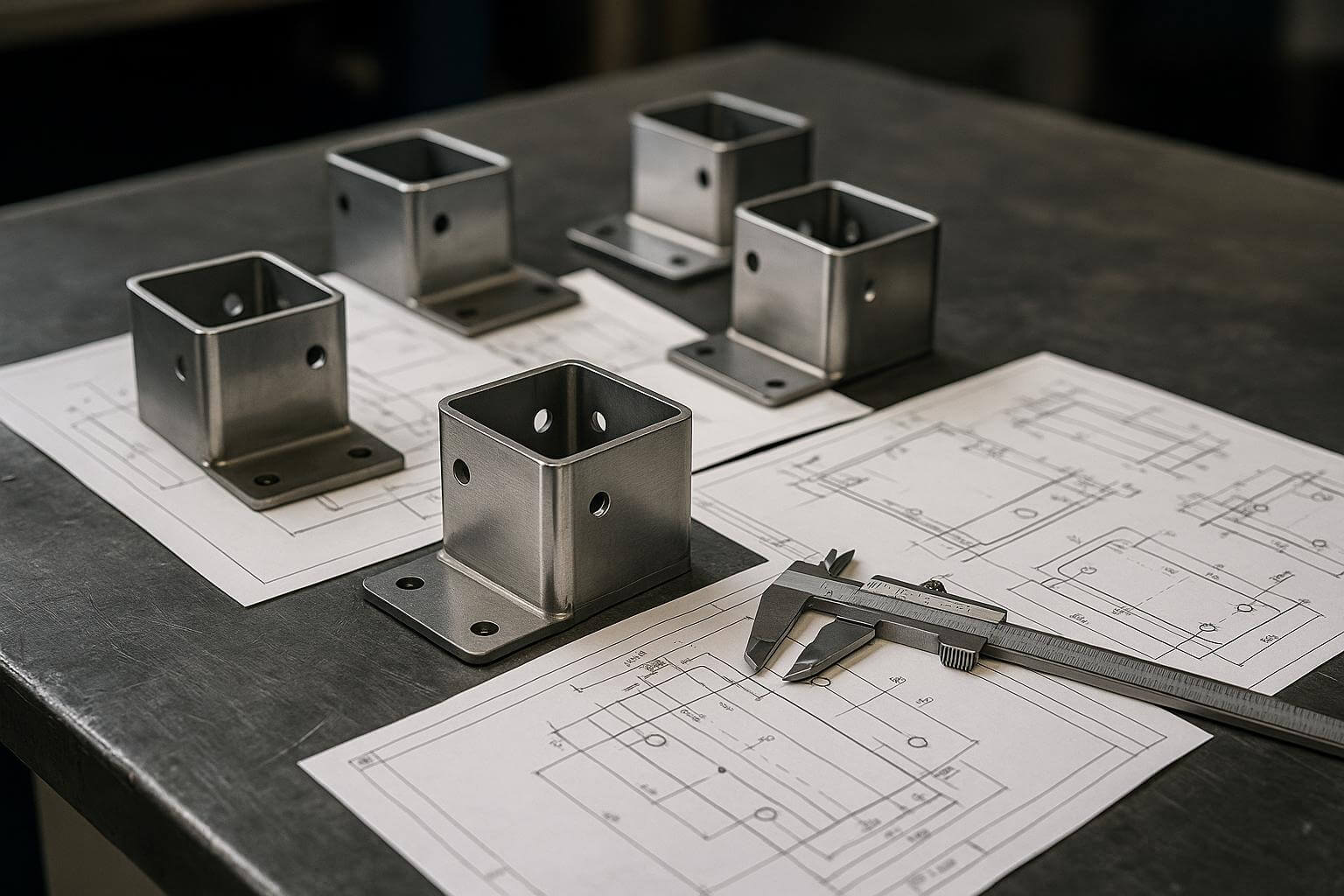
Another major driver of RFQ ambiguity lies in tolerance specifications—or lack thereof. Buyers often assume that general tolerances are understood by suppliers, but this assumption can backfire in custom sheet metal fabrication projects where tight fits or assemblies are involved.
Consider a welded assembly for an OEM machine housing. The RFQ provides detailed dimensions but omits specific tolerance requirements for the weld seams or joining areas. Supplier A assumes standard sheet metal tolerances of ±0.5mm, while Supplier B interprets the lack of detail as a need for precision welding with ±0.2mm tolerances. These different assumptions can lead to wildly different production methods, costs, and final part quality.
The consequences of such mismatches aren’t limited to cost overruns. An assembly built to loose tolerances may fail to fit with other components, causing delays in the production line and requiring emergency fixes. On the flip side, over-specifying tolerances can unnecessarily inflate costs without adding value.
To address this, buyers should specify tolerances not just for individual dimensions but also for critical functional interfaces. Yishang takes this a step further by reviewing designs for manufacturability, identifying areas where tolerances are critical versus areas where standard tolerances suffice. This ensures parts not only meet functional requirements but also remain cost-effective.
Prototype Success Doesn’t Guarantee Production Stability
A successful prototype run can give buyers a false sense of security, leading them to believe that their design is ready for full-scale production. However, the transition from prototype to production often reveals hidden challenges, especially when RFQs fail to consider scaling factors or secondary operations.
Imagine a sheet metal enclosure for an electronic device. The prototype is hand-assembled, with minor adjustments made on the fly to ensure a perfect fit. However, when the project moves to production, those manual adjustments are no longer practical. The lack of clear assembly fixture requirements or allowances for process variability results in inconsistent parts that either don’t fit or require time-consuming rework.
Additionally, secondary operations like inserting PEM fasteners or applying gaskets often introduce bottlenecks. If these steps weren’t explicitly included in the original RFQ, suppliers might exclude them from their quotes or handle them inconsistently during production.
To prevent these pitfalls, buyers should treat the prototype phase as an opportunity to refine not just the design but also the production plan. Yishang supports this transition by conducting a production-readiness review, identifying potential scalability issues and ensuring all secondary operations are clearly defined and accounted for before production begins.
Conclusion
The most common—and costly—errors in sheet metal fabrication projects often trace back to RFQ ambiguity. Misaligned priorities, unverified assumptions about tolerances, and insufficient planning for production scalability can all lead to significant downstream challenges. By clarifying these factors early, buyers can reduce risks and control costs.
At Yishang, we specialize in bridging the gaps between buyer intent and supplier execution. Whether it’s reviewing RFQs for clarity, optimizing designs for manufacturability, or ensuring a stable transition from prototype to production, our approach minimizes surprises and maximizes project success.
FAQs
- What are the most common RFQ gaps in sheet metal fabrication projects?
RFQ gaps often include unclear tolerance requirements, insufficient distinction between cosmetic and functional priorities, and missing details about secondary operations. - How can I ensure quotes accurately reflect my project needs?
Provide detailed RFQs that clearly outline priorities, tolerances, and secondary operations. Collaborate with suppliers like Yishang for pre-quote reviews. - Why do quotes for the same RFQ vary so much between suppliers?
Quotes vary due to differing assumptions about processes, tolerances, and finishing requirements. Clarifying these elements reduces discrepancies. - What’s the risk of not specifying critical tolerances?
Unspecified tolerances can lead to mismatched parts, assembly failures, or unnecessary cost increases due to over-engineering. - How can I ensure a smooth transition from prototype to production?
Work with a supplier like Yishang to identify scalability issues during the prototype phase and refine your production plan. - What role does design-for-manufacturability play in reducing costs?
Design-for-manufacturability ensures parts are optimized for efficient production, balancing functional needs with cost-effectiveness.