
When OEM buyers compare sheet metal fabrication quotes, the biggest differences often do not come from labor rates alone. They usually come from what the RFQ leaves open to interpretation, especially around tolerance priorities, finish expectations, and whether a prototype is meant to validate function only or support a stable production plan.
That is why two suppliers can quote the same cabinet, enclosure, bracket, or housing very differently while both appearing “reasonable” at first glance. The real problem usually appears later, when fit-up issues, cosmetic disputes, rework, or production delays reveal that the RFQ was never interpreted in the same way to begin with.
The Hidden Costs of Ambiguous Tolerance Specifications
Tolerance problems in sheet metal fabrication rarely begin with obviously bad drawings. They usually begin when buyers fail to separate fit-critical dimensions from general fabrication dimensions, especially in control cabinets, door panels, mating brackets, or welded frames where alignment matters more than overall size.
Where the Issue Begins
Imagine an RFQ for a laser-cut and bent aluminum control cabinet. The drawing includes basic dimensions but doesn’t specify tolerances for the bends or the fit-up of doors and panels. Supplier A assumes standard industry tolerances of ±0.5mm, while Supplier B interprets the design as requiring tighter tolerances of ±0.2mm for certain areas. Supplier A’s quote comes in 15% lower, but it’s based on looser tolerances that may cause assembly issues down the line.
Why Buyers Miss It Early
During the RFQ stage, buyers often focus on the final product’s appearance or functionality but overlook how tolerances impact manufacturability. Suppliers rarely flag these issues upfront because they operate within the framework of their own assumptions.
Where It Becomes Risky
Problems arise when the aluminum control cabinet is delivered. The doors and panels don’t align properly, causing gaps and poor fit-up. Retrofitting these parts requires either post-production modifications or a redesign of the original tooling, both of which increase costs and delay assembly schedules.
What Should Be Clarified Earlier
Buyers must clearly identify critical dimensions and tolerances in their drawings. Highlight areas where tight tolerances are essential for performance and areas where standard tolerances are acceptable. This distinction allows suppliers to quote more accurately and avoid unnecessary cost inflation.
How Yishang Reduces This Risk
In RFQs for cabinets, panels, or bracket assemblies, Yishang does not treat all dimensions the same by default. We first identify which dimensions affect door alignment, panel fit, hardware mounting, or downstream assembly, then separate those from general fabrication tolerances. That allows buyers to avoid both under-specification and unnecessary cost inflation.
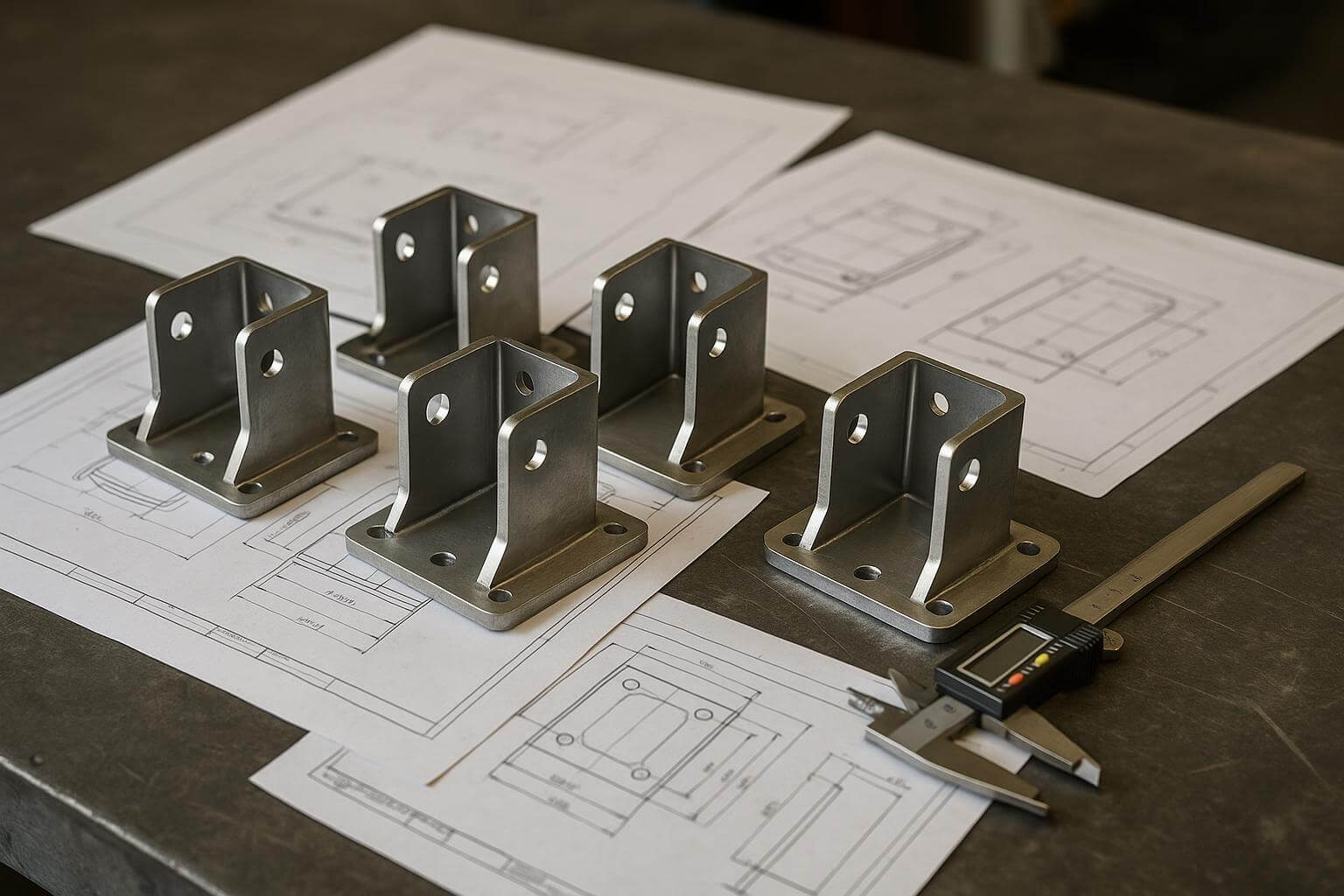
When Cosmetic Priorities Undermine Functional Performance
Finish-related quote distortion usually starts when buyers describe the appearance they want without making it equally clear how the part will be used. This happens often in stainless-steel enclosures, branded equipment covers, medical housings, and display fixtures, where visible surfaces matter commercially but not every surface needs the same treatment level.
Where the Issue Begins
Consider an OEM sourcing custom stainless-steel enclosures for a medical device. The RFQ emphasizes that the exterior surface must be visually flawless, but it doesn’t differentiate between areas that are purely cosmetic and those that are structurally or functionally critical. Supplier A quotes a higher price because they assume a polished finish is required for the entire part, while Supplier B quotes lower by focusing only on visible surfaces.
Why Buyers Miss It Early
Buyers may assume that suppliers automatically understand which surfaces need higher cosmetic attention. However, without explicit instructions, suppliers either overengineer the finish (raising costs) or underprioritize it (causing quality issues).
Where It Becomes Expensive
After the enclosures are delivered, it becomes clear that Supplier B’s interpretation of the finish requirements was too lenient. The visible surfaces have scratches that compromise the product’s aesthetic appeal. The buyer now faces additional costs for secondary finishing processes, such as polishing or repainting.
What Should Be Clarified Earlier
RFQs should include detailed notes on which surfaces are cosmetic and specify acceptable finish levels (e.g., brushed, polished, or powder-coated). Functional areas, such as mounting points, should have separate requirements to ensure structural integrity.
How Yishang Reduces This Risk
For enclosure and housing projects, Yishang helps buyers define which surfaces are customer-visible, which areas are functional only, and which finish requirements are driven by environment rather than appearance. This prevents over-finishing internal areas while making sure visible or exposed surfaces are quoted and processed to the right standard.
Prototype Success That Fails in Production Scale-Up
Prototype approval often creates false confidence in sheet metal projects because it proves that a part can be made once, not that it can be repeated economically and consistently at volume. That gap becomes especially visible in housings with tight cutouts, bend-heavy covers, patterned panels, or assemblies that depend on stable downstream fit-up.
Where the Issue Begins
Picture a startup developing a new IoT device. They order a prototype batch of 10 sheet metal housings with intricate cutouts for sensors, assuming the same design can scale to thousands of units. The RFQ doesn’t account for the potential challenges of tooling, material handling, or batch consistency in larger production runs.
Why Buyers Miss It Early
During prototyping, suppliers often use manual or semi-automated processes that aren’t viable for high-volume production. Buyers mistakenly assume that prototype success guarantees production feasibility, neglecting to evaluate scalability in the RFQ stage.
Where It Becomes Unstable
As production ramps up, the intricate cutouts prove difficult to replicate consistently with automated equipment. Material waste increases, production slows, and quality variations emerge. The buyer faces unplanned costs for retooling and process optimization.
What Should Be Clarified Earlier
RFQs for prototypes should include questions about scalability. Ask suppliers if the proposed design, materials, and processes are suitable for both low-volume and high-volume production. This foresight can prevent costly redesigns later.
How Yishang Reduces This Risk
Before moving from prototype to production, Yishang reviews whether cutout geometry, bend design, material handling, and batch repeatability are compatible with scaled manufacturing. Where needed, we recommend design adjustments early so buyers do not discover production instability only after tooling, scheduling, or procurement commitments have already been made.
Conclusion
RFQ gaps often seem like minor issues during the quoting phase but can lead to significant problems in production. By addressing ambiguous tolerances, clarifying cosmetic versus functional priorities, and planning for scalability, buyers can mitigate risks and improve project outcomes. Yishang’s consultative approach to sheet metal fabrication helps buyers navigate these complexities, delivering not just parts but manufacturing stability and long-term reliability.
Which dimensions should be marked fit-critical in a sheet metal RFQ?
Mark the dimensions that directly affect alignment, mating, hardware mounting, or downstream assembly. For cabinets, enclosures, and welded assemblies, this usually includes hole positions, door fit, panel flushness, and bracket interfaces rather than every general feature.
Why do similar sheet metal RFQs lead to very different quotes?
Because suppliers are often pricing different assumptions, not the same requirements. Variations usually come from tolerance interpretation, finish expectations, assembly needs, and whether the supplier is quoting for prototype flexibility or stable production.
When should cosmetic finish requirements be separated from functional requirements?
Whenever a part has both visible and non-visible areas, or when appearance and performance do not carry the same priority. This is common in enclosures, cabinets, covers, and display-related fabricated parts.
What prototype adjustments usually fail to scale into production?
Manual edge correction, hand-fitting during assembly, bend compensation changes, and extra polishing often work in small prototype batches but become inconsistent or expensive in volume production. Buyers should always confirm whether the prototype process matches the intended production method.
How should buyers specify tolerances for cabinets, enclosures, or welded assemblies?
Tolerances should be defined by functional priority, not applied equally across the whole drawing. For these parts, door alignment, mounting-hole positions, hinge fit, and mating features usually matter more than non-critical formed edges or cosmetic dimensions.
What should an RFQ include to reduce quote variance between suppliers?
A strong RFQ should include clear drawings, material grade, thickness, finish expectations, tolerance priorities, assembly requirements, annual volume, and whether the project is prototype-only or intended for production scale-up. Clear priorities make quotes much easier to compare fairly.