
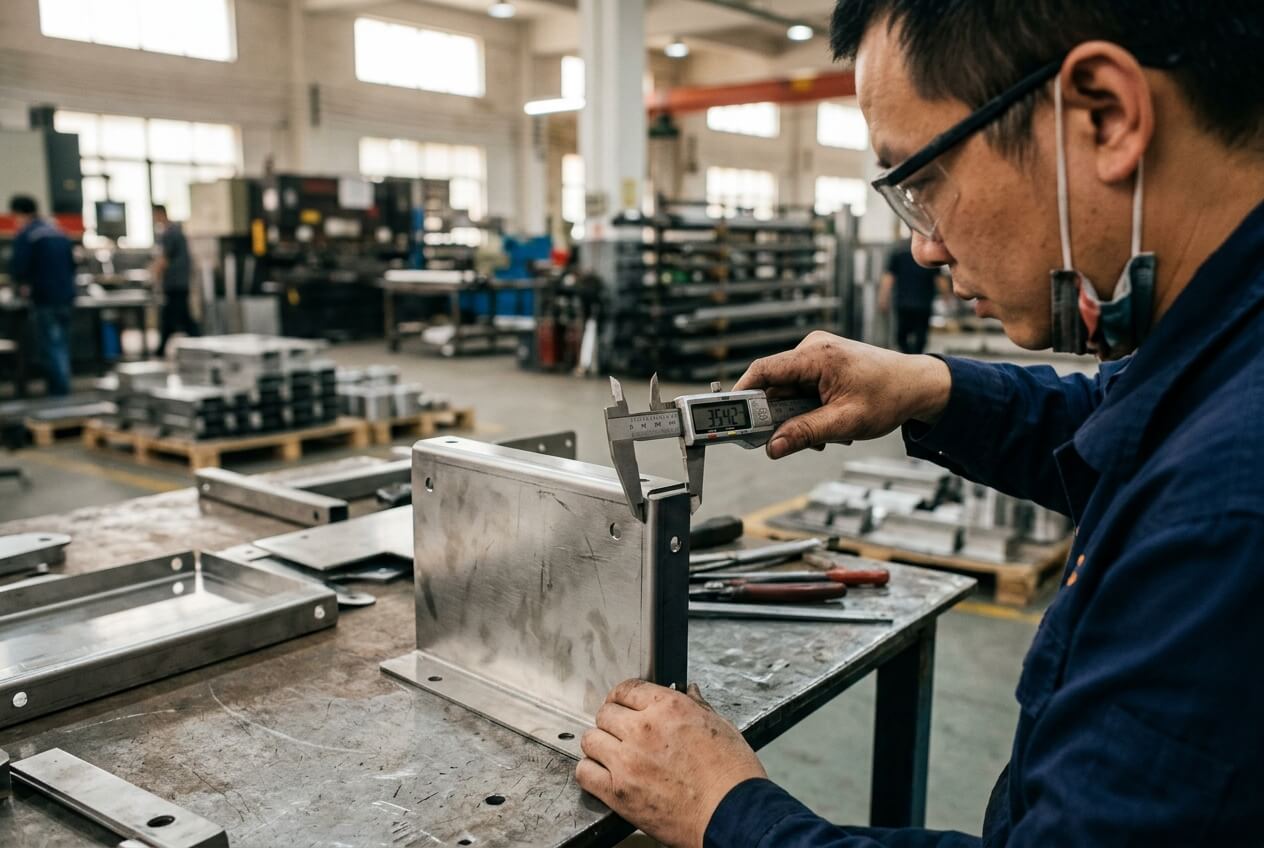
In sheet metal fabrication, buyers often ask what is hardness only after the quote changes or the first sample fails inspection. That is usually too late. Hardness sounds like a simple material term, but in procurement it can mean very different things: incoming sheet condition, bend resistance, weld-zone behavior, or surface durability after finishing. If the RFQ does not name the exact feature, the supplier has to guess. The result is rarely a small misunderstanding. It usually changes the price, the process route, and the inspection plan.
The real risk is not the number itself. The risk is attaching that number to the wrong part state. A cabinet door can need dent resistance at the visible skin. A bracket can need bend stability at the flange. A welded frame can need a predictable response near the heat-affected zone. Each case leads to a different quote assumption. Each one also creates a different batch failure mode if the buyer only says hardness without context.
That is why hardness should be treated as a procurement decision, not a vague material note. If buyers define where the requirement applies, how it will be checked, and what failure it is trying to prevent, they reduce surprise in quoting and production. If they do not, they may approve a part that reads correctly on paper but still dents, cracks, or loses fit after forming and welding.
Why one vague hardness note can send three suppliers toward three different quotes
A supplier does not price hardness in isolation. The estimator asks what process must survive the requirement. If the note refers to the sheet before fabrication, the quote may stay close to standard cold-rolled stock. If it refers to a formed flange or a welded zone, the supplier may need extra process control, different tooling, or more inspection time. Those assumptions can move the price long before sampling starts.
That is why two quotes can look comparable while describing different parts. One shop may assume a standard steel enclosure with a normal forming sequence. Another may assume a harder grade because the RFQ mentions durability but not the failure point. A third may quote the visible surface after powder coating because the drawing never says whether hardness matters before or after finishing. The unit prices will not look wildly different, but the risk behind them will be different.
Name the feature, not just the property
Buyers get better quotes when they tie hardness to the exact feature that matters. For a door panel, that may be the outer skin around a handle cutout. For a bracket, it may be the bend line nearest a mounting hole. For a welded frame, it may be the area around the joint where distortion or softening could affect fit. The supplier can only price the right process when the drawing says which feature carries the risk.
One practical example is a control cabinet for a production line. The buyer wants the door to resist dents during installation and maintenance. If the RFQ only says “hardness required,” one supplier may price thicker material, another may add an unnecessary grade upgrade, and a third may assume the finish will carry the cosmetic requirement. The finished cabinet may still look acceptable, but the cost basis will not match the buyer’s intent.
A better RFQ says what the part must survive. It also says where the reading matters and whether the number applies to incoming sheet, a formed part, or the finished assembly. That one change removes a large share of quote spread caused by hidden assumptions.
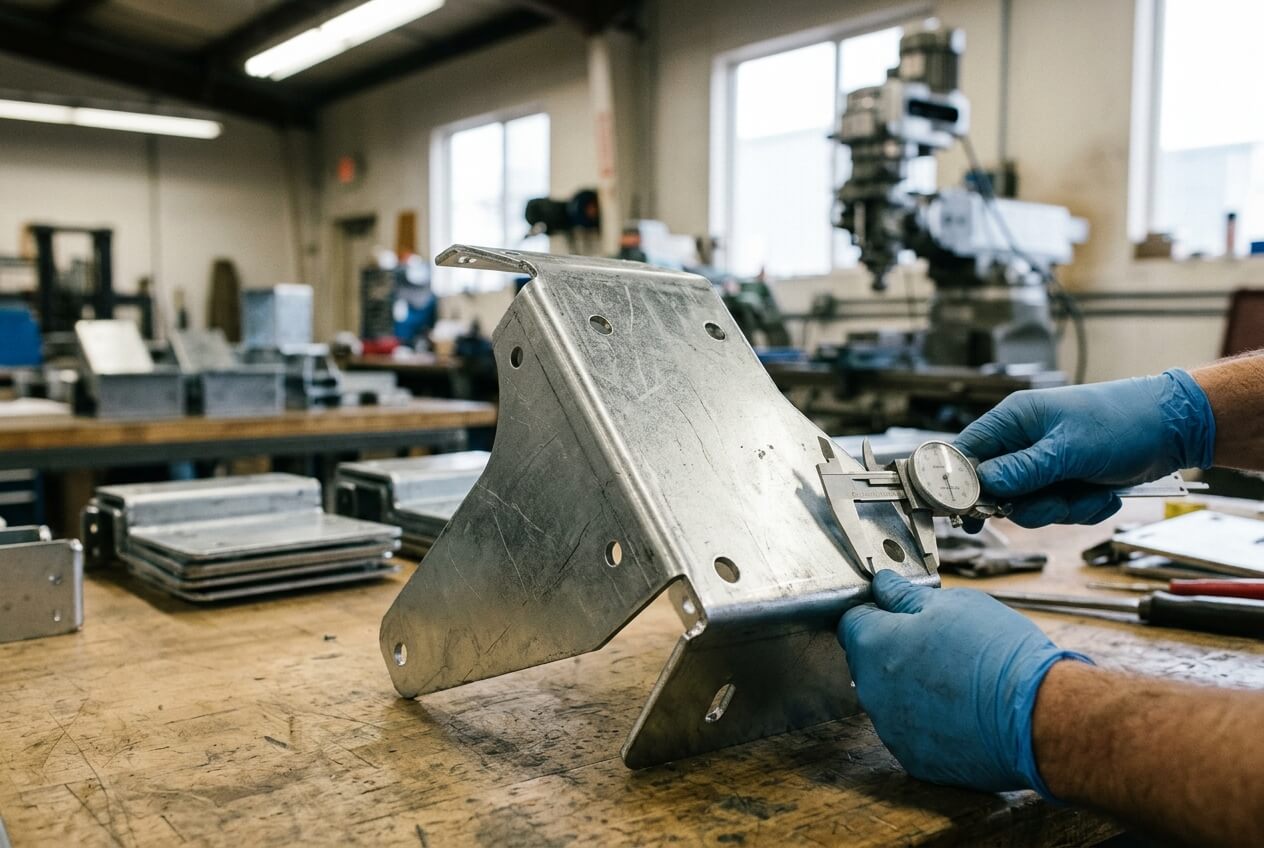
How forming, welding, and finishing change the hardness story after the first cut
Buyers often assume hardness stays fixed once the mill certificate is issued. Fabrication proves otherwise. Cutting does not usually change the issue much, but bending can work-harden a flange area, and welding can create a heat-affected zone with different behavior from the base sheet. Even finishing changes how teams judge the result, because a powder-coated or polished surface may look stronger than it really is.
That matters because the part the buyer approves is not the same as the flat stock that arrived at the shop. A sheet can meet the spec before forming and still crack at a tight bend if the geometry is aggressive. A welded assembly can look dimensionally correct and still hide a soft or uneven zone near the bead. A coated enclosure can pass appearance review while the substrate underneath still dents too easily during handling.
Process stage determines what hardness means
If the real concern is assembly fit, the test has to reflect the part after forming and welding, not just the raw sheet. If the concern is cosmetic damage, a finish note may matter more than a base-metal hardness value. If the concern is repeated fastening or contact wear, the supplier needs to know which surface sees the load. Hardness becomes useful only when the drawing ties it to the right production stage.
Consider a welded frame for a machine base. The prototype may fit because the fabricator adjusts it by hand. In production, the same frame can behave differently if the material lot changes or the weld sequence shifts. A hardness reading taken on the wrong spot will not explain why the bolt holes no longer line up cleanly. The buyer then spends time arguing about material when the real issue is that the test point never represented the failure point.
Surface finish can add another layer of confusion. A coated part may resist scratches better, but the coating does not repair a bend line that is already too brittle. Buyers who want durability should decide whether hardness is the primary control or whether finish acceptance and handling controls are more relevant. That decision belongs in the RFQ, not in the sample review.
How prototype approval can hide a batch problem in sheet metal parts and welded assemblies
Prototype parts often pass because they get more attention than production parts. They may use a favorable material lot, more manual adjustment, and slower handling. That can create a false sense of security. The sample looks right, the hardness note appears acceptable, and the buyer moves to volume. Then the batch starts to drift because the production run follows a more repeatable, less forgiving process.
This is where hardness causes the most expensive surprises. A part can pass a prototype inspection and still fail in volume because the buyer never froze the stage of the measurement. Was the number checked on the flat sheet, after bending, after welding, or after coating? Was it a one-off sample or a lot requirement? Without that detail, the prototype approval does not protect the batch order.
Prototype and batch should answer the same question
One useful test is to compare the failure mode, not just the reading. If a bracket must survive repeated installation, the prototype should be checked where the flange sees load. If a cabinet door must resist dents, the sample should be evaluated on the visible skin, not a hidden coupon. If a frame must stay stable after welding, the approval should include the affected zone that could change fit later. The sample only helps when it matches the real risk.
A realistic project example makes this clear. A buyer sources 300 powder-coated brackets for a conveyor guard. The prototype passes hardness testing on the flat blank, but production bends show more springback, and the mounting holes shift enough to slow assembly. The issue was not the coating or the final measurement alone. The issue was that the prototype approval never locked the hardness note to the formed geometry that actually affected fit.
Another example is a welded enclosure for a control system. The first article looks good, but batch production shows inconsistent door closure because the frame around the weld area changes slightly with each lot. If the buyer had named the weld-adjacent zone as the inspection point, the supplier could have controlled the sequence earlier and avoided the assembly dispute later.

What to freeze in the drawing so hardness does not become a quotation dispute later
The best way to prevent a hardness dispute is to make the drawing answer the questions the estimator will ask. That does not mean over-specifying every surface. It means defining the requirement in a way the supplier can quote, inspect, and repeat. If buyers want comparable offers, they should make the RFQ say what the number controls and what happens if the result falls outside the range.
This is also where the procurement team should connect hardness to other project details. Material choice affects forming force. Tolerances affect how much springback matters. Finish expectations affect whether the visible face or the base metal should carry the requirement. Quantity matters too, because a one-off prototype can tolerate more manual correction than a batch order. If the RFQ leaves those details open, the quote will absorb the uncertainty.
Put the acceptance rule in the same package as the part
A practical note might state whether hardness applies to incoming sheet, a bent flange, a weld zone, or the finished cosmetic face. It should also name the test method if the buyer needs comparable results, such as Rockwell, Vickers, or Brinell. If the location matters, mark it on the drawing. If the lot size matters, define the sample size and the action for an out-of-range reading. That is enough to turn a vague preference into a production rule.
For buyers working with Yishang on custom sheet metal fabrication, that review step is often the difference between a usable quote and a misleading one. A clear drawing package helps the team review manufacturability, prototype behavior, finish impact, and assembly fit before the order is released. It also reduces back-and-forth later, when a supplier realizes the hardness note was pointing at the wrong surface.
In practice, the clearest RFQs do not ask the supplier to infer intent. They state the part name, the material requirement, the quantity, the tolerances, the finish expectation, and the hardness-related failure the buyer wants to avoid. That gives the fabricator enough context to price the right process and keep the first article aligned with batch production.
If you want a quote that reflects the real part, not a guess, send your drawings, material requirements, quantities, tolerances, finish expectations, and any prototype hardness results before you release the RFQ. Yishang can then review the part against the fabrication sequence and flag where the hardness note affects forming, welding, coating, or final inspection.
Frequently Asked Questions
What is hardness in sheet metal fabrication?
It is a material property that describes how well the metal resists indentation or localized deformation. In procurement, the useful question is not only the number itself. Buyers also need to know which part feature the number protects, such as a flat skin, a bend line, or a weld-adjacent area.
Why does hardness change the quote for a bent bracket or enclosure panel?
Harder material can increase tool wear, springback, and crack risk during forming. That can require tighter process control or different material assumptions. If the RFQ does not explain the real failure risk, the supplier may price a safer process than the buyer expected.
Should hardness be checked before or after bending and welding?
It depends on the risk you are trying to control. If the concern is raw material quality, check the incoming sheet. If the concern is fit, cracking, or weld-zone behavior, the reading should match the formed or welded state. The test point should always follow the failure mode.
Can a prototype hardness result be used for batch approval?
Only if the prototype and the batch use the same material state, the same process sequence, and the same inspection point. Prototype parts often receive more manual correction and gentler handling. That can hide a production problem unless the buyer freezes the requirement clearly before volume release.
What test methods are commonly used for sheet metal hardness?
Rockwell, Vickers, and Brinell are common options, but the right one depends on material thickness, test location, and how comparable the buyer wants the results to be. The important part is consistency. The RFQ should name the method if the reading will affect acceptance or supplier comparison.
What should buyers send with an RFQ when hardness matters?
Send drawings, material requirements, quantities, tolerances, finish expectations, and any prototype results. Add a note that explains what hardness is protecting, such as dent resistance, assembly fit, or weld-zone stability. That gives the fabricator enough context to quote accurately and reduce batch risk.