
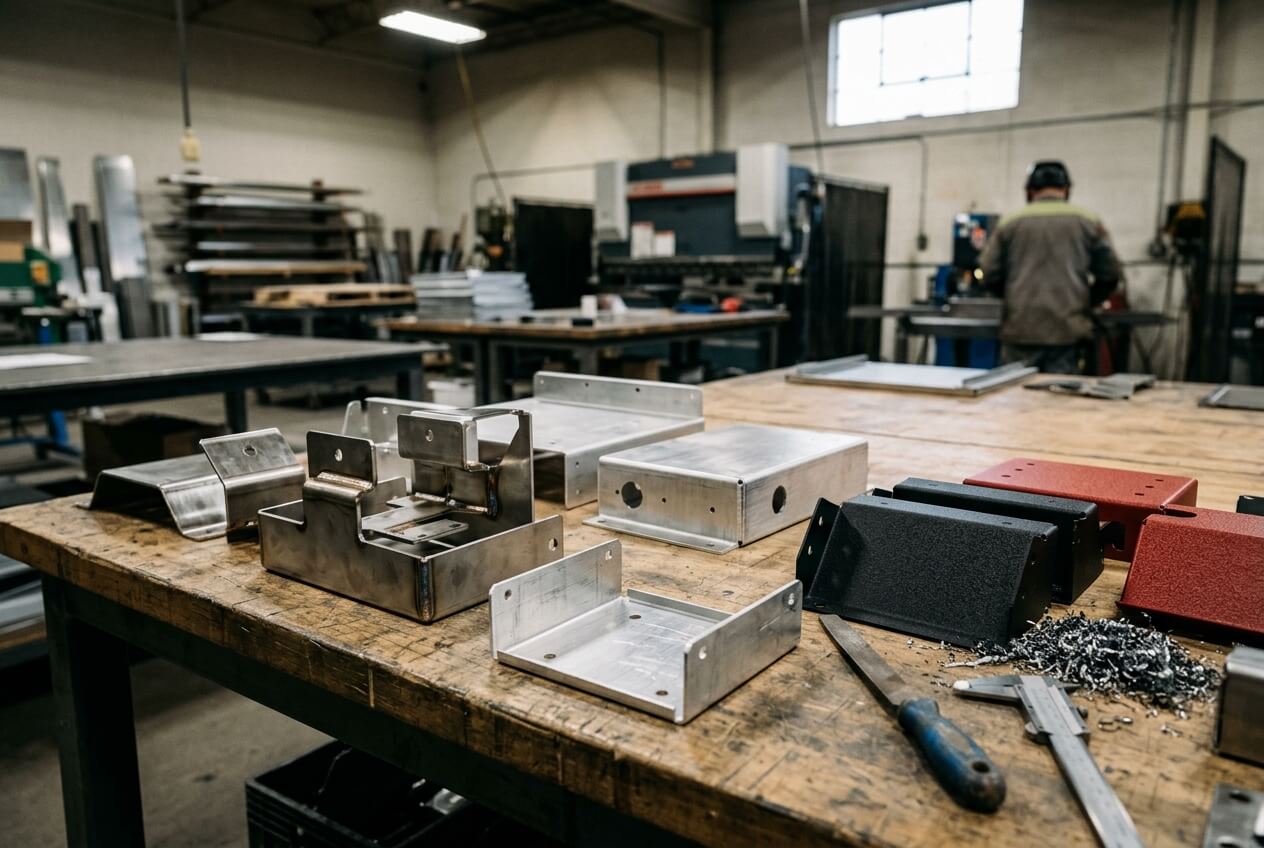
An OEM sourcing team sends one enclosure drawing to three suppliers before a cost review. One supplier prices cold-rolled steel with powder coating. Another assumes galvanized steel because the cabinet may face humidity. A third quotes stainless steel because the drawing mentions corrosion resistance in a note.
The unit prices arrive in the same spreadsheet, but the suppliers did not quote the same product. Each supplier filled missing RFQ information with a different assumption. That is the real procurement risk. The buyer may choose the lowest price, then discover extra polishing, fixture work, coating rework, weak threads, poor door fit, or longer lead time after the prototype.
Searches such as multiple metal processing inc may bring up many companies that handle metal. Some process raw material. Some trade, recycle, cut, finish, or fabricate. Custom sheet metal procurement needs a narrower test. The RFQ must show how the part will be cut, punched, bent, welded, finished, assembled, inspected, packed, and used.
This article focuses on one risk: unclear RFQs create supplier assumptions that make quotes non-comparable. Material, finish, tolerance, prototype, and batch questions all matter because they change the quoted fabrication route.
Where RFQ Assumptions Start to Distort Fabrication Quotes
A drawing note such as “1.5 mm steel, black powder coat” looks simple. It names a material family and a finish. It does not define the use environment, visible faces, assembly function, corrosion exposure, mating parts, or inspection priorities.
Suppliers will not leave every blank empty. They will estimate. One may quote the easiest route that meets the visible note. Another may include safer pretreatment, tighter inspection, and better packaging. A third may assume the buyer will accept substitution if the unit price improves.
The first price gap may not be a price gap
Procurement often treats supplier differences as negotiation room. Sometimes that works. In custom sheet metal fabrication, a price gap can also mean a scope gap. One quote may include welding fixtures. Another may assume hand adjustment. One may protect cosmetic faces during bending. Another may expect coating to hide handling marks.
This becomes dangerous when the buyer compares only unit price. The low number may exclude the controls that protect assembly fit. The high number may include cautious work that the product does not need. Both cases waste time because the RFQ did not separate required performance from supplier guesswork.
A stronger RFQ does not need excessive detail. It needs the details that stop suppliers from inventing the product. For a metal enclosure, that means material grade, thickness, finish system, visible surfaces, mating components, hinge or latch requirements, critical dimensions, quantities, and packaging expectations.
Project example: cabinet quote with three hidden products
A control cabinet RFQ listed “steel enclosure, powder coated, indoor industrial use.” One supplier quoted cold-rolled steel. Another quoted galvanized sheet. A third added seam sealing and thicker coating because the cabinet might sit near washdown equipment. The buyer saw a 14% price spread and pushed the lowest supplier for faster delivery.
Prototype review exposed the missing scope. The lowest quote did not include masking for grounding points, extra edge protection, or controlled door gaps after coating. The problem started with a short RFQ note. It affected quotation, sample approval, and production schedule. The buyer should have clarified humidity exposure, grounding areas, coating thickness, and door gap acceptance before asking for final pricing.
Material Assumptions Become Cutting, Bending, Welding, and Hardware Assumptions
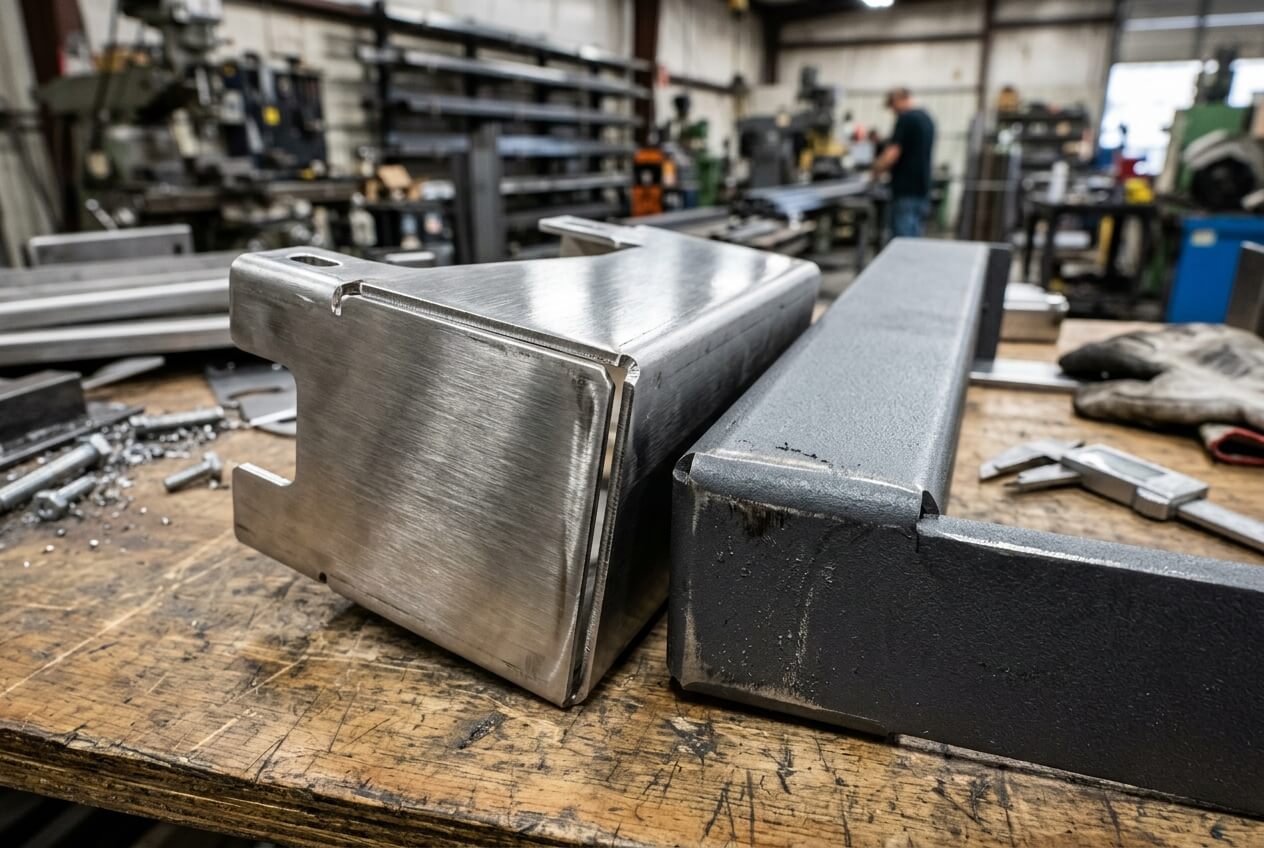
Material choice does more than change sheet cost. It changes bend radius, springback, edge quality, weld distortion, thread strength, finish preparation, and handling risk. A supplier cannot quote a reliable part if the RFQ treats material as a purchasing line only.
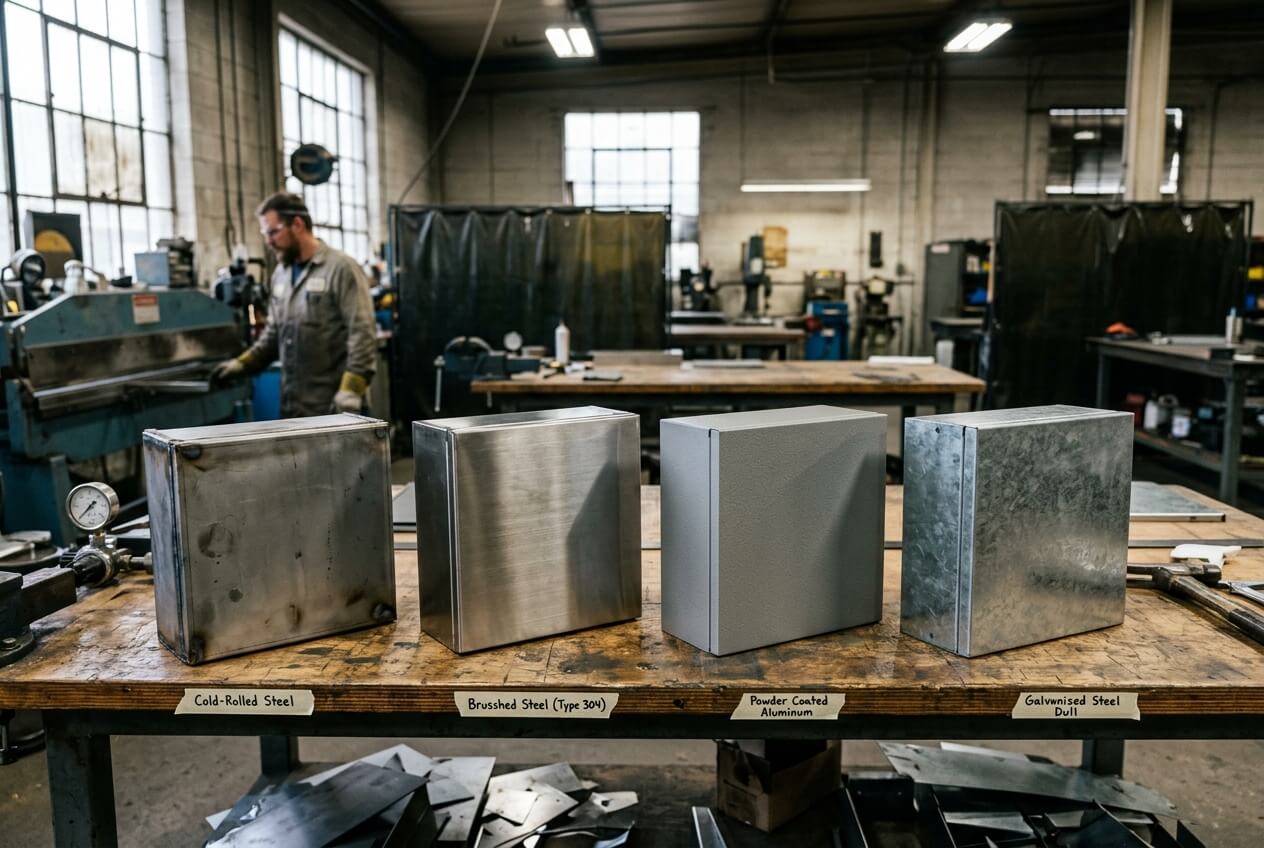
Cold-rolled steel often suits painted enclosures, brackets, frames, and cabinets. It forms well and supports strong threaded hardware. Yet it needs the right coating and pretreatment for the environment. Galvanized sheet may improve corrosion resistance, but welding and powder coating require more attention. Stainless steel may resist corrosion, but thin panels can distort during welding. Aluminum reduces weight, but it marks easily and may need inserts for repeated fastening.
Low sheet cost can move cost into fabrication
A cheaper sheet can raise total cost when it fights the geometry. Long flanges may need wider bend radii. Holes near bend lines may move after forming. Thin sheet may require more fixtures to control flatness. Large cosmetic panels may need protective film and careful tooling.
Welded assemblies create another assumption chain. If the RFQ does not define weld length, appearance, strength, and distortion limits, suppliers may quote different weld strategies. One may use continuous welds and include grinding. Another may use stitch welds and leave discoloration. Both may be reasonable, but they are not the same scope.
Project example: bracket material changed the assembly risk
A sourcing team changed a load-bearing bracket from steel to aluminum to reduce shipping weight. The model geometry stayed the same. The RFQ did not update bend radius, fastener strategy, or thread life. The prototype looked clean, but repeated assembly stripped several threaded holes.
The material substitution lowered part weight but moved risk into hardware. The supplier later added PEM inserts and adjusted the bend tooling. That raised cost and delayed batch release. The buyer could have avoided the loop by asking whether the proposed aluminum grade could support the same threads, load, and assembly cycle.
When suppliers propose substitution, procurement should ask for the process consequences. Will bend radii change? Will hole positions need tolerance changes? Will weld sequence change? Will inserts replace tapped holes? Will coating adhesion or polishing effort change? These questions protect the quote comparison without turning the RFQ into a textbook.
Finish and Tolerance Notes Decide Whether Quotes Cover the Same Work
Finish and tolerance language often creates the largest hidden differences between sheet metal quotes. Buyers may think they are adding appearance notes. Suppliers see labor, masking, inspection, rework risk, and packaging requirements.
Powder coating does not erase poor weld preparation, deep scratches, uneven grinding, or sharp edges. It adds thickness that may affect hinges, slots, latches, inserts, and grounding points. Brushed stainless steel needs grain direction control if panels sit side by side. Polished parts need surface handling long before final finishing.
Visible faces need different rules than hidden faces
A cabinet door may need a clean cosmetic surface. The internal mounting plate may need accurate holes but no cosmetic polish. A frame foot may need flatness and weld strength, while the rear side can accept tool marks. If the RFQ applies one finish note to every surface, suppliers guess where to spend labor.
That guess affects quotation. One supplier may polish every exposed weld. Another may clean only weld discoloration. One may package each panel with foam and film. Another may stack parts after coating with simple separators. The buyer only sees the difference after the sample arrives with scratches, gloss mismatch, or visible grinding marks.
Clear finish notes should identify color code, texture, gloss range, coating thickness target, masked zones, grounding points, visible surfaces, and packing protection. Photos of an approved product help suppliers price appearance consistently. If the part must match an existing product line, state that before quoting.
Tight tolerances in the wrong places raise cost without reducing risk
Tolerances create another assumption trap. Some buyers apply tight tolerances across the full drawing to avoid assembly problems. That can raise inspection time and unit price without protecting the features that matter. Other buyers leave all tolerances generic, which lets critical gaps drift during bending, welding, and coating.
The best RFQ marks the features that control function. These may include hinge datum locations, latch engagement, hole patterns for purchased modules, rack rail spacing, welded frame diagonals, and flatness on mounting surfaces. Less critical edges can carry normal fabrication tolerances.
This approach helps suppliers quote real work. They can plan fixtures, inspection gauges, and coating masks around important features. They can also warn the buyer when a tolerance conflicts with material thickness, bend length, weld heat, or coating buildup.
Prototype Approval Can Hide the Assumptions That Fail in Batch Production
A prototype proves that one part can be made. It does not prove that 200 or 2,000 parts will hold the same gaps, flatness, hole locations, finish, and assembly feel. Many RFQ assumptions stay hidden because skilled workers can correct a prototype by hand.
Batch production exposes those assumptions. Small bend angle variation can change door gaps. Weld pull can move mounting points. Powder coating can reduce clearance around hinges or slots. Inserts can tilt if the hole size and sheet thickness do not match the hardware. Packaging can damage a finish that looked perfect at sample approval.
Assembly fit must move from memory to drawings
Enclosures, cabinets, display frames, brackets, and welded assemblies often depend on mating parts. A drawing may show the fabricated part, but it may not show the purchased lock, hinge, electronic module, rail, fan, or mating frame. Without that context, the supplier controls the wrong dimensions.
A prototype may pass because the technician adjusts the hinge or files one slot. In batch production, that manual correction becomes slow and inconsistent. It also creates a dispute. The buyer expects repeatable fit. The supplier points to the drawing and says the parts meet the listed dimensions.
Procurement can prevent this conflict by marking critical-to-fit features in the RFQ. Add 2D drawings with revision numbers, 3D models for shape, mating part details, assembly notes, and inspection requirements. For welded assemblies, ask how the supplier plans to locate parts during welding and how they will check frame squareness or hole position after welding.
Lead time risk grows when assumptions surface late
Late clarification does more than change price. It changes lead time. A material switch may require new procurement. A finish change may need new pretreatment tests or color approval. A tolerance change may require fixtures. A packaging change may need new cartons, foam, or pallet design.
This is why supplier communication before quotation matters. Good clarification questions can feel like delays, but they often shorten the real schedule. They reveal whether the supplier understands laser cutting, CNC punching, bending, welding, powder coating, polishing, assembly, inspection, and batch packing as one connected route.
If you ask Yishang to review a custom sheet metal RFQ, send the manufacturing context with the drawings. Include material requirements, target quantities, tolerance priorities, finish expectations, mating parts, and prototype goals. That gives the team enough information to comment on manufacturability, not only unit price.
What Buyers Should Lock Before They Compare Supplier Prices
The safest time to remove quote assumptions is before the price comparison. Once procurement selects a supplier, every missing detail becomes harder to discuss. The supplier may need to protect margin. The buyer may need to protect launch timing. Both sides then negotiate around a product they defined too late.
Start with the drawing package. Provide 2D drawings with material grade, thickness, dimensions, tolerances, revision control, and notes for critical features. Add 3D files when geometry matters. If the part mates with another component, include that context or mark the controlled interface.
Next, define the finish by use, not only by color. State which surfaces are cosmetic, which areas need masking, and whether scratches, weld marks, grain direction, gloss, or texture matter. Add coating thickness where clearance or durability depends on it.
Then separate prototype and batch expectations. Tell suppliers the prototype quantity, first order quantity, annual volume, and approval process. Ask whether batch production will require fixtures, tooling, special inspection, or packing controls. This helps you compare a prototype price against a production plan, not against another supplier’s shortcut.
Finally, require suppliers to list assumptions with the quote. Ask them to identify material substitutions, tolerance concerns, finish exclusions, hardware choices, packaging method, and lead time drivers. A quote with visible assumptions gives procurement a better decision than a low number with hidden risk.
Preparing an RFQ for a metal enclosure, bracket, frame, cabinet, panel, or welded assembly? Send Yishang your 2D drawings, 3D files if available, material requirements, quantities, tolerance priorities, finish expectations, hardware notes, and assembly concerns. The review can focus on the fabrication route behind the quote: cutting, bending, welding, finishing, assembly, inspection, and batch consistency.
Share your project details through Yishang custom sheet metal fabrication so the quotation reflects the product you need, not a supplier’s best guess.
Frequently Asked Questions
What should OEM buyers prepare before requesting a sheet metal fabrication quote?
Buyers should prepare drawings, material grade, sheet thickness, quantities, tolerance notes, finish expectations, and any assembly or inspection requirements. The clearer the RFQ, the fewer assumptions the supplier needs to make during quoting.
Why do sheet metal fabrication quotes vary between suppliers?
Quotes often vary because suppliers make different assumptions about tolerances, material yield, finishing steps, welding complexity, inspection needs, packaging, and lead time. A detailed RFQ helps buyers compare quotations on the same technical basis.
How can tolerance requirements affect fabrication cost?
Tight tolerances may require more controlled cutting, forming, fixturing, inspection, or secondary work. Buyers can control cost by separating fit-critical dimensions from non-critical dimensions instead of applying tight tolerances everywhere.
When is a prototype recommended before batch production?
A prototype is useful when the part has tight fit-up, visible surfaces, welded assemblies, complex bends, or mating components. It helps confirm manufacturability, assembly behavior, and finish expectations before larger quantities are produced.
What surface finish details should be included in an RFQ?
Buyers should specify finish type, color, coating thickness if required, cosmetic surfaces, corrosion expectations, masking areas, and any visual acceptance standard. This avoids finish-related rework or quote changes later.
How can Yishang support custom sheet metal fabrication projects?
Yishang can review drawings, clarify fabrication requirements, discuss materials and finishes, support prototypes, and prepare for batch production based on the buyer’s RFQ details.